Tokyo Tower
ExploreJapanDaily Editorial Team · Last updated: June 26, 2026

- Area
- Shiba / Minato
- Best For
- Views, Photography, Couples
Visiting Tokyo Tower
Tokyo Tower rises above central Tokyo as one of the city's most recognizable landmarks and remains one of the best places to experience the atmosphere of old and modern Tokyo together. Standing 333 meters tall in the Minato district, the tower first opened in 1958 during a period when Japan was rebuilding rapidly after the war. Today, its bright orange-and-white steel frame continues to dominate the skyline and has become one of the most iconic symbols of Tokyo for travelers from around the world.
While newer observation towers focus on futuristic architecture, Tokyo Tower feels more nostalgic and personal. There is a warmth to the experience that many visitors immediately notice. The tower has appeared in countless Japanese films, anime series, television dramas, and photography collections, making it deeply connected to Tokyo's cultural identity. For many locals, Tokyo Tower represents memories of childhood trips, first visits to the capital, or seeing the skyline glow at night for the very first time.
The Main Deck, located 150 meters above the city, offers sweeping panoramic views across Tokyo's endless urban landscape. From the observation windows, visitors can spot Tokyo Bay, the surrounding skyscrapers of central Tokyo, and on especially clear days, even Mount Fuji rising in the distance. The contrast between historic temples, dense neighborhoods, modern glass towers, and distant mountains creates a view that feels uniquely Japanese. Unlike open-air observatories, the enclosed deck is comfortable throughout the year, whether visiting during humid summers, rainy afternoons, or cold winter evenings.

Visitors looking for a higher viewpoint can continue to the Top Deck at 250 meters. The experience feels more intimate and modern, with reflective interior designs, dramatic lighting, and expansive city views stretching far beyond central Tokyo. Looking down from above reveals the incredible scale of the world's largest metropolitan area in a way that is difficult to fully appreciate from street level. The tower may not be Tokyo's tallest structure anymore, but many travelers still prefer its closer connection to the city below and its more classic Tokyo atmosphere.
At the base of the tower, the FootTown complex adds another layer to the experience with souvenir shops, cafes, restaurants, and entertainment areas spread across multiple floors. The surrounding neighborhood also makes the visit feel special. Nearby Shiba Park offers quiet walking paths beneath the tower, while the historic Zojoji Temple creates one of the most beautiful contrasts in Tokyo, where traditional temple grounds stand directly beside the modern steel landmark. Travelers looking to continue exploring often walk on to Roppongi Hills, just a short distance away.
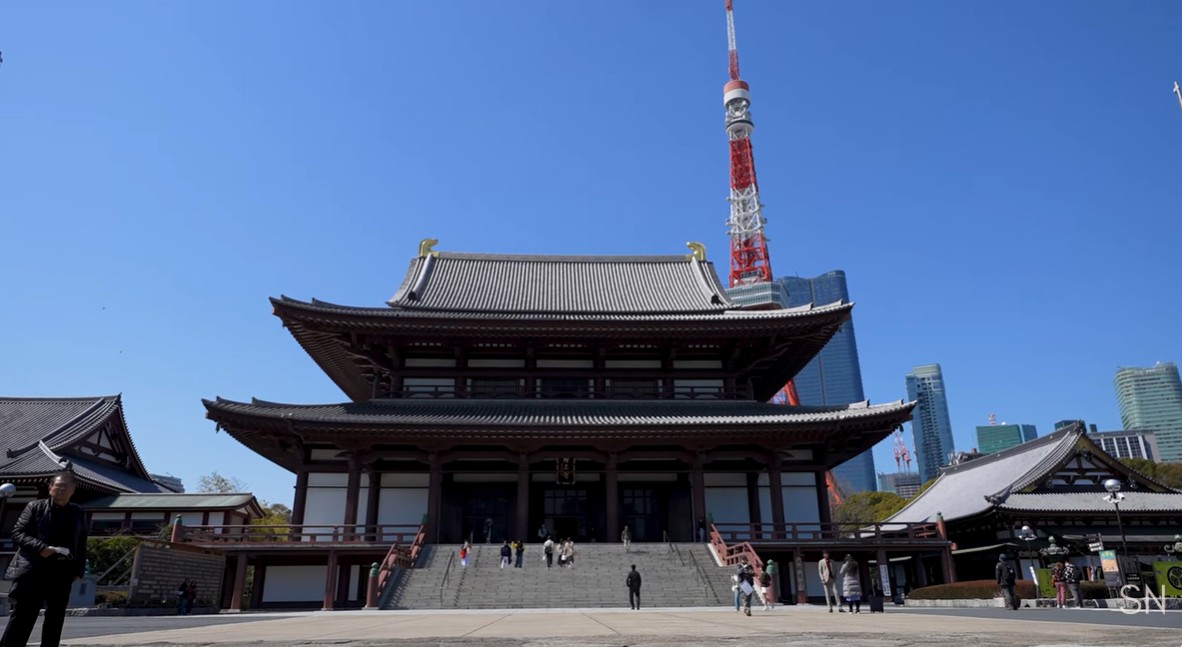
Tokyo Tower becomes especially memorable after sunset. As darkness falls, the structure lights up against the skyline with its famous warm illumination, creating one of the most photographed nighttime scenes in the city. Seasonal lighting events throughout the year give the tower a different atmosphere depending on when you visit, from cherry blossom season in spring to festive winter illuminations.

For first-time visitors to Japan, Tokyo Tower offers more than just a city view. It captures a side of Tokyo that feels emotional, historic, and unmistakably local. Standing beneath the glowing tower while the city moves around you is one of those classic Tokyo moments that stays with travelers long after they leave Japan.
Things to Do at Tokyo Tower
How to Get to Tokyo Tower
Tokyo Tower is located in the Minato district in central Tokyo and is one of the easiest landmarks in the city to reach using Tokyo's train and subway network. Thanks to its central location near popular neighborhoods like Roppongi, Ginza, and Shibuya, many travelers include Tokyo Tower as part of a full day exploring central Tokyo.
The tower can be accessed from several nearby stations, with Akabanebashi Station, Onarimon Station, and Kamiyacho Station being the closest and most convenient for most visitors. Once you exit the station, the bright orange-and-white structure is usually visible immediately above the surrounding buildings, making navigation surprisingly easy even for first-time travelers in Japan.
| From | Line | Transfer | Station | Walk | Approx. Fare |
|---|---|---|---|---|---|
| Shinjuku | Toei Oedo Line | Direct (no transfer) | Akabanebashi | 5 min | ¥210 (~$1.30) |
| Shibuya | Tokyo Metro Ginza Line → Hibiya Line | Transfer at Ginza | Kamiyacho | 7 min | ¥220 (~$1.35) |
| Tokyo Station | JR Yamanote Line | Direct (no transfer) | Hamamatsucho | 15 min | ¥170 (~$1.05) |
| Asakusa | Toei Asakusa Line | Direct (no transfer) | Daimon | 10 min | ¥280 (~$1.75) |
| Haneda Airport | Tokyo Monorail | Direct (no transfer) | Hamamatsucho | 15 min | ¥500 (~$3.10) |
- •Nearest station: Akabanebashi (Oedo Line, 3 min) · Kamiyacho (Hibiya Line, 7 min)
- •IC cards (Suica, Pasmo, or ICOCA) are accepted on trains, subways, and buses throughout Japan. Tap in and out at every gate.
- •Avoid traveling during rush hour on weekdays: 7am to 9am and 5pm to 8pm. Trains are significantly more crowded.
- •Google Maps provides accurate real-time transit directions in Tokyo. Download offline maps before you arrive.
For IC cards, tickets, and full transit basics for Tokyo, see the complete transportation guide.
See the Getting Around Tokyo guide →Map
Best Time to Visit Tokyo Tower
Best time to visit Tokyo Tower: Evening for illuminations, or daytime for Mount Fuji visibility. Weekday mornings are generally quieter than weekends and public holidays.
- •Best time to visit: Evening for illuminations, or daytime for Mount Fuji visibility
- •Arriving on a weekday morning avoids the largest crowds. Weekends and public holidays are significantly busier.
- •Spring (late March to early May) and autumn (October to November) are the most popular seasons for visiting Tokyo.
- •Golden Week (late April to early May) is the busiest week of the year in Japan. Book accommodation and tickets well in advance.
Around 200 cherry trees bloom in Shiba Park at the base of the tower, with the best views found near Zojo-ji Temple.
Shiba Park's trees turn shades of red and gold, pairing well with the tower's evening illumination for photos.
The tower's nightly lighting shifts to festive winter colors and special patterns through the holiday season.
Entry Fee & Hours
| Category | Price (JPY) | Approx. (USD) |
|---|---|---|
| Adult | ¥1,500 | ~$9 |
| High School Student | ¥1,200 | ~$7 |
| Elementary / Junior High | ¥900 | ~$6 |
| Age 4+ | ¥600 | ~$4 |
| Category | Price (JPY) | Approx. (USD) |
|---|---|---|
| Adult | ¥3,300 | ~$20 |
| High School Student | ¥3,100 | ~$19 |
| Elementary / Junior High | ¥2,100 | ~$13 |
| Age 4+ | ¥1,500 | ~$9 |
Web prices shown; counter (walk-up) prices are slightly higher for the Top Deck Tour. USD amounts are approximate and change with the exchange rate.
- •Main Deck (150m) tickets can be purchased at the tower on the day. Walk-up queues are usually manageable on weekdays.
- •Top Deck Tour (150m + 250m) can be booked online in advance. Recommended on weekends, holidays, and during cherry blossom season.
- •Discounts are available for children, high school students, and visitors with disabilities. There is no senior discount.
- •Tokyo Tower is not covered by the Japan Rail Pass. Admission tickets must be purchased separately at the FootTown entrance.
Nearby Attractions
Combine with Tokyo Tower on the same day

Zojoji Temple

Shiba Park

teamLab Borderless

Roppongi Hills

Hamarikyu Gardens
- •Zojoji Temple (Around 2–5 minutes walk from Tokyo Tower): Zojoji Temple is a free-to-enter Jodo-shu Buddhist temple in Shiba, Minato, historically the family temple of the Tokugawa shogunate. Its 1622 Sangedatsumon gate is a National Important Cultural Property, currently under restoration through a scheduled 2032 completion. The separately paid Treasure Gallery and Tokugawa Mausoleum sit beside the free grounds, and the temple stands directly next to Tokyo Tower.
- •Shiba Park (Surrounds the base of Tokyo Tower): A peaceful park surrounding the base of Tokyo Tower, offering walking paths, open green spaces, and some of the best photo spots in the area. Especially beautiful during cherry blossom season.
- •teamLab Borderless (Around 15 minutes walk from Tokyo Tower): teamLab Borderless is a permanent digital art museum at Azabudai Hills in central Tokyo, not its former Odaiba venue, which closed in 2022. Visitors walk shoes-on through vast, interconnected rooms of light, projection, and interactive art with no fixed floor plan.
- •Roppongi Hills (Around 15–20 minutes walk from Tokyo Tower): Roppongi Hills is a landmark urban development in Minato housing the Mori Art Museum, the Tokyo City View observation deck, luxury shops, restaurants, and public art. It is a major center for contemporary art and nightlife.
- •Hamarikyu Gardens (Around 10–15 minutes from Tokyo Tower): Hamarikyu Gardens is a nationally designated Special Historic Site in Chuo, Tokyo, built around Shioiri-no-ike, the only seawater tidal pond among Tokyo's Edo-period gardens. It has an island tea house serving matcha, two preserved Edo-period duck hunting grounds, and a 300-year pine and peony garden, with adult admission at just ¥300.
Suggested Itinerary
Pair Tokyo Tower with these nearby stops for a full day in Shiba / Minato.
Frequently Asked Questions
Planning Your Tokyo Trip?
See the full Tokyo destination guide or browse Japan itineraries that include this city.
See all Towers & Views across Japan →Explore all attractions in Tokyo or browse nearby destinations.
Back to Tokyo Guide →