
Japan's Buddhist Temples & Shinto Shrines
From vermillion torii tunnels to gilded pavilions, discover the sacred sites that define Japan's spiritual landscape.
Japan is home to over 80,000 Shinto shrines and tens of thousands of Buddhist temples, and a handful of them are essential viewing for any first-time visitor. Shrines (jinja) honor Shinto kami and are marked by a torii gate at the entrance, while temples (ji or dera) house Buddhist statues and are typically grander in scale, with pagodas and incense halls. Below are the most rewarding examples across the country, each linked to a full visiting guide.
Temples & Shrines Across Japan
60 temples & shrines across 16 destinations
Tokyo
View Tokyo guide →
Senso-ji Temple
Senso-ji is Tokyo's oldest and most visited temple, dating to 645 AD, with the famous Kaminarimon gate and Nakamise shopping street leading to the main hall. It is the spiritual heart of Asakusa.
Explore →
Meiji Shrine
Meiji Shrine is a serene Shinto shrine dedicated to Emperor Meiji, set within a 700-acre forested sanctuary in the heart of Tokyo. It offers a peaceful escape from the city bustle.
Explore →
Tsukiji Hongwanji Temple
Tsukiji Hongwanji Temple is a free-to-enter Jodo Shinshu Buddhist temple in Tsukiji, rebuilt in 1934 to a design that blends Indian and other Asian Buddhist architecture with a pipe organ and stained glass. It is one of Tokyo's most architecturally distinctive temples.
Explore →
Nezu Shrine
Nezu Shrine is a free Shinto shrine in Bunkyo, Tokyo, founded by legend around 1,900 years ago and rebuilt at its present site in 1705-1706. It is known for a vermillion torii gate tunnel leading to Otome Inari Shrine and a spring azalea garden that hosts the Bunkyo Azalea Festival, and it offers a genuinely quieter alternative to Meiji Shrine or Senso-ji most of the year.
Explore →
Zojoji Temple
Zojoji Temple is a free-to-enter Jodo-shu Buddhist temple in Shiba, Minato, historically the family temple of the Tokugawa shogunate. Its 1622 Sangedatsumon gate is a National Important Cultural Property, currently under restoration through a scheduled 2032 completion. The separately paid Treasure Gallery and Tokugawa Mausoleum sit beside the free grounds, and the temple stands directly next to Tokyo Tower.
Explore →
Gotokuji Temple
Gotokuji Temple is a free-to-enter Soto Zen Buddhist temple in Setagaya, historically the Ii clan's family temple and home to Ii Naosuke's grave, a National Historic Site. It's popularly known as a birthplace claimant of the maneki-neko legend, whose rows of small white cat figurines at Shofuku-den are its best-known sight, though the legend itself is folklore rather than documented history. The grounds are free; figurines are purchased separately.
Explore →Kyoto
View Kyoto guide →
Fushimi Inari Taisha
Fushimi Inari Taisha is the head shrine of Japan's Inari shrines, with about 10,000 vermilion torii along the paths up Mount Inari in southern Kyoto. Entry is free, the grounds are always open, and you choose how far to climb.
Explore →
Kinkaku-ji (Golden Pavilion)
Kinkaku-ji, the Golden Pavilion, is a Zen temple in northwest Kyoto whose three-story relics hall has its upper two stories covered in gold leaf. Visitors see it across Kyoko-chi pond on a single walking route through the garden. The temple is a UNESCO World Heritage site.
Explore →
Kiyomizu-dera Temple
Kiyomizu-dera is a Buddhist temple on the slopes of Mt. Otowa in eastern Kyoto, founded in 778. Its Main Hall stands on a wooden stage held up by 18 zelkova pillars, with a view across the city. The temple is a UNESCO World Heritage site.
Explore →
Ginkaku-ji (Silver Pavilion)
Ginkaku-ji, officially Jisho-ji, is a Rinzai Zen temple in eastern Kyoto built on the Higashiyama villa of the shogun Ashikaga Yoshimasa. Its Kannon Hall, the Silver Pavilion, and the Togudo are National Treasures, set in a garden of raked sand, pond and hillside. It is a UNESCO World Heritage site.
Explore →
Kifune Shrine
Kifune Shrine enshrines the god of water and is the head shrine of about two thousand water-god shrines across Japan. It has three parts along the Kibune river: the main shrine, the Yui no Yashiro and the Okumiya, where it was founded.
Explore →
Ryoan-ji Temple
Ryoan-ji is a Rinzai Zen temple in northwest Kyoto, founded in 1450 by Hosokawa Katsumoto and part of the Historic Monuments of Ancient Kyoto World Heritage site. Its rock garden sets 15 stones in about 248 square meters of white gravel, and no one knows who designed it.
Explore →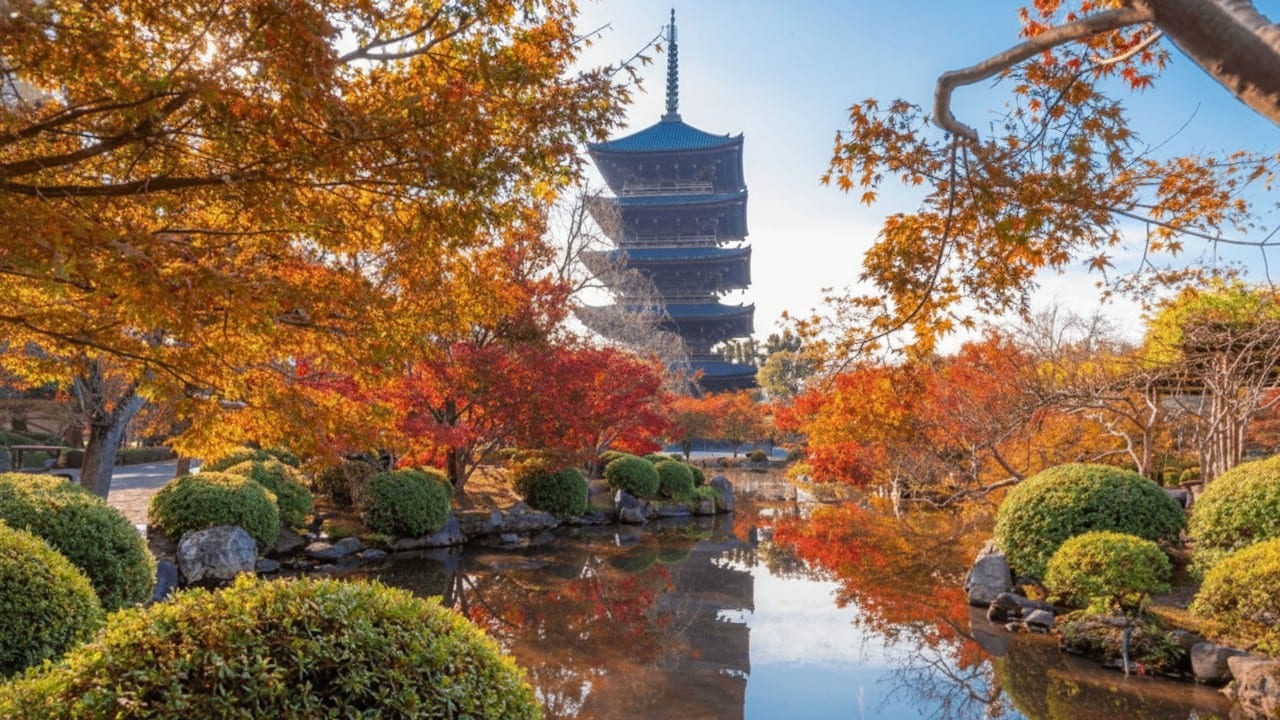
Toji Temple
Toji (Kyo-o-gokoku-ji) was founded in 796 as one of two great temples guarding the southern gate of the new capital, and was given to the monk Kukai in 823. It is the head temple of Shingon Buddhism, part of the Historic Monuments of Ancient Kyoto World Heritage site, and its pagoda, rebuilt in 1644, is the tallest five-story pagoda in Japan.
Explore →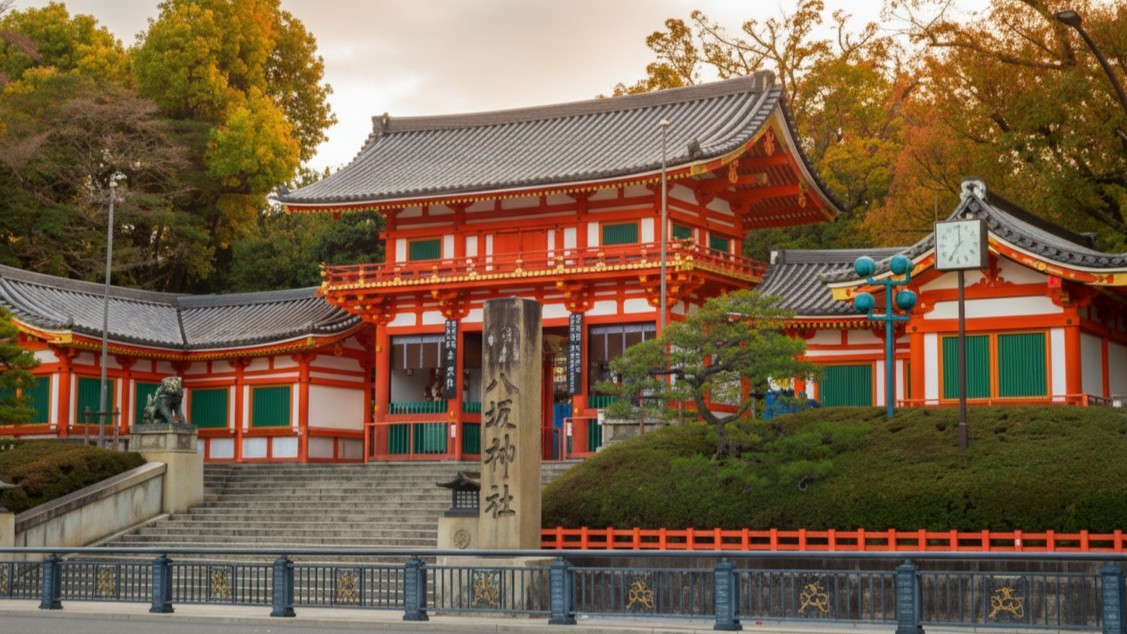
Yasaka Shrine
Yasaka Shrine (Yasaka Jinja) enshrines Susanoo-no-mikoto and traces its origins to 656 or 876, depending on the account. Its main hall, with the worship hall under the same roof, was designated a National Treasure in 2020, and the shrine runs the Gion Matsuri, held through July for more than 1,150 years.
Explore →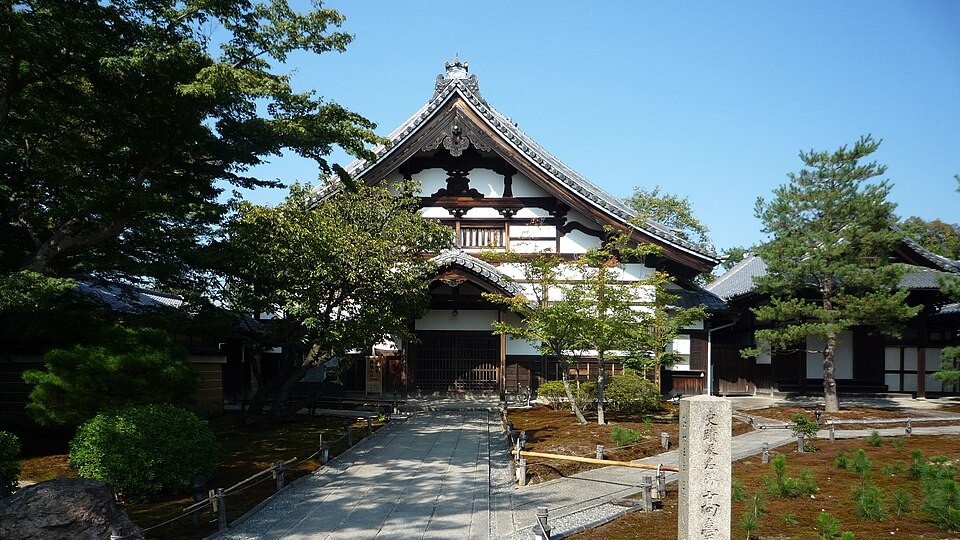
Kodai-ji Temple
Kodai-ji is a Rinzai Zen temple in Higashiyama founded in 1606 by Nene, the widow of Toyotomi Hideyoshi. Its pond garden, the Otamaya shrine with its gold lacquer, two hillside tea houses and a bamboo grove are all inside one ticket.
Explore →
Tenryu-ji Temple
Tenryu-ji is a Rinzai Zen temple in Arashiyama, founded in 1339 by the shogun Ashikaga Takauji with Muso Soseki as its first abbot, and part of the Kyoto UNESCO World Heritage site. Its Sogenchi Garden was the first in Japan designated a Site of Special Historic and Scenic Importance.
Explore →
Heian Shrine
Heian Shrine was built in 1895 to honor Emperor Kanmu, who founded Kyoto, as a five-eighths-scale copy of the Heian palace's state halls. The shrine is free; its Meiji-era stroll garden, the Shin-en, is ticketed.
Explore →
Daigo-ji Temple
Daigo-ji is a World Heritage temple in south-east Kyoto, with a pagoda completed in 951, the garden Toyotomi Hideyoshi laid out for his 1598 cherry-blossom party, and a mountaintop precinct, Kami-Daigo, whose trail is currently closed.
Explore →
Nanzen-ji Temple
Nanzen-ji is the head temple of the Nanzen-ji school of Rinzai Zen, with a 22-meter Sanmon gate, a National Treasure abbot's hall and its tiger garden, and the red-brick aqueduct of the Lake Biwa Canal running through its grounds.
Explore →Osaka
View Osaka guide →
Sumiyoshi Taisha Shrine
One of Japan's oldest shrines with distinctive architecture and the famous Sorihashi arched bridge.
Explore →
Namba Yasaka Shrine
Famous for its giant lion-head stage, one of Osaka's most visually unique and photographed shrines.
Explore →
Hozenji Temple
A small Pure Land temple in Namba known for Mizukake Fudo, a moss-covered statue visitors douse with water for good luck. Free, open around the clock, and a short stop rather than a destination.
Explore →
Osaka Tenmangu Shrine
A free Shinto shrine founded in 949 and dedicated to Sugawara no Michizane, host to the Tenjin Matsuri festival and a genuinely worthwhile stop year-round, not only during festival season.
Explore →Sapporo
View Sapporo guide →
Hiroshima
View Hiroshima guide →
Miyajima Island
The island of Itsukushima Shrine, in Hatsukaichi city, Hiroshima Prefecture, about an hour from central Hiroshima by train and ferry. Half a day for the shrine and town; a full day with Mount Misen.
Explore →
Itsukushima Shrine
The World Heritage shrine on Miyajima, built over a tidal bay with the Great Torii standing offshore. Entry is 300 yen, hours change by season, and the tide decides whether the torii stands in water or can be reached on foot.
Explore →
Kasuga Taisha Shrine
Nara's most sacred Shinto shrine, founded in 768 CE, where 3,000 stone and bronze lanterns line an ancient cedar forest approach to the vermilion inner sanctuary.
Explore →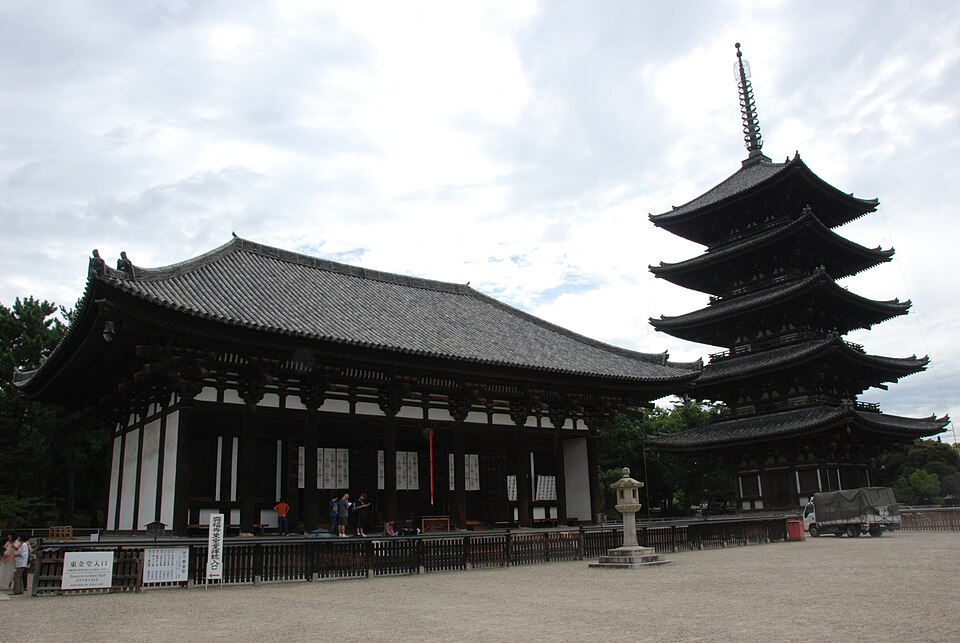
Kofuku-ji Temple
A UNESCO World Heritage temple complex originally established in 669 CE, best known for its five-story pagoda mirrored in Sarusawa Pond and its world-class collection of Buddhist sculpture.
Explore →
Todai-ji Temple
Japan's largest wooden structure, housing the awe-inspiring 15-meter bronze Daibutsu (Great Buddha) cast in 752 CE — the spiritual heart of Nara and a UNESCO World Heritage Site.
Explore →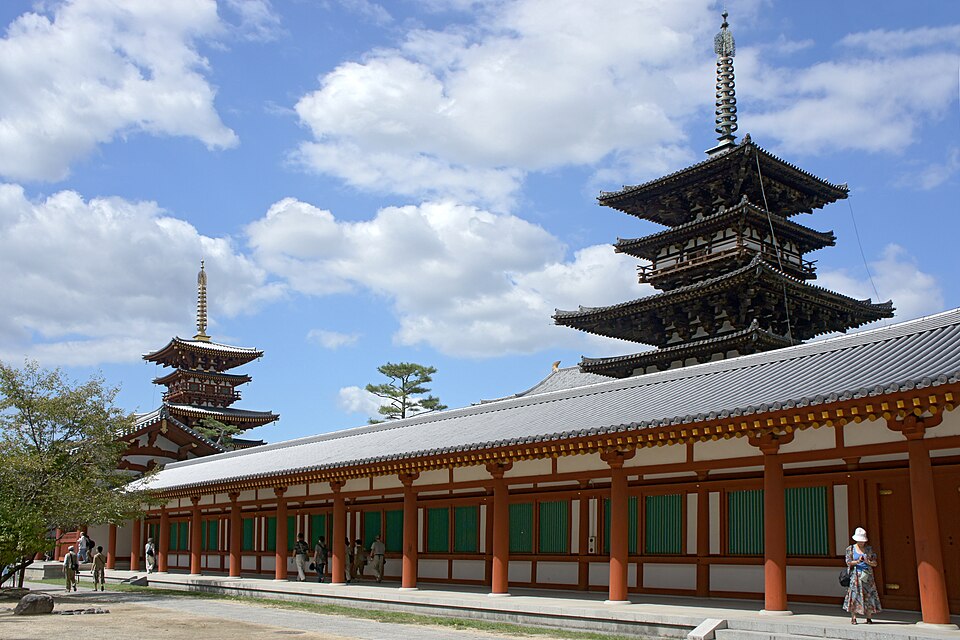
Yakushiji Temple
An imperial temple complex founded in 680 CE, famed for its ancient East Pagoda — described by Nara-period monks as 'frozen music in stone' — standing as one of Japan's oldest surviving structures.
Explore →
Toshodaiji Temple
A UNESCO World Heritage temple in Nara's Nishinokyo district, founded in 759 by the Chinese monk Ganjin and known for its Nara-period Kondo Hall.
Explore →
Gangoji Temple
A UNESCO World Heritage temple and National Treasure inside Nara's Naramachi district, with roof tiles dating to its original 6th-7th century Asuka-dera incarnation.
Explore →
Himuro Shrine
A small Shinto shrine in central Nara founded in 710 AD and dedicated to the deity of ice, a short walk from Nara National Museum, known for a weeping cherry tree, unique ice-themed rituals, and its own distinct identity from a differently located Himuro Shrine in Tenri City.
Explore →Hakone
View Hakone guide →
Kamakura
View Kamakura guide →
Engaku-ji Temple
A Kamakura Five Great Zen Temple founded in 1282, one minute from Kita-Kamakura Station, known for the National Treasure Shariden hall, the Ogane great bell, and some of Kamakura's best autumn foliage.
Explore →
Great Buddha of Kamakura (Kotoku-in)
Kamakura's 13.35-meter outdoor bronze Buddha at Kotoku-in Temple, Japan's second-tallest bronze Buddha statue, standing in the open air since a tsunami destroyed its hall in the 1400s.
Explore →
Hasedera Temple
A hillside Buddhist temple in Kamakura, home to a 9.18-meter gilded Kannon statue, a sea view over Sagami Bay, and a hydrangea path that draws crowds each June.
Explore →
Hokokuji Temple
A Zen temple in eastern Kamakura best known for a grove of roughly 2,000 bamboo stalks and a tea house serving matcha inside it.
Explore →
Kenchoji Temple
Japan's oldest Zen training monastery and the top-ranked of Kamakura's Five Great Zen Temples, founded in 1253, with a dragon-ceiling hall, a Muso Soseki-attributed garden, and a climb to the Hansobo viewpoint.
Explore →
Sasuke Inari Shrine
A free, always-open Inari shrine in a residential Kamakura valley, known for a vermilion torii-gate stairway and hundreds of fox statues, roughly a 20-minute walk from Kamakura Station.
Explore →
Tsurugaoka Hachimangu Shrine
Kamakura's most important Shinto shrine, a hilltop complex reached by a long cherry tree lined approach and the historical center of the Kamakura shogunate.
Explore →
Zeniarai Benten Shrine
A cave shrine in western Kamakura where visitors wash coins and bills in a sacred spring, a tradition believed to bring financial fortune, formally named Zeniarai Benzaiten Ugafuku Shrine.
Explore →Nikko
View Nikko guide →
Toshogu Shrine
Japan's most ornate shrine, the lavish gold-leaf mausoleum of Tokugawa Ieyasu set within a towering cedar forest.
Explore →
Nikko Futarasan Shrine
One of Nikko's oldest shrines, dedicated to the deities of the surrounding sacred mountains.
Explore →
Rinno-ji Temple
One of Nikko's most important Buddhist temples, home to three towering gilded Buddhist statues.
Explore →Fukuoka
View Fukuoka guide →
Mount Fuji
View Mount Fuji guide →
Chureito Pagoda
A five-story memorial pagoda on the hillside above Fujiyoshida, 398 steps up, framed against Mount Fuji from its viewing deck.
Explore →
Kitaguchi Hongu Fuji Sengen Shrine
The cedar-lined Fujiyoshida shrine where the Yoshida Trail up Mount Fuji begins, a World Heritage component with 11 Important Cultural Property buildings.
Explore →Photo: 江戸村のとくぞう, CC BY-SA 4.0
Nagoya
View Nagoya guide →
Atsuta Jingu
One of Japan's most revered Shinto shrines, traditionally said to enshrine the sacred sword Kusanagi no Tsurugi, set within a wooded precinct in southern Nagoya.
Explore →
Osu Kannon
A free, centuries-old Buddhist temple in Nagoya's Osu district, one of Japan's Three Kannon Temples and the historical anchor around which the surrounding Osu Shopping District grew up.
Explore →Takayama
View Takayama guide →
Hida Kokubunji Temple
Takayama's oldest temple, founded in 746 CE, with free public grounds centered on a 1,200-year-old ginkgo tree and a three-story pagoda, a 5-minute walk from Takayama Station.
Explore →
Sakurayama Hachimangu Shrine
The guardian shrine of northern Takayama and traditional home of the Autumn Takayama Festival, reached through a cedar-lined torii approach, with free, always-open grounds separate from the paid exhibition hall next door.
Explore →Nagasaki
View Nagasaki guide →
Nagasaki Confucius Shrine
A Confucian shrine built in 1893 by Nagasaki's Chinese community, with 72 life-size stone statues of Confucius's disciples and an adjoining Historical Museum of China on the same ticket.
Explore →
Kofukuji Temple
A Buddhist temple of the Obaku Zen sect founded in the 1620s by a Chinese monk, with Ming-dynasty Chinese architecture, a hall dedicated to the sea goddess Mazu, and a main hall designated an Important Cultural Property.
Explore →
Oura Cathedral
The 1864 basilica where Hidden Christians revealed their faith in 1865, a National Treasure and the only building among the twelve UNESCO-listed Hidden Christian Sites in the Nagasaki Region.
Explore →
Sofukuji Temple
A Buddhist temple of the Obaku Zen sect founded in 1629 for Nagasaki's merchants from Fuzhou, with two National Treasure structures built in China and reassembled on site.
Explore →
Suwa Shrine
Nagasaki's principal Shinto shrine, established in 1614 and reached by a long, steep stone approach, home to the Nagasaki Kunchi festival held every October 7 to 9.
Explore →
Urakami Cathedral
An active Catholic parish church in Nagasaki's Urakami district, destroyed by the atomic bomb in 1945 and rebuilt, with damaged statues and a surviving bell preserved on its grounds.
Explore →
Explore Other Categories
Plan Your Visit
Build these stops into a full itinerary, or browse every destination they belong to.