Fukuoka Tower
ExploreJapanDaily Editorial Team · Last updated: July 1, 2026

- Area
- Fukuoka
- Best For
- City Views, Sunset, Photography, Couples
Visiting Fukuoka Tower
Rising above Fukuoka's modern waterfront skyline, Fukuoka Tower is one of the city's most recognizable landmarks and an essential stop for travelers seeking a broader perspective of Japan's largest city on Kyushu Island. Standing along the shores of Hakata Bay in the Seaside Momochi district, the tower combines contemporary architecture, sweeping coastal views, and a distinctive identity that reflects Fukuoka's reputation as one of Japan's most livable and forward-looking urban centers. Whether viewed from a distance or experienced from its observation decks high above the city, Fukuoka Tower offers a memorable introduction to the geography, character, and atmosphere of Fukuoka.
Completed in 1989 to commemorate the 100th anniversary of Fukuoka City, Fukuoka Tower was designed as a symbol of the city's future while celebrating its connection to the sea. At 234 meters tall, it remains the tallest seaside tower in Japan and has become a defining feature of the local skyline. Its exterior is particularly striking, covered with thousands of mirrored panels that reflect changing light conditions throughout the day. Depending on the weather and season, the structure can appear brilliant blue beneath clear skies, glow warmly during sunset, or blend elegantly into the surrounding landscape through reflections of clouds and the sea.
What distinguishes Fukuoka Tower from many urban observation towers is its setting. Unlike towers located deep within dense city centers, this landmark stands beside the waterfront, creating expansive views that combine urban scenery with coastal landscapes. From elevated observation areas, visitors can appreciate the unique layout of Fukuoka, where modern neighborhoods, green spaces, beaches, and the waters of Hakata Bay exist in close proximity. On clear days, the horizon stretches far beyond the city, providing an appreciation for Fukuoka's position as a gateway between Japan and the broader region of East Asia.
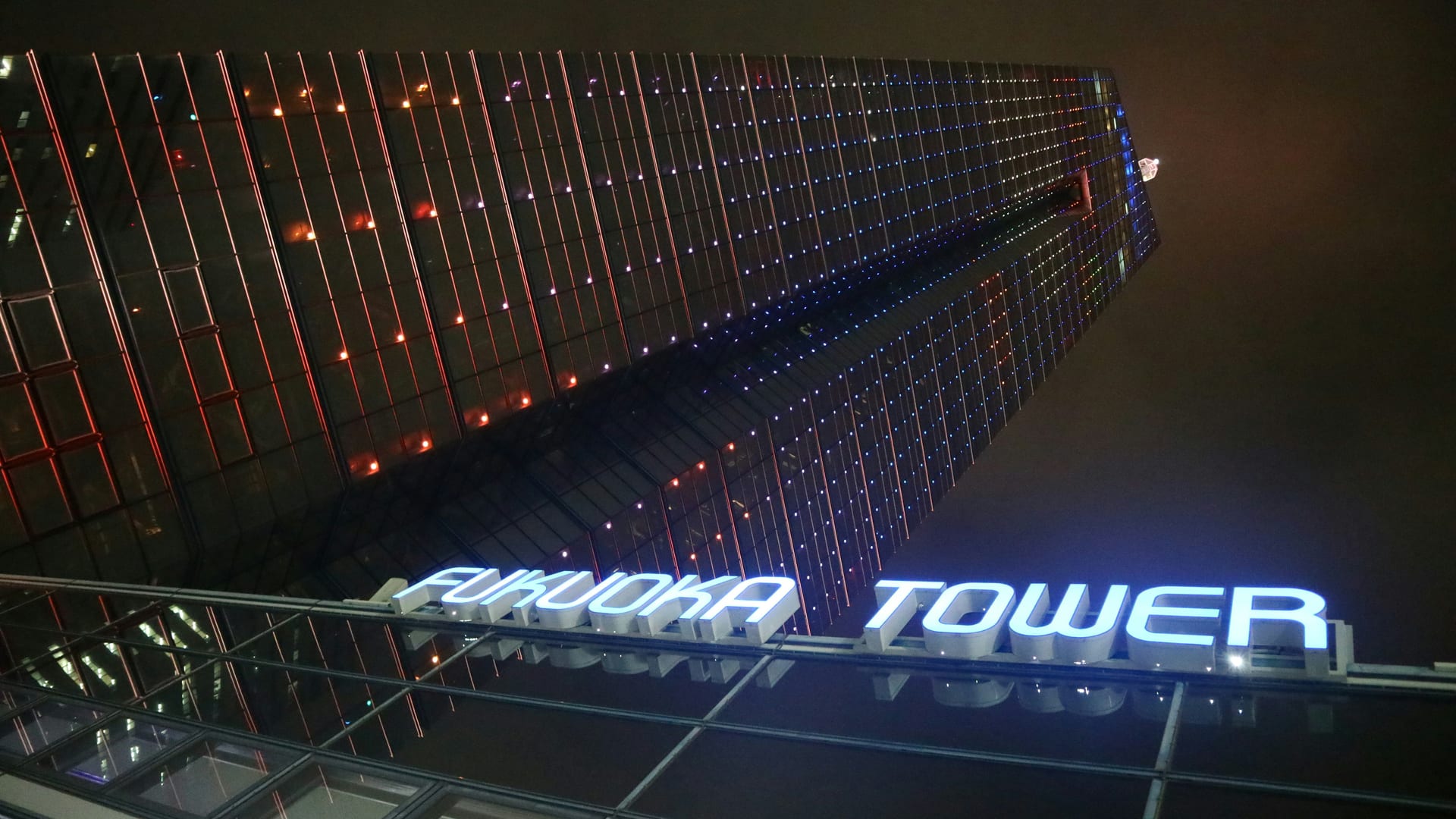
The surrounding Momochi waterfront contributes significantly to the experience. This district represents a more contemporary side of Fukuoka, characterized by modern architecture, public spaces, cultural facilities, and scenic coastal promenades. The contrast between the glass-covered tower and the nearby shoreline creates a setting that feels distinctly different from Japan's historic temple towns or traditional castle districts. Visitors often find that a trip to Fukuoka Tower reveals a side of Japan that is innovative, open, and closely connected to its maritime environment.
The atmosphere changes noticeably throughout the day, making repeat visits rewarding. During daylight hours, the observation decks showcase the city's geography in remarkable detail. Visitors can trace the coastline, identify major landmarks, and gain a clearer understanding of how the city has developed around its natural surroundings. As evening approaches, the scenery transforms. Sunlight reflects off the waters of Hakata Bay, the skyline begins to illuminate, and the city gradually takes on a different personality. After dark, countless lights spread across the urban landscape, creating one of the most impressive nighttime views in Kyushu.
Seasonal changes also influence the experience. Spring often brings clear conditions and comfortable temperatures that enhance long-distance visibility. Summer highlights the blue waters of the bay and the vibrant atmosphere of the waterfront district. During autumn, crisp air can create exceptionally sharp panoramic views, while winter sunsets often paint the horizon with dramatic colors. Throughout the year, the tower itself is frequently illuminated with special seasonal displays, adding visual interest to the skyline and reinforcing its role as one of Fukuoka's most recognizable landmarks.
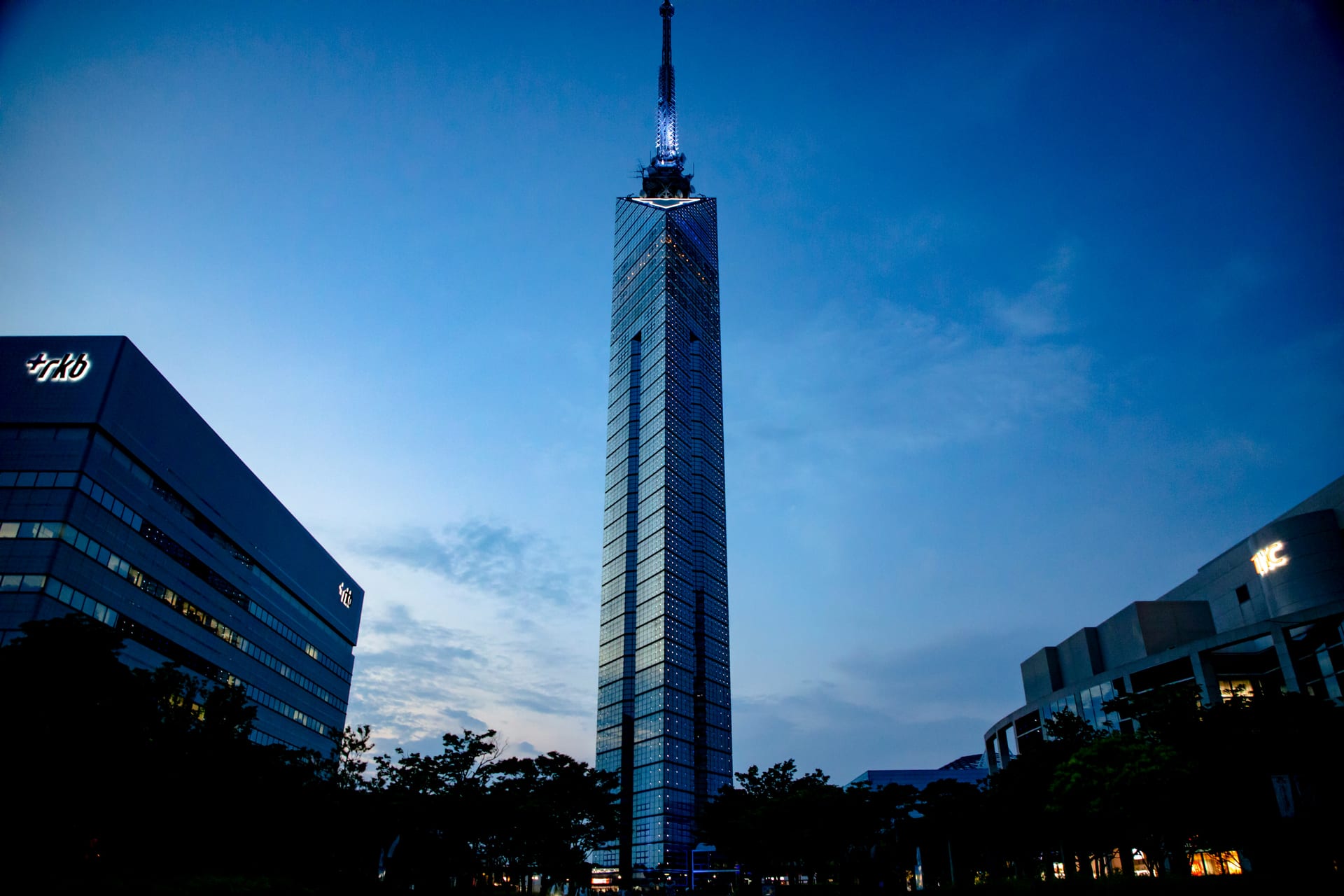
Beyond its views, Fukuoka Tower reflects the city's modern identity and aspirations. Fukuoka has long been known as a center of commerce, innovation, and international exchange, benefiting from its strategic location along historic trade routes connecting Japan with the Asian mainland. The tower serves as a visual representation of this outward-looking spirit. It stands not only as an observation point but also as a symbol of a city that embraces growth while maintaining a high quality of life and strong connection to its coastal setting.
Photographers are particularly drawn to the structure because of its unique design and location. The mirrored facade creates constantly changing visual effects depending on weather conditions and lighting. During golden hour, reflections across the glass surfaces can be especially dramatic, while nighttime illuminations provide opportunities for striking urban photography. The tower is equally appealing when viewed from surrounding beaches, waterfront promenades, and nearby parks, where it often serves as the focal point of the skyline.
For international travelers, Fukuoka Tower offers more than just elevated views. It provides context. Looking out across the city allows visitors to better understand Fukuoka's scale, geography, and relationship with the sea. The experience helps connect many of the destinations travelers encounter throughout their stay, from historic neighborhoods and cultural attractions to modern commercial districts and coastal landscapes. Few locations offer such a comprehensive perspective of the city in a single visit.
What ultimately makes Fukuoka Tower memorable is the balance it achieves between architecture, scenery, and place. It is not simply a tall structure designed for observation. It is a landmark that reflects the identity of modern Fukuoka itself. The combination of waterfront surroundings, panoramic views, contemporary design, and changing seasonal scenery creates an experience that remains engaging throughout the year. For visitors exploring Kyushu, Fukuoka Tower serves as both a visual landmark and a meaningful introduction to one of Japan's most dynamic and welcoming cities.
Things to Do at Fukuoka Tower
How to Get to Fukuoka Tower
Fukuoka Tower is located in the Momochi waterfront district, west of central Fukuoka.
- •Nearest station: Nishijin Station (approx. 20 minute walk, or short bus/taxi ride)
- •IC cards (Suica, Pasmo, or ICOCA) are accepted on trains, subways, and buses throughout Japan. Tap in and out at every gate.
- •Avoid traveling during rush hour on weekdays: 7am to 9am and 5pm to 8pm. Trains are significantly more crowded.
- •Google Maps provides accurate real-time transit directions in Fukuoka. Download offline maps before you arrive.
Map
Best Time to Visit Fukuoka Tower
Best time to visit Fukuoka Tower: Late afternoon through sunset, to see daytime views transition into the illuminated night skyline. Weekday mornings are generally quieter than weekends and public holidays.
- •Best time to visit: Late afternoon through sunset, to see daytime views transition into the illuminated night skyline
- •Arriving on a weekday morning avoids the largest crowds. Weekends and public holidays are significantly busier.
- •Spring (late March to early May) and autumn (October to November) are the most popular seasons for visiting Fukuoka.
- •Golden Week (late April to early May) is the busiest week of the year in Japan. Book accommodation and tickets well in advance.
The tower's exterior is decorated with special holiday lighting, and the observation deck offers views over the city's winter illuminations below.
Entry Fee & Hours
| Category | Price (JPY) | Approx. (USD) |
|---|---|---|
| Adult (high school age and up) | ¥1,000 | ~$7 |
| Elementary / Junior High School Student | ¥500 | ~$3.50 |
| Ages 4 and up (preschool) | ¥200 | ~$1.50 |
One ticket covers all open observation levels for the day.
- •Fukuoka Tower's observation deck is reached by elevator, and the visitor areas are wheelchair and stroller accessible throughout.
Nearby Attractions
Combine with Fukuoka Tower on the same day
Momochi Seaside Park
Distance: Approx. 2 Minutes WalkFukuoka City Museum
Distance: Approx. 10 Minutes WalkMarizon Waterfront Complex
Distance: Approx. 5 Minutes Walk
Fukuoka Ohori Park

Fukuoka Castle Ruins
- •Momochi Seaside Park (Approx. 2 Minutes Walk): A popular waterfront destination featuring a sandy beach, seaside promenade, restaurants, and beautiful views of Hakata Bay.
- •Fukuoka City Museum (Approx. 10 Minutes Walk): A fascinating museum showcasing the history and culture of Fukuoka, including the famous Gold Seal of the King of Na, a National Treasure of Japan.
- •Marizon Waterfront Complex (Approx. 5 Minutes Walk): A stylish seaside complex with restaurants, cafés, shops, and ferry services, offering excellent views of the bay and Fukuoka Tower.
- •Fukuoka Ohori Park (Approx. 15 Minutes by Bus or Car): A spacious lakeside park built around a former moat of Fukuoka Castle, popular for walking, boating, and seasonal scenery.
- •Fukuoka Castle Ruins (Approx. 15 Minutes by Bus or Car): The remains of a vast Edo-period castle, now a peaceful park of stone walls, turret foundations, and cherry trees overlooking Ohori Park.
Suggested Itinerary
Pair Fukuoka Tower with these nearby stops for a full day in Fukuoka.
Frequently Asked Questions
Planning Your Fukuoka Trip?
See the full Fukuoka destination guide or browse Japan itineraries that include this city.
See all Towers & Views across Japan →Explore all attractions in Fukuoka or browse nearby destinations.
Back to Fukuoka Guide →