

10 Days
Best for: Foodie
Foodie Japan Tour: 10 Days
A 10-day culinary route through Tokyo, Osaka, Fukuoka & Kyoto
Tokyo · Osaka · Fukuoka · Kyoto
#Mid-Range
From$2,600/person
View Fukuoka route →
Fukuoka is one of Japan's most underrated cities, combining modern urban energy with a relaxed coastal atmosphere on the northern shore of Kyushu, Japan's southernmost main island. Fukuoka has long served as a gateway between Japan and the rest of Asia, shaping its unique culture, cuisine, and international outlook. Visitors can spend the day exploring landmarks such as Kushida Shrine, Ohori Park, and Fukuoka Castle Ruins before enjoying the city's famous yatai street food stalls along the Nakasu waterfront. Keep reading to discover why this dynamic city deserves a place on your Japan itinerary.
•7 min read
The must-see sights, ranked by traveler impact
View all Fukuoka attractions →
Fukuoka

Fukuoka

Fukuoka

Fukuoka

Fukuoka
Fukuoka
Quick Answer
Fukuoka pairs Japan's best-known ramen scene with a compact, walkable city center and easy access to day trips across Kyushu (Dazaifu, Nagasaki, Kumamoto, Beppu). It suits food lovers and travelers wanting a relaxed alternative to Tokyo or Osaka.
Fukuoka is worth visiting because it offers excellent food (it's widely regarded as the birthplace of tonkotsu ramen), a compact and walkable city center, and an easy gateway to exploring the rest of Kyushu. Located on the northern shore of Kyushu, it combines the energy of a modern city with a relaxed atmosphere, making it one of the easiest and most enjoyable places to explore in Japan. Unlike Tokyo or Osaka, many of Fukuoka's top attractions are located close together, allowing visitors to spend less time commuting and more time experiencing the city.
Food is one of Fukuoka's biggest draws. The city is widely regarded as the birthplace of tonkotsu ramen, and its famous yatai street food stalls create a dining experience that is uniquely Japanese. Spending an evening sampling local specialties along the Nakasu waterfront is often a highlight of any visit.
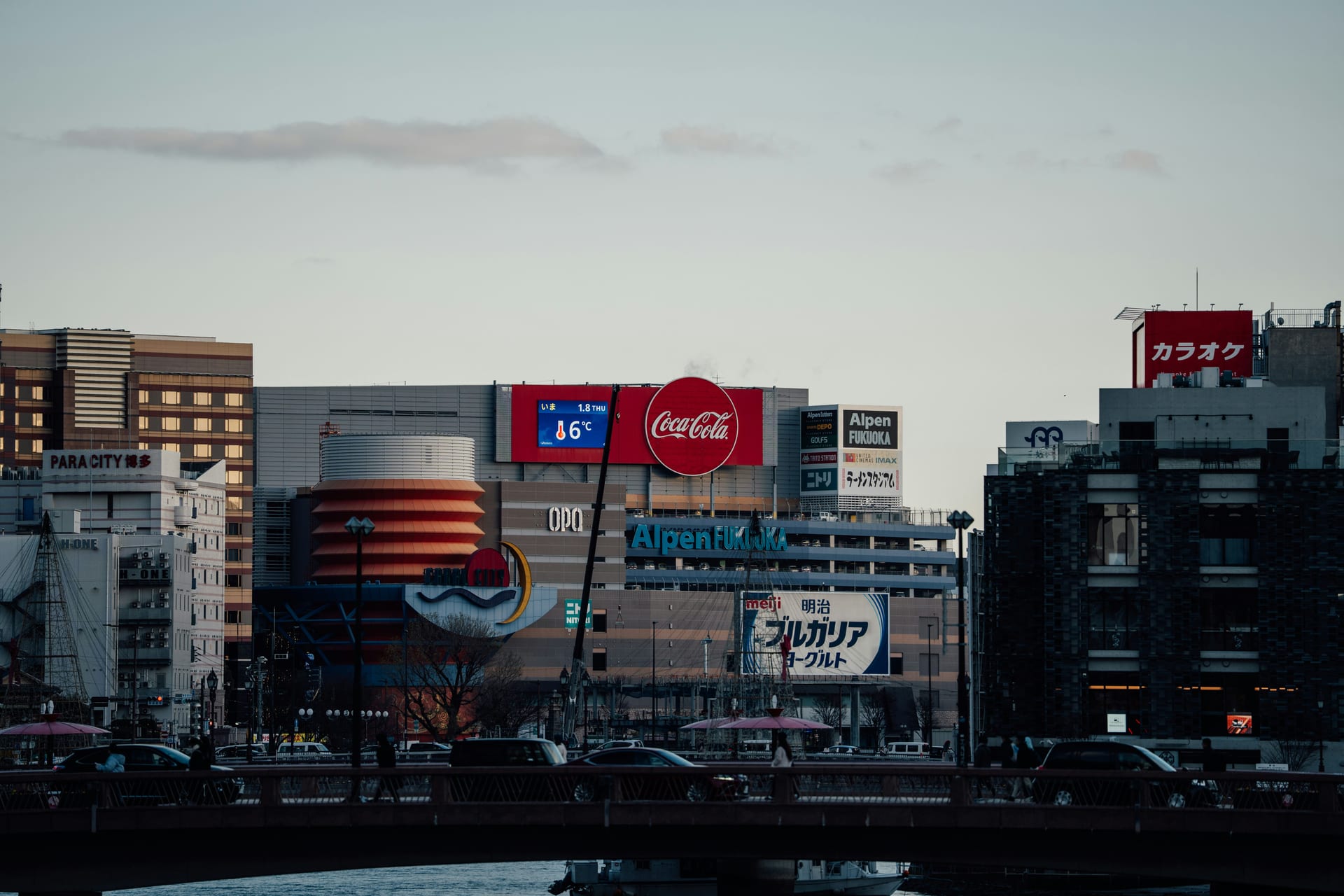
Fukuoka also offers a diverse mix of attractions. Visitors can explore historic sites such as Kushida Shrine and Fukuoka Castle Ruins, relax beside the lake at Ohori Park, enjoy panoramic city views from Fukuoka Tower, or shop and dine in the lively Canal City Hakata district.
The city serves as an excellent gateway to Kyushu while maintaining its own distinct identity. With friendly locals, excellent food, green spaces, waterfront scenery, and a more laid-back pace of life, Fukuoka appeals to travelers seeking a modern Japanese city that feels both welcoming and easy to navigate.
Quick Answer
Fukuoka Airport is one of the most central airports in Japan — the subway reaches Hakata Station, the city's main hub, in about 5 minutes, making Fukuoka one of the fastest airport-to-downtown trips in the country.
Fukuoka is one of Japan's easiest cities to reach because Fukuoka Airport (FUK) sits extremely close to the city center, connected to Hakata Station by subway in about 5 minutes — among the shortest airport-to-downtown connections of any major Japanese city.
Fukuoka Airport (FUK)
Kitakyushu Airport (KKJ)
Hakata Station is Fukuoka's main rail hub and the arrival point for the Shinkansen. From here, you can easily reach:
Recommended
For most international visitors, the easiest route is to fly into Fukuoka Airport and take the subway to Hakata or Tenjin. If you are already traveling through Japan by rail, the Shinkansen to Hakata Station is fast and convenient, especially from Hiroshima or Osaka.
Quick Answer
Spring (March–April) and autumn (October–November) are Fukuoka's most comfortable seasons for sightseeing. The mild coastal climate also makes winter a reasonable time to visit, with far fewer crowds than Tokyo or Kyoto.
The best time to visit Fukuoka is spring (March–April) or autumn (October–November), when the city's mild climate is at its most comfortable for sightseeing. Fukuoka is one of Japan's most pleasant year-round destinations thanks to its mild climate, coastal location, and relatively warm winters.
Spring is one of the most popular seasons in Fukuoka. Cherry blossoms typically bloom from late March to early April, transforming parks and castle ruins throughout the city.
Popular cherry blossom locations include:
Temperatures generally range from 50°F–75°F (10°C–24°C), making spring perfect for walking around the city and exploring outdoor attractions.
Spring also offers some of the year's most comfortable weather for day trips to Dazaifu, Itoshima, and Yanagawa.
Summer brings warm temperatures, lively festivals, and bustling nightlife. June marks the rainy season, while July and August are typically hot and humid.
Temperatures often range from 75°F–92°F (24°C–33°C).
Summer highlights include:
Although summer is exciting, visitors should be prepared for heat and humidity.
Many travelers consider autumn the best time to visit Fukuoka. Temperatures become comfortable, humidity drops, and skies are often clear.
Popular autumn locations include:
Temperatures generally range from 55°F–80°F (13°C–27°C).
Autumn combines pleasant weather with fewer crowds than the spring cherry blossom season.
Unlike northern Japan, Fukuoka experiences relatively mild winters. Snow is uncommon, and temperatures usually remain comfortable for sightseeing.
Temperatures typically range from 40°F–60°F (4°C–16°C).
Winter highlights include:
Winter is also one of the best times to enjoy Fukuoka's famous food scene without long lines.
Golden Week is one of Japan's busiest holiday periods. Attractions, trains, and hotels become significantly more crowded, and accommodation prices often increase.
Fukuoka receives frequent rainfall during Japan's rainy season. While sightseeing remains possible, outdoor activities can be affected.
This major domestic travel period brings increased tourism, crowded transportation, and higher hotel prices.
The Hakata Gion Yamakasa Festival in July is one of Japan's most famous festivals. While it is an incredible cultural experience, accommodation prices may rise and popular areas become very crowded.
For the best combination of weather, scenery, and sightseeing opportunities, visit Fukuoka during:
For most first-time visitors, October and November offer the best overall experience. The weather is comfortable, humidity is low, attractions are less crowded than spring, and conditions are ideal for exploring the city on foot. Spring is a close second, especially for travelers hoping to see cherry blossoms around Fukuoka Castle Ruins and Ohori Park.
Quick Answer
Hakata is the best base for most first-time visitors, with direct Shinkansen and airport access. Tenjin suits shopping and nightlife, Nakasu suits food lovers (yatai stalls), and Ohori Park area suits a quieter stay.
The best areas to stay in Fukuoka are Hakata, Tenjin, Nakasu, and the Ohori Park area, each suiting a different travel style and budget. Fukuoka is one of Japan's most compact and convenient major cities.
Best for: First-timers & airport/Shinkansen access
Best for: Shopping & nightlife
Best for: Food & yatai stalls
Best for: A relaxed stay
Easy day trips or next stops from Fukuoka
Day-by-day Japan routes that include Fukuoka
Best for: Foodie
A 10-day culinary route through Tokyo, Osaka, Fukuoka & Kyoto
Tokyo · Osaka · Fukuoka · Kyoto
From$2,600/person
View Fukuoka route →
Best for: Culture
Tokyo, Kyoto, Osaka, and Fukuoka timed around peak matsuri season
Tokyo · Kyoto · Osaka · Fukuoka
From$2,700/person
View Fukuoka route →
Best for: Repeat Visitor
Fukuoka ramen, Nagasaki history, an active volcano in Kagoshima, and Beppu's hot springs
From$2,600/person
View Fukuoka route →Free Itinerary Builder
Choose Fukuoka attractions, organize them by day, and see opening hours, admission fees and your trip pace in one place.
Guides and tools for the parts of a Fukuoka trip that take the most planning
Browse curated itineraries that include Fukuoka, or build your own with our free planning tools.
Next: Explore all attractions in Fukuoka or browse nearby destinations.
Back to All Destinations →