Daigo-ji Temple
ExploreJapanDaily Editorial Team · Last updated: September 28, 2026
Daigo-ji is a World Heritage temple in south-east Kyoto whose five-story pagoda, finished in 951, is the oldest wooden building in Kyoto Prefecture. A ticket for its three areas, the Sanbo-in, the main precinct and the Reihokan museum, costs ¥1,500 (¥1,800 from March 20 to the third Sunday of April), and it is open 9:00 a.m. to 5:00 p.m. (4:30 p.m. in winter). The trail up to Kami-Daigo on the mountain is closed for now.

- Area
- Fushimi / Daigo
- Best For
- Cherry Blossoms, Autumn Foliage, History, Gardens
- Nearby
- Nanzen-ji Temple · Uji
Visiting Daigo-ji Temple
Daigo-ji spreads from the foot of Mount Daigo, on the east side of the Yamashina basin, to its summit. The monk Shobo founded it on the mountaintop in 874, and three emperors, Daigo, Suzaku and Murakami, built it out below. The lower precinct, Shimo-Daigo, is what most visitors see. Kami-Daigo, on the summit, is about an hour's steep climb, and the temple has closed the trail for the time being because part of it is at risk of landslides.
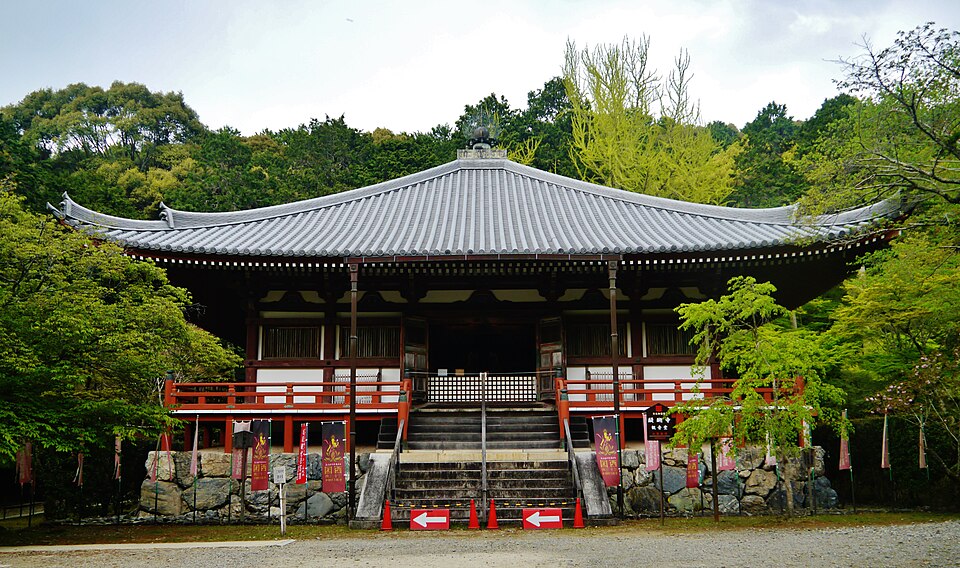
The five-story pagoda, begun in 936 and completed in 951 to pray for the late Emperor Daigo, is about 38 meters high and the oldest wooden building in Kyoto Prefecture. The Kondo, the main hall, was moved here from Yuasa in Kii Province on Toyotomi Hideyoshi's orders and finished in 1600; its Yakushi Buddha is the temple's principal image.
Hideyoshi's mark is everywhere. For the Daigo flower-viewing of spring 1598 he had 700 cherry trees planted and rebuilt the Sanbo-in, whose garden he designed himself; it is a Special Historic Site and Special Place of Scenic Beauty, and the Omote-shoin that looks over it is a National Treasure. The Reihokan museum keeps the temple's treasures and, in its garden, a weeping cherry about 180 years old.
At the far end of the main precinct, the Kannon-do and the vermilion Bentendo, built in 1930 around a pond, make the temple's best-known autumn view. Allow about half an hour for each of the three areas; the cherry-blossom weeks are the busiest time of year.
A visit to Daigo-ji, area by area
Short answer
Buy one ticket for all three areas at the Sanbo-in reception and allow about half an hour for each.
About 30 minutes; shoes off
Sanbo-in
Hideyoshi's garden, seen from the National Treasure Omote-shoin; no photos inside.
About 30 minutes
Reihokan
Treasures in rotating displays; the great weeping cherry in the garden.
Main precinct
Kondo and the pagoda
Through the Niomon to the main hall of 1600 and the pagoda of 951.
End of the main precinct
Kannon-do and Bentendo
The pond and its vermilion hall, the best autumn view; temple stamps at the Kannon-do.
When to go
Short answer
Gates open at 9:00 a.m. all year; the cherry-blossom weeks are the busiest and dearest.
- March 1 to the first Sunday of December
- 9:00 a.m. to 5:00 p.m.; last tickets 4:30 p.m.
- Rest of December to February
- 9:00 a.m. to 4:30 p.m.; last tickets 4:00 p.m.
- March 20 to the third Sunday of April
- Spring prices and the busiest weeks; hours can change.
- November
- Maples along the approach and around the Bentendo pond.
Fitting Daigo-ji into a day
Short answer
Daigo-ji takes a morning; the Tozai Line links it to Nanzen-ji, and Rokujizo links it to Uji and Fushimi Inari.
Better on another day
Arashiyama
On the far side of the city; give it its own day.
Daigo-ji's three areas
How to Get to Daigo-ji Temple
Daigo-ji is in the Daigo district of Fushimi Ward, south-east of central Kyoto. The Tozai subway line does not reach Kyoto Station, so most trips involve one change.
- •Tozai Line to Daigo (trains bound for Rokujizo), then 10 minutes on foot from Exit 2.
- •Buy tickets for every area at the Sanbo-in reception.
Map
Best Time to Visit Daigo-ji Temple
Best time to visit Daigo-ji Temple: late March to early April for the cherry blossom, November for the maples, and an early weekday morning at any time. Weekday mornings are generally quieter than weekends and public holidays.
- •Gates open at 9:00 a.m.; ticket sales stop 30 minutes before closing (5:00 p.m., or 4:30 p.m. from December to February).
- •Spring prices and the biggest crowds run from March 20 to the third Sunday of April.
- •November brings the maples along the approach and around the Bentendo pond.
Cherry blossom and spring prices (March 20 to the third Sunday of April). The Hideyoshi parade, usually on the second Sunday of April, was cancelled in 2026.
Maples along the approach from the Niomon and around the Bentendo pond.
Entry Fee & Hours
| Category | Price (JPY) | Approx. (USD) |
|---|---|---|
| Adult | ¥1,500 | ~$10 |
| Junior and senior high school student | ¥1,000 | ~$6.7 |
| Adult, spring | ¥1,800 | ~$12 |
| Junior and senior high, spring | ¥1,300 | ~$8.7 |
| Category | Price (JPY) | Approx. (USD) |
|---|---|---|
| Adult | ¥1,000 | ~$6.7 |
| Junior and senior high school student | ¥700 | ~$4.7 |
| Category | Price (JPY) | Approx. (USD) |
|---|---|---|
| Adult | ¥600 | ~$4 |
| Junior and senior high school student | ¥400 | ~$2.7 |
| Adult, spring | ¥800 | ~$5.3 |
| Junior and senior high, spring | ¥600 | ~$4 |
Tickets are sold at the Sanbo-in reception. Elementary school children and younger enter free. Spring prices apply from March 20 to the third Sunday of April; the temple lists no two-area ticket in spring.
- •Visitors with a disability certificate and one companion enter all three areas free. Special viewings of the Sanbo-in's inner rooms cost ¥500 more.
- •Outside food is not allowed; drinks in sealed bottles are fine outdoors. There are places to eat in the main precinct and the Reihokan area.
Nearby Attractions
Places to pair with Daigo-ji

Nanzen-ji Temple

Uji

Fushimi Inari Taisha
- •Nanzen-ji Temple (On the same Tozai Line, at Keage): Nanzen-ji is the head temple of the Nanzen-ji school of Rinzai Zen, with a 22-meter Sanmon gate, a National Treasure abbot's hall and its tiger garden, and the red-brick aqueduct of the Lake Biwa Canal running through its grounds.
- •Uji (Tozai Line to Rokujizo, then south by JR or Keihan): Uji is a tea town on the Uji River south of Kyoto, with two World Heritage sites: Byodo-in, whose Phoenix Hall is on the 10-yen coin, and Ujigami Shrine, whose main hall is the oldest surviving shrine building in Japan.
- •Fushimi Inari Taisha (Tozai Line to Rokujizo, then the JR Nara Line): Fushimi Inari Taisha is the head shrine of Japan's Inari shrines, with about 10,000 vermilion torii along the paths up Mount Inari in southern Kyoto. Entry is free, the grounds are always open, and you choose how far to climb.
Two ways to fit Daigo-ji in
Both use Daigo Station on the Tozai Line.
Daigo-ji morning
About two hours on site.
9:00 a.m.
The Sanbo-in garden as the gates open.
Mid-morning
The Reihokan, then the main precinct to the Bentendo pond.
Late morning
Back to Daigo Station, or on to Nanzen-ji by the Tozai Line.
South-east day
A full day, with one change at Rokujizo.
Morning
Daigo-ji from 9:00 a.m.
Midday
Tozai Line to Rokujizo, then south to Uji.
Afternoon
Byodo-in; the last Phoenix Hall tour is at 4:10 p.m.
Frequently Asked Questions
References
View references
Planning Your Kyoto Trip?
See the full Kyoto destination guide or browse Japan itineraries that include this city.
See all Temples & Shrines across Japan →Explore all attractions in Kyoto or browse nearby destinations.
Back to Kyoto Guide →