Sumida Park
ExploreJapanDaily Editorial Team · Last updated: August 25, 2026 · Facts verified: August 25, 2026

- Area
- Asakusa / Sumida
- Best For
- Photography, Nature, Families
Visiting Sumida Park
Sumida Park runs along both banks of the Sumida River near Asakusa, and it's worth understanding its layout before visiting: the western side, in Taito-ku, sits directly across from Senso-ji Temple, while the eastern side, in Sumida-ku, faces Tokyo Skytree. The two sides are administered separately as Taito City's and Sumida City's own municipal parks, but they're treated, and visited, as one continuous riverside park, connected by bridges including the pedestrian Sumida River Walk.
The park's cherry trees date back to the Edo period, when the shogun Tokugawa Yoshimune had them planted along the riverbank in the early 18th century to give ordinary residents a public place to enjoy hanami. The park itself was formally established in 1931, and it remains one of Tokyo's best-known and most historic cherry blossom locations, listed among Japan's "100 Famous Cherry Blossom Spots."
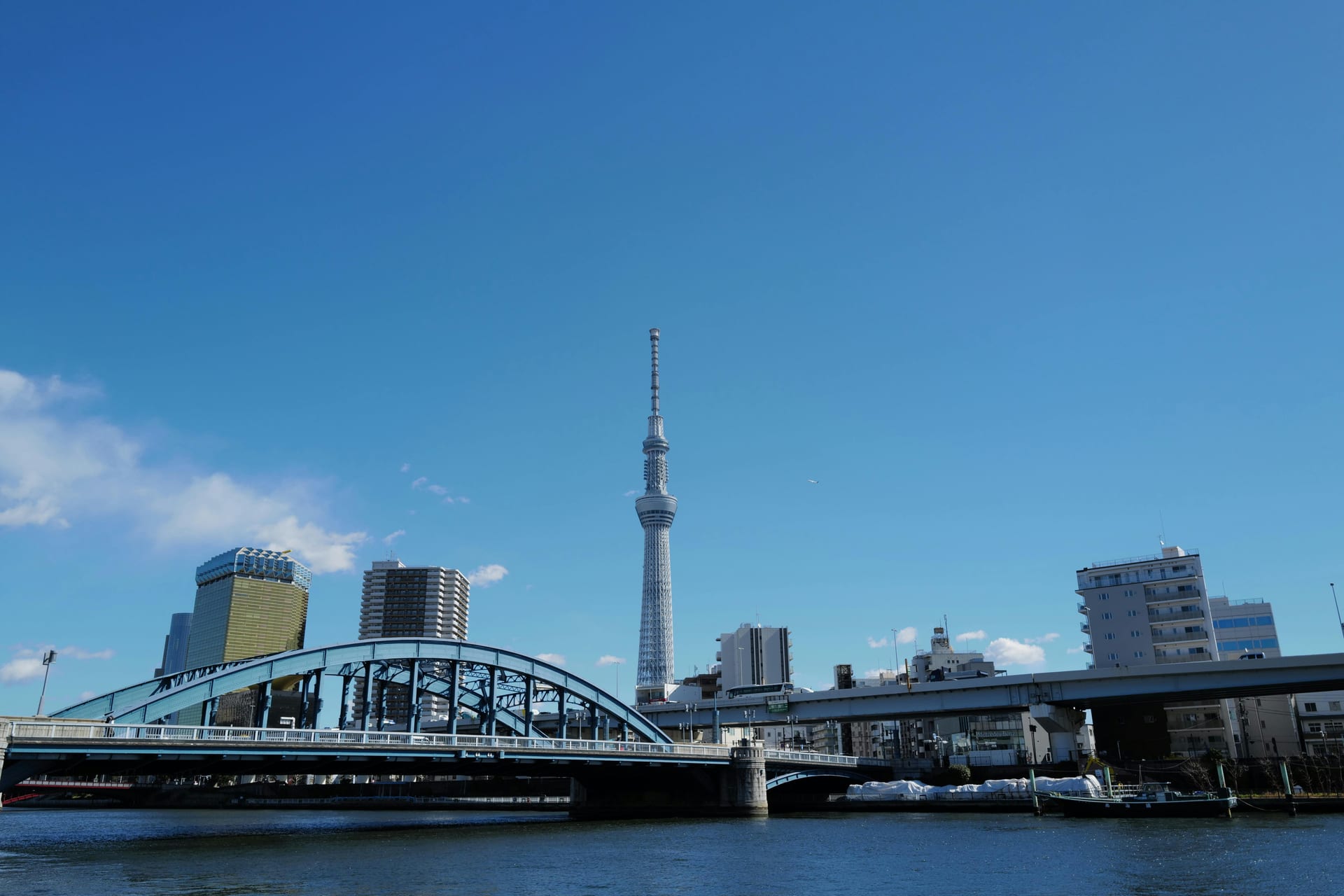
Admission is free and the park has no fixed closing time, since it's ordinary open public parkland rather than a ticketed attraction. The Taito-ku side offers a roughly 1-kilometer, cherry-tree-lined riverside promenade between the Azumabashi and Sakurabashi bridges, the heart of the park's spring hanami crowds. The Sumida-ku side adds a Japanese garden, a playground, and a water bus pier at Azumabashi, with Tokyo Skytree and the Asahi Beer Tower's golden "flame" sculpture rising directly across the river, one of the most reliable Skytree photo angles in the city.
While cherry blossom season, typically late March through early April, is the park's best-known moment, it's a useful year-round stop: plum blossoms bloom in winter, the riverside stays quiet and walkable through summer and autumn, and the Skytree view is worth visiting for after dark regardless of season. It pairs naturally with a Senso-ji or Tokyo Skytree visit, sitting within easy walking distance of both.
Things to Do at Sumida Park
How to Get to Sumida Park
Sumida Park spans both banks of the Sumida River, so the closest station depends on which side you're heading to.
- •Nearest station: Asakusa Station, Tokyo Metro Ginza Line / Toei Asakusa Line / Tobu Skytree Line (Taito-ku side, about 3-5 minute walk); Honjo-Azumabashi Station, Toei Asakusa Line (Sumida-ku side, about 4 minute walk)
- •IC cards (Suica, Pasmo, or ICOCA) are accepted on trains, subways, and buses throughout Japan. Tap in and out at every gate.
- •Avoid traveling during rush hour on weekdays: 7am to 9am and 5pm to 8pm. Trains are significantly more crowded.
- •Google Maps provides accurate real-time transit directions in Tokyo. Download offline maps before you arrive.
For IC cards, tickets, and full transit basics for Tokyo, see the complete transportation guide.
See the Getting Around Tokyo guide →Map
Best Time to Visit Sumida Park
Best time to visit Sumida Park: Late March-early April for cherry blossoms; evenings year-round for Tokyo Skytree photography. Weekday mornings are generally quieter than weekends and public holidays.
- •Best time to visit: Late March-early April for cherry blossoms; evenings year-round for Tokyo Skytree photography
- •Arriving on a weekday morning avoids the largest crowds. Weekends and public holidays are significantly busier.
- •Spring (late March to early May) and autumn (October to November) are the most popular seasons for visiting Tokyo.
- •Golden Week (late April to early May) is the busiest week of the year in Japan. Book accommodation and tickets well in advance.
Entry Fee & Hours
- •Sumida Park spans two separately administered municipal parks, a Taito-ku side near Senso-ji and a Sumida-ku side near Tokyo Skytree, connected by the Sumida River Walk pedestrian bridge.
- •The park grounds have no fixed closing time; only the Sumida-ku Park Center building keeps its own separate hours.
- •Cherry tree counts and exact bloom dates vary by source and by year; treat any specific figure as an estimate, not an official count.
- •Some sections of the Sumida-ku riverside have periodically been affected by redevelopment work; confirm current access before planning a visit around one specific viewpoint.
- •Riverside paths are paved and mostly flat; this reflects general observation rather than an official accessibility statement.
Nearby Attractions
Combine with Sumida Park on the same day

Senso-ji Temple
Tokyo Skytree

Hamarikyu Gardens

Kappabashi Kitchen Street
- •Senso-ji Temple (Directly adjacent to the Taito-ku side): Senso-ji is Tokyo's oldest and most visited temple, dating to 645 AD, with the famous Kaminarimon gate and Nakamise shopping street leading to the main hall. It is the spiritual heart of Asakusa.
- •Tokyo Skytree (Directly adjacent to the Sumida-ku side): Tokyo Skytree is the tallest structure in Japan at 634 meters, offering panoramic views of the city from its observation decks. It is a must-visit landmark in eastern Tokyo.
- •Hamarikyu Gardens (Reachable by water bus from the park's Azumabashi Pier, about 35-40 minutes): Hamarikyu Gardens is a nationally designated Special Historic Site in Chuo, Tokyo, built around Shioiri-no-ike, the only seawater tidal pond among Tokyo's Edo-period gardens. It has an island tea house serving matcha, two preserved Edo-period duck hunting grounds, and a 300-year pine and peony garden, with adult admission at just ¥300.
- •Kappabashi Kitchen Street (Around 15-20 minutes walk): Kappabashi Kitchen Street is a roughly 800-meter shopping street of about 160-170 independent kitchenware and restaurant-supply shops in Taito-ku, between Asakusa and Ueno. It's free to walk, with knives, ceramics, cookware, and food-sample replicas as the main draws, but there's no single opening time or closure day since every shop sets its own hours.
Suggested Itinerary
Pair Sumida Park with these nearby stops for a full day in Asakusa / Sumida.
Frequently Asked Questions
Planning Your Tokyo Trip?
See the full Tokyo destination guide or browse Japan itineraries that include this city.
See all Nature & Scenic Spots across Japan →Explore all attractions in Tokyo or browse nearby destinations.
Back to Tokyo Guide →