Tokyo Metropolitan Government Building Observatory
ExploreJapanDaily Editorial Team · Last updated: August 19, 2026

- Area
- Shinjuku
- Best For
- Views, Free Admission, Photography
Visiting Tokyo Metropolitan Government Building Observatory
The Tokyo Metropolitan Government Building's North and South Observatories are two of the very few genuinely free observation decks in central Tokyo, set 202 meters above Shinjuku on the 45th floor of the government complex's twin main towers. There is no admission fee and no ticket to book, which makes this one of the easiest ways to see Tokyo's skyline from above without adding to a trip's budget.
The building itself was designed by architect Kenzo Tange and completed in 1990, and its twin-tower silhouette has become one of Shinjuku's defining landmarks. Because the complex is a working seat of Tokyo's metropolitan government, first-time visitors are sometimes surprised that a functioning government building doubles as a public viewpoint, but the observatories operate independently of the offices below and welcome visitors throughout the year.
The two towers each hold their own observatory with their own schedule, which matters for planning. The South Observatory stays open later, generally until 10:00 PM, and is the more popular choice for sunset and nighttime visits. The North Observatory closes earlier in the afternoon but extends its own hours on the days the South Observatory is closed, so one of the two is almost always available.
From either deck, the view stretches across the Shinjuku skyline toward Tokyo Skytree, Tokyo Bay, and the wider Kanto Plain. On clear days, particularly dry autumn and winter mornings when the air is less hazy, Mount Fuji becomes visible on the western horizon. It is not a guaranteed sighting on every visit, and that honest uncertainty is worth knowing before making a special trip purely for the mountain.
After dark, the building's facade becomes part of the experience even for visitors who never go inside. Tokyo Night and Light, a free nightly projection-mapping display across the twin towers, was recognized by Guinness World Records in February 2024 as the world's largest permanent architectural projection-mapped display, and it runs in short shows roughly every 30 minutes from sunset into the evening.
For a traveler weighing this observatory against Tokyo's paid viewpoints like Shibuya Sky or Tokyo Skytree, the tradeoff is straightforward: this building gives up the open-air rooftop feel and guaranteed booking slots those attractions offer, but it costs nothing, tends to be less crowded, and sits directly above one of Tokyo's most walkable nightlife districts.
Things to Do at Tokyo Metropolitan Government Building Observatory
How to Get to Tokyo Metropolitan Government Building Observatory
The Tokyo Metropolitan Government Building sits on the west side of Shinjuku, one of Tokyo's best-connected districts, making it an easy stop to combine with a Shinjuku day whether arriving by subway or on foot from JR Shinjuku Station.
Both observatory entrances are reached through the same ground-floor security check inside Main Building No. 1, so the route into the building is the same regardless of which observatory you plan to visit.
- •Nearest station: Tochomae Station, Toei Oedo Line (direct underground access, Exit A4), or a 10-minute walk from JR Shinjuku Station's West Exit
- •IC cards (Suica, Pasmo, or ICOCA) are accepted on trains, subways, and buses throughout Japan. Tap in and out at every gate.
- •Avoid traveling during rush hour on weekdays: 7am to 9am and 5pm to 8pm. Trains are significantly more crowded.
- •Google Maps provides accurate real-time transit directions in Tokyo. Download offline maps before you arrive.
For IC cards, tickets, and full transit basics for Tokyo, see the complete transportation guide.
See the Getting Around Tokyo guide →Map
Best Time to Visit Tokyo Metropolitan Government Building Observatory
Best time to visit Tokyo Metropolitan Government Building Observatory: Sunset through early evening for the South Observatory's later hours and Tokyo Night and Light, or clear autumn and winter mornings for the best odds of seeing Mount Fuji. Weekday mornings are generally quieter than weekends and public holidays.
- •Best time to visit: Sunset through early evening for the South Observatory's later hours and Tokyo Night and Light, or clear autumn and winter mornings for the best odds of seeing Mount Fuji
- •Arriving on a weekday morning avoids the largest crowds. Weekends and public holidays are significantly busier.
- •Spring (late March to early May) and autumn (October to November) are the most popular seasons for visiting Tokyo.
- •Golden Week (late April to early May) is the busiest week of the year in Japan. Book accommodation and tickets well in advance.
Entry Fee & Hours
- •Admission is free for both observatories, and no reservation or ticket is required for either one.
- •A bag X-ray scan and walk-through metal detector are required before boarding the dedicated observatory elevator, similar to a light airport-style check. Traveling light speeds up entry.
- •Both observatories are accessible: automatic doors, wheelchair ramps, elevators, multi-purpose restrooms, and wheelchair loans are available, along with handrails and disabled parking at street level.
- •Either observatory can close at short notice for weather, government use, or building inspection. Check the official @tocho_tenbou account or the Tokyo Metropolitan Government's visitor page before a same-day visit.
Nearby Attractions
Combine with Tokyo Metropolitan Government Building Observatory on the same day

Shinjuku

Shinjuku Gyoen National Garden
Shibuya Sky

Tokyo Tower
- •Shinjuku (Around 5-10 minutes walk): Shinjuku is Tokyo's most dynamic district, anchored by the world's busiest train station and home to Kabukicho, Golden Gai, Omoide Yokocho, Shinjuku Gyoen garden, and some of the city's best nightlife and shopping.
- •Shinjuku Gyoen National Garden (Around 15-20 minutes walk): Shinjuku Gyoen National Garden is a 58.3-hectare national garden in Shinjuku combining French Formal, English Landscape, and Japanese Traditional garden styles plus a large greenhouse. It is a genuine year-round escape from the city, not just a cherry blossom spot.
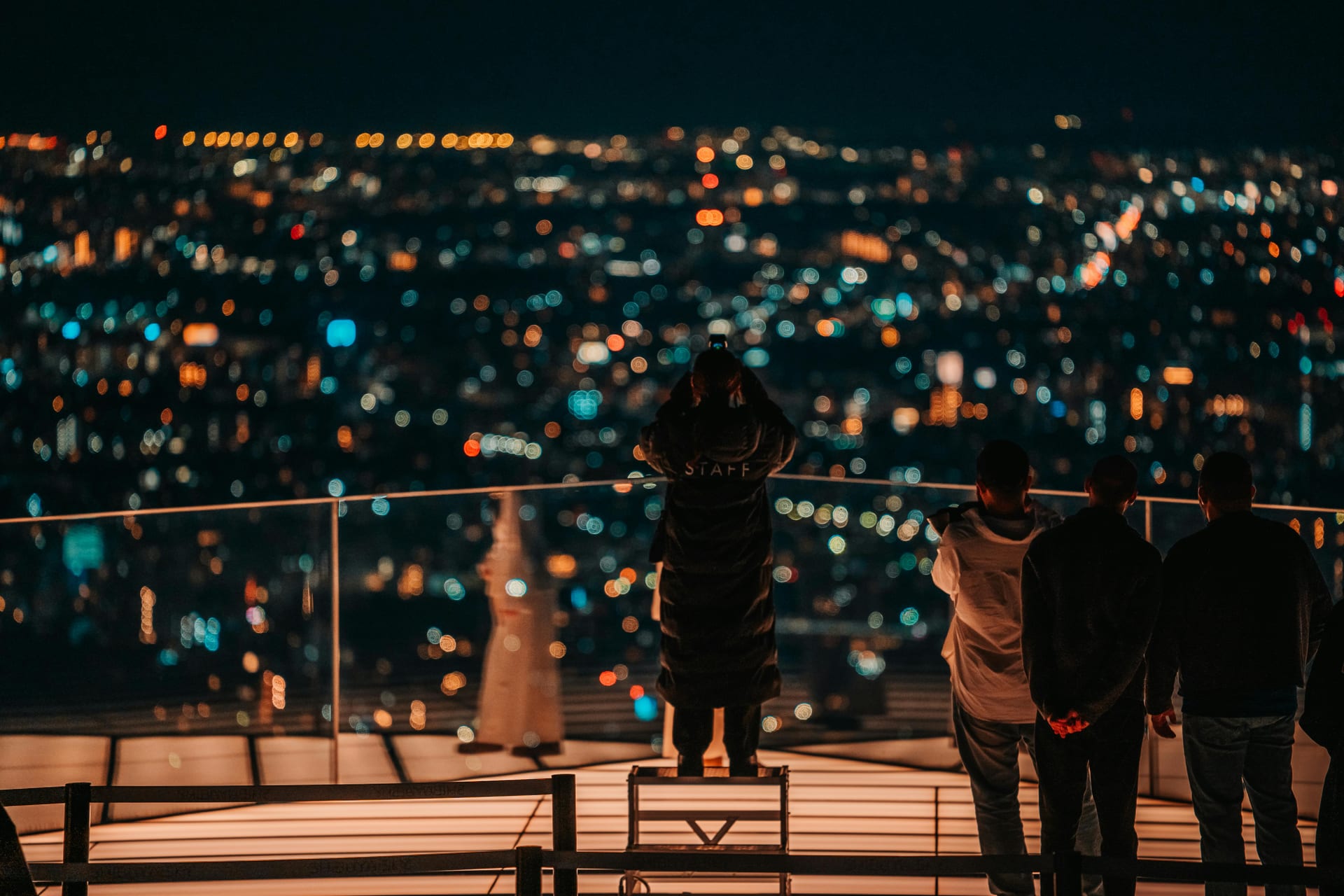
- •Shibuya Sky (Around 15-20 minutes by train): Shibuya Sky is an open-air observation rooftop on the 46th floor of Shibuya Scramble Square, offering unobstructed 360-degree views over Shibuya Crossing, Mount Fuji, and the full Tokyo skyline.
- •Tokyo Tower (Around 25-30 minutes by train): Tokyo Tower is an iconic 333-meter orange-and-white lattice tower that has symbolized Tokyo since 1958. It offers observation decks with views over the city and Tokyo Bay.
Suggested Itinerary
Pair Tokyo Metropolitan Government Building Observatory with these nearby stops for a full day in Shinjuku.
Frequently Asked Questions
Planning Your Tokyo Trip?
See the full Tokyo destination guide or browse Japan itineraries that include this city.
See all Towers & Views across Japan →Explore all attractions in Tokyo or browse nearby destinations.
Back to Tokyo Guide →