Engaku-ji Temple
ExploreJapanDaily Editorial Team · Last updated: September 22, 2026 · Facts verified: September 22, 2026

- Area
- Kita-Kamakura, Kamakura
- Best For
- Zen Buddhism, Autumn foliage, National Treasure architecture, Zazen for visitors
Visiting Engaku-ji Temple
Engaku-ji is a Rinzai Zen temple in Kita-Kamakura, about one minute on foot from Kita-Kamakura Station and founded in 1282 by regent Hojo Tokimune. It ranks second among Kamakura's Five Great Zen Temples, just behind neighboring Kencho-ji, and holds two of Kamakura's National Treasure structures: the Shariden relic hall and the Ogane great bell. Most visitors come for the wooded valley setting and, especially, the autumn foliage in late November. Plan for 1 to 1.5 hours, more if you continue on to Kencho-ji or the wider Kita-Kamakura temple walk.
Tokimune founded the temple to honor those who died on both sides of the Mongol invasions of 1274 and 1281, and to spread the Rinzai school of Zen he had studied under the Chinese monk Mugaku Sogen (Wuxue Zuyuan), whom he installed as founding abbot. Engaku-ji remains the head temple of its own Rinzai branch and an active training monastery rather than a preserved museum piece; monks still live and practice on the grounds today.
More than twenty sub-temples and halls line the valley behind the Sanmon gate, connected by stone paths that climb gradually into the hillside. The main sequence runs from the Sanmon to the Butsuden and on toward the Hojo, the former abbot's quarters, with side paths leading to a bamboo grove and smaller sub-temples. Expect stone steps and sloped, sometimes uneven ground once you're past the entrance, typical of a hillside temple built into a narrow valley.

The Shariden, said to enshrine a tooth relic of the Buddha, is Kamakura's only National Treasure building and the temple's most significant structure. On most visits it's viewed from a fenced platform rather than entered; close public access is generally limited to a handful of days a year, including the Hosenkai ceremony in early November, the New Year period, and one day in early May, with interior photography not permitted even then. The Ogane, a National Treasure bell cast in 1301, is similarly a viewing piece rather than something visitors ring; monks sound it only on special occasions, most notably the 108 strikes on New Year's Eve.
Autumn is Engaku-ji's signature season, with maples along the valley coloring from late November into early December and drawing the year's largest crowds. Spring brings cherry blossoms in late March and early April with comparatively lighter crowds. Early mornings, in any season, remain the most reliable way to see the grounds without a crowd.
Engaku-ji also runs regular zazen meditation sessions open to individual visitors rather than tour groups: an early-morning sitting most days year-round on a voluntary-donation basis, and a Saturday and 1st/3rd-Sunday afternoon sitting for a set fee plus temple admission. Both are conducted in Japanese only, so visitors who don't speak Japanese should expect to follow the physical structure of the session rather than verbal instruction.
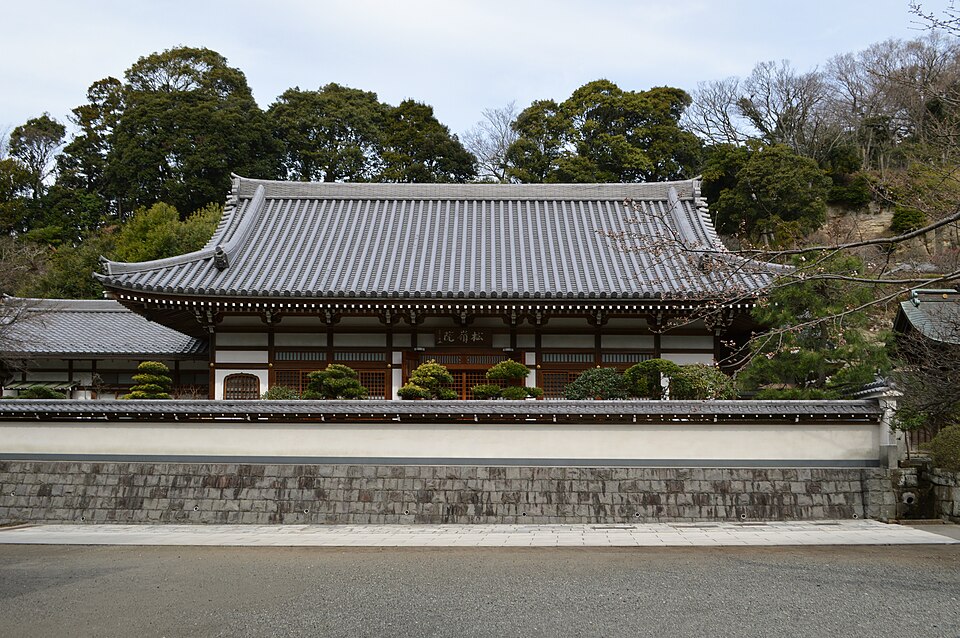
Engaku-ji and Kencho-ji are the two temples travelers most often weigh against each other, and both are close enough to combine on foot in about 15 minutes. Kencho-ji ranks first among the Five Great Zen Temples and has the larger formal garden and a hiking trail into the hills; Engaku-ji ranks second, sits directly at the station, and holds the denser cluster of National Treasure architecture. Travelers with only one Kita-Kamakura stop to spare should choose based on that trade-off rather than assume one temple supersedes the other.
Engaku-ji sits at one end of Kita-Kamakura's temple cluster; Tokei-ji and Meigetsu-in are both a short walk further along the same road toward Kamakura Station, though neither has a dedicated guide on this site yet. A single Kita-Kamakura morning built around Engaku-ji and Kencho-ji, with a stop at whichever smaller temple interests you, is the common way visitors structure this part of the city.
Things to Do at Engaku-ji Temple
How to Get to Engaku-ji Temple
Engaku-ji sits immediately outside Kita-Kamakura Station, making it one of the easiest Kamakura temples to reach by train.
- •Nearest station: Kita-Kamakura Station (JR Yokosuka Line)
- •IC cards (Suica, Pasmo, or ICOCA) are accepted on trains, subways, and buses throughout Japan. Tap in and out at every gate.
- •Avoid traveling during rush hour on weekdays: 7am to 9am and 5pm to 8pm. Trains are significantly more crowded.
- •Google Maps provides accurate real-time transit directions in Kamakura. Download offline maps before you arrive.
Map
Best Time to Visit Engaku-ji Temple
Best time to visit Engaku-ji Temple: Early morning for a quieter visit; late November to early December for autumn foliage. Weekday mornings are generally quieter than weekends and public holidays.
- •Best time to visit: Early morning for a quieter visit; late November to early December for autumn foliage
- •Arriving on a weekday morning avoids the largest crowds. Weekends and public holidays are significantly busier.
- •Spring (late March to early May) and autumn (October to November) are the most popular seasons for visiting Kamakura.
- •Golden Week (late April to early May) is the busiest week of the year in Japan. Book accommodation and tickets well in advance.
Cherry blossoms bloom throughout the temple grounds, with lighter crowds than the autumn foliage peak.
Maple trees across the valley turn red, orange, and gold, making this Engaku-ji's most visited and most photographed season.
Entry Fee & Hours
| Category | Price (JPY) | Approx. (USD) |
|---|---|---|
| Adult (high school and above) | ¥500 | ~$3.50 |
| Child (elementary/junior high) | ¥200 | ~$1.50 |
- •The main grounds are reachable via mostly flat paths from the entrance, but some areas involve stone steps, gravel paths, and slight inclines typical of a hillside temple. Wheelchair users and visitors with limited mobility should expect some uneven terrain, particularly around the Shariden and hillside sections.
- •Visitors with a disability certificate and one accompanying caregiver are admitted free, per the temple's official visitor information.
Nearby Attractions
Combine with Engaku-ji Temple on the same day

Kenchoji Temple
Tokei-ji Temple
Distance: Approx. 5 minutes walkMeigetsu-in Temple
Distance: Approx. 10 minutes walkJochi-ji Temple
Distance: Approx. 10 minutes walk
Hokokuji Temple
- •Kenchoji Temple (Approx. 15 minutes walk): Japan's oldest Zen training monastery and the top-ranked of Kamakura's Five Great Zen Temples, founded in 1253, with a dragon-ceiling hall, a Muso Soseki-attributed garden, and a climb to the Hansobo viewpoint.
- •Tokei-ji Temple (Approx. 5 minutes walk): A historic temple famous for its beautiful gardens, seasonal flowers, and unique history as a refuge for women seeking divorce during the Edo period.
- •Meigetsu-in Temple (Approx. 10 minutes walk): Often called the "Hydrangea Temple," Meigetsu-in is famous for its stunning hydrangea displays in June and its picturesque circular window.
- •Jochi-ji Temple (Approx. 10 minutes walk): One of Kamakura's Five Great Zen Temples, Jochi-ji offers a tranquil atmosphere, forested surroundings, and charming traditional architecture.
- •Hokokuji Temple (Approx. 15 minutes by taxi): A Zen temple in eastern Kamakura best known for a grove of roughly 2,000 bamboo stalks and a tea house serving matcha inside it.
Suggested Itinerary
Pair Engaku-ji Temple with these nearby stops for a full day in Kita-Kamakura, Kamakura.
Frequently Asked Questions
Planning Your Kamakura Trip?
See the full Kamakura destination guide or browse Japan itineraries that include this city.
See all Temples & Shrines across Japan →Explore all attractions in Kamakura or browse nearby destinations.
Back to Kamakura Guide →