Kenchoji Temple
ExploreJapanDaily Editorial Team · Last updated: September 22, 2026 · Facts verified: September 22, 2026

- Area
- Kita-Kamakura, Kamakura
- Best For
- Zen Buddhism, Historic architecture, Panoramic viewpoint, Photography
Visiting Kenchoji Temple
Kenchoji Temple is the oldest Zen training monastery in Japan and the highest-ranked of the Kamakura Gozan, the Five Great Zen Temples of Kamakura. Founded in 1253, it sits in a wooded Kita-Kamakura valley about a 15 to 20 minute walk from Kita-Kamakura Station. Most visitors spend 1 to 1.5 hours on the main grounds, the Sanmon gate, the Butsuden, the Hatto, and the Hojo garden. Travelers who also climb to Hansobo Shrine on the hill behind the temple should budget 45 to 60 minutes more for the stairs and the view.
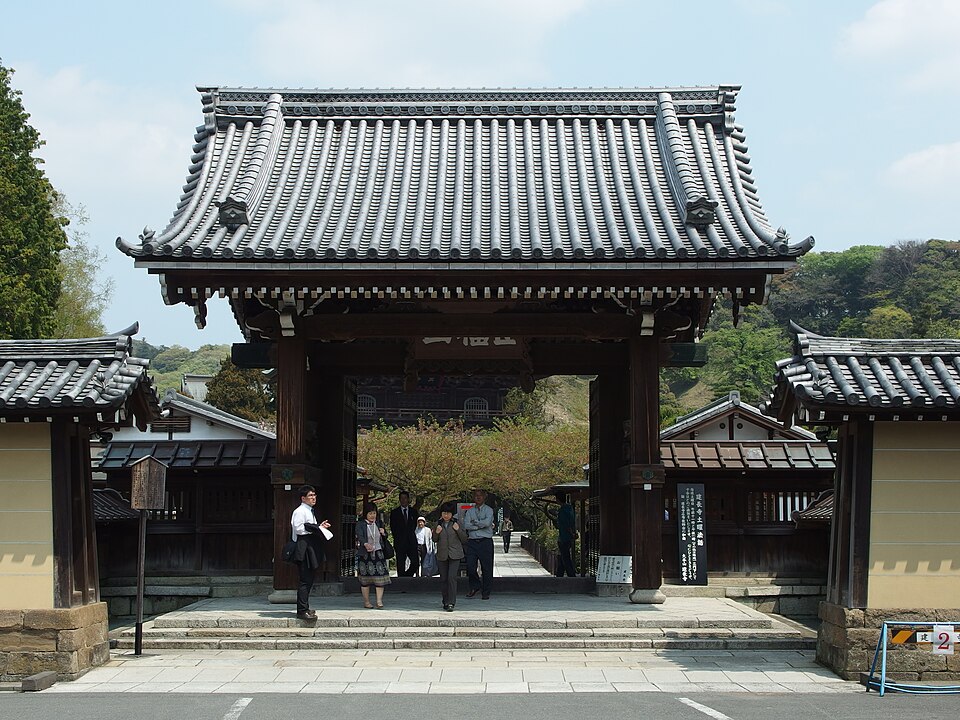
Hojo Tokiyori, the fifth regent of the Kamakura shogunate, founded Kenchoji in 1253 and invited the Chinese Zen master Rankei Doryu, known in Chinese as Lanxi Daolong, to serve as its first abbot. It was built as Japan's first purpose-built Zen training monastery, designed from the ground up around Zen monastic practice rather than adapted from an earlier temple of a different school. That founding role, more than age alone, is why Kenchoji ranks first among the Kamakura Gozan, ahead of Engaku-ji, Jufuku-ji, Jochi-ji, and Jomyo-ji, and it remains head temple of the Kenchoji branch of Rinzai Zen Buddhism today.
The temple stands on the former site of Jigokudani, or Hell Valley, a Kamakura-period execution ground. When Kenchoji was built here, Jizo Bosatsu, the bodhisattva associated with guiding souls, was installed as the Butsuden's principal image, an unusual choice for a Zen temple, where Shakyamuni Buddha is the more typical central figure. The statue stands roughly 5 meters tall including its pedestal. The Butsuden building itself was relocated to Kenchoji from Tokyo in 1647.

Beyond the Butsuden, the Hatto, or Dharma Hall, holds Kenchoji's best-known single feature: a large dragon painted across the ceiling, visible from different angles as visitors move through the hall. Further into the grounds, a Zen garden behind the Hojo, the head priest's residence, is attributed to Muso Soseki, the same monk-designer associated with gardens at Kyoto's Tenryuji and Saihoji. The garden's pond is said to be shaped like the character for heart, 心, and the design borrows the surrounding hillside as part of its composition.
Behind the Hojo, a stairway climbs to Hansobo Shrine, dedicated to Kenchoji's guardian deity and lined with roughly a dozen carved tengu statues said to protect the temple from fire. The climb runs to about 240 steps, and a further set of roughly 150 steps beyond the shrine reaches an additional viewpoint with benches. From the top, Kamakura and Sagami Bay open out below, with Mount Fuji visible on clear days. This is genuinely more physical effort than most of Kamakura's other Zen temples ask of a visitor, and it is worth deciding on purpose rather than discovering it halfway up: comfortable shoes matter, and travelers with limited mobility or short on time can skip the climb entirely and still see everything that makes Kenchoji distinct architecturally.
A trailhead for the Tenen Hiking Trail toward Zuisenji Temple starts near the back of the grounds past Hansobo. That trail is a separate hike beyond the temple's own precinct, with its own route and time commitment, and it is covered in its own dedicated guide, not here.
Kenchoji is often paired with Engaku-ji, the other major Kita-Kamakura Zen temple, and the two are different enough to justify visiting both on the same day rather than choosing one over the other. Kenchoji is larger, ranks first among the Gozan, and centers on the dragon-ceiling Hatto and the Hansobo climb; it is a 15 to 20 minute walk from Kita-Kamakura Station. Engaku-ji is smaller, a one-minute walk from the same station, and centers on its National Treasure Shariden and one of Kamakura's most admired autumn-foliage displays. Travelers short on time who want one scenic Zen temple with the easiest possible walk from the station should choose Engaku-ji; those who want the oldest, highest-ranked temple with more ground to explore, including the optional hillside climb, should choose Kenchoji.
Kenchoji remains an active training monastery. It holds public zazen, or seated meditation, sessions in the Hojo on Friday and Saturday evenings, roughly 4:30 to 5:30 PM, for a fee separate from general admission; schedules and pricing are worth confirming directly with the temple before a visit, since program details change. For most travelers building a Kita-Kamakura temple day, Kenchoji is worth visiting for its scale, its dragon ceiling, and its garden alone. The Hansobo climb is a genuine bonus for anyone willing to add the stairs, not a requirement for the temple to feel worthwhile.
Things to Do at Kenchoji Temple
How to Get to Kenchoji Temple
Kenchoji Temple is located in northern Kamakura, close to Kita-Kamakura Station and other major historical attractions.
- •Nearest station: Kita-Kamakura Station (JR Yokosuka Line)
- •IC cards (Suica, Pasmo, or ICOCA) are accepted on trains, subways, and buses throughout Japan. Tap in and out at every gate.
- •Avoid traveling during rush hour on weekdays: 7am to 9am and 5pm to 8pm. Trains are significantly more crowded.
- •Google Maps provides accurate real-time transit directions in Kamakura. Download offline maps before you arrive.
Map
Best Time to Visit Kenchoji Temple
Best time to visit Kenchoji Temple: Spring for cherry blossoms; autumn for foliage; early morning for fewer crowds. Weekday mornings are generally quieter than weekends and public holidays.
- •Best time to visit: Spring for cherry blossoms; autumn for foliage; early morning for fewer crowds
- •Arriving on a weekday morning avoids the largest crowds. Weekends and public holidays are significantly busier.
- •Spring (late March to early May) and autumn (October to November) are the most popular seasons for visiting Kamakura.
- •Golden Week (late April to early May) is the busiest week of the year in Japan. Book accommodation and tickets well in advance.
Cherry blossoms bloom throughout the temple grounds alongside fresh greenery.
Maple foliage creates striking contrasts against the temple's traditional wooden buildings and stone pathways.
Entry Fee & Hours
| Category | Price (JPY) | Approx. (USD) |
|---|---|---|
| Adult (high school and above) | ¥500 | ~$3.50 |
| Child (elementary/junior high) | ¥200 | ~$1.50 |
- •The main temple grounds, including the Sanmon Gate, Butsuden, and Hojo Garden, are on relatively level paths suitable for most visitors. The climb to Hansobo Shrine, roughly 240 steps, is steep and uneven and not suitable for wheelchairs or visitors with limited mobility.
Nearby Attractions
Combine with Kenchoji Temple on the same day

Engaku-ji Temple

Tsurugaoka Hachimangu Shrine
Meigetsu-in Temple
Distance: Approx. 15 minutes walkTokei-ji Temple
Distance: Approx. 15 minutes walk
Komachi Street
- •Engaku-ji Temple (Approx. 15 minutes walk): A Kamakura Five Great Zen Temple founded in 1282, one minute from Kita-Kamakura Station, known for the National Treasure Shariden hall, the Ogane great bell, and some of Kamakura's best autumn foliage.
- •Tsurugaoka Hachimangu Shrine (Approx. 20 minutes walk): Kamakura's most important Shinto shrine, a hilltop complex reached by a long cherry tree lined approach and the historical center of the Kamakura shogunate.
- •Meigetsu-in Temple (Approx. 15 minutes walk): Often called the Hydrangea Temple, Meigetsu-in is famous for its stunning hydrangea displays in June and its picturesque circular window overlooking a garden.
- •Tokei-ji Temple (Approx. 15 minutes walk): A peaceful temple known for its beautiful gardens and unique history as a sanctuary for women seeking divorce during the Edo period.
- •Komachi Street (Further walk or bus ride from Kita-Kamakura): Kamakura's main pedestrian shopping and food street, running from Kamakura Station's east exit toward Tsurugaoka Hachimangu Shrine, lined with roughly 250 independent shops.
Suggested Itinerary
Pair Kenchoji Temple with these nearby stops for a full day in Kita-Kamakura, Kamakura.
Frequently Asked Questions
Planning Your Kamakura Trip?
See the full Kamakura destination guide or browse Japan itineraries that include this city.
See all Temples & Shrines across Japan →Explore all attractions in Kamakura or browse nearby destinations.
Back to Kamakura Guide →