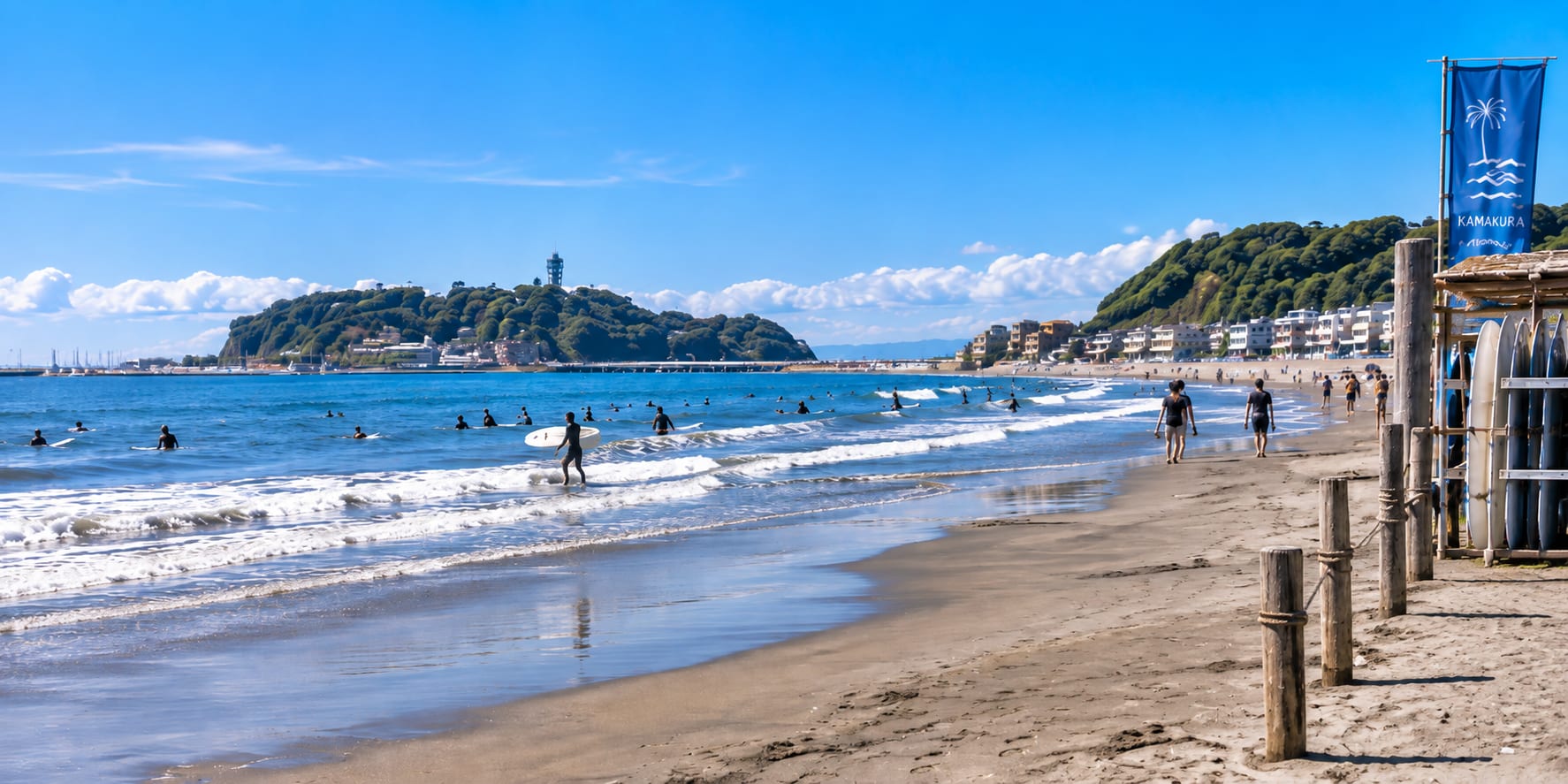
Kamakura at a Glance
Visiting Kamakura: Temples, Beaches, and the Great Buddha
Kamakura is a coastal city just an hour south of Tokyo and Japan's former political capital and seat of the first shogunate, known for centuries-old temples, peaceful bamboo groves, and the iconic Great Buddha. What makes Kamakura unique is the way ancient history blends with a relaxed seaside atmosphere, where temple visits can be followed by walks along sandy beaches and local shopping streets. Perfect for day-trippers and travelers seeking a slower pace, Kamakura combines culture, nature, and history in a compact and easy-to-explore destination. Keep reading to discover why Kamakura remains one of Japan's most rewarding escapes from Tokyo.
•6 min read
Top Attractions in Kamakura
The must-see sights, ranked by traveler impact
Must-SeeEngaku-ji Temple
Editor's PickEnoshima Island

Great Buddha of Kamakura (Kotoku-in)

Hasedera Temple

Hokokuji Temple

Kenchoji Temple

Tsurugaoka Hachimangu Shrine
Why Visit Kamakura?
Quick Answer
Kamakura packs samurai-era temples, the 750-year-old Great Buddha, and a relaxed beach town atmosphere into a compact city less than an hour from Tokyo. It suits travelers wanting history and nature without a long journey.
Kamakura is worth visiting because it packs samurai-era temples, a 750-year-old Great Buddha, and a relaxed beach town atmosphere into a compact city less than an hour from Tokyo. As the country's political capital from 1185 to 1333, the city is home to dozens of important temples, shrines, and historic landmarks that tell the story of Japan's samurai era.
The city's most famous attraction is the Great Buddha (Daibutsu), a massive bronze statue that has watched over Kamakura for more than 750 years. Visitors can also explore beautiful sites such as Hasedera Temple, Tsurugaoka Hachimangu Shrine, Kencho-ji Temple, and the tranquil bamboo grove of Hokokuji Temple.
Beyond its history, Kamakura offers scenic hiking trails, charming shopping streets, and beaches that attract surfers and locals throughout the year. Its compact size makes it easy to explore on foot, while its proximity to Tokyo makes it one of Japan's most convenient day-trip destinations.
Whether you're interested in samurai history, temple architecture, nature, photography, or simply escaping the crowds of Tokyo, Kamakura delivers one of the most balanced and memorable travel experiences in Japan.
How to Get to Kamakura
Quick Answer
Kamakura is about one hour from central Tokyo by train, making it one of Japan's easiest day trips. Frequent JR and Enoden services connect Kamakura Station directly to Tokyo, Yokohama, and Shinjuku.
Kamakura is one of the easiest day trips from Tokyo, located about 50 kilometers (31 miles) south of the capital in Kanagawa Prefecture. Thanks to frequent train services, most visitors can reach Kamakura from central Tokyo in about one hour.
From Tokyo Station
From Shinjuku Station
From Shibuya Station
From Yokohama
From Kyoto
From Osaka
From Haneda Airport
Getting Around Kamakura
Most of Kamakura's major attractions are located around Kamakura Station, Hase Station, and Kita-Kamakura Station. Walking is often the best way to explore the historic center. For attractions such as Hasedera Temple, the Great Buddha (Kotoku-in), and Enoshima, the charming Enoden Railway connects many of the area's most popular sights.
- •Enoden Day Pass: Approximately ¥800
- •Individual Rides: Typically ¥200–¥300 per trip
Recommended
Because Kamakura is compact, most visitors find that a combination of walking and short train rides on the Enoden Railway is enough to comfortably explore the city in a single day.
Best Time to Visit Kamakura
Quick Answer
Spring and autumn are Kamakura's best seasons, with comfortable temperatures and clear skies for temple visits and coastal walks. Cherry blossoms peak in late March–early April around Tsurugaoka Hachimangu Shrine and Genjiyama Park.
The best time to visit Kamakura is spring or autumn, when temperatures are comfortable, skies are often clear, and the city's temples, shrines, and walking trails are at their most scenic. Kamakura is a year-round destination, but the best times to visit are spring and autumn.
Spring (March–May): Cherry Blossoms and Mild Weather
Spring brings cherry blossoms to locations such as Tsurugaoka Hachimangu Shrine, Genjiyama Park, and along the Dankazura approach.
Temperatures generally range from 50°F–70°F (10°C–21°C). The mild weather makes it an excellent time for exploring Kamakura's historic districts on foot.
Summer (June–August): Hydrangea Season and Coastal Heat
Summer can be surprisingly hot and humid. Daytime temperatures frequently exceed 86°F (30°C), and the combination of heat, humidity, and crowds can make long walks between attractions tiring. June marks the rainy season, while July and August bring the warmest weather of the year.
Summer highlights include:
- Hydrangea season at Meigetsuin Temple and Hasedera Temple
- Yuigahama and Zaimokuza beaches
- The Enoden Railway's coastal views
Despite the heat, summer is hydrangea season, and Hasedera Temple becomes one of Kamakura's most photographed locations as thousands of flowers bloom across its hillside gardens. Kamakura's beaches also attract both locals and visitors seeking relief from the heat.
Autumn (October–November): Maple Foliage and Comfortable Sightseeing
Autumn is equally rewarding, with colorful maple leaves transforming temple grounds such as Engaku-ji, Kencho-ji, and Hasedera.
Temperatures generally range from 50°F–68°F (10°C–20°C). Cooler temperatures and lower humidity create ideal conditions for sightseeing.
Winter (December–February): Mild Days and Quiet Temples
Winter is generally mild compared to many other parts of Japan. Temperatures typically range from 40°F–55°F (4°C–13°C).
While temperatures are cooler, sunny days are common, crowds are smaller, and temple visits often feel more peaceful. On clear winter days, visitors may also enjoy some of the year's best views of Mount Fuji from nearby coastal areas.
Times to Avoid
Golden Week (Late April to Early May)
Golden Week is one of Japan's busiest holiday periods. Kamakura's temples, beaches, and the Enoden Railway can become extremely crowded.
Hydrangea Season Weekends (Mid-June to Early July)
Meigetsuin and Hasedera Temples draw large crowds on weekends during peak hydrangea bloom, often resulting in long lines.
Obon Holiday (Mid-August)
This major domestic travel period brings heavier crowds to Kamakura's beaches and central temples.
Peak Autumn Foliage Weekends (Mid-to-Late November)
Engaku-ji, Kencho-ji, and other foliage spots become especially crowded on weekends during peak color.
Best Overall Months
For most travelers, April, May, October, and November offer the best balance of pleasant weather, seasonal beauty, and comfortable sightseeing conditions.
Where to Stay in Kamakura
Quick Answer
The Kamakura Station area is the most practical base for first-time visitors. Hase suits travelers wanting a quieter, temple-focused stay near the Great Buddha, while the Enoshima/Shonan Coast suits beach lovers. Many travelers also stay in Yokohama or Tokyo and visit as a day trip.
The best areas to stay in Kamakura are the Kamakura Station area, Hase, the Enoshima and Shonan Coast, and Kita-Kamakura, each suiting a different travel style and budget. Unlike Tokyo, Kyoto, or Osaka, Kamakura is a relatively small coastal city where most visitors stay for one or two nights or visit as a day trip.
Kamakura Station Area
Best for: First-timers & convenience
Hase Area
Best for: Temples & traditional atmosphere
Enoshima & Shonan Coast
Best for: Beach lovers & couples
Kita-Kamakura
Best for: Zen temples & nature
Nearby Destinations
Easy day trips or next stops from Kamakura

Tokyo
First-timers • Food • Shopping • Pop culture • Nightlife

Yokohama
Chinatown • Waterfront • Food • Urban culture • Day trips from Tokyo

Nikko
History • Architecture • Nature • Day trips from Tokyo
- •Tokyo: First-timers, Food, Shopping, Pop culture, Nightlife
- •Yokohama: Chinatown, Waterfront, Food, Urban culture, Day trips from Tokyo
- •Nikko: History, Architecture, Nature, Day trips from Tokyo
Frequently Asked Questions

Ready to Experience Kamakura?
Browse curated itineraries that include Kamakura, or build your own with our free planning tools.
Plan This Trip
Next: Explore all attractions in Kamakura or browse nearby destinations.
Back to All Destinations →