Kyoto Imperial Palace
ExploreJapanDaily Editorial Team · Last updated: September 28, 2026
The Kyoto Imperial Palace was the home of Japan's emperors until the capital moved to Tokyo in 1869. It is open to walk-in visitors, free, with no booking: you enter at the Seishomon Gate after a bag check and follow a one-way route past the halls, which you see from outside. Last entry is 4:20 p.m. from April to August, 3:50 p.m. in March and September, and 3:20 p.m. from October to February, and it is closed on Mondays.

- Area
- Central Kyoto
- Best For
- History, Architecture, Free Entry
Visiting Kyoto Imperial Palace
Emperors lived on this site from 1331, when Emperor Kogon was enthroned in a nobleman's mansion here, until the move to Tokyo in 1869. The present buildings date from 1855 and follow the plan of a 1790 rebuilding, which recreated the main ceremonial halls in the style of the Heian-period palace. The enthronements of the Taisho and Showa emperors took place here.
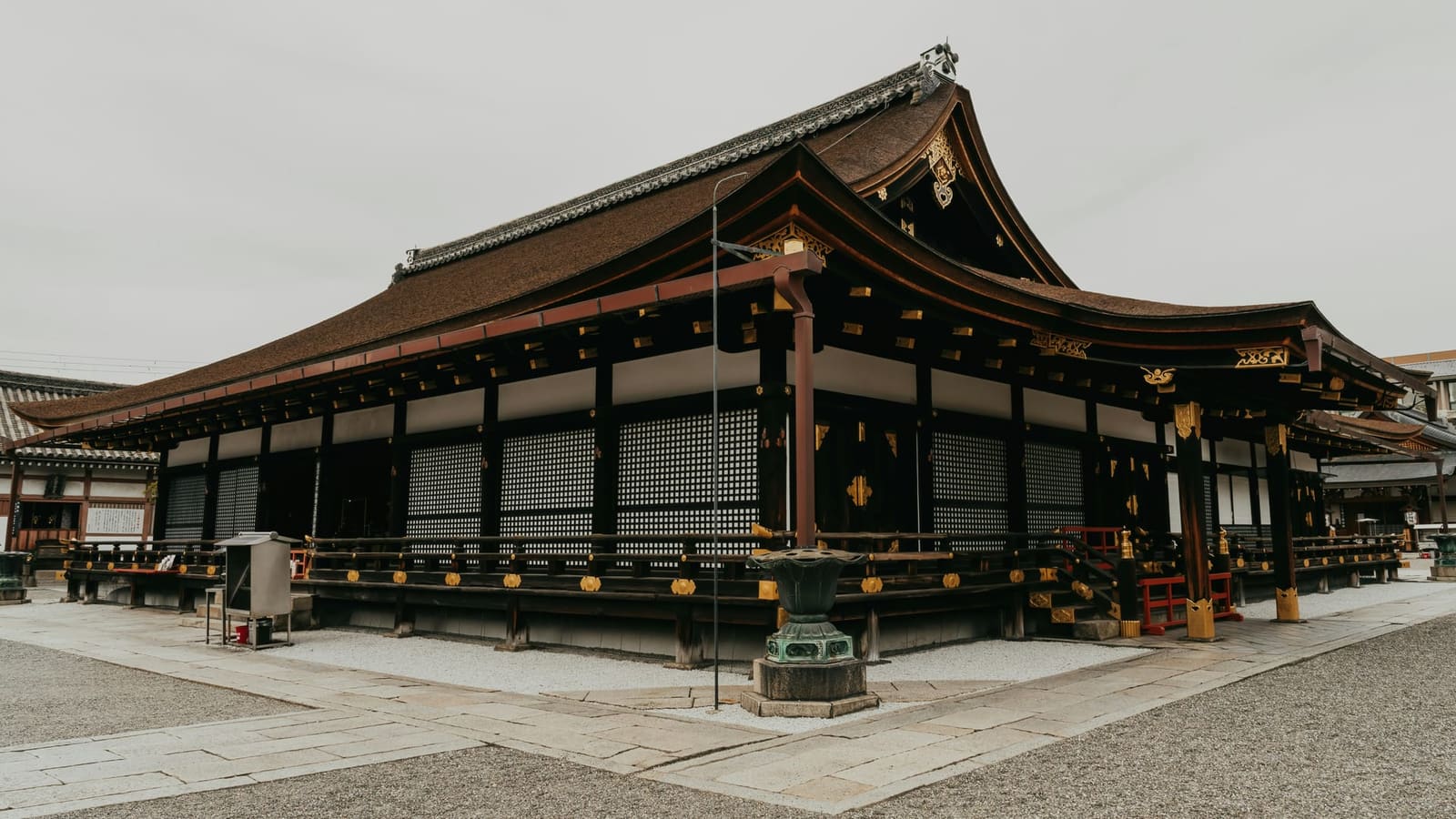
The visit is a walk along a one-way gravel route. You cannot go inside, but the outer doors of the Shodaibu-no-ma, the Seiryoden and the Kogosho are partly open so you can see into some of the rooms, and the Shishinden, the hall of state, faces a wide white courtyard. The Imperial Household Agency runs free tours in English, Chinese and Japanese, and a free audio guide app in six languages.

The palace stands inside Kyoto Gyoen, the large public park in the middle of the city, which is open to anyone. The Sento Imperial Palace, in the southeast of the same park, is a separate site seen only on a guided tour, booked in advance online or registered for in person on the day.
The visitor route
Short answer
Enter at the Seishomon Gate and follow the one-way route: the reception halls, the Shishinden courtyard, the Seiryoden, the Kogosho and the Oikeniwa pond garden, then back to the gate.
Start
Seishomon Gate
Bag check, then the visitor room, where guided tours begin.
Next
Shodaibu-no-ma and the carriage porches
Where courtiers waited and arrived; the outer doors of the Shodaibu-no-ma are partly open.
The center of the visit
The Shishinden
The hall of state, facing a white gravel courtyard enclosed by a vermilion corridor.
Then
The Seiryoden and the Kogosho
Halls of the emperor's daily life and audiences, with some rooms visible through open doors.
Exit
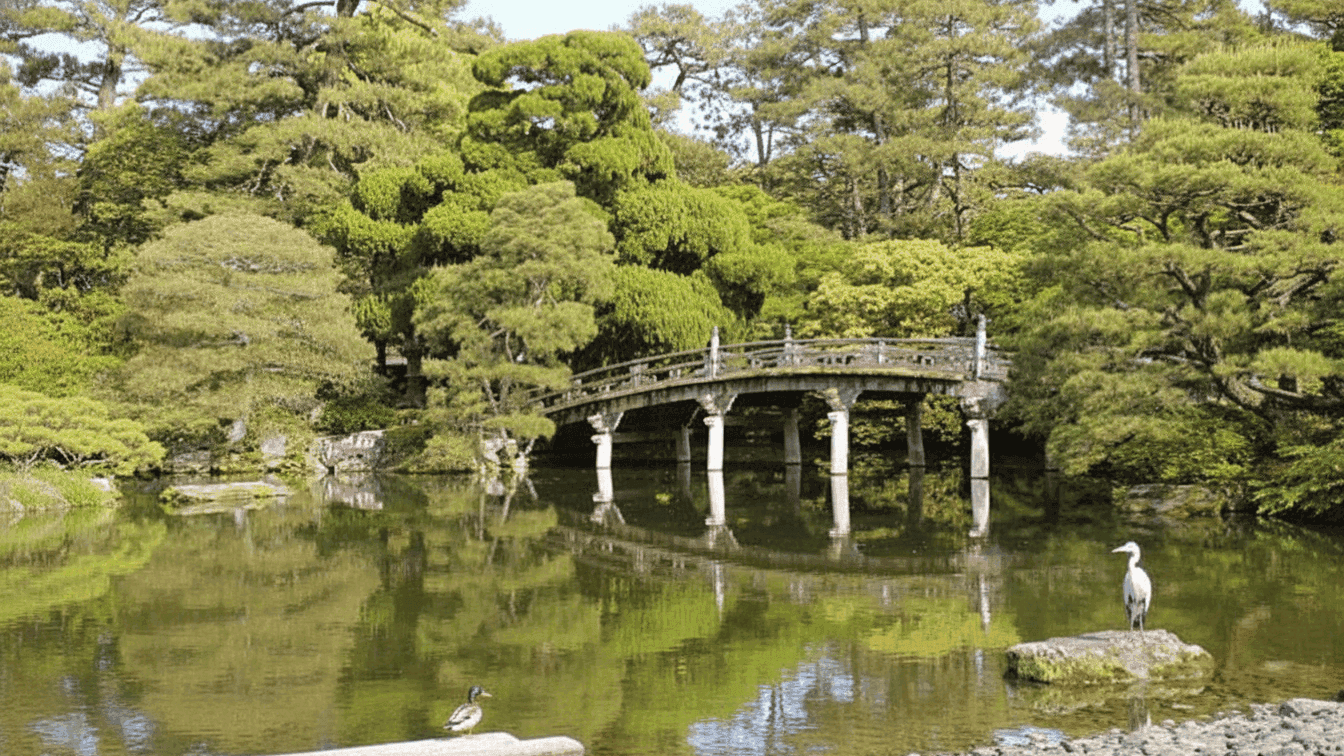
The Oikeniwa garden
A pond garden with an arched bridge, before the route returns to the gate.


When to go
Short answer
Time your arrival to the English tour at 10:00 a.m. or 2:00 p.m., and allow for the early last entry in autumn and winter.
- April to August
- 9:00 a.m. to last entry 4:20 p.m.
- March and September
- 9:00 a.m. to last entry 3:50 p.m.
- October to February
- 9:00 a.m. to last entry 3:20 p.m.
- Closed
- Mondays (Tuesday after a Monday holiday), December 28 to January 4, and some court event days.
Fitting the palace into a Kyoto day
Short answer
The palace is central and on the Karasuma subway, so it pairs with Nijo Castle and Nishiki Market. Avoid planning it for a Monday.
Eizan Railway from Demachiyanagi, east of the park
Kibune
A half day at Kifune Shrine in the northern mountains.
Better on another day
Mondays
The palace is closed on Mondays (Tuesday after a Monday holiday); plan it for another day.
What to see at the Kyoto Imperial Palace
How to Get to Kyoto Imperial Palace
The palace is inside Kyoto Gyoen, the park in the center of the city. Visitors enter only through the Seishomon Gate, on the palace's west side.
- •Imadegawa Station on the Karasuma subway line is 5 minutes' walk from the Seishomon Gate.
- •The Seishomon Gate is the only visitor entrance, with a bag check.
- •Leave suitcases at your hotel or a station locker; they are not allowed inside.
Map
Best Time to Visit Kyoto Imperial Palace
Best time to visit Kyoto Imperial Palace: at 10:00 a.m. or 2:00 p.m., for the free English tour. Weekday mornings are generally quieter than weekends and public holidays.
- •Entry starts at 9:00 a.m. Last entry is 4:20 p.m. from April to August, 3:50 p.m. in March and September, and 3:20 p.m. from October to February; visitors must be out 40 minutes later.
- •Closed on Mondays (Tuesday when Monday is a national holiday) and from December 28 to January 4. It can also close at short notice for court events or bad weather, so check the palace calendar.
- •The palace stays open in rain; the route is gravel throughout.
Entry Fee & Hours
- •Admission and the guided tours are free and need no registration. The Sento Imperial Palace, in the same park, is a separate guided tour booked through the Imperial Household Agency.
- •You can visit in a wheelchair, and wheelchairs with electric assist can be borrowed at the entrance. Two multi-purpose restrooms are near the entrance and the Kenshunmon Gate.
Nearby Attractions
Places that pair with the Kyoto Imperial Palace

Nijo Castle

Nishiki Market

Kifune Shrine
- •Nijo Castle (Southwest of the palace, in central Kyoto): Nijo Castle is a UNESCO World Heritage castle in central Kyoto, built for the Tokugawa shoguns. Its Ninomaru Palace, a National Treasure, is the only surviving example of a fortified palace complex, with wall paintings by the Kano school; the end of shogunate rule was proclaimed here in 1867.
- •Nishiki Market (Down the Karasuma subway line): Nishiki Market is a covered food street about 390 meters long in central Kyoto, running along Nishikikoji-dori with fish, pickle, tofu and yuba, produce, sweet and kitchenware shops. A licensed fish market since 1615, it is known as "Kyoto's Kitchen".
- •Kifune Shrine (North, on the Eizan Railway from Demachiyanagi): Kifune Shrine enshrines the god of water and is the head shrine of about two thousand water-god shrines across Japan. It has three parts along the Kibune river: the main shrine, the Yui no Yashiro and the Okumiya, where it was founded.
Two ways to build a day around the palace
Both avoid Mondays, when the palace is closed.
Central Kyoto
Palace, market and castle.
10:00 a.m.
The English tour from the Seishomon Gate.
Lunch
Karasuma subway to Shijo and Nishiki Market.
Afternoon
Nijo Castle, entry until 4:00 p.m.
Palace and the northern mountains
An early palace visit, then Kibune.
9:00 a.m.
The palace at opening, self-guided with the audio guide app.
Late morning
Walk east across the park and the Kamo River to Demachiyanagi.
Afternoon
Eizan Railway to Kifune Shrine.
Frequently Asked Questions
References
View references
Imperial Household Agency
Planning Your Kyoto Trip?
See the full Kyoto destination guide or browse Japan itineraries that include this city.
See all Nature & Scenic Spots across Japan →Explore all attractions in Kyoto or browse nearby destinations.
Back to Kyoto Guide →