Nijo Castle
ExploreJapanDaily Editorial Team · Last updated: September 28, 2026
Nijo Castle is the Tokugawa shoguns' palace in central Kyoto, beside Nijo-jo-mae subway station. The ticket that matters is the ¥1,300 castle-plus-Ninomaru Palace combination: the palace, a National Treasure, is the reason to come. Entry is 8:45 a.m. to 4:00 p.m.; the Ninomaru Palace closes on Tuesdays in January, July, August and December, and the Honmaru Palace needs a web ticket booked ahead.

- Area
- Central Kyoto
- Best For
- History, Architecture, UNESCO Heritage, Gardens
Visiting Nijo Castle
Nijo Castle was the Kyoto residence of the Tokugawa shoguns. In 1867 the end of the shogunate's rule and the return of power to the emperor were proclaimed here, and after the Meiji Restoration it became an imperial villa, which is why its official name is the Former Imperial Villa Nijo-jo Castle.
The Ninomaru Palace is the heart of a visit. It is six connected buildings in the shoin style perfected at the start of the Edo period, designated a National Treasure as the only surviving fortified palace complex, and decorated with Kano school wall paintings, from the gold-ground tigers of the first waiting rooms to the quiet ink paintings of the shogun's private quarters. The corridors are known as nightingale floors for the sound they make underfoot.
The Honmaru Palace, a separate Important Cultural Property, can be seen only with a timed web ticket. The route below takes you through both, and the tickets section explains which to buy.
Which ticket to buy
Short answer
Buy the ¥1,300 castle and Ninomaru Palace ticket. Add the Honmaru Palace (¥1,000) only if you book a timed web ticket in advance; it is not sold at the gate ticket office.
- Castle grounds, ¥800
- Gates, walls, moats and gardens only. You can upgrade to the Ninomaru Palace for ¥500 at the information desk inside.
- Grounds + Ninomaru Palace, ¥1,300
- The right ticket for most visitors: the National Treasure palace with its painted rooms and nightingale floors.
- Honmaru Palace, ¥1,000 extra
- Timed web ticket, on sale 30 days ahead; a few same-day tickets at the General Information Desk. Allow 15 to 20 minutes to walk there from the east gate.
The route through Nijo Castle
Short answer
Enter at the Higashi Ote-mon east gate, pass through the Karamon gate to the Ninomaru Palace, walk its corridors, then the Ninomaru Garden, and continue to the Honmaru area if you have booked. The Ninomaru Palace visit takes about 30 minutes.
Entrance
Higashi Ote-mon
The east gate, beside Nijo-jo-mae Station, with the ticket office and coin lockers next to it.
Next
The Karamon gate
The gilded, carved gate in front of the Ninomaru Palace.
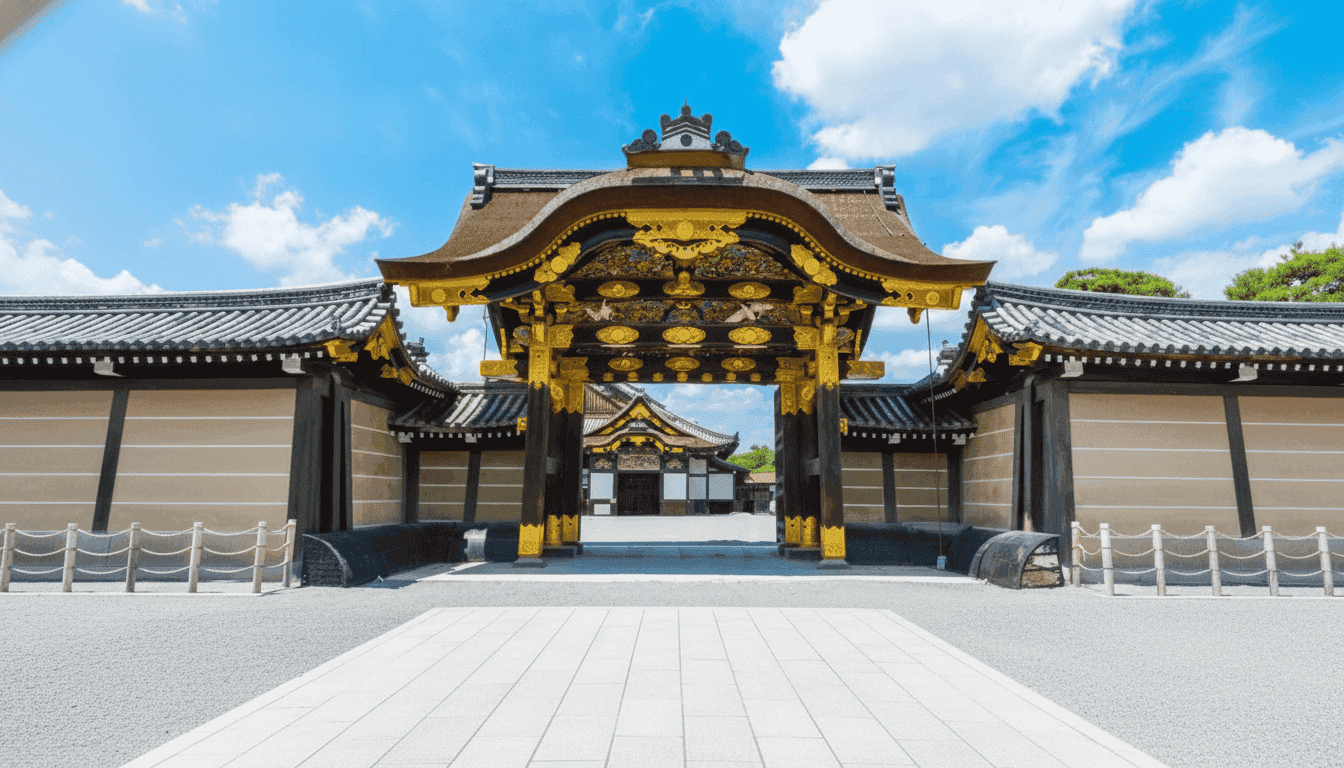
About 30 minutes
Ninomaru Palace
Six connected buildings, from the Tiger Rooms to the shogun's private quarters, along the nightingale-floor corridors. Shoes off; no photos inside. Reception closes at 4:10 p.m.
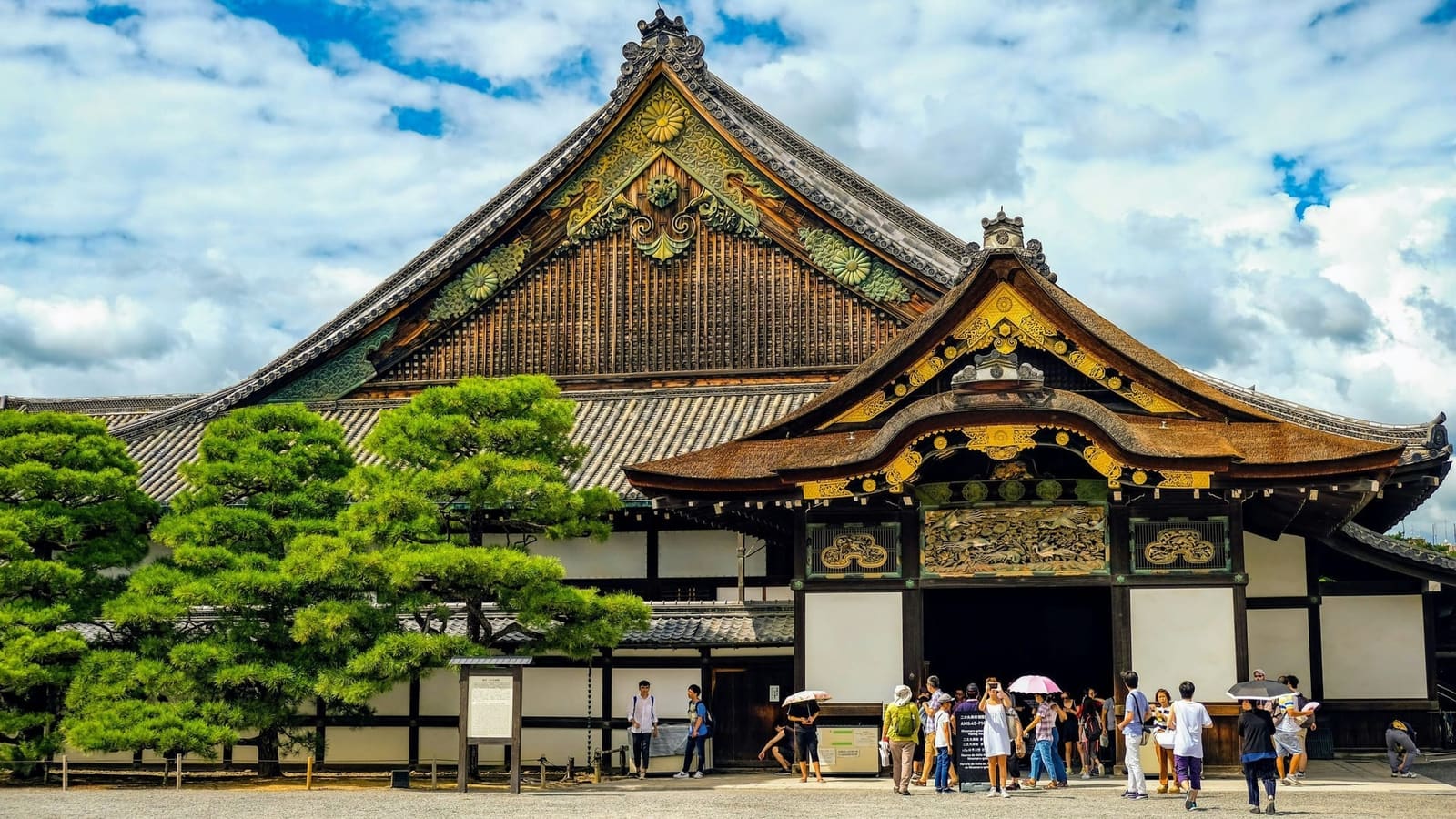
After the palace
Ninomaru Garden and the Honmaru area
The garden beside the palace, then the inner moat and the Honmaru Palace for those with a timed ticket.
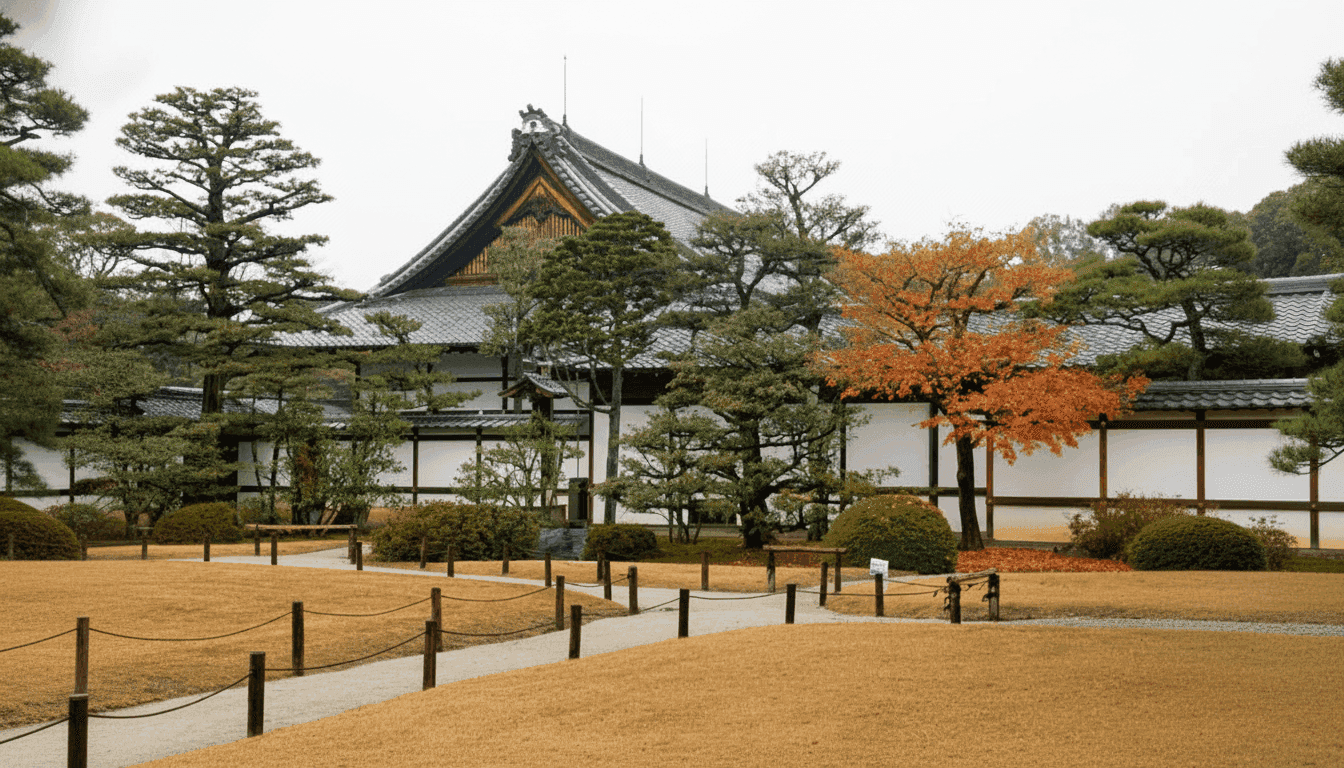


When to go
Short answer
Come at the 8:45 a.m. opening and check the palace closing days first: a Tuesday in January, July, August or December means no Ninomaru Palace.
- Whole castle
- Closed: December 29 to 31
- Ninomaru Palace
- Closed: Tuesdays in January, July, August and December (next day if a holiday); December 26 to 28; January 1 to 3
- Honmaru Palace
- Closed: Third Monday of each month and the following day (open if a holiday); December 26 to 28; January 1 to 3
| Part | Closed |
|---|---|
| Whole castle | December 29 to 31 |
| Ninomaru Palace | Tuesdays in January, July, August and December (next day if a holiday); December 26 to 28; January 1 to 3 |
| Honmaru Palace | Third Monday of each month and the following day (open if a holiday); December 26 to 28; January 1 to 3 |
Fitting Nijo Castle into a Kyoto day
Short answer
Nijo Castle is central and on the subway, so it pairs with almost anything; the natural links are the Imperial Palace, Nishiki Market, and Arashiyama on the JR Sagano Line.
Central Kyoto
Kyoto Imperial Palace
The Kyoto Imperial Palace, the other seat of power, is northeast of the castle.
What to look for at Nijo Castle
How to Get to Nijo Castle
Nijo Castle is in central Kyoto, with its own subway station at the east gate, where you enter.
- •Subway Tozai Line to Nijo-jo-mae, beside the east gate where you enter.
- •A Kyoto subway or subway-and-bus one-day pass saves ¥100 on an adult castle ticket.
- •Nijo Station on the JR Sagano Line links the castle with Arashiyama.
Map
Best Time to Visit Nijo Castle
Best time to visit Nijo Castle: At the 8:45 AM opening; avoid Tuesdays in January, July, August and December, when the Ninomaru Palace is closed. Weekday mornings are generally quieter than weekends and public holidays.
- •At the 8:45 a.m. opening, before the palace corridors fill.
- •Avoid Tuesdays in January, July, August and December, when the Ninomaru Palace is closed.
- •Book the Honmaru Palace online; tickets go on sale 30 days ahead and are limited.
Entry Fee & Hours
| Category | Price (JPY) | Approx. (USD) |
|---|---|---|
| Adult | ¥800 | ~$5 |
| Junior high and high school student | ¥400 | ~$3 |
| Elementary school student | ¥300 | ~$2 |
| Category | Price (JPY) | Approx. (USD) |
|---|---|---|
| Adult | ¥1,300 | ~$9 |
| Category | Price (JPY) | Approx. (USD) |
|---|---|---|
| Adult | ¥1,000 | ~$7 |
| Junior high and high school student | ¥300 | ~$2 |
| Elementary school student | ¥200 | ~$1 |
- •Children under elementary school age are free. Groups of 30 or more pay ¥700 (grounds) or ¥1,100 (with the Ninomaru Palace). A grounds ticket can be upgraded to the Ninomaru Palace for ¥500 at the information desk.
- •A Kyoto subway one-day pass or subway-and-bus one-day pass takes ¥100 off an adult grounds ticket on the day of use.
- •The grounds are gravel. Electric wheelchairs are lent free at the General Information Desk and indoor wheelchairs at the palaces, without reservations.
Nearby Attractions
Kyoto guides that pair with Nijo Castle

Kyoto Imperial Palace

Nishiki Market

Kinkaku-ji (Golden Pavilion)

Arashiyama Bamboo Grove
- •Kyoto Imperial Palace (Northeast, in central Kyoto): The Kyoto Imperial Palace (Kyoto Gosho) was the emperor's residence from 1331 until 1869; the present buildings date from 1855. It stands in Kyoto Gyoen park in the center of the city and is managed by the Imperial Household Agency, which opens it free to walk-in visitors.
- •Nishiki Market (Southeast, by subway or on foot): Nishiki Market is a covered food street about 390 meters long in central Kyoto, running along Nishikikoji-dori with fish, pickle, tofu and yuba, produce, sweet and kitchenware shops. A licensed fish market since 1615, it is known as "Kyoto's Kitchen".
- •Kinkaku-ji (Golden Pavilion) (Northwest, by city bus): Kinkaku-ji, the Golden Pavilion, is a Zen temple in northwest Kyoto whose three-story relics hall has its upper two stories covered in gold leaf. Visitors see it across Kyoko-chi pond on a single walking route through the garden. The temple is a UNESCO World Heritage site.
- •Arashiyama Bamboo Grove (West, on the JR Sagano Line from Nijo Station): The Arashiyama Bamboo Grove is a short public path through tall bamboo in the Sagano area of western Kyoto, free to walk and with no gate. Most visitors combine it with Tenryu-ji's garden, Okochi Sanso and Nonomiya Shrine, which sit along it.
Two ways to build a day around Nijo Castle
Both start at the 8:45 a.m. opening.
Central Kyoto
Castle, market and palace park.
8:45 a.m.
Nijo Castle and the Ninomaru Palace.
Lunch
Afternoon
Castle and Arashiyama
West along the JR Sagano Line.
8:45 a.m.
Nijo Castle.
Late morning
JR Sagano Line from Nijo to Saga-Arashiyama.
Afternoon
The Arashiyama Bamboo Grove and Tenryu-ji.
Frequently Asked Questions
References
Planning Your Kyoto Trip?
See the full Kyoto destination guide or browse Japan itineraries that include this city.
See all Castles across Japan →Explore all attractions in Kyoto or browse nearby destinations.
Back to Kyoto Guide →