Nishiki Market
ExploreJapanDaily Editorial Team · Last updated: September 28, 2026
Nishiki Market is a covered shopping street about 390 meters long in central Kyoto, lined with food shops and known as "Kyoto's Kitchen". It is free to walk, and each shop keeps its own hours, broadly from 10:00 a.m. to 6:00 p.m. The market asks one thing of visitors: do not eat while walking. Eat in front of, or inside, the shop where you bought the food.

- Area
- Central Kyoto / Kawaramachi
- Best For
- Food, Souvenirs, Rainy Days, Local Culture
Visiting Nishiki Market
Nishiki Market runs east to west along Nishikikoji-dori, a street 3.3 to 5 meters wide, for about 390 meters, under a glass roof of red, yellow and green. Its shops sell fish, Kyoto pickles, yuba, fu and tofu, produce, sweets, and kitchen tools, to restaurants and households as well as to visitors. At the end of the year it is so crowded that it is hard to move.
The market counts its history from 1615, when the Tokugawa shogunate licensed three fish wholesalers in Kyoto, one of them here. The painter Ito Jakuchu (1716-1800) was born into a produce wholesaler on the street and, as a town elder in the 1770s, helped keep the market open in a dispute over its trade; a monument near the west entrance marks his birthplace.
Many shops cook food to eat on the spot. The market's request is simple: eat in front of or inside the shop you bought from, not while walking through the crowd. Several shops have eat-in counters, and the market lists some that let you bring in food bought elsewhere on the street.
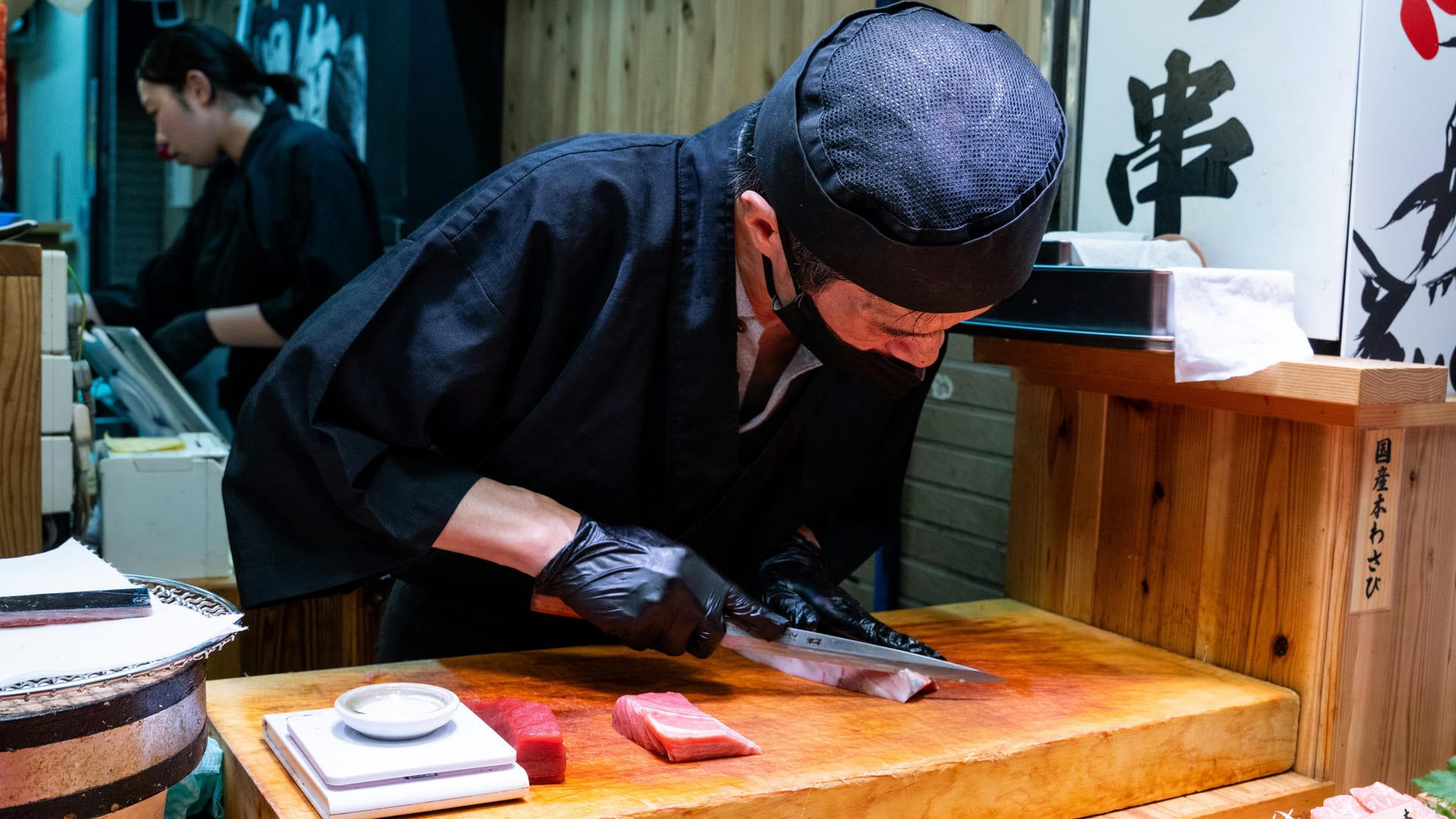
Walking Nishiki Market, west to east
Short answer
Enter at the west end on Takakura-dori, a few minutes from Shijo Station, and walk east for about 390 meters toward Teramachi and Kawaramachi. Stop to eat at the shop you buy from, not on the move.
Start, Takakura-dori
West entrance and the Jakuchu monument
About 3 minutes from Shijo or Karasuma stations. A monument near the entrance marks the birthplace of the painter Ito Jakuchu.
About 390 meters
The arcade
Fish, pickle, yuba and tofu, produce, sweet and kitchenware shops on both sides, under the red, yellow and green glass roof. Paintings hang from the ceiling at each cross street.
Toward Kawaramachi
East end
The market continues east toward Teramachi. Kyoto-Kawaramachi Station is about 4 minutes on, and Gion is across the river beyond it.
The market's requests to visitors
Short answer
The one rule the market asks every visitor to follow: do not eat while walking. Eat in front of or inside the shop where you bought the food.
Eating as you walk
Instead: The market asks visitors not to, because food can stain other shoppers' clothes in the crowd. Eat at the shop you bought from.
Carrying food from one shop to eat at another
Instead: Only some shops allow it; the market's visitor page lists those that accept food bought elsewhere on the street, under their own rules.
Arriving late in the afternoon
Instead: Shops set their own hours and many close around 6:00 p.m. Come by mid-afternoon.
Blocking the aisle
Instead: The street is 3.3 to 5 meters wide. Step into a shop, or to the side, to stop.
Fitting Nishiki Market into a Kyoto day
Short answer
Nishiki is a daytime stop in central Kyoto, easy to fit before an afternoon and evening east of the river in Gion and Pontocho.
East, across the Kamo River
Gion and Pontocho
Walk east after lunch at the market; Pontocho and Gion are at their best in the evening.
Northwest, by subway or bus
Nijo Castle
Nijo Castle fills a morning or afternoon on the same side of the city.
North, on the Karasuma subway line
Kyoto Imperial Palace
The Kyoto Imperial Palace is up the same subway line as Shijo.
Better on another day
An evening visit
Most shops close around 6:00 p.m. For food after dark, go to Pontocho or Gion instead.
What to look for at Nishiki Market
How to Get to Nishiki Market
Nishiki Market is in the center of Kyoto, one block north of Shijo-dori, running east from Takakura-dori toward Teramachi. Three stations are within a few minutes' walk.
- •Shijo (Karasuma subway) and Karasuma (Hankyu) stations are about 3 minutes' walk from the market.
- •From Kyoto Station, the Karasuma subway line to Shijo is the simplest route.
- •The market is a short walk west of Gion across the Kamo River.
Map
Best Time to Visit Nishiki Market
Best time to visit Nishiki Market: Weekday late morning, soon after most shops open; avoid late afternoon, when shops start to close. Weekday mornings are generally quieter than weekends and public holidays.
- •Weekday late morning, soon after most shops open, is calmer than the afternoon.
- •Shops begin to close in the late afternoon; it is not an evening outing.
- •The last days of December are the most crowded of the year.
Entry Fee & Hours
- •The market street is free to walk. The street is 3.3 to 5 meters wide and gets very crowded, especially at the end of December.
Nearby Attractions
Kyoto guides close to central Kyoto
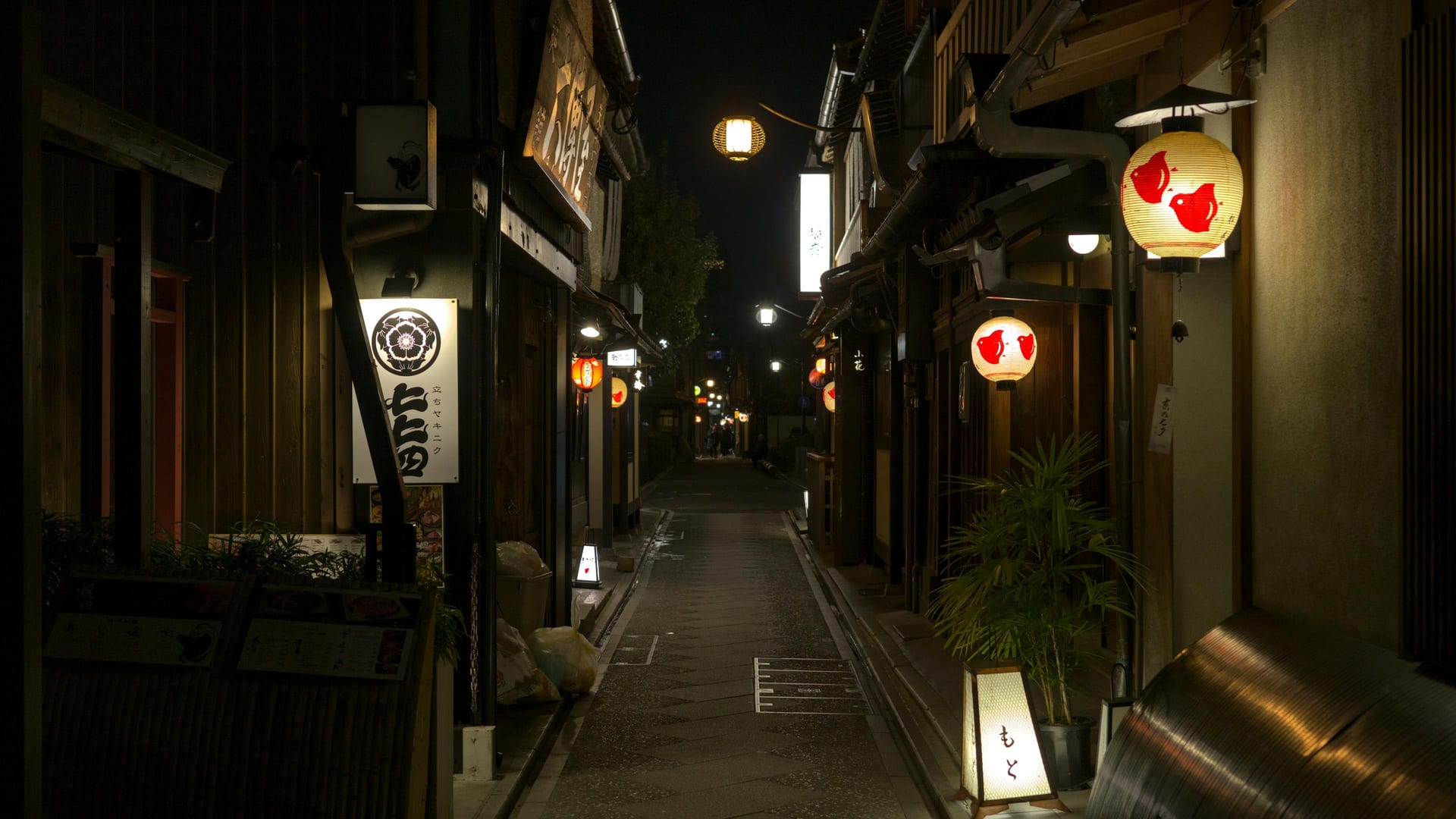
Pontocho Alley

Gion District

Nijo Castle

Kyoto Imperial Palace
- •Pontocho Alley (East, by the Kamo River): Pontocho is a narrow, lantern-lit street of restaurants, bars and teahouses between Sanjo and Shijo beside the Kamo River, and one of Kyoto's five geisha districts. Its riverside restaurants put out yuka platforms from May 1 to October 15.
- •Gion District (East, across the Kamo River): Gion is the historic geiko district of Kyoto, east of the Kamo River around Hanamikoji-dori and the Shirakawa canal, next to Yasaka Shrine. Its streets of wooden teahouses are free to walk, while the private lanes off Hanamikoji are signposted no entry for sightseers.
- •Nijo Castle (Northwest, by subway or bus): Nijo Castle is a UNESCO World Heritage castle in central Kyoto, built for the Tokugawa shoguns. Its Ninomaru Palace, a National Treasure, is the only surviving example of a fortified palace complex, with wall paintings by the Kano school; the end of shogunate rule was proclaimed here in 1867.
- •Kyoto Imperial Palace (North, by the Karasuma subway line): The Kyoto Imperial Palace (Kyoto Gosho) was the emperor's residence from 1331 until 1869; the present buildings date from 1855. It stands in Kyoto Gyoen park in the center of the city and is managed by the Imperial Household Agency, which opens it free to walk-in visitors.
Two ways to build a day around Nishiki Market
Both put the market at lunchtime and differ in where the rest of the day goes.
Central Kyoto and Gion
Food at midday, Gion in the evening.
Morning
Late morning
Nishiki Market, west to east, eating at the counters.
Evening
A rainy day in Kyoto
The covered market and the covered arcades around it.
Late morning
Nishiki Market under its glass roof.
Afternoon
The Kyoto Imperial Palace, up the Karasuma subway line, if the rain eases.
Evening
Dinner in Pontocho.
Frequently Asked Questions
References
View references
Kyoto Nishiki Market Shopping Street
Planning Your Kyoto Trip?
See the full Kyoto destination guide or browse Japan itineraries that include this city.
See all Shopping & Entertainment across Japan →Explore all attractions in Kyoto or browse nearby destinations.
Back to Kyoto Guide →