Heijo Palace Site
By Andrew Liyan · Last updated: September 10, 2026 · Facts verified: September 10, 2026

- Area
- Heijo Palace / West Nara
- Best For
- History & Culture, UNESCO World Heritage, Architecture, Photography
Visiting Heijo Palace Site
Heijo Palace Site is the archaeological and partly reconstructed remains of the imperial palace of Heijo-kyo, Japan's capital from 710 to 784. It is not a surviving castle or an intact historical palace in the conventional sense; the original wooden structures disappeared centuries ago, and what stands today is a combination of excavated foundations and carefully reconstructed buildings built on the site of the original palace complex.
Also known officially as the Nara Palace Site Historical Park, the site is one of eight component properties of the UNESCO World Heritage inscription "Historic Monuments of Ancient Nara," recognized for its role as the physical seat of government during Japan's first permanent capital. Excavation of the site by the Nara National Research Institute for Cultural Properties (Nabunken) began in earnest in 1959 and continues to inform the ongoing reconstruction and interpretation of the grounds.
The site's two headline reconstructed structures are the Suzakumon, the palace's main southern gate, rebuilt in 1998, and the Daigokuden, the Former Imperial Audience Hall, rebuilt between 2001 and 2010 for the 1300th anniversary of Heijo-kyo's founding. Both are large-scale, Chinese-influenced Nara-period structures that give visitors a physical sense of the palace's original grandeur, even though neither is an original building. The grounds also include the Toin Garden, a reconstructed aristocratic banquet garden, and several small on-site museums, including the Heijokyo Izanaikan Guidance Center and the Nara Palace Site Museum, which together explain the excavation and daily life of the ancient capital.
Because the site spans roughly 120 hectares and its facilities are spread across a largely open, unshaded landscape, a visit here requires meaningfully more time and walking than a single Nara Park temple. That scale, combined with its distance from central Nara, means Heijo Palace Site rewards visitors with a full day or more in Nara rather than a rushed single-highlight trip, but it offers something none of Nara's temples can: a direct physical connection to the seat of government of Japan's first permanent capital.
All facilities described here, the Suzakumon, the Daigokuden, the Toin Garden, and the on-site museums, are part of this single site rather than separate attractions, and entry to all of them is free.
Things to Do at Heijo Palace Site
See the Reconstructed Suzakumon Gate
The Suzakumon was the palace's main southern gate, rebuilt in 1998 based on excavation findings, and remains the site's most recognizable landmark.
Visit the Daigokuden (Former Imperial Audience Hall)
Rebuilt between 2001 and 2010 for the 1300th anniversary of Heijo-kyo's founding, the Daigokuden was the palace's most important state building, where official ceremonies took place.
Walk the Toin Garden
A reconstructed aristocratic banquet garden gives a sense of how the palace's elite entertained guests during the Nara period.
Learn the Excavation Story at the On-Site Museums
The Heijokyo Izanaikan Guidance Center and the Nara Palace Site Museum, run by the Nara National Research Institute for Cultural Properties, explain the ongoing excavation and daily life of the ancient capital.
Understand the Scale of Heijo-kyo
At roughly 120 hectares, the site conveys the physical scale of Japan's first permanent capital in a way no single temple complex can.
How to Get to Heijo Palace Site
Heijo Palace Site sits in western Nara, farther from central Nara than the Nara Park temple cluster, with three main access routes.
From Kintetsu Yamato-Saidaiji Station
Approximately a 20-minute walk to the Suzakumon gate.
From Kintetsu Shin-Omiya Station
Also approximately a 20-minute walk to the Suzakumon gate.
By Bus from Kintetsu Nara Station
A bus from Kintetsu Nara Station to the Suzakumon-hiroba-mae stop takes approximately 16 minutes.
Combining with Nishinokyo
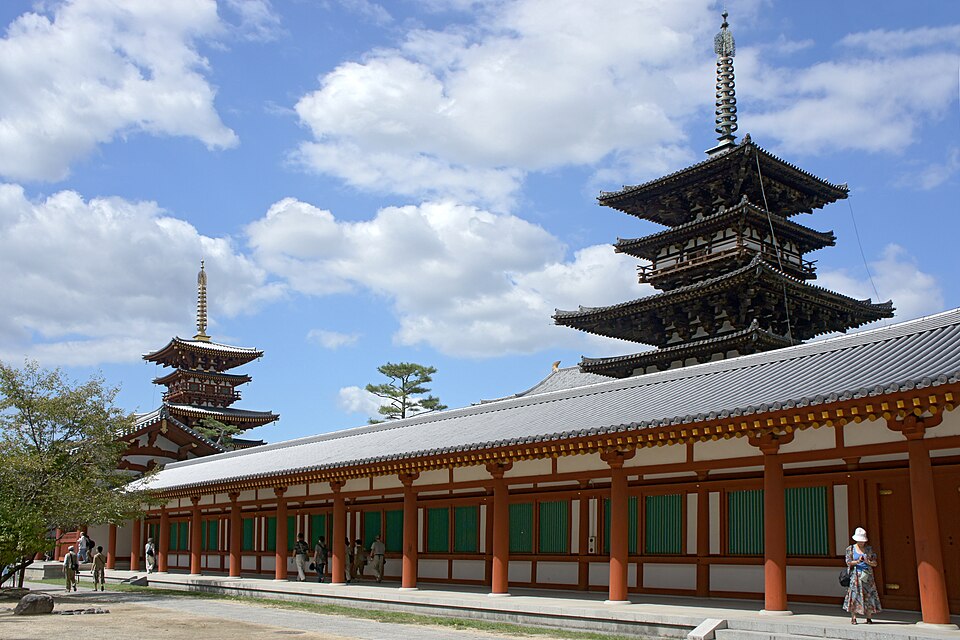
Yakushiji Temple and Toshodaiji Temple sit in nearby western Nara and can be combined with a Heijo Palace Site visit for travelers with a full day available.
Best Time to Visit Heijo Palace Site
Cooler parts of the day.
Entry Fee & Hours
- •Official Nara tourism explicitly states that facility hours differ and defers to the historical park's own official website for exact current hours; the 9:00 AM-4:30 PM figure above is drawn from secondary sources and should be re-verified directly before treating it as final.
- •The Suzakumon gate, Daigokuden, Toin Garden, and on-site museums are all facilities of this one site and are not separate attractions with their own admission.
Nearby Attractions
Combine with Heijo Palace Site on the same day

Frequently Asked Questions
Planning Your Nara Trip?
See the full Nara destination guide or browse Japan itineraries that include this city.