Minoo Park
ExploreJapanDaily Editorial Team · Last updated: June 26, 2026

- Area
- Minoh, Osaka Prefecture
- Best For
- Nature, Hiking, Waterfall, Autumn Foliage
- Nearby
- Umeda Sky Building
Visiting Minoo Park
Minoo Park offers a side of Osaka that many first-time visitors do not expect to find so close to the city. Located in the hills north of central Osaka, the park is known for its forested walking trails, mountain scenery, seasonal foliage, and the famous Minoo Waterfall that sits at the heart of the valley. Compared with Osaka's crowded entertainment districts and dense commercial neighborhoods, Minoo Park feels remarkably calm and spacious. The sound of traffic disappears quickly beneath the trees, replaced by flowing water, birdsong, and the quiet rhythm of people walking along shaded paths beside the river.
Officially designated as one of Japan's oldest quasi-national parks in the late 19th century, Minoo Park has long been appreciated as a natural retreat for Osaka residents. Yet the area's connection to spiritual practice and mountain worship stretches back much further. For centuries, monks and ascetics traveled into these wooded hills for meditation and religious training connected to Shugendo, a Japanese spiritual tradition centered around mountain asceticism. Even today, traces of that spiritual history remain visible along the trails through small temples, stone markers, and quiet resting places tucked between the trees. The combination of nature and spiritual heritage gives the park a more contemplative atmosphere than many urban green spaces.
The experience of visiting Minoo Park is shaped largely by movement through the landscape itself. Rather than arriving at one central landmark immediately, visitors gradually follow a paved riverside trail deeper into the valley toward Minoo Waterfall. The walk is gentle and accessible, but it feels immersive because the environment changes subtly with every section of the path. Maple trees arch overhead while the river flows beside stone embankments and moss-covered rocks. Small bridges cross the water at intervals, and occasional tea houses or snack shops appear between stretches of dense greenery. The atmosphere encourages a slower pace, even among travelers who originally planned only a short visit.
Minoo Waterfall remains the visual centerpiece of the park. Falling approximately 33 meters into a rocky basin surrounded by forest, the waterfall has long been admired in Japanese poetry and seasonal landscape traditions. Unlike some waterfalls designed around dramatic viewing platforms or commercial attractions, Minoo Waterfall feels naturally integrated into its surroundings. Visitors gather quietly near the base, listening to the sound of rushing water echoing through the valley walls. The setting changes throughout the year, but the atmosphere remains consistently peaceful. During warmer months, the cool mist and shade create relief from Osaka's summer humidity, while autumn transforms the surrounding hillsides into layers of deep red, orange, and gold.
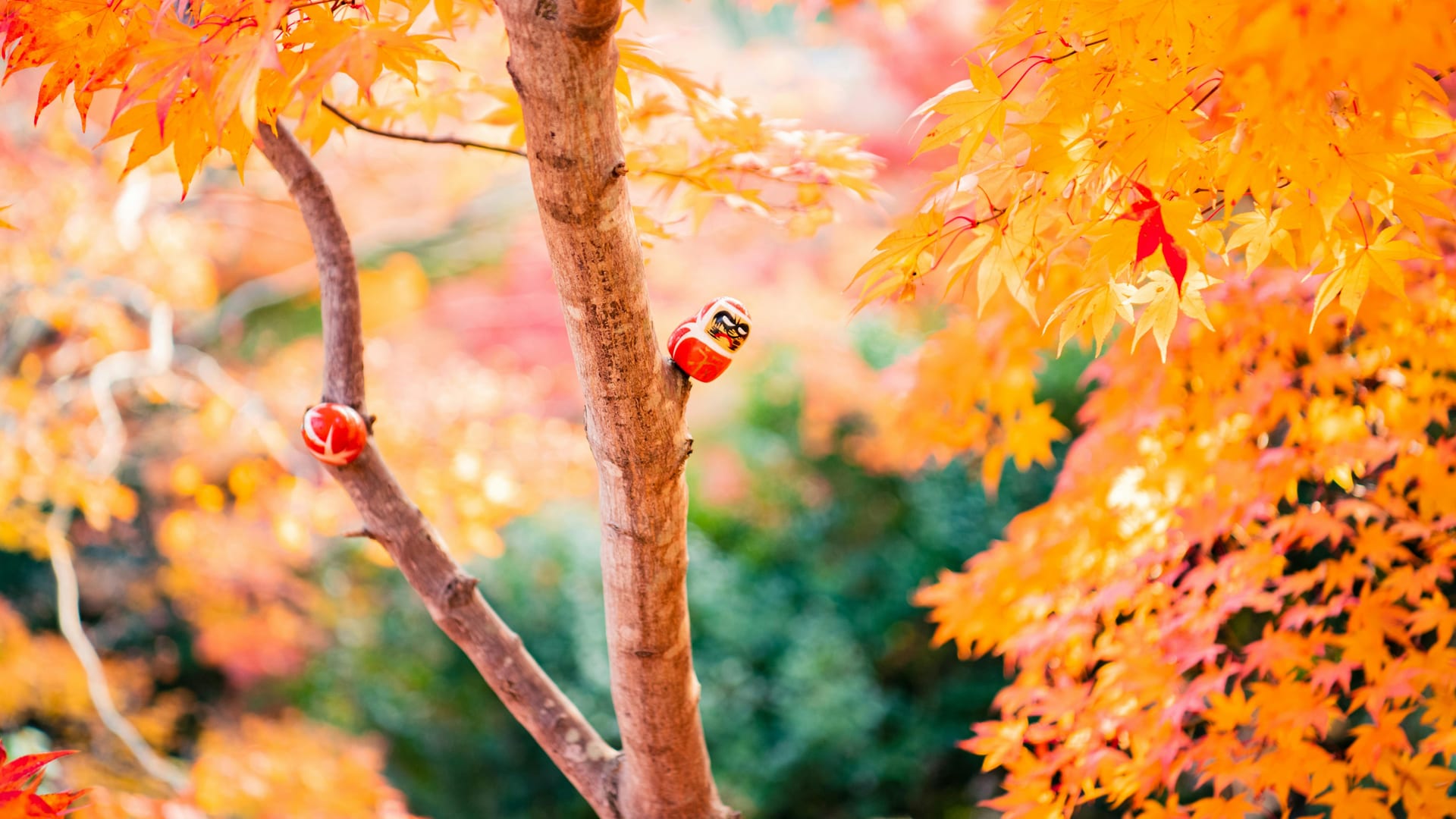
Autumn is especially significant at Minoo Park and has made the area one of the Kansai region's best-known destinations for fall foliage viewing. Thousands of maple trees line the valley, creating long tunnels of color along the walking paths during late autumn. The combination of mountain scenery, flowing water, and changing leaves attracts visitors from across Osaka and Kyoto each year. Even during busier periods, however, the park rarely loses its quieter atmosphere because the valley absorbs sound and movement naturally. Early mornings during autumn are particularly memorable, when cool air settles over the river and sunlight filters gradually through the trees.
The park is also known for one unusual local specialty connected to the autumn season: momiji tempura, maple leaves preserved and fried in a light sweet batter. Vendors along the trail have sold the snack for generations, and the tradition reflects how deeply seasonal culture is woven into the identity of the park. Small details like this contribute to the feeling that Minoo is not simply a hiking destination but a place where nature, local customs, and everyday leisure continue to overlap in subtle ways.

Wildlife and natural scenery remain central to the experience throughout the year. In spring, fresh green foliage brightens the valley after winter, while summer fills the park with dense vegetation and the sound of cicadas echoing through the forest. Winter creates a quieter atmosphere entirely, with fewer visitors and occasional frost adding stillness to the riverside paths. Depending on the season and time of day, travelers may encounter birds, butterflies, or the macaque monkeys sometimes seen in the surrounding hills. The changing environment gives the park a different emotional tone each time it is visited.
What makes Minoo Park especially compelling is how quickly the atmosphere shifts away from the modern city surrounding it. Osaka is internationally associated with neon streets, shopping arcades, food districts, and dense urban energy, yet within a relatively short distance, the landscape changes completely into forest trails and mountain scenery. That contrast often surprises international travelers and reveals another dimension of the Kansai region beyond temples and major urban attractions. The park feels less curated than many famous sightseeing areas. It remains primarily a place where local residents walk, relax, photograph seasonal scenery, and reconnect with nature.

For travelers planning a broader Osaka itinerary, Minoo Park offers a different emotional experience from the city's entertainment districts and observation towers. It is quieter, slower, and more reflective, shaped by water, trees, changing light, and the natural rhythm of the valley itself. The appeal of the park does not come from spectacle or large-scale attractions. Instead, it comes from atmosphere and continuity. The same paths that modern visitors walk today have been followed for generations by residents, pilgrims, and travelers seeking temporary distance from city life. Minoo Park remains one of the clearest reminders that even within one of Japan's largest metropolitan regions, nature and seasonal tradition continue to play an important role in everyday life.
Things to Do at Minoo Park
How to Get to Minoo Park
Minoo Park is located in northern Osaka Prefecture near the city of Minoh and is one of the most accessible nature destinations from central Osaka.
- •Nearest station: Minoh Station (Hankyu Minoh Line)
- •IC cards (Suica, Pasmo, or ICOCA) are accepted on trains, subways, and buses throughout Japan. Tap in and out at every gate.
- •Avoid traveling during rush hour on weekdays: 7am to 9am and 5pm to 8pm. Trains are significantly more crowded.
- •Google Maps provides accurate real-time transit directions in Osaka. Download offline maps before you arrive.
For IC cards, tickets, and full transit basics for Osaka, see the complete transportation guide.
Getting Around Osaka →Map
Best Time to Visit Minoo Park
Best time to visit Minoo Park: Late October to early November for peak autumn foliage. Weekday mornings are generally quieter than weekends and public holidays.
- •Best time to visit: Late October to early November for peak autumn foliage
- •Arriving on a weekday morning avoids the largest crowds. Weekends and public holidays are significantly busier.
- •Spring (late March to early May) and autumn (October to November) are the most popular seasons for visiting Osaka.
- •Golden Week (late April to early May) is the busiest week of the year in Japan. Book accommodation and tickets well in advance.
The park is famous for its autumn colors; the trail gets very crowded and roadside stalls sell momiji tempura (deep-fried maple leaves).
Entry Fee & Hours
- •Free admission; no ticket is required to enter the park or view the waterfall.
- •The main trail from Hankyu Minoo Station to the waterfall is paved, roughly 3 km (45 minutes) one-way, and suitable for most fitness levels.
- •Wild monkeys are sometimes seen along the trail; visitors should not feed them.
Nearby Attractions
Combine with Minoo Park on the same day

- •Umeda Sky Building: One of Osaka's most photogenic modern landmarks with panoramic skyline views from the Floating Garden Observatory.
Suggested Itinerary
Pair Minoo Park with these nearby stops for a full day in Minoh, Osaka Prefecture.
Frequently Asked Questions
Planning Your Osaka Trip?
See the full Osaka destination guide or browse Japan itineraries that include this city.
See all Nature & Scenic Spots across Japan →Explore all attractions in Osaka or browse nearby destinations.
Back to Osaka Guide →