Umeda Sky Building
ExploreJapanDaily Editorial Team · Last updated: June 26, 2026

- Area
- Kita, Osaka
- Best For
- Views, Photography, Architecture, Couples
Visiting Umeda Sky Building
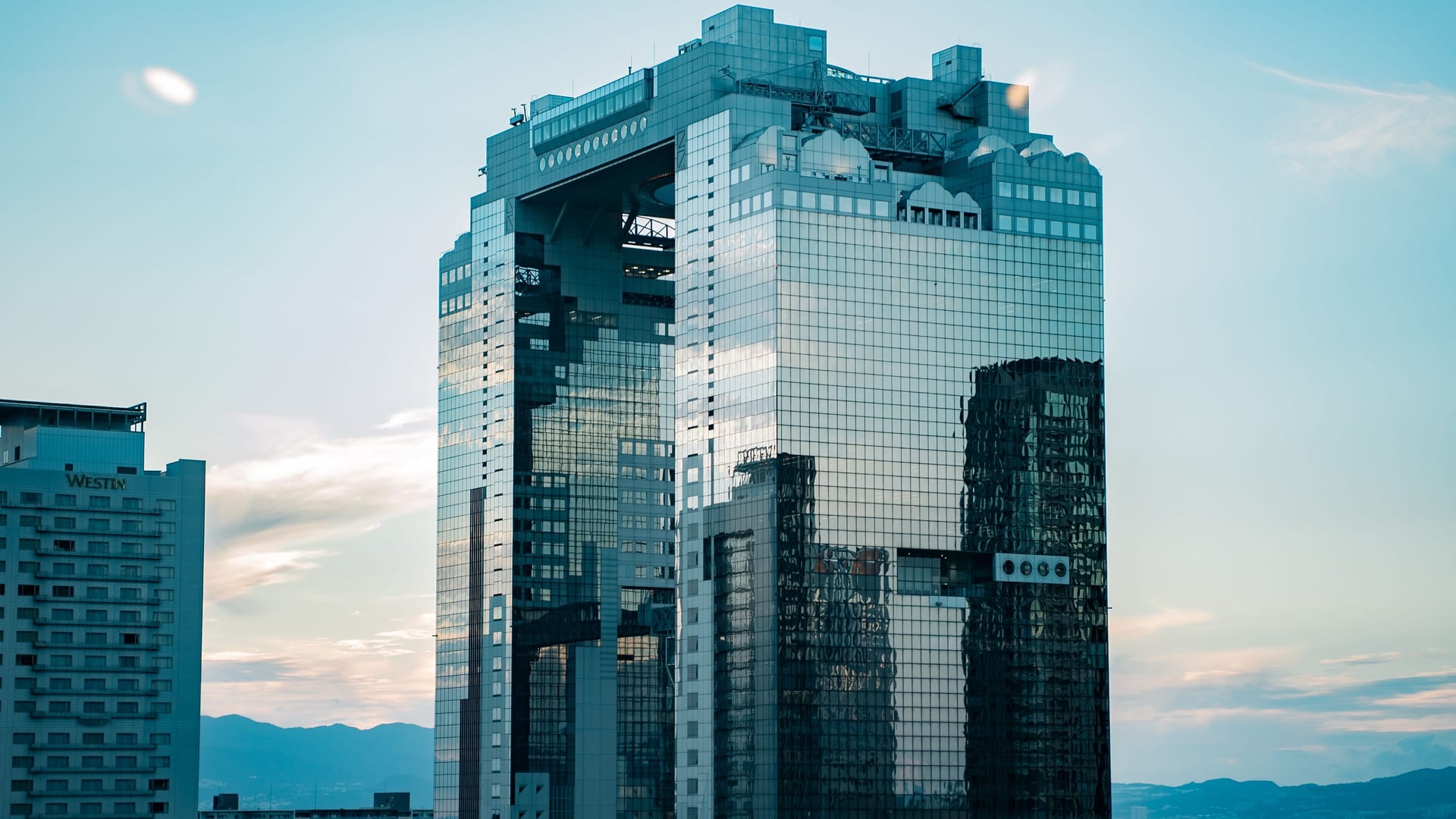
The Umeda Sky Building is one of Osaka's most recognizable modern landmarks and one of the city's best places to understand its scale. Rising above the busy Umeda district in northern Osaka, the structure is known for its striking twin-tower design connected by the Floating Garden Observatory high above the skyline. Unlike historic landmarks such as Osaka Castle or temple districts found elsewhere in Japan, the Umeda Sky Building represents a different side of the country's identity. It reflects Japan's fascination with futuristic architecture, urban engineering, and carefully designed city spaces while still offering moments of calm and reflection above one of the busiest commercial areas in Kansai.
Completed in 1993, the building quickly became an icon of Osaka's skyline due to its unusual design. Two separate towers are linked near the top by a circular observation structure that appears suspended in the air when viewed from below. Glass escalators crossing the open space between the towers became one of the building's defining visual features and remain one of the most memorable parts of visiting. Even travelers who normally avoid observation decks often find themselves drawn into the experience simply because of how visually dramatic the architecture feels before they even reach the top.
The atmosphere changes noticeably as visitors move upward through the building. At street level, the surrounding Umeda district feels intensely urban, filled with office towers, department stores, underground shopping streets, train stations, and constant pedestrian movement. The lower areas around Osaka Station are among the busiest transportation and commercial zones in western Japan. Yet inside the Umeda Sky Building, the environment gradually becomes quieter and more spacious. Elevators and escalators carry visitors away from the crowded streets into increasingly open views of the city, creating a transition that feels almost cinematic. By the time travelers step onto the observation deck, Osaka's density begins to feel distant rather than overwhelming.

The Floating Garden Observatory is the centerpiece of the experience. From the rooftop viewing area, Osaka stretches outward in nearly every direction with an uninterrupted panoramic perspective. During the daytime, the city appears vast and highly organized, with rivers, bridges, rail lines, and clusters of high-rise buildings extending toward the horizon. On clear days, visitors can see all the way toward Osaka Bay and the surrounding mountains beyond the urban center. Sunset is particularly popular because the city gradually shifts from soft afternoon light into illuminated evening streets, with layers of neon and office towers beginning to glow across the skyline.
Unlike some observation decks that feel enclosed and heavily commercialized, the rooftop atmosphere at the Umeda Sky Building feels surprisingly open. The circular rooftop walkway allows visitors to move slowly around the perimeter while exposed to the wind and sounds of the city below. Couples pause along the railings to watch the changing light, photographers wait for blue hour reflections, and travelers often spend more time there than they originally expected. The openness of the deck creates a stronger emotional connection to the city than many indoor observatories. Osaka does not simply appear as a distant skyline. It feels active and alive beneath you.
Architecturally, the Umeda Sky Building also stands out because it belongs to a specific era of Japanese urban design. Built during the late stages of Japan's economic boom years, the structure reflects the ambitious futuristic style associated with that period. Yet despite its bold appearance, the building has aged remarkably well. Its clean lines, steel framing, circular forms, and dramatic vertical spaces still feel contemporary decades later. Visitors interested in architecture often appreciate how the building balances spectacle with restraint. It is visually distinctive without becoming excessively ornamental, and its design remains closely integrated with the surrounding cityscape rather than competing against it.
The surrounding Umeda neighborhood adds another layer to the overall experience. Below the observation deck, Osaka's northern commercial district continues late into the evening with restaurants, department stores, underground malls, cocktail bars, and illuminated shopping streets packed with commuters and travelers. The contrast between the calm atmosphere at the top of the tower and the movement below is part of what makes the visit memorable. Nearby areas such as Grand Front Osaka, Osaka Station City, and the riverside developments around Nakanoshima help frame the broader urban environment visible from the observatory. For many travelers, the view from the Umeda Sky Building helps make sense of Osaka's geography in a way that maps alone cannot.
Season and weather also influence the mood of visiting the building. Clear winter evenings often provide the sharpest visibility, with cool air creating crisp city views and vivid nighttime illumination. Summer sunsets can feel softer and more atmospheric as haze settles over the skyline and the city transitions slowly into night. Rainy days bring a different character entirely, with clouds drifting between buildings and reflections spreading across wet rooftops below. Because the experience is tied so closely to light and atmosphere, many repeat visitors find that the observatory feels different each time they return.
For international travelers visiting Osaka, the Umeda Sky Building offers more than a high viewpoint over the city. It captures the relationship between modern Japanese architecture and urban life in a way few landmarks manage to achieve. The building is futuristic without feeling cold, dramatic without becoming overwhelming, and deeply connected to the rhythm of the city surrounding it. Whether visited during daylight, sunset, or after dark, the experience tends to stay with travelers because it reveals Osaka not as a collection of separate attractions, but as one vast, interconnected urban landscape stretching endlessly beneath the observation deck.
Things to Do at Umeda Sky Building
How to Get to Umeda Sky Building
The Umeda Sky Building is located in Osaka's Umeda district near Osaka Station, making it one of the easiest major attractions in the city to reach by public transportation.
- •Nearest station: Osaka Station (JR Lines), 10-minute walk
- •IC cards (Suica, Pasmo, or ICOCA) are accepted on trains, subways, and buses throughout Japan. Tap in and out at every gate.
- •Avoid traveling during rush hour on weekdays: 7am to 9am and 5pm to 8pm. Trains are significantly more crowded.
- •Google Maps provides accurate real-time transit directions in Osaka. Download offline maps before you arrive.
For IC cards, tickets, and full transit basics for Osaka, see the complete transportation guide.
Getting Around Osaka →Map
Best Time to Visit Umeda Sky Building
Best time to visit Umeda Sky Building: Evening for city lights; clear winter days for long-distance views. Weekday mornings are generally quieter than weekends and public holidays.
- •Best time to visit: Evening for city lights; clear winter days for long-distance views
- •Arriving on a weekday morning avoids the largest crowds. Weekends and public holidays are significantly busier.
- •Spring (late March to early May) and autumn (October to November) are the most popular seasons for visiting Osaka.
- •Golden Week (late April to early May) is the busiest week of the year in Japan. Book accommodation and tickets well in advance.
Entry Fee & Hours
| Category | Price (JPY) | Approx. (USD) |
|---|---|---|
| Adult | ¥2,000 | ~$13 |
| Child (4-12) | ¥500 | ~$3 |
| Adult with Disability | ¥1,000 | ~$7 |
| Child with Disability (4-12) | ¥250 | ~$2 |
Prices as listed on the official site.
- •Last admission to the observation deck is 30 minutes before closing (10:00 PM).
- •Visitors with disabilities receive a 50% discount on admission.
- •Children under 4 enter free.
- •Osaka Amazing Pass holders get free entry before 3:00 PM, or a 10% discount after 3:00 PM.
Nearby Attractions
Combine with Umeda Sky Building on the same day

HEP FIVE Ferris Wheel

Osaka Station City

Tenjinbashisuji Shopping Street
- •HEP FIVE Ferris Wheel: A specific rooftop Ferris wheel ride atop the HEP FIVE shopping complex in Umeda, reaching 106 meters, distinct from the shopping complex itself and from Umeda Sky Building's separate observation deck.
- •Osaka Station City: JR West's shopping, dining, and rooftop-garden complex built around and above Osaka Station, distinct from the station itself and from the wider Umeda district.
- •Tenjinbashisuji Shopping Street: A roofed shopping arcade of roughly 2.6 kilometers in Osaka's Kita Ward, known for everyday local shops and snack counters. A district, not a ticketed attraction, and easiest to sample near Osaka Tenmangu Shrine.
Suggested Itinerary
Pair Umeda Sky Building with these nearby stops for a full day in Kita, Osaka.
Frequently Asked Questions
Planning Your Osaka Trip?
See the full Osaka destination guide or browse Japan itineraries that include this city.
See all Towers & Views across Japan →Explore all attractions in Osaka or browse nearby destinations.
Back to Osaka Guide →