Tsurugaoka Hachimangu Shrine
ExploreJapanDaily Editorial Team · Last updated: September 22, 2026 · Facts verified: September 22, 2026

- Area
- Yukinoshita, Kamakura
- Best For
- Shinto shrines, Cherry blossoms, History, Festivals
Visiting Tsurugaoka Hachimangu Shrine
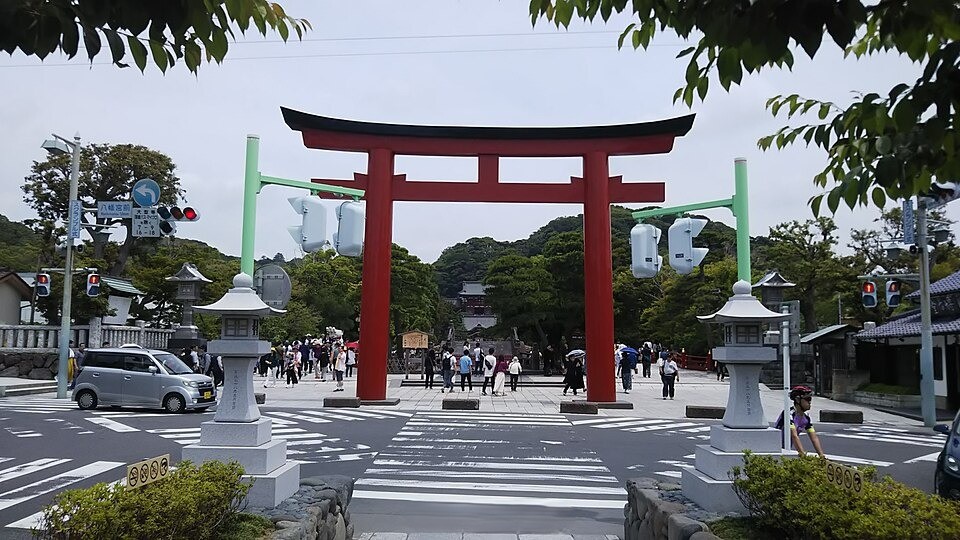
Tsurugaoka Hachimangu is Kamakura's most important Shinto shrine and, for most first-time visitors, the single site that ties the city's history together. It sits at the north end of Wakamiya Oji, a 10-minute walk from Kamakura Station, and it is free to enter. Nearly every visitor to Kamakura should see it: the location is central, the layout is easy to follow, and no other site in the city carries as much of its early samurai-era history. The main tradeoffs are crowding, especially on weekends and during the shrine's own festivals, and the fact that two of its most interesting buildings, the Treasure Hall and the separately run Kamakura Museum of National Treasures, require their own admission.
The shrine's roots go back to 1063, when Minamoto no Yoriyoshi founded an earlier version of it elsewhere in Kamakura. Minamoto no Yoritomo, who would go on to found Japan's first military government, moved it to its current site in 1180 as he was establishing Kamakura as his base of power. A fire destroyed the original buildings in 1191, and Yoritomo rebuilt the shrine into the two-tier layout still visible today. For the next century and a half, Tsurugaoka Hachimangu functioned as the shogunate's spiritual and political anchor, which is why so many of Kamakura's other historic sites orient around it.
The shrine is arranged on two levels. Wakamiya, the lower shrine, sits at ground level near the Maiden, an open-sided dance pavilion where a reenactment of Shizuka Gozen's 1186 dance is still performed every April. She is said to have danced there in defiance of Yoritomo's anger toward her, since she loved his estranged brother Yoshitsune. From the Maiden, a staircase of 61 stone steps climbs to Hongu, the upper main hall, where most visitors pray. The climb is short and steep rather than a long hike, and the top gives a clear view back down over the grounds and the rooftops of central Kamakura.

Wakamiya Oji is the shrine's own ceremonial approach, not a separate attraction: a roughly 1.8 km avenue running from the coast to the shrine's entrance. Its raised, cherry tree lined middle stretch, the Dankazura, is part of that same approach and is at its best in the last week of March and first week of April. Komachi Street, which runs parallel to Wakamiya Oji one block over, is a genuinely different, separately worth-visiting street of shops and food stalls. It meets the shrine's approach near the entrance and makes a natural continuation of the same visit.
Two ticketed sites sit on the shrine's own grounds, and they are easy to conflate. The Treasure Hall (Homotsuden) is run by the shrine itself, costs ¥200, and displays shrine-owned artifacts. The Kamakura Museum of National Treasures (Kamakura Kokuhokan) is a separate, city-operated museum with its own admission of ¥400 to ¥1,000 depending on the exhibition. It has been closed for renovation since May 2026 and is scheduled to reopen October 24, 2026 with a new exhibition marking Zuisenji Temple's 700th anniversary. Everything else on the grounds, the walk up to Hongu, the Maiden, and Genpei Pond, is free.

Genpei Pond, the two ponds inside the grounds, were commissioned by Yoritomo in 1182. Tradition holds that his wife, Hojo Masako, planted white lotus in one pond to represent the defeated Taira clan and red lotus in the other for the victorious Minamoto clan. The lotus bloom is most visible from mid-July into August. The shrine's largest annual event, the Reitaisai festival, runs September 14 to 16 and closes with the Yabusame mounted archery ritual, drawing heavier crowds and some nearby road closures for those three days.
Ramps reach the lower grounds and the Maiden, but the stairs to Hongu have no wheelchair alternative. Most visitors spend 1 to 1.5 hours on a full walk through the grounds, longer with the Treasure Hall or during a festival. Given its location and the amount of Kamakura history it covers in a single stop, Tsurugaoka Hachimangu works well as either the first stop on a Kamakura day, before continuing to Komachi Street or the temples of Kita-Kamakura, or the last one, ending the day back at Kamakura Station.
Things to Do at Tsurugaoka Hachimangu Shrine
How to Get to Tsurugaoka Hachimangu Shrine
Tsurugaoka Hachimangu sits at the north end of Wakamiya Oji, about a 10-minute walk from Kamakura Station, and is easily reached from Tokyo or Yokohama as a day trip.
- •Nearest station: Kamakura Station (East Exit, approx. 8-10 minute walk)
- •IC cards (Suica, Pasmo, or ICOCA) are accepted on trains, subways, and buses throughout Japan. Tap in and out at every gate.
- •Avoid traveling during rush hour on weekdays: 7am to 9am and 5pm to 8pm. Trains are significantly more crowded.
- •Google Maps provides accurate real-time transit directions in Kamakura. Download offline maps before you arrive.
Map
Best Time to Visit Tsurugaoka Hachimangu Shrine
Best time to visit Tsurugaoka Hachimangu Shrine: Spring for cherry blossoms along Dankazura; summer for lotus flowers at Genpei Pond; early mornings for fewer crowds. Weekday mornings are generally quieter than weekends and public holidays.
- •Best time to visit: Spring for cherry blossoms along Dankazura; summer for lotus flowers at Genpei Pond; early mornings for fewer crowds
- •Arriving on a weekday morning avoids the largest crowds. Weekends and public holidays are significantly busier.
- •Spring (late March to early May) and autumn (October to November) are the most popular seasons for visiting Kamakura.
- •Golden Week (late April to early May) is the busiest week of the year in Japan. Book accommodation and tickets well in advance.
Cherry blossoms line the Dankazura approach, making it one of Kamakura's most popular cherry blossom viewing spots.
Lotus flowers bloom across Genpei Pond within the shrine grounds.
The Reitaisai festival brings larger crowds and some road closures near the shrine, closing with the Yabusame mounted archery ritual on the final day.
Foliage colors the shrine grounds and surrounding hills.
Entry Fee & Hours
| Category | Price (JPY) | Approx. (USD) |
|---|---|---|
| Adult | ¥200 | ~$1.50 |
| Child (elementary school) | ¥100 | ~$0.70 |
Shrine grounds are free to enter. The separately city-operated Kamakura Museum of National Treasures (Kamakura Kokuhokan) charges ¥400-¥1,000 for adults depending on the current exhibition. It is closed for renovation through October 23, 2026 and reopens October 24, 2026 with a new special exhibition. It is a different institution from the shrine's own Treasure Hall (Homotsuden), and also different from the Kamakura Museum of History and Culture, which is off the shrine grounds.
- •The lower shrine grounds, Wakamiya Oji approach, and the Maiden dance pavilion are reachable by ramp. Reaching the elevated main hall (Hongu) requires climbing the 61-step stone staircase, which has no ramp or elevator alternative; visitors who cannot use stairs can still visit and pray at the Maiden below.
Nearby Attractions
Combine with Tsurugaoka Hachimangu Shrine on the same day

Komachi Street

Kenchoji Temple

Hokokuji Temple

Engaku-ji Temple

Great Buddha of Kamakura (Kotoku-in)
- •Komachi Street (Directly at the start of the shrine's approach): Kamakura's main pedestrian shopping and food street, running from Kamakura Station's east exit toward Tsurugaoka Hachimangu Shrine, lined with roughly 250 independent shops.
- •Kenchoji Temple (Approx. 20 minutes walk): Japan's oldest Zen training monastery and the top-ranked of Kamakura's Five Great Zen Temples, founded in 1253, with a dragon-ceiling hall, a Muso Soseki-attributed garden, and a climb to the Hansobo viewpoint.
- •Hokokuji Temple (Approx. 10 minutes by bus): A Zen temple in eastern Kamakura best known for a grove of roughly 2,000 bamboo stalks and a tea house serving matcha inside it.
- •Engaku-ji Temple (Approx. 10 minutes by train): A Kamakura Five Great Zen Temple founded in 1282, one minute from Kita-Kamakura Station, known for the National Treasure Shariden hall, the Ogane great bell, and some of Kamakura's best autumn foliage.
- •Great Buddha of Kamakura (Kotoku-in) (Approx. 15 minutes by Enoden): Kamakura's 13.35-meter outdoor bronze Buddha at Kotoku-in Temple, Japan's second-tallest bronze Buddha statue, standing in the open air since a tsunami destroyed its hall in the 1400s.
Suggested Itinerary
Pair Tsurugaoka Hachimangu Shrine with these nearby stops for a full day in Yukinoshita, Kamakura.
Frequently Asked Questions
Planning Your Kamakura Trip?
See the full Kamakura destination guide or browse Japan itineraries that include this city.
See all Temples & Shrines across Japan →Explore all attractions in Kamakura or browse nearby destinations.
Back to Kamakura Guide →