Kobe Port Tower
ExploreJapanDaily Editorial Team · Last updated: July 7, 2026

- Area
- Chuo-ku, Kobe (Meriken Park)
- Best For
- Views, Photography, Couples, Architecture
Visiting Kobe Port Tower
Kobe Port Tower is the red steel tower that defines Kobe's skyline, standing 108 meters tall inside Meriken Park on the city's waterfront. Completed in 1963, it was the first tower in Japan built using a pipe-in-pipe lattice structure, and its hourglass silhouette, made from 32 curved red steel columns, was designed to evoke a tsuzumi, a traditional Japanese hand drum. After closing in September 2021 for a major renovation and seismic retrofit, the tower reopened to the public on April 26, 2024, with a substantially updated interior, new digital exhibits, and a rooftop observation area that had never previously been open to visitors. For most travelers in Kobe, it remains the single most recognizable landmark in the city and the natural anchor point for a visit to the Meriken Park waterfront.
The tower's original 1963 design came from Nikken Sekkei, one of Japan's major architecture firms, and its lattice construction was considered structurally innovative at the time, an early example of the pipe-in-pipe method later used elsewhere in Japanese tower design. It underwent a first refurbishment in 2010, when LED lighting was installed to allow more flexible night illumination. The tower survived the 1995 Great Hanshin-Awaji earthquake, which devastated much of Kobe's port infrastructure nearby, and it continued operating for decades afterward as a fixture of the rebuilt waterfront. Its most significant renovation began in September 2021, when the tower closed for roughly two and a half years of structural reinforcement and interior redevelopment before reopening in the spring of 2024.
Visitors today move through several distinct floors, each with its own character. The ground floor holds a gallery and gift shop, while the third floor is home to a small cafe and bar that slowly rotates, completing a full turn roughly every 30 minutes as visitors take in the harbor view. The fourth floor, described by the tower as its art floor, uses digital projection and light installations to present Kobe's port history in a more interactive format than the tower's previous exhibits. The fifth floor observation area offers glass-enclosed 360-degree views over the harbor, and above it, the tower's newest addition, a partially open-air rooftop deck, gives visitors an unobstructed view that was not accessible before the 2024 renovation.
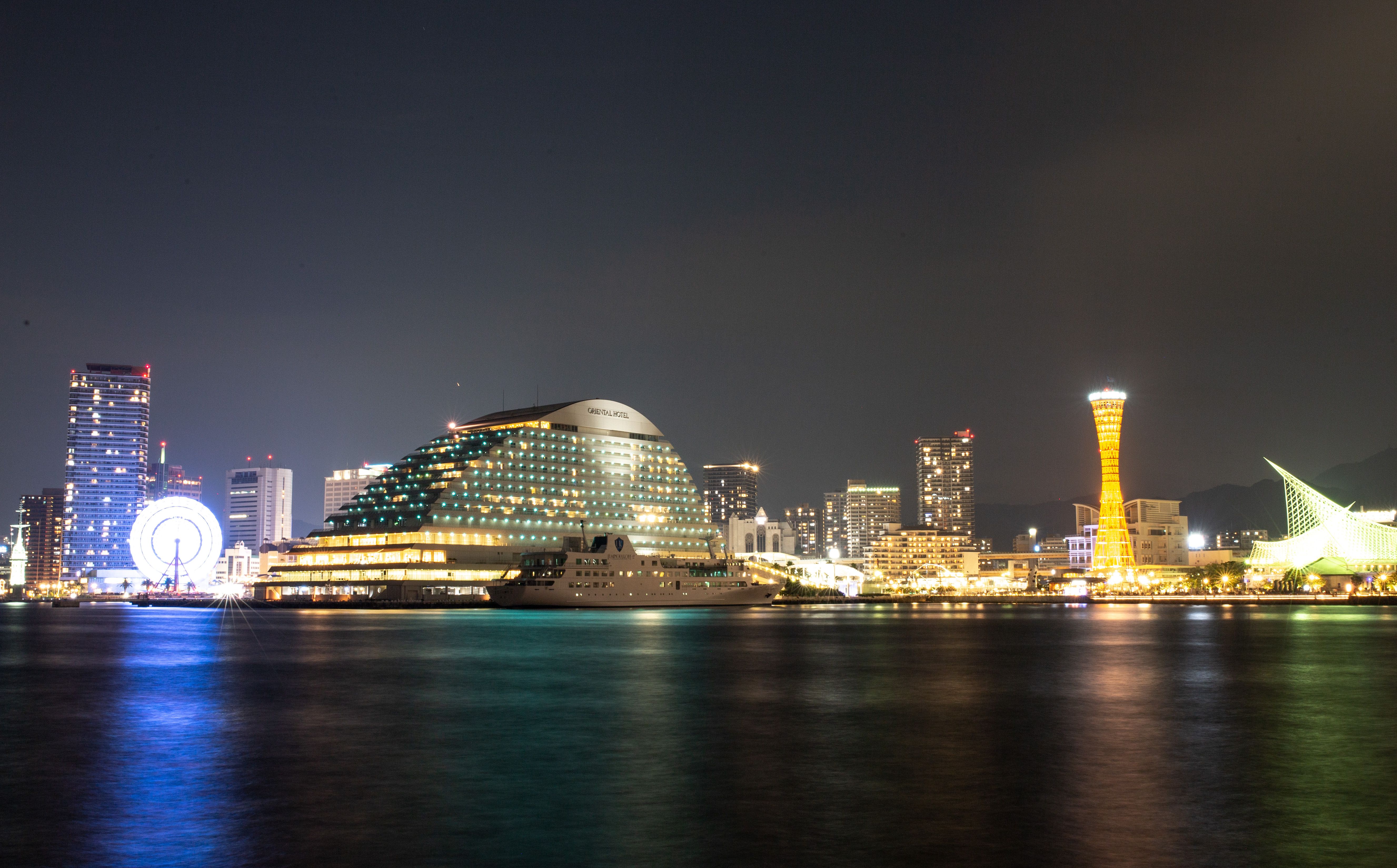
Structurally, the tower's red lattice shape is what sets it apart from typical observation towers, which are usually built as solid enclosed columns. The open steel frame lets light and air pass through the structure itself, and from a distance the tower appears almost woven rather than built. From the observation floors, the views extend across the harbor to passing ships and cranes, toward the Rokko mountain range that rises directly behind the city, and on especially clear days as far as the Akashi Kaikyo Bridge to the west. At night the entire structure is lit, and the lighting scheme is changed periodically for seasonal events, making the tower a consistent visual anchor for the harbor after dark.
The tower's appearance shifts with the seasons more through lighting and atmosphere than through any physical change. Clearer air in winter tends to produce the longest sightlines from the observation floors, while summer haze can shorten visibility somewhat, though the tower remains a popular sunset and evening spot year-round. In early August, the Kobe Minato Matsuri festival fills the harbor below with fireworks, and the observation floors and rooftop deck become a sought-after vantage point for the display, timed ticket availability permitting. Evening visits generally offer the best combination of views and atmosphere, since the tower's own lighting comes on as the harbor view transitions from daylight to city lights.

Kobe Port Tower's history is closely tied to the city's broader identity as a major Japanese port. It was built during a period of rapid postwar growth, when Kobe was expanding into one of the busiest container ports in the world, and the tower was conceived partly as a symbol of that growth, a modern landmark to match the city's rising commercial importance. Its survival through the 1995 earthquake, and its continued presence through the long rebuilding of the surrounding waterfront, has given it a secondary role as a marker of the city's recovery. The 2021-2024 renovation, focused heavily on seismic reinforcement, reflects the same underlying concern that shaped much of Kobe's post-earthquake infrastructure investment.
Within Meriken Park, the tower is one part of a small cluster of waterfront landmarks that together represent Kobe's maritime identity, alongside the sail-shaped Kobe Maritime Museum and the BE KOBE sign nearby. Visible from many points across central Kobe, the tower also functions as an informal orientation marker for visitors moving between Harborland, Meriken Park, and the rest of the waterfront. Its distinctive shape means it rarely gets confused with any other structure in the city, and photographs of Kobe's skyline taken from Mount Rokko or the harbor almost always include it.
For visitors deciding whether to go up, the renovated tower offers more to do than the pre-2024 version did, with the rotating cafe, digital art floor, and new rooftop deck adding real content beyond the observation windows. It works well as a standalone stop of under two hours, and pairs naturally with a walk through the rest of Meriken Park and into Kobe Harborland nearby. Given its central role in the city's skyline and its recent renovation, Kobe Port Tower is one of the more straightforward must-see recommendations in Kobe, particularly for anyone interested in harbor views or in seeing the results of the tower's 2024 reopening firsthand.
Things to Do at Kobe Port Tower
How to Get to Kobe Port Tower
Kobe Port Tower stands inside Meriken Park at the edge of Kobe's waterfront, a short walk from the city's central train stations.
- •Nearest station: Minatomotomachi Station (Kobe Municipal Subway Kaigan Line), approx. 5-minute walk; also reachable on foot from JR/Hankyu/Hanshin Motomachi Station and JR Kobe Station
- •IC cards (Suica, Pasmo, or ICOCA) are accepted on trains, subways, and buses throughout Japan. Tap in and out at every gate.
- •Avoid traveling during rush hour on weekdays: 7am to 9am and 5pm to 8pm. Trains are significantly more crowded.
- •Google Maps provides accurate real-time transit directions in Kobe. Download offline maps before you arrive.
Map
Best Time to Visit Kobe Port Tower
Best time to visit Kobe Port Tower: Late afternoon into evening, for sunset views and the illuminated night skyline. Weekday mornings are generally quieter than weekends and public holidays.
- •Best time to visit: Late afternoon into evening, for sunset views and the illuminated night skyline
- •Arriving on a weekday morning avoids the largest crowds. Weekends and public holidays are significantly busier.
- •Spring (late March to early May) and autumn (October to November) are the most popular seasons for visiting Kobe.
- •Golden Week (late April to early May) is the busiest week of the year in Japan. Book accommodation and tickets well in advance.
Comfortable temperatures for lingering on the rooftop deck, with clearing spring air improving daytime sightlines across the harbor.
Long daylight hours push sunset later into the evening, and in early August the tower's upper floors are a sought-after vantage point for the Kobe Minato Matsuri fireworks over the harbor, ticket availability permitting.
Clearer air typically gives some of the best long-distance views of the year, extending toward the Rokko mountains and, on the clearest days, the Akashi Kaikyo Bridge.
Winter air is often the sharpest of the year for observation floor views, and the tower's night illumination stands out against shorter daylight hours and an earlier sunset.
Entry Fee & Hours
| Category | Price (JPY) | Approx. (USD) |
|---|---|---|
| Adult (high school age and up) | ¥1,200 | ~$8 |
| Child (elementary to middle school) | ¥500 | ~$3.50 |
| Category | Price (JPY) | Approx. (USD) |
|---|---|---|
| Adult | ¥1,000 | ~$7 |
| Child | ¥400 | ~$2.50 |
Kobe Port Tower reopened on April 26, 2024 after a full renovation. Timed-entry tickets for a specific date and time are used for the Observation Floor and rooftop deck, and same-day availability can be limited on weekends and holidays.
- •Booking a timed ticket online in advance is recommended, especially around sunset and on weekends, since rooftop deck access is date and time specific.
- •The ground floor gallery and gift shop can be visited without an admission ticket. The rooftop deck may close temporarily in poor weather for safety reasons.
Nearby Attractions
Combine with Kobe Port Tower on the same day
Kobe Harborland & Meriken Park

Kobe Maritime Museum
Umie Mosaic Big Ferris Wheel
Distance: Approx. 10 minutes walk
Kobe City Museum
- •Kobe Harborland & Meriken Park (Adjacent, within Meriken Park and a few minutes' walk into Harborland): A waterfront district pairing the Harborland shopping and dining complex with the open harbor plaza of Meriken Park, home to the BE KOBE sign, Kobe Maritime Museum, and Kobe Port Tower.
- •Kobe Maritime Museum (Approx. 1-2 minutes walk): Kobe's port-history museum in Meriken Park, housed under a distinctive white sail-shaped roof beside Kobe Port Tower, with a single ticket that also covers the attached Kawasaki Good Times World.
- •Umie Mosaic Big Ferris Wheel (Approx. 10 minutes walk): A waterfront Ferris wheel at the Mosaic section of Harborland, with harbor views back toward the tower.
- •Kobe City Museum (Approx. 15 minutes walk): Kobe's city and open-port history museum, housed in a 1935 former bank building in the Old Foreign Settlement, holding nationally significant archaeological finds alongside a free ground-floor history exhibition.
Suggested Itinerary
Pair Kobe Port Tower with these nearby stops for a full day in Chuo-ku, Kobe (Meriken Park).
Frequently Asked Questions
Planning Your Kobe Trip?
See the full Kobe destination guide or browse Japan itineraries that include this city.
See all Towers & Views across Japan →Explore all attractions in Kobe or browse nearby destinations.
Back to Kobe Guide →