
Kobe at a Glance
- region
- Kansai (Hyogo Prefecture)
- best For
- Kobe beef, port views, Mount Rokko night views, Chinatown
- best Time
- Spring (March-April) and autumn (October-November) for mild weather and cherry blossoms or foliage
- suggested Stay
- 1-2 days
- main Station
- Shin-Kobe Station (Shinkansen) and Sannomiya Station (city center hub)
- nearby Destinations
- Osaka, Kyoto, Nara
Visiting Kobe: Japan's Cosmopolitan Port City
Kobe is one of Japan's most livable and international cities, built on a narrow strip of land between the Rokko mountain range and Osaka Bay in the Kansai region. As one of the first Japanese ports opened to foreign trade in the 1860s, Kobe absorbed decades of European, American, and Chinese influence, and that layered history still shows in the former foreign residences of Kitano, the red gates of Nankinmachi Chinatown, and a food culture built around the city's famous Kobe beef. Visitors can walk the waterfront at Meriken Park and Harborland, ride the ropeway up to Nunobiki Herb Gardens, or take the cable car to Mount Rokko for a night view often ranked among the best in Japan. Just 15 minutes from Shin-Osaka by Shinkansen and under an hour from Kyoto, Kobe rewards travelers who make time for it, whether as a day trip or a slower overnight stay.
•8 min read
Top Attractions in Kobe
The must-see sights, ranked by traveler impact
View all Kobe attractions →
Nada-ku, Kobe, Hyogo Prefecture
Mount Rokko
- Entry
- Rokko Cable Car round trip ¥1,550 adults
- Best time
- Clear evenings
- Time needed
- Half day
 Must-See
Chuo-ku, Kobe
Kobe Harborland & Meriken Park
- Entry
- Free to enter Harborland and Meriken Park
- Best time
- Late afternoon into evening
- Time needed
- 2-3 hours

Chuo-ku, Kobe (Meriken Park)
Kobe Port Tower
- Entry
- ¥1,200 adults / ¥500 children
- Best time
- Late afternoon into evening
- Time needed
- 45 minutes to 1.5 hours

Suma-ku, Kobe
Kobe Suma Sea World
- Entry
- Dynamic date-based pricing
- Best time
- Weekdays for smaller crowds
- Time needed
- Half day

Chuo-ku, Kobe
Kobe Nunobiki Herb Gardens & Ropeway
- Entry
- Ropeway round trip
- Best time
- Spring
- Time needed
- 2-3 hours

Kitano, Kobe
Weathercock House (Kazamidori no Yakata)
- Entry
- ¥500 adults
- Best time
- Any season
- Time needed
- 30-45 minutes

Chuo-ku, Kobe
Nunobiki Falls
- Entry
- Free. No admission fee or ticket required
- Best time
- May-June
- Time needed
- 30 minutes to 2 hours

Chuo-ku, Kobe
Kobe Chinatown (Nankinmachi)
- Entry
- Free to walk around the district. Food and shopping are pay-per-item
- Best time
- Late morning to early afternoon on a weekday to avoid the heaviest crowds
- Time needed
- 1-1.5 hours

Chuo-ku, Kobe
Ikuta Shrine
- Entry
- Free to enter the shrine grounds. Optional charges apply
- Best time
- Early morning for a quiet visit
- Time needed
- 30-45 minutes

Harborland, Kobe
Kobe Anpanman Children's Museum & Mall
- Entry
- Museum
- Best time
- Weekday mornings
- Time needed
- 2-3 hours

Port Island, Chuo-ku, Kobe
Kobe Animal Kingdom
- Entry
- Adult
- Best time
- Weekday mornings
- Time needed
- 2-3 hours

Mount Rokko, Kobe
Rokko Garden Terrace
- Entry
- Grounds free
- Best time
- Clear evenings
- Time needed
- 1-2 hours

HAT Kobe, Chuo-ku, Kobe
Earthquake Memorial Museum
- Entry
- ¥650 adults
- Best time
- Weekday mornings
- Time needed
- 1.5 to 2 hours

Maiko, Tarumi-ku, Kobe
Akashi Kaikyo Bridge
- Entry
- Free to view from Maiko Park. Maiko Marine Promenade: ¥250 weekday / ¥300 weekend adult. Three-facility combo ticket
- Best time
- Late afternoon into evening
- Time needed
- 45-60 minutes
Why Visit Kobe?
Quick Answer
Kobe pairs its famous Kobe beef with a scenic waterfront, a historic foreign-settlement district, one of Japan's three official Chinatowns, and a mountain cable car ride to one of the country's best night views, all within a compact, easy-to-navigate city.
Kobe is worth visiting because it packs mountains, a working port, international history, and some of Japan's best beef into a city that is easy to reach and easy to walk. Unlike Osaka or Kyoto, Kobe rarely feels crowded, and its compact center means most major sights sit within a short train or bus ride of Sannomiya Station.
Food is a major draw. Kobe beef, the marbled Tajima-gyu prized for its tenderness, originates from cattle raised in Hyogo Prefecture and is served across the city in steakhouses and teppanyaki counters. Kobe is also home to Nankinmachi, one of Japan's three official Chinatowns, where small stalls sell steamed buns and street snacks alongside sit-down Chinese restaurants.
The city's history as one of Japan's first treaty ports after 1868 gave it a distinctly international character that persists today. The Kitano district preserves dozens of former foreign merchants' residences, known as ijinkan, built in Western architectural styles rarely found elsewhere in Japan. That same openness shaped Kobe's food, coffee, and bakery culture, which locals still take pride in.
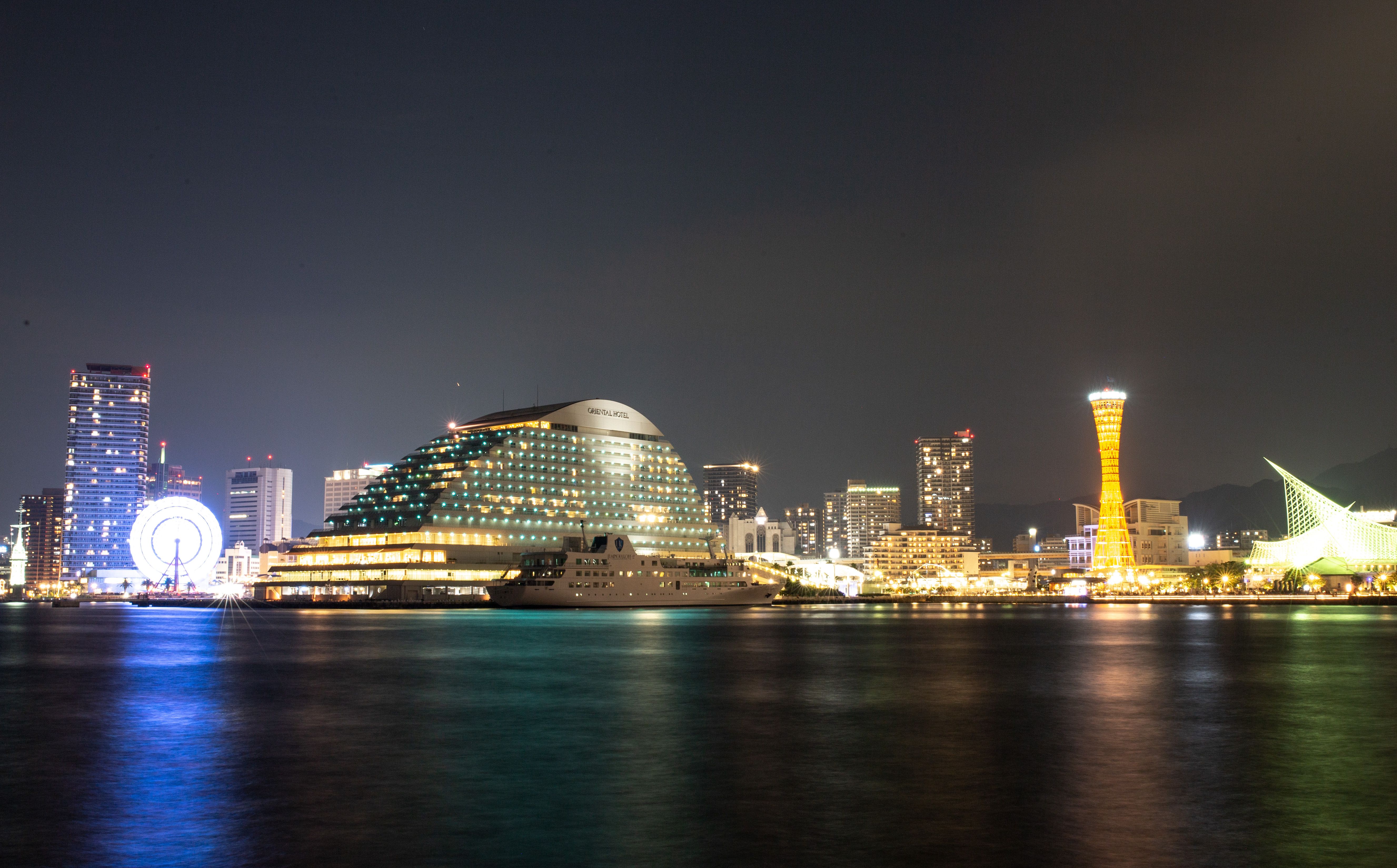
Kobe's setting between mountains and sea also makes it one of the most scenic cities in Kansai. Mount Rokko rises directly behind downtown, reachable by cable car in minutes, with an observation terrace overlooking the entire bay. Along the waterfront, Meriken Park and Harborland combine the red-lattice Kobe Port Tower, the sail-shaped Kobe Maritime Museum, and a preserved section of the pier damaged in the 1995 Great Hanshin-Awaji Earthquake, a reminder of the disaster the city rebuilt from and now commemorates at the Disaster Reduction and Human Renovation Institution.
For travelers based in Osaka or Kyoto, Kobe works well as a half-day or full-day trip, and its combination of beef, port scenery, mountain views, and international heritage gives it a distinct identity within the Kansai region rather than feeling like an extension of Osaka.
How to Get to Kobe
Quick Answer
Kobe is about 20-25 minutes from Osaka and 50-55 minutes from Kyoto by direct JR Special Rapid train, and about 3 hours from Tokyo by Shinkansen to Shin-Kobe Station.
Kobe sits close enough to Osaka that most travelers reach it as an extension of a Kansai itinerary rather than flying in directly, though a small domestic airport and a Shinkansen station both serve the city.
Kansai International Airport (KIX)
- Travel time
- 60-90 minutes
- Distance
- Approx. 65 km (40 miles)
- Best for
- Most international visitors
Kobe Airport (UKB)
- Travel time
- 20-30 minutes
- Distance
- Approx. 8 km (5 miles)
- Best for
- Domestic flights only
Getting from Kansai International Airport (KIX) to Kobe
Getting to Kobe from Tokyo
Getting to Kobe from Osaka
Getting to Kobe from Kyoto
Getting to Kobe from Hiroshima
Arriving at Sannomiya Station
Sannomiya is Kobe's central transportation hub, served by JR, Hankyu, Hanshin, the Kobe Municipal Subway, and the Port Liner. From here, you can easily reach:
- •Kitano
- •Motomachi and Nankinmachi Chinatown
- •Harborland and Meriken Park
- •Shin-Kobe Station
- •Mount Rokko cable car (via bus or train transfer)
- •Kobe Airport (via Port Liner)
Recommended
For most international visitors, the easiest route is to fly into Kansai International Airport and take the airport limousine bus or the Kobe-Kansai Bay Shuttle boat directly to Sannomiya. If you are already based in Osaka or Kyoto, the JR Special Rapid train is faster and cheaper than the Shinkansen for reaching central Kobe.
Best Time to Visit Kobe
Quick Answer
Spring (March-April) and autumn (October-November) are Kobe's most comfortable seasons for sightseeing. The coastal location also gives Kobe milder winters than inland Kansai cities like Kyoto.
The best time to visit Kobe is spring (March-April) or autumn (October-November), when mild temperatures make walking the waterfront and riding the Mount Rokko cable car most enjoyable. Kobe's coastal location also gives it a milder winter than inland Kansai cities.
Spring (March-May): Cherry Blossoms and Mild Weather
Spring is one of the most popular seasons in Kobe. Cherry blossoms typically bloom from late March to early April, with Sorakuen Garden, Mount Rokko, and the Nunobiki Herb Gardens among the best viewing spots.
Popular cherry blossom locations include:
- Sorakuen Garden
- Mount Rokko and the Rokko Cable Car route
- Nunobiki Herb Gardens
- Meriken Park
Temperatures generally range from 50°F-72°F (10°C-22°C), making spring ideal for walking the waterfront and hiking around Mount Rokko.
Summer (June-August): Warm, Humid, and Festival Season
Summer brings warm, humid weather along with fireworks festivals and evening illuminations along the harbor. June marks the rainy season, while July and August are typically hot.
Temperatures often range from 75°F-92°F (24°C-33°C).
Summer highlights include:
- Kobe Minato Fireworks Festival
- Evening walks through Harborland and Meriken Park
- Cooler air and views from the Mount Rokko summit
Summer visitors should be prepared for heat and humidity, especially in the downtown area away from the bay breeze.
Autumn (September-November): Best Overall Season
Many travelers consider autumn the best time to visit Kobe. Humidity drops, skies are often clear, and the foliage around Mount Rokko and Nunobiki Herb Gardens turns shades of red and gold.
Popular autumn locations include:
- Mount Rokko
- Nunobiki Herb Gardens
- Sorakuen Garden
Temperatures generally range from 55°F-77°F (13°C-25°C).
Autumn combines pleasant weather with fewer crowds than the spring cherry blossom season.
Winter (December-February): Illuminations and Fewer Crowds
Kobe's coastal position keeps winters relatively mild compared with inland Kansai. Snow is uncommon in the city center, though it can dust the Mount Rokko summit.
Temperatures typically range from 38°F-55°F (3°C-13°C).
Winter highlights include:
- Kobe Luminarie, an illumination event held in December to commemorate the 1995 Great Hanshin-Awaji Earthquake
- Fewer tourists at major sights
- Clear night views from Mount Rokko
Times to Avoid
Golden Week (Late April to Early May)
Golden Week is one of Japan's busiest holiday periods. Trains, hotels, and popular attractions become significantly more crowded.
Obon Holiday (Mid-August)
This major domestic travel period brings increased tourism, crowded transportation, and higher hotel prices.
Rainy Season (Mid-June to Mid-July)
Kobe receives frequent rainfall during Japan's rainy season, which can affect the Mount Rokko cable car and hiking trails in particular.
Best Overall Months
For the best combination of weather, scenery, and sightseeing conditions, visit Kobe during:
- Late March to early April for cherry blossoms
- October and November for comfortable temperatures and clear mountain views
- May for pleasant weather and fewer crowds after cherry blossom season
When Should First-Time Visitors Go?
For most first-time visitors, October and November offer the best overall experience, with comfortable temperatures, low humidity, and clear conditions for the Mount Rokko night view. Spring is a close second for travelers hoping to combine cherry blossoms with a Kansai itinerary that includes Kyoto and Osaka.
Where to Stay in Kobe
Quick Answer
Sannomiya is the best base for most first-time visitors, with the city's main transportation connections. Kitano suits history and architecture lovers, Motomachi/Harborland suits food and waterfront scenery, and Shin-Kobe suits Shinkansen travelers.
The best areas to stay in Kobe are Sannomiya, Kitano, Motomachi/Harborland, and Shin-Kobe, each suiting a different travel style. Kobe's compact layout means most neighborhoods are within walking distance of each other.
Sannomiya
from $40/nightBest for: First-timers & transportation access
Kitano
from $45/nightBest for: History & atmosphere
Motomachi & Harborland
from $40/nightBest for: Food & waterfront views
Shin-Kobe
from $40/nightBest for: Shinkansen access
Nearby Destinations
Easy day trips or next stops from Kobe

Kyoto
Culture • History • Temples • Ryokan stays • Cherry blossoms

Osaka
Food • Nightlife • Shopping • Day trips

Nara
Day trips • Temples • Deer • History • Families
- •Kyoto: Culture, History, Temples, Ryokan stays, Cherry blossoms
- •Osaka: Food, Nightlife, Shopping, Day trips
- •Nara: Day trips, Temples, Deer, History, Families
Frequently Asked Questions
Free Itinerary Builder
Build Your Own Kobe Itinerary
Choose Kobe attractions, organize them by day, and see opening hours, admission fees and your trip pace in one place.
Plan This Trip
Guides and tools for the parts of a Kobe trip that take the most planning
Ready to Experience Kobe?
Browse curated Japan itineraries, or build your own with our free planning tools.
Next: Explore all attractions in Kobe or browse nearby destinations.
Back to All Destinations →