Kyoto Tower
ExploreJapanDaily Editorial Team · Last updated: September 28, 2026
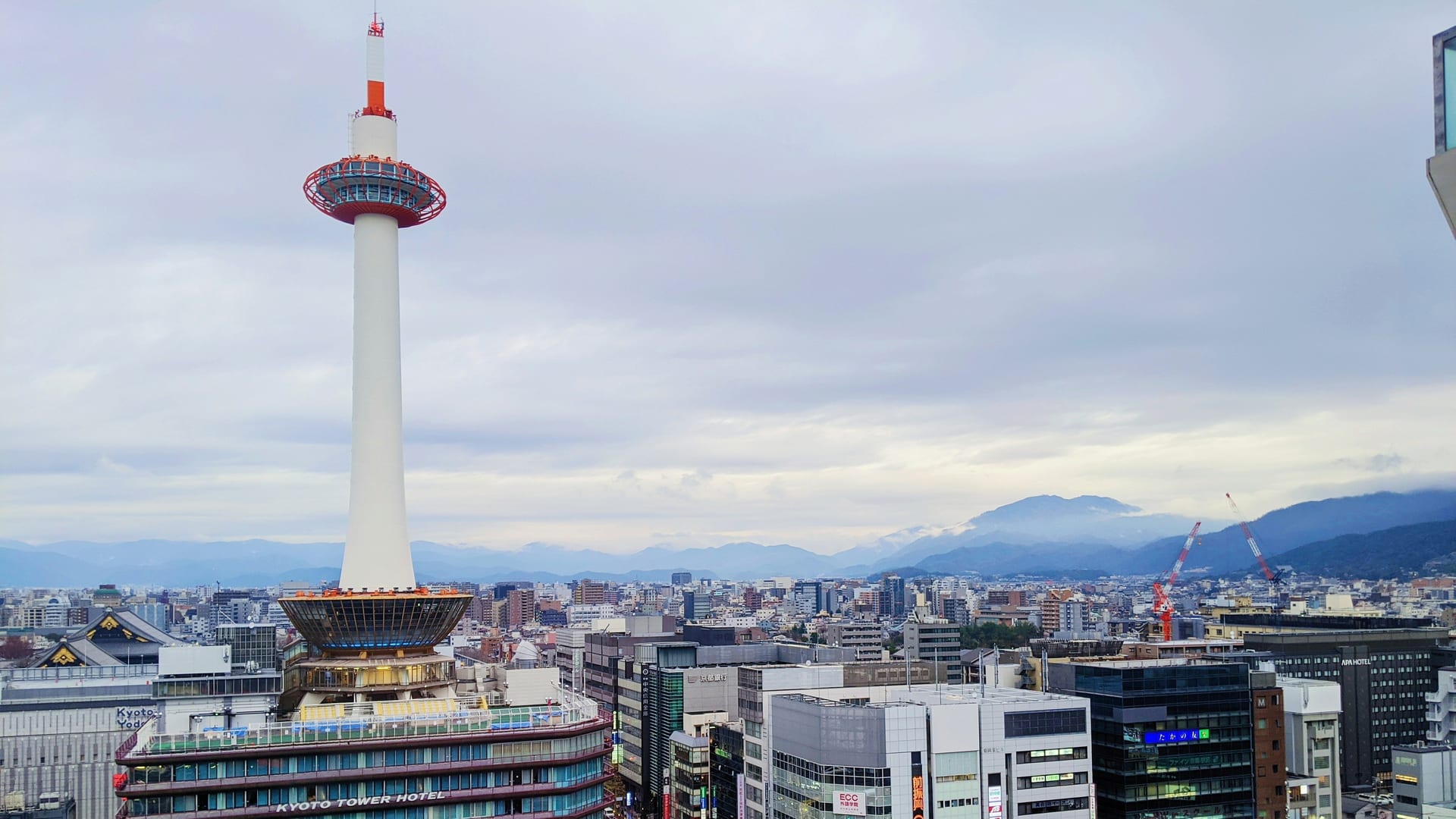
Kyoto Tower is the 131-meter white tower across the road from Kyoto Station, the tallest tower in Kyoto. Its observation deck, 100 meters up and the highest viewpoint in the city center, costs ¥1,000 for adults from October 1, 2026 (¥900 until then) and is open 10:00 a.m. to 9:00 p.m., with last entry at 8:30 p.m. Most visitors spend 15 to 30 minutes at the top.
- Area
- Kyoto Station / Central Kyoto
- Best For
- Views, City Orientation, Night Views, Arrival or Departure Day
Visiting Kyoto Tower
Kyoto Tower stands on the roof of a nine-story building across Shiokoji-dori from Kyoto Station's Central Exit. It opened on December 28, 1964, the year the Tokaido Shinkansen began running, and at 131 meters it is still the tallest tower in Kyoto. Its architect, Yamada Mamoru, drew it as a lighthouse for a city without a sea, with the tiled roofs below standing in for waves. Since April 2024 its official name has been Nidec Kyoto Tower.
The observation deck, 100 meters up, is a ring of windows on two levels. Because Kyoto limits building heights, little blocks the view: the operator points out Toji's pagoda, Nishi Hongan-ji, the stage of Kiyomizu-dera, Sanjusangen-do and the gates of Tofuku-ji and Chion-in, and on a clear day Osaka. The telescopes are free, and there is no time limit.
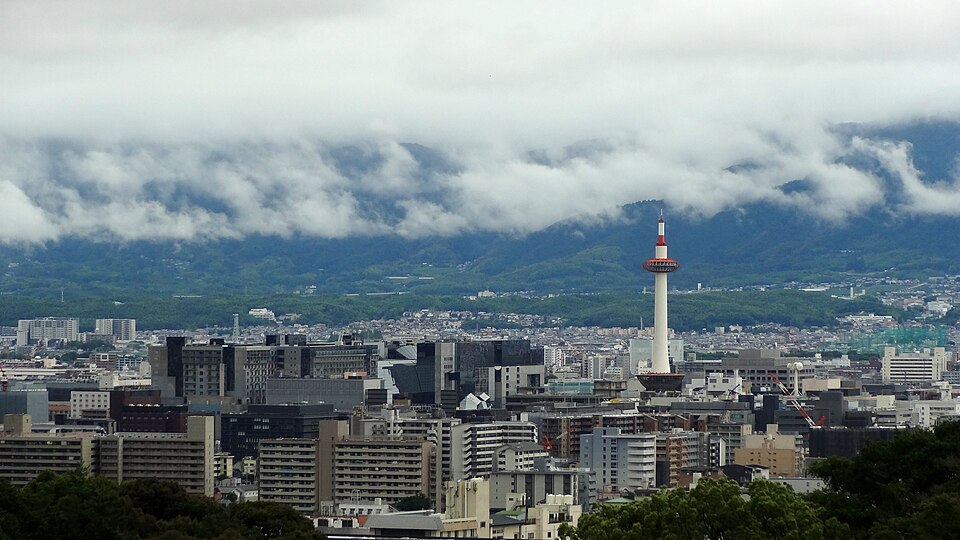
It is a short visit. The operator says most people stay 15 to 30 minutes, and the view is at its best in clear weather, around sunset or after dark. In rain or low cloud it shrinks to the nearest districts, so look at the sky before buying a ticket.

The building below holds Kyoto Tower Sando: a food hall in the basement, souvenir shops on the ground floor and hands-on workshops, such as Japanese sweet-making and kimono rental, on the second floor. A public bath, Yuu, is three floors underground.
When to go up
Short answer
Go on a clear day around sunset or after dark; in low cloud, pick another time.
- Clear evening
- Sunset and the first hour of darkness show the city and the hills around it.
- Daytime
- Best for picking out temples and the mountains; haze can hide Osaka.
- Rain or low cloud
- The view shrinks to the nearest districts.
- August 16 and January 1
- Special hours: the deck closes early on August 16 before the bonfire viewing, and opens at 6:30 a.m. on January 1.
Fitting Kyoto Tower into a day
Short answer
The tower is a 15 to 30 minute stop that fits around a train or an evening near Kyoto Station.
One stop west
Kyoto Railway Museum
Kyoto Railway Museum, one stop on the JR Sagano Line; closed on most Wednesdays.
South of the station
Toji
Toji and its pagoda, which you can pick out from the deck, 15 minutes on foot from the Hachijo exit.
Two stops south
Fushimi Inari
Fushimi Inari Taisha on the JR Nara Line; go in the morning and save the tower for the evening.
What's at Kyoto Tower
How to Get to Kyoto Tower
Kyoto Tower is directly north of Kyoto Station, across Shiokoji-dori. The deck ticket counter is on the ground floor of the tower building.
- •Kyoto Station Central Exit, then 2 minutes on foot across the bus terminal.
- •The deck does not hold luggage or strollers: use the coin lockers at Kyoto Station first.
Map
Best Time to Visit Kyoto Tower
Best time to visit Kyoto Tower: around sunset or after dark on a clear day. Weekday mornings are generally quieter than weekends and public holidays.
- •The deck is open 10:00 a.m. to 9:00 p.m. every day; last entry is 8:30 p.m.
- •A clear evening shows the most; in rain or low cloud the view shrinks to the nearest districts.
- •On August 16 the deck closes at 6:30 p.m. (last entry 6:00 p.m.) before a separate bonfire viewing; on January 1 it opens at 6:30 a.m.
Entry Fee & Hours
| Category | Price (JPY) | Approx. (USD) |
|---|---|---|
| Adult | ¥1,000 | ~$6.7 |
| High school student | ¥800 | ~$5.3 |
| Elementary and junior high school student | ¥700 | ~$4.7 |
| Child (3 and over) | ¥300 | ~$2 |
From October 1, 2026. Until September 30, 2026: ¥900, ¥700, ¥600 and ¥200. Under 3 free.
- •Disability certificate holders and one companion pay ¥500 from October 1, 2026 (¥450 before). Tickets are sold on the ground floor of the tower building; cash, cards and mobile payments are accepted.
- •There is no luggage storage or stroller parking at the deck and no re-entry. Photography is fine on the deck but not in the lifts.
Nearby Attractions
Places to pair with Kyoto Tower
Kyoto Railway Museum
Toji Temple

Fushimi Inari Taisha
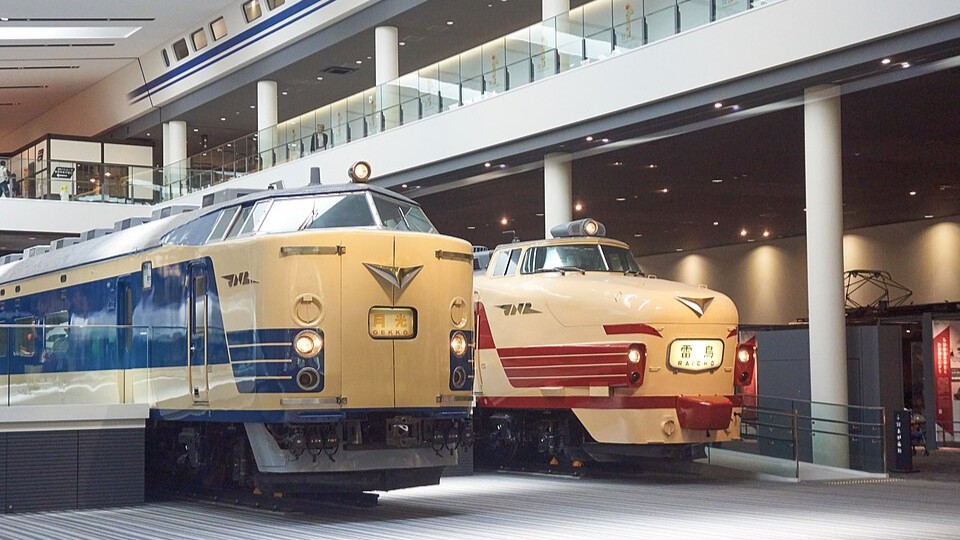
- •Kyoto Railway Museum (One stop on the JR Sagano Line, or 20 minutes on foot): The Kyoto Railway Museum displays 54 trains, from steam locomotives to the 500-series Shinkansen, in a main hall, an outdoor promenade and Japan's oldest surviving reinforced-concrete roundhouse, where steam engines still run.
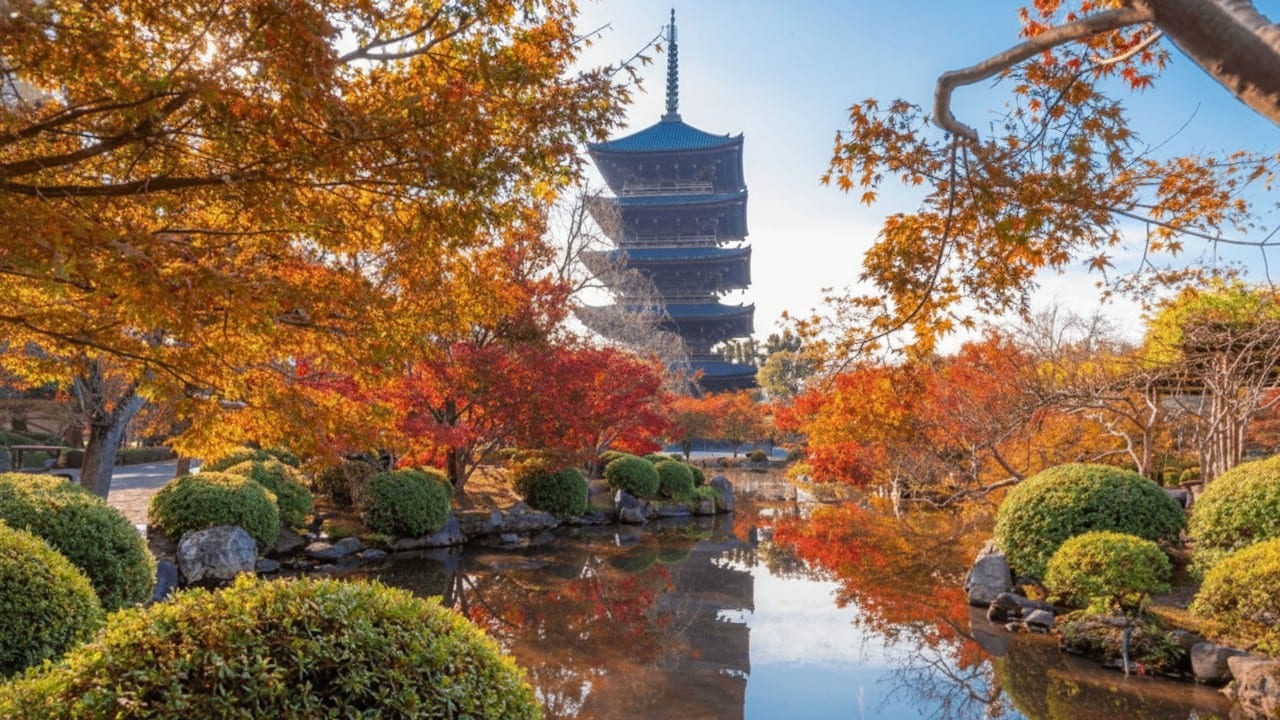
- •Toji Temple (15 minutes on foot from the station's Hachijo exit): Toji (Kyo-o-gokoku-ji) was founded in 796 as one of two great temples guarding the southern gate of the new capital, and was given to the monk Kukai in 823. It is the head temple of Shingon Buddhism, part of the Historic Monuments of Ancient Kyoto World Heritage site, and its pagoda, rebuilt in 1644, is the tallest five-story pagoda in Japan.
- •Fushimi Inari Taisha (Two stops on the JR Nara Line): Fushimi Inari Taisha is the head shrine of Japan's Inari shrines, with about 10,000 vermilion torii along the paths up Mount Inari in southern Kyoto. Entry is free, the grounds are always open, and you choose how far to climb.
Two ways to fit Kyoto Tower in
Both start from Kyoto Station.
Arrival evening
About an hour.
After check-in
Leave bags at the hotel or in Kyoto Station lockers.
Sunset
Up the tower as the light goes down over the western hills.
Dinner
The Kyoto Tower Sando food hall in the basement.
Station-area morning
Half a day, not on a Wednesday.
10:00 a.m.
The Kyoto Railway Museum as it opens.
Midday
Back to Kyoto Station for lunch.
Afternoon
Kyoto Tower before your train.
Frequently Asked Questions
References
View references
Nidec Kyoto Tower
Kyoto Tower Sando
Planning Your Kyoto Trip?
See the full Kyoto destination guide or browse Japan itineraries that include this city.
See all Towers & Views across Japan →Explore all attractions in Kyoto or browse nearby destinations.
Back to Kyoto Guide →