Toji Temple
ExploreJapanDaily Editorial Team · Last updated: September 28, 2026
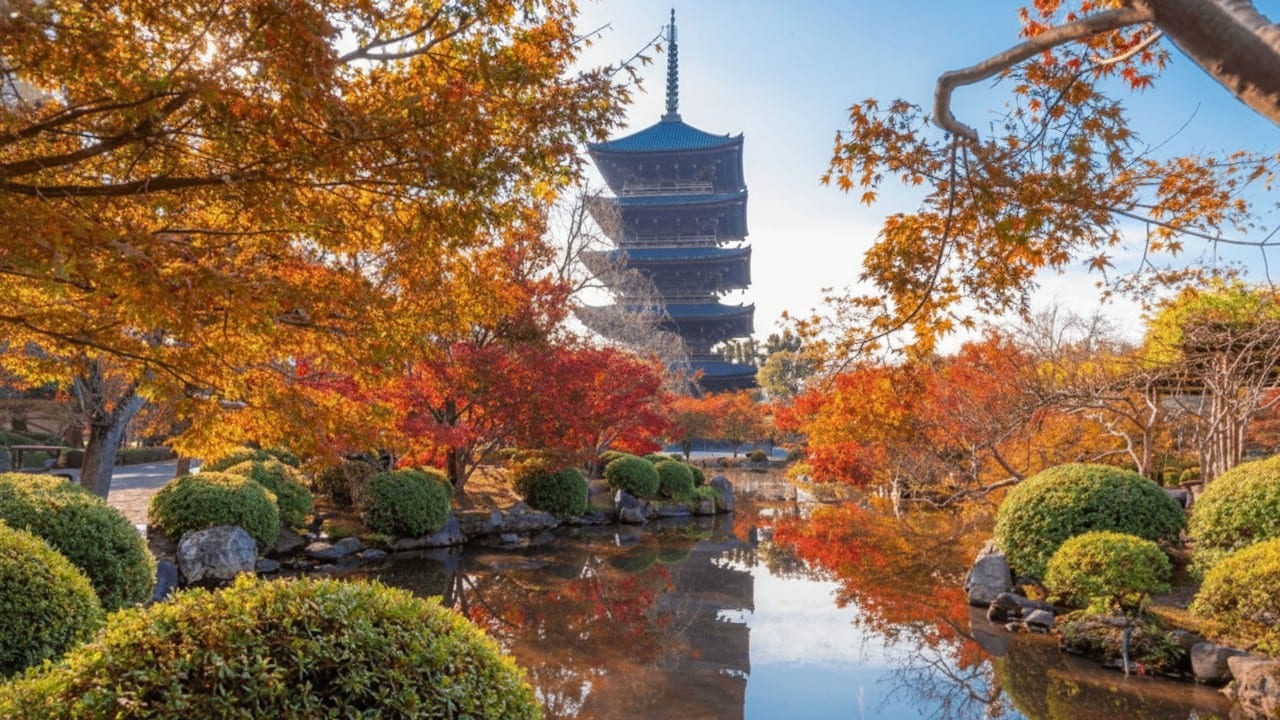
Toji is the Shingon temple with Japan's tallest five-story pagoda, about 55 m high, a 15-minute walk from Kyoto Station. The grounds are free; the Kondo and Kodo halls, where 21 statues are arranged as a three-dimensional mandala, cost ¥800 and are open 8:00 a.m. to 5:00 p.m. every day. On the 21st of each month, the Kobo-ichi market fills the grounds with close to a thousand stalls.
- Area
- South of Kyoto Station
- Best For
- Architecture, Buddhist Art, Markets, UNESCO Heritage
Visiting Toji Temple
When the capital moved to Kyoto in 794, two great temples were built on either side of its main southern gate. The western one is long gone; Toji, the "East Temple", still stands in the same place, and work on its main hall began in 796. In 823 Emperor Saga gave the temple to the monk Kukai (Kobo Daishi), who made it the center of Shingon, or esoteric, Buddhism, and it remains the sect's head temple.
The five-story pagoda, about 55 m high and rebuilt in 1644, is the tallest in Japan and the landmark to walk toward from Kyoto Station. Two halls hold the temple's great images. The Kondo, the main hall, rebuilt in 1603 and a National Treasure, enshrines the Medicine Buddha, Yakushi, with two attendants. In the Kodo, Kukai arranged 21 statues around the cosmic Buddha, Dainichi, as a mandala you can walk in front of.

The Miedo, the hall devoted to Kukai, and the Jikido are free to enter, as are the grounds. Kukai's memorial service is held on the 21st of every month, and the market that grew up around it, the Kobo-ichi, still draws close to a thousand stalls.
The route through Toji
Short answer
On the paid ticket, see the Kondo and the Kodo, walk to the pagoda by the garden pond, then finish at the free Miedo.
Paid area
The Kondo
The main hall, a National Treasure from 1603, with the Medicine Buddha and two attendants.
Next
The Kodo
Kukai's three-dimensional mandala: 21 statues around the Buddha Dainichi.
Then
The pagoda and the pond
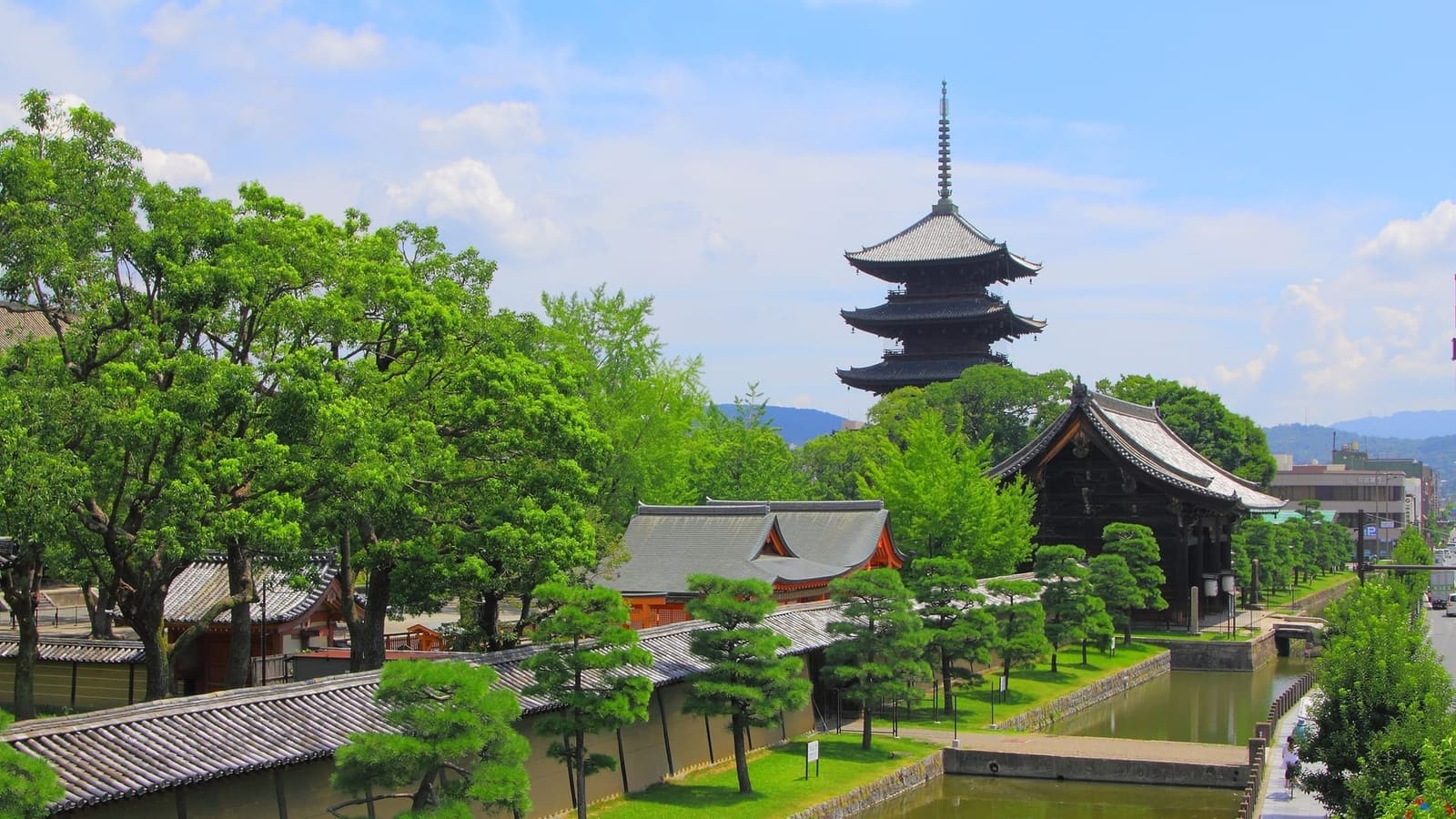
The 55 m pagoda stands in the southeast of the grounds, beyond the garden pond. Its ground floor opens only in special periods.
Free
The Miedo
The hall devoted to Kukai, where the daily morning service and the 21st-of-the-month memorial are held.

When to go
Short answer
Any day for the halls; the 21st for the market, when the grounds are crowded from dawn. Check the temple's calendar if you want to go inside the pagoda.
- Kondo and Kodo
- 8:00 a.m. to 5:00 p.m. every day, last entry 4:30 p.m.
- Kobo-ichi market
- The 21st of every month, from 5:00 a.m. to about 4:00 p.m.
- Pagoda interior, 2026
- January 1 to March 18, April 25 to May 25, October 31 to December 13.
- Night openings, 2026
- March 14 to April 12, April 28 to May 10, October 31 to December 13.
Fitting Toji into a Kyoto day
Short answer
Toji is the easiest major temple to reach from Kyoto Station, so it fits an arrival or departure day, or a morning before Fushimi Inari.
Kyoto Station
Arrival or departure day
An hour at Toji fits between trains; use the station lockers for luggage.
Better on another day
Arashiyama or Kinkaku-ji
Northwest and west Kyoto are the other side of the city; give them their own day.
Things to do at Toji
How to Get to Toji Temple
Toji is just southwest of Kyoto Station, close enough to walk. The pagoda is visible most of the way.
- •Kyoto Station's Hachijo (south) exit is a 15-minute walk; head for the pagoda.
- •Kintetsu Toji Station, one stop from Kyoto Station, is 10 minutes' walk.
- •From Gion, City Bus 207 from Shijo Keihan-mae stops at Toji Higashimon-mae.
Map
Best Time to Visit Toji Temple
Best time to visit Toji Temple: the 21st of the month, for the Kobo-ichi market. Weekday mornings are generally quieter than weekends and public holidays.
- •The Kondo and Kodo are open 8:00 a.m. to 5:00 p.m. every day, last entry 4:30 p.m.
- •Come on the 21st for the Kobo-ichi market, or the first Sunday of the month for the smaller Garakuta-ichi.
- •The pagoda interior and the treasure hall open only in special periods; the temple publishes each year's schedule.
Kobo-ichi market and Kukai's memorial service; the car park is closed.
Garakuta-ichi antiques market.
The pagoda's ground floor is open; the ticket is ¥1,200.
Entry Fee & Hours
| Category | Price (JPY) | Approx. (USD) |
|---|---|---|
| Adult | ¥800 | ~$5.3 |
| High school student | ¥400 | ~$2.7 |
| Junior high student and younger | ¥300 | ~$2 |
| Category | Price (JPY) | Approx. (USD) |
|---|---|---|
| Adult | ¥1,200 | ~$8 |
| High school student | ¥700 | ~$4.7 |
| Junior high student and younger | ¥500 | ~$3.3 |
| Category | Price (JPY) | Approx. (USD) |
|---|---|---|
| Adult and high school student | ¥600 | ~$4 |
| Junior high student and younger | ¥300 | ~$2 |
- •The grounds, the Miedo and the Jikido are free. The treasure hall (¥600) opens only in spring and autumn; night openings of the Kondo and Kodo are ¥1,000. Groups of 30 or more get a discount.
- •Special periods and fees are set each year and can change; these are the temple's 2026 figures.
Nearby Attractions
Places that pair with Toji
Kyoto Tower

Fushimi Inari Taisha
Kyoto Railway Museum
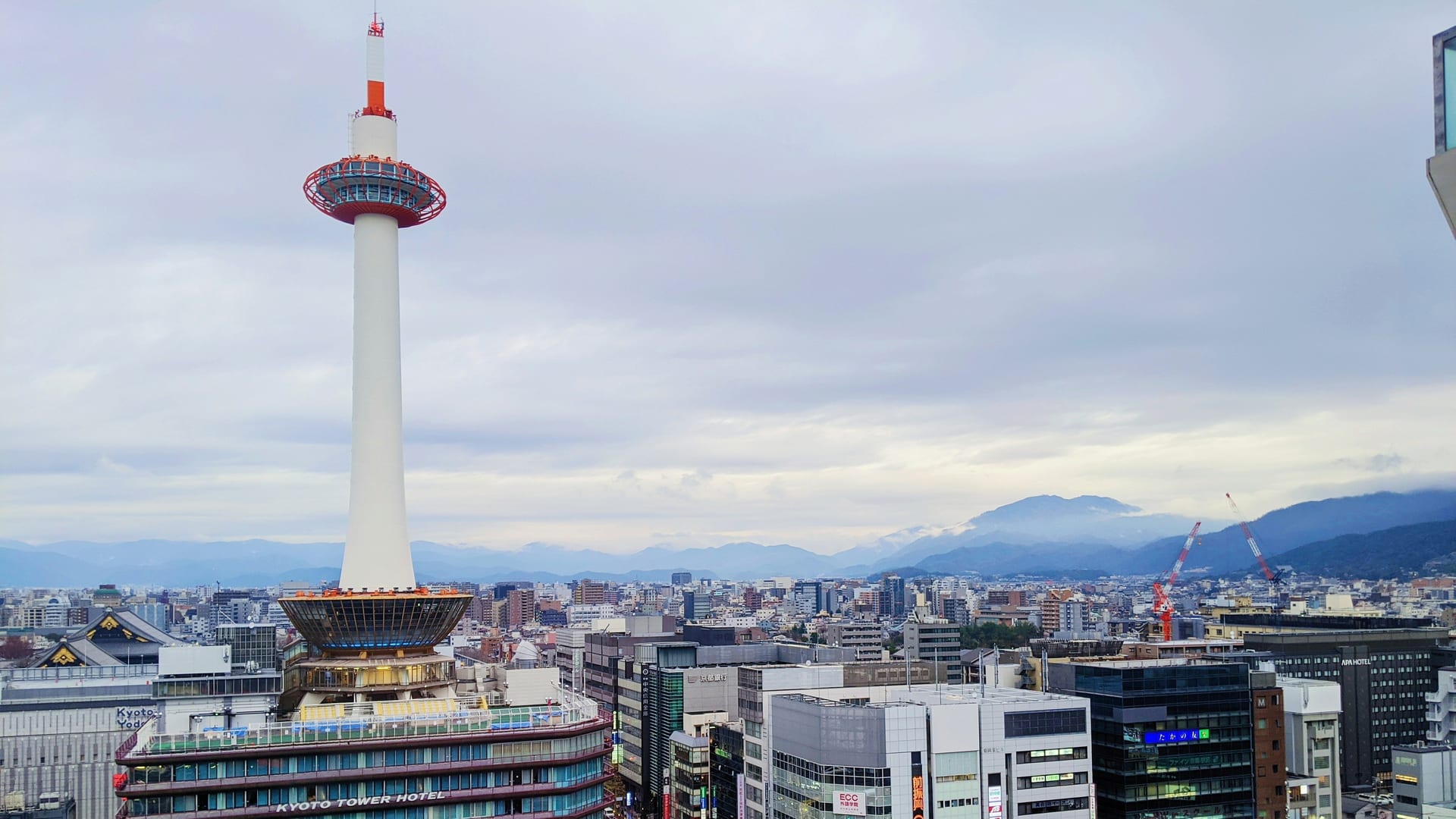
- •Kyoto Tower (Opposite Kyoto Station): Kyoto Tower is the 131-meter tower opposite Kyoto Station, with an observation deck 100 meters up that looks across the whole city basin, and a food hall, souvenir shops and workshops in the building below.
- •Fushimi Inari Taisha (South, on the JR Nara Line from Kyoto Station): Fushimi Inari Taisha is the head shrine of Japan's Inari shrines, with about 10,000 vermilion torii along the paths up Mount Inari in southern Kyoto. Entry is free, the grounds are always open, and you choose how far to climb.
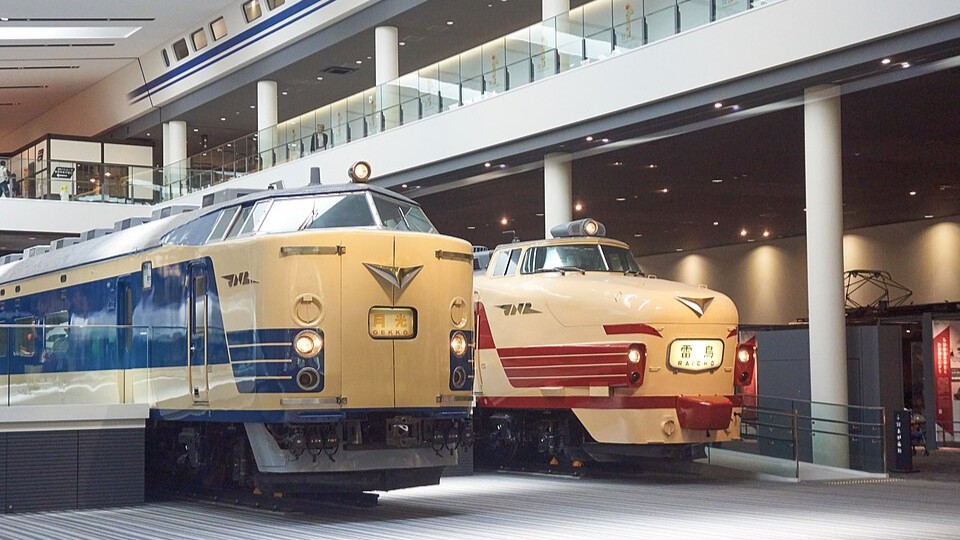
- •Kyoto Railway Museum (West of Kyoto Station): The Kyoto Railway Museum displays 54 trains, from steam locomotives to the 500-series Shinkansen, in a main hall, an outdoor promenade and Japan's oldest surviving reinforced-concrete roundhouse, where steam engines still run.
Two ways to fit Toji into a day
Both start from Kyoto Station.
South Kyoto
Toji, then Fushimi Inari.
8:00 a.m.
Walk from Kyoto Station to Toji; the Kondo and Kodo open at 8:00.
Late morning
Back to Kyoto Station and the JR Nara Line to Fushimi Inari.
Evening
Kyoto Tower or dinner near the station.
Market day (the 21st)
The Kobo-ichi at its best.
8:00 a.m.
The market, when nearly every stall is open.
10:00 a.m.
Kukai's memorial service in the Miedo, then the Kondo and Kodo.
Afternoon
Back to Kyoto Station for your next sight.
Frequently Asked Questions
Planning Your Kyoto Trip?
See the full Kyoto destination guide or browse Japan itineraries that include this city.
See all Temples & Shrines across Japan →Explore all attractions in Kyoto or browse nearby destinations.
Back to Kyoto Guide →