Pontocho Alley
ExploreJapanDaily Editorial Team · Last updated: September 28, 2026
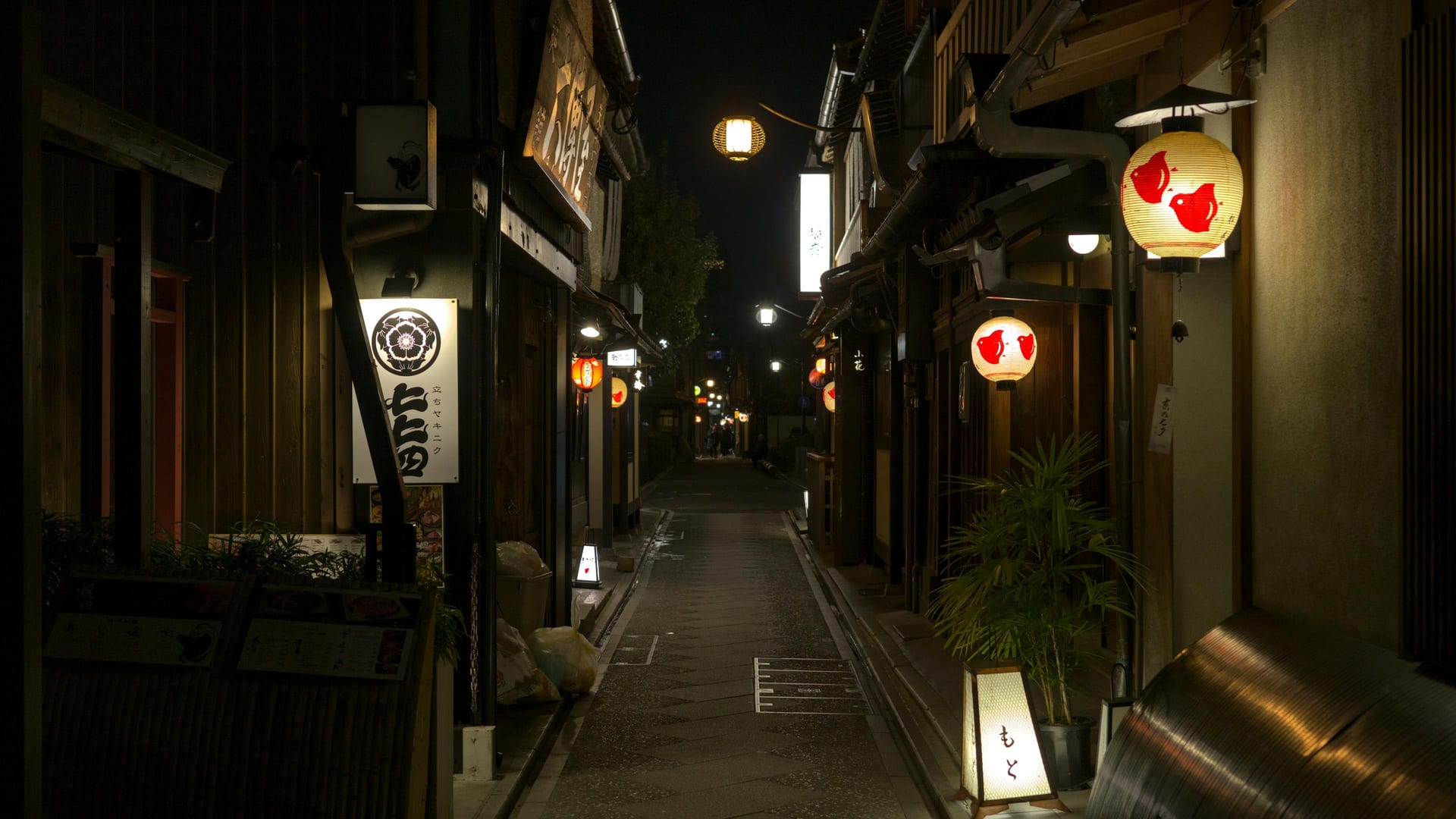
Pontocho is the narrow restaurant street between the Kamo River and Kiyamachi, running about 500 meters from just south of Sanjo-dori to Shijo-dori. It is one of Kyoto's five geisha districts, and it is free to walk at any hour. From May 1 to October 15 its riverside restaurants serve meals on raised platforms, the yuka, over the channel beside the Kamo River.
- Area
- Central Kyoto / Kamo River
- Best For
- Dining, Evening Walks, Riverside Yuka, Traditional Arts
Visiting Pontocho Alley
Pontocho runs north to south between Sanjo-dori and Shijo-dori, one street back from the Kamo River, for a little over 500 meters. It is barely wide enough for two people to pass, and numbered side alleys lead off it toward the river and toward Kiyamachi. The members of the local shop association, around seventy restaurants, bars and shops, range from kaiseki and Kyoto home cooking to yakitori, Italian and cocktail bars.
The street began as land reclaimed from the river when its banks were built up in 1670, and teahouses opened here in the early 1700s for boatmen and travelers on the Takase canal. Pontocho is still one of Kyoto's five hanamachi, with teahouses (ochaya) and geiko and maiko who train in the district, so parts of the street are private homes and businesses rather than attractions.
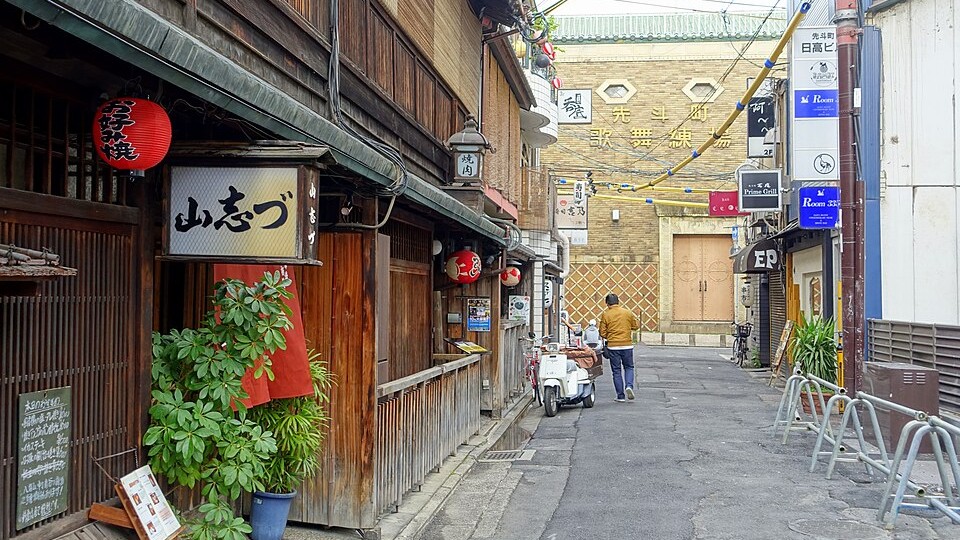
The easiest way to see the district's performers is its own stage. The Pontocho Kaburenjo theater, at the Sanjo end, was completed in 1927 and hosts the Kamogawa Odori each May, first staged in 1872; in 2026 it ran from May 5 to 22, with a tea ceremony served by geiko before each show.
Eating on a yuka platform
Short answer
From May 1 to October 15, riverside restaurants in Pontocho serve meals on raised platforms over the channel beside the Kamo River. Book the restaurant directly.
- Season
- May 1 to October 15 (2026). Some restaurants stop at the end of September.
- Lunch
- Some restaurants also open the platform at lunchtime; check with each one.
- Booking
- Book directly and do not cancel on the day.
- Rain
- You are seated indoors instead.
- On the platform
- Tables are close together with no partitions; keep your voice down. Singing and instruments are not allowed.
When to go
Short answer
Come at dusk to walk it, or book dinner. May and October add performances by the district's geiko and maiko.
- Early evening
- Lanterns lit, street not yet full: the best time to walk through.
- Dinner time
- The narrowest stretches get crowded; keep moving and keep to one side.
- May
- Kamogawa Odori at the Pontocho Kaburenjo (2026: May 5 to 22).
- October
- Suimeikai at the Kaburenjo (2026: October 15 to 20).
Fitting Pontocho into a Kyoto day
Short answer
Pontocho is an evening stop in central Kyoto. Pair it with Nishiki Market in the afternoon or Gion across the river.
West of Kawaramachi
Nishiki Market, earlier
Nishiki Market shops close around 6:00 p.m., so go in the afternoon, not for dinner.
Down any side alley
The Kamo River bank
The riverbank below the yuka platforms is a public path, good for a walk after dinner.
Better on another day
Arashiyama or Fushimi Inari
Both are across the city; finish those earlier in the day.
Things to do in Pontocho
How to Get to Pontocho Alley
Pontocho has an entrance at each end, and four stations are within a short walk. Pick the station for the end you want to start from.
- •Stations at each end: Keihan Sanjo and Kyoto Shiyakusho-mae (north); Hankyu Kyoto-Kawaramachi and Keihan Gion-Shijo (south).
- •The street is paved but very narrow and crowded at dinner time, which makes wheelchairs and strollers difficult.
Map
Best Time to Visit Pontocho Alley
Best time to visit Pontocho Alley: early evening, before the dinner rush; May 1 to October 15 for yuka dining. Weekday mornings are generally quieter than weekends and public holidays.
- •Early evening, before the dinner crowd, is the easiest time to walk it.
- •Yuka platforms: May 1 to October 15; some restaurants finish at the end of September.
- •The Kamogawa Odori is in May and the Suimeikai in October.
Kamogawa Odori at the Pontocho Kaburenjo (2026: May 5 to 22).
Yuka dining platforms over the channel beside the Kamo River.
Suimeikai performances at the Kaburenjo (2026: October 15 to 20).
Entry Fee & Hours
- •Walking the street is free. The Kamogawa Odori is ticketed (2026: ¥4,000 ordinary seat, ¥6,000 special seat, ¥7,000 with the tea ceremony).
- •Pontocho is a narrow paved street, often crowded in the evening, which makes wheelchairs and strollers difficult at dinner time.
Nearby Attractions
Places to pair with an evening in Pontocho

Gion District

Nishiki Market
Yasaka Shrine
- •Gion District (Across the Shijo bridge): Gion is the historic geiko district of Kyoto, east of the Kamo River around Hanamikoji-dori and the Shirakawa canal, next to Yasaka Shrine. Its streets of wooden teahouses are free to walk, while the private lanes off Hanamikoji are signposted no entry for sightseers.
- •Nishiki Market (West of Kawaramachi): Nishiki Market is a covered food street about 390 meters long in central Kyoto, running along Nishikikoji-dori with fish, pickle, tofu and yuba, produce, sweet and kitchenware shops. A licensed fish market since 1615, it is known as "Kyoto's Kitchen".
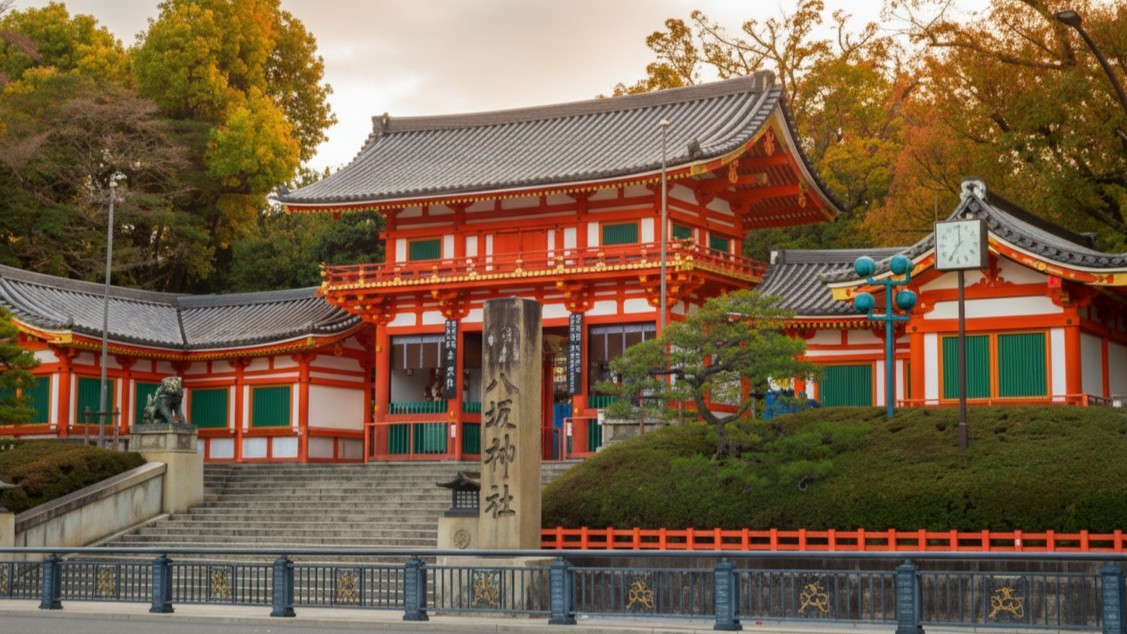
- •Yasaka Shrine (At the top of Shijo-dori, past Gion): Yasaka Shrine (Yasaka Jinja) enshrines Susanoo-no-mikoto and traces its origins to 656 or 876, depending on the account. Its main hall, with the worship hall under the same roof, was designated a National Treasure in 2020, and the shrine runs the Gion Matsuri, held through July for more than 1,150 years.
Two evenings in Pontocho
Both start at the Shijo end, by Hankyu Kyoto-Kawaramachi.
Yuka dinner (May 1 to October 15)
Book the restaurant ahead.
Afternoon
Nishiki Market before its shops close around 6:00 p.m.
Dusk
Walk Pontocho from Shijo toward Sanjo as the lanterns come on.
Dinner
Your booked table on a riverside platform.
Gion and Pontocho
Any time of year.
Late afternoon
Yasaka Shrine and Gion.
Dusk
Cross the Shijo bridge into Pontocho.
Evening
Dinner, then a walk along the Kamo River bank.
Frequently Asked Questions
References
View references
Kyoto Kamogawa Noryo-yuka Association
Pontocho Kabukai
Pontocho Noren-kai
Planning Your Kyoto Trip?
See the full Kyoto destination guide or browse Japan itineraries that include this city.
See all Shopping & Entertainment across Japan →Explore all attractions in Kyoto or browse nearby destinations.
Back to Kyoto Guide →