Gion District
ExploreJapanDaily Editorial Team · Last updated: September 28, 2026
Gion is Kyoto's best-known geiko district, a grid of wooden teahouses and restaurants east of the Kamo River, free to walk at any hour. Hanamikoji-dori is a public street, but the private lanes off it are signposted no entry for sightseers, and the maiko and geiko you may pass are on their way to work. The dependable way to see them dance is the Miyako Odori, every April.

- Area
- Gion / Higashiyama
- Best For
- Traditional Streets, Evening Walks, Geiko Culture, Photography
Visiting Gion District
Gion grew up as the entertainment quarter at the gate of Yasaka Shrine, and it is still where Kyoto's geiko and their apprentices, maiko, live and work. It is not a museum district: the wooden buildings are teahouses, restaurants and homes, and most of the entertaining happens behind closed doors, by prior arrangement.
For a visitor, Gion is two walks. South of Shijo-dori is Hanamikoji-dori, the main street of teahouses, running down to the Gion Kobu Kaburenjo theater. North of Shijo-dori is the Shirakawa canal and Shinbashi-dori, a quieter stone-paved street of willows and old facades. The route below links them with Yasaka Shrine.
Residents have pushed back against crowding: the private lanes off Hanamikoji are signposted no entry for sightseers. The public streets stay open.
A walk through Gion, north to south
Short answer
Start north of Shijo-dori on the Shirakawa canal, walk east to Yasaka Shrine, then come back along Shijo-dori and turn south down Hanamikoji-dori to the Gion Kobu Kaburenjo. Stay on the public streets: the lanes off Hanamikoji are private.
Start, north of Shijo-dori
Shirakawa canal and Shinbashi-dori
A stone-paved street along the canal, lined with willows and teahouse facades, a few minutes from Gion-Shijo Station.
East end of Shijo-dori
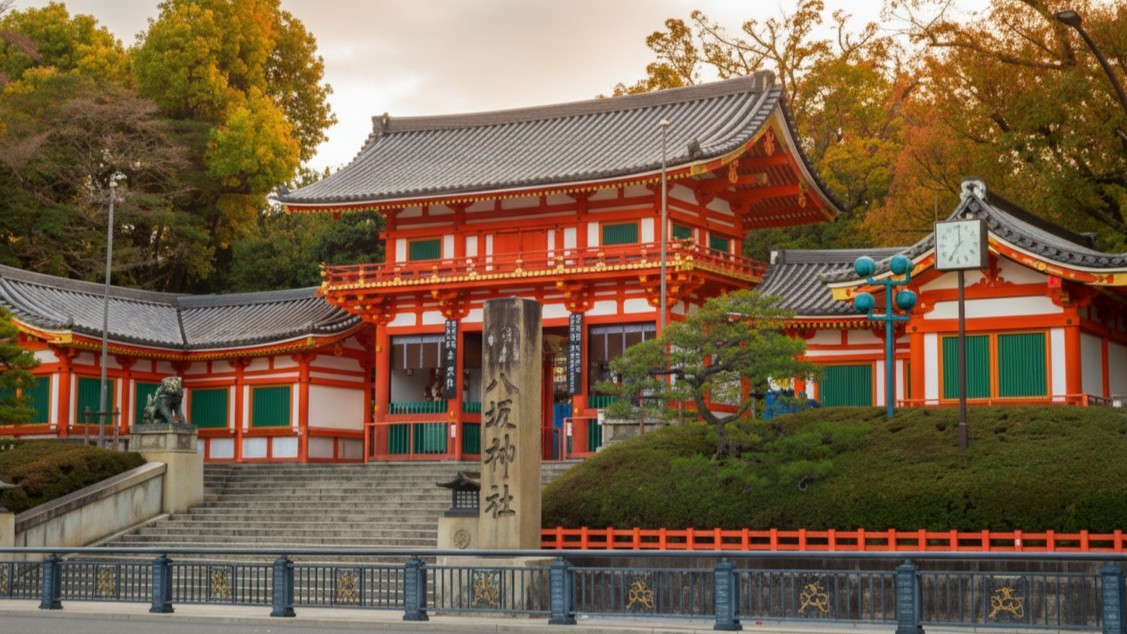
Yasaka Shrine
The vermilion west gate at the top of the steps marks the edge of Gion. The shrine's festival, the Gion Matsuri, fills July.
South of Shijo-dori
Hanamikoji-dori
Gion's main street of teahouses and restaurants. It is public; the narrow lanes that branch off it are private and signposted no entry for sightseers.
South end of Hanamikoji
Gion Kobu Kaburenjo
The theater of the Gion Kobu geiko district, where the Miyako Odori is danced every April.
Gion's rules for visitors
Short answer
Gion is a working neighborhood. Stay on the public streets, keep them clear, and treat maiko and geiko as people on their way to work, not as a sight.
Walking into the private lanes
Instead: The private lanes off Hanamikoji are signposted no entry for sightseers, and the district asks visitors not to enter private property. Stay on Hanamikoji itself.
Following or photographing maiko and geiko
Instead: The district asks visitors not to stop, touch, follow or take unauthorized photos or videos of them. Obstructing someone's path or stalking can bring a fine of up to ¥10,000.
Stopping in the road for a photo
Instead: Do not block the road or sidewalk by loitering or stepping out to take photos; obstructing traffic is an offence. Step aside and keep moving.
Expecting to see maiko on the street
Instead: Sightings are chance. For certainty, book the Miyako Odori in April, or see Kyoto-style dance at Gion Corner, which the district itself recommends.
For etiquette across Japan, see the Japan etiquette guide.
When to go
Short answer
Early evening is Gion at its most atmospheric, when the lanterns come on. April brings the Miyako Odori and July the Gion Matsuri; both make the district busier.
- Daytime
- Quieter streets and open shops.
- Early evening
- The lanterns come on and the restaurants open. It is also when you may see maiko and geiko heading to work; give them room.
- April
- The Miyako Odori at the Gion Kobu Kaburenjo, three shows a day. Book ahead.
- July
- The Gion Matsuri, with float processions on July 17 and 24. Expect heavy crowds across central Kyoto.
Fitting Gion into a Kyoto day
Short answer
Gion is the natural end of a day in eastern Kyoto: walk north from Kiyomizu-dera through Higashiyama in the afternoon and arrive for the evening, then cross the river to Pontocho for dinner.
South, on foot
Kiyomizu-dera and Higashiyama
Walk north from Kiyomizu-dera through Sannenzaka and Ninenzaka to arrive in Gion.
West, across the Kamo River
Pontocho
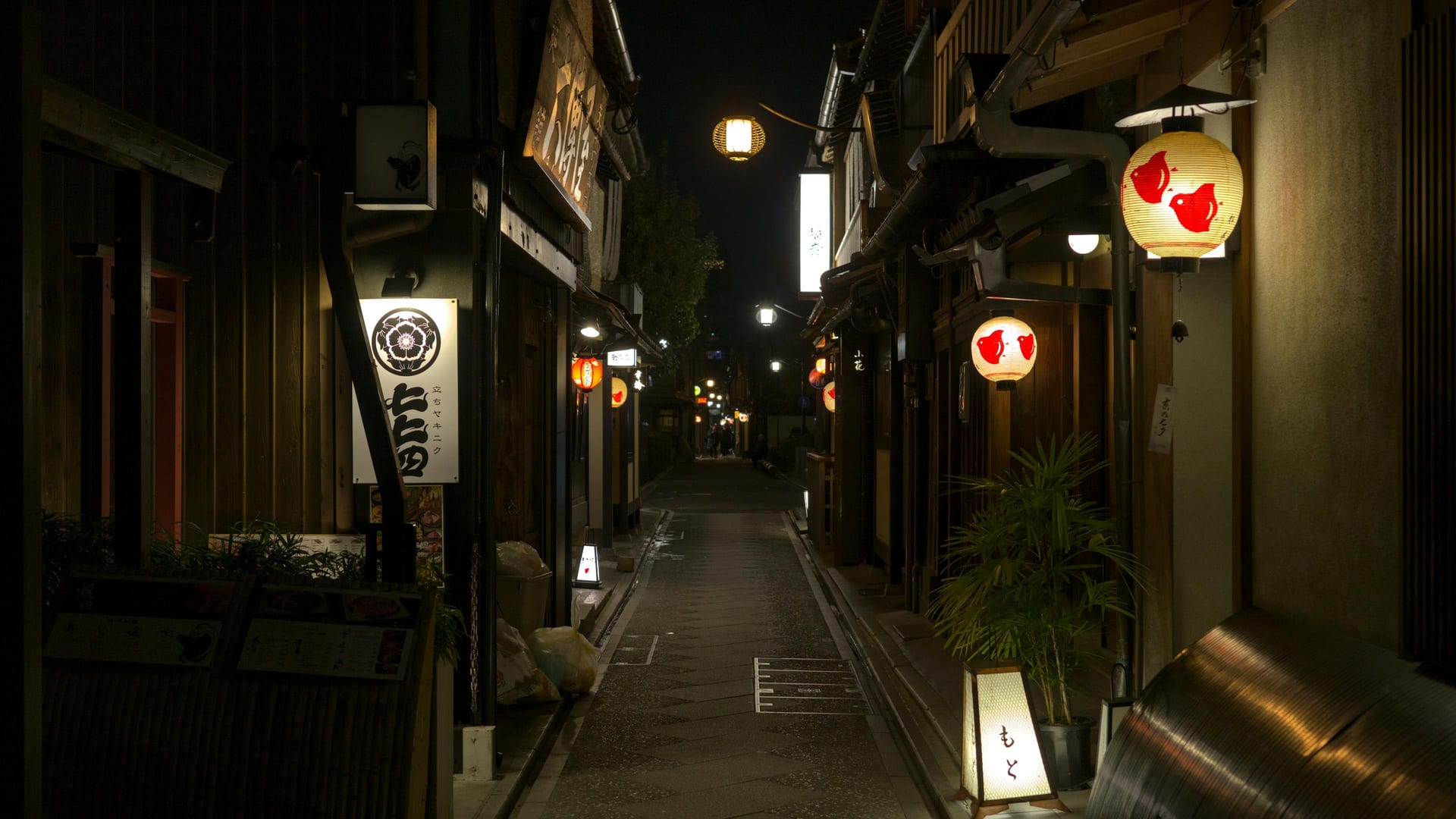
The lantern-lit dining alley of Pontocho is across the Shijo bridge.
West, in central Kyoto
Nishiki Market
Nishiki Market is best in the morning or early afternoon, before its shops close, so visit it before Gion.
What to see in Gion
How to Get to Gion District
Gion is on the east bank of the Kamo River around the east end of Shijo-dori. Two railways stop at either end of the Shijo-dori bridge, and the district is compact enough to cover on foot from there.
- •Keihan Gion-Shijo is the closest station; Hankyu Kyoto-Kawaramachi is across the river.
- •From Kyoto Station, City Bus 206 or, on the days it runs, the EX100 express bus stops at Gion.
- •Gion is too far to walk from Kyoto Station comfortably; take the train, bus or a taxi.
Map
Best Time to Visit Gion District
Best time to visit Gion District: Early evening, when the lanterns come on; April for the Miyako Odori; July for the Gion Matsuri. Weekday mornings are generally quieter than weekends and public holidays.
- •Early evening, when the lanterns come on and the restaurants open.
- •April, for the Miyako Odori at the Gion Kobu Kaburenjo.
- •July, for the Gion Matsuri; the float processions are on July 17 and 24.
Entry Fee & Hours
- •The public streets are free. Restaurants and teahouses charge their own prices, and the Miyako Odori is ticketed.
- •The main streets are paved; Hanamikoji and Shinbashi-dori are stone-paved and can be uneven in places.
Nearby Attractions
Kyoto guides within walking distance of Gion
Yasaka Shrine
Pontocho Alley

Nishiki Market

Kiyomizu-dera Temple

Sannenzaka and Ninenzaka
- •Yasaka Shrine (At the east end of Shijo-dori, the edge of Gion): Yasaka Shrine (Yasaka Jinja) enshrines Susanoo-no-mikoto and traces its origins to 656 or 876, depending on the account. Its main hall, with the worship hall under the same roof, was designated a National Treasure in 2020, and the shrine runs the Gion Matsuri, held through July for more than 1,150 years.
- •Pontocho Alley (West, across the Kamo River): Pontocho is a narrow, lantern-lit street of restaurants, bars and teahouses between Sanjo and Shijo beside the Kamo River, and one of Kyoto's five geisha districts. Its riverside restaurants put out yuka platforms from May 1 to October 15.
- •Nishiki Market (West, in central Kyoto): Nishiki Market is a covered food street about 390 meters long in central Kyoto, running along Nishikikoji-dori with fish, pickle, tofu and yuba, produce, sweet and kitchenware shops. A licensed fish market since 1615, it is known as "Kyoto's Kitchen".
- •Kiyomizu-dera Temple (South through Higashiyama on foot): Kiyomizu-dera is a Buddhist temple on the slopes of Mt. Otowa in eastern Kyoto, founded in 778. Its Main Hall stands on a wooden stage held up by 18 zelkova pillars, with a view across the city. The temple is a UNESCO World Heritage site.
- •Sannenzaka and Ninenzaka (South, on the walk to Kiyomizu-dera): Sannenzaka and Ninenzaka are stone-stepped lanes below Kiyomizu-dera in Kyoto's Higashiyama district, lined with late-Edo to Taisho-era townhouses. They lie in the Sanneizaka preservation district, designated for its historic townscape in 1976.
Two ways to spend an evening in Gion
Both arrive in the late afternoon; one comes on foot through Higashiyama, the other is built around a performance.
Higashiyama to Gion on foot
A walking afternoon that ends in Gion.
Afternoon
Kiyomizu-dera, then north through Sannenzaka and Ninenzaka.
Late afternoon
Yasaka Shrine, then the Shirakawa canal.
Evening
Hanamikoji-dori as the lanterns come on, then dinner in Pontocho.
An April afternoon at the Miyako Odori
For seeing geiko and maiko perform.
Morning
Nishiki Market for lunch.
2:30 or 4:30 p.m.
The Miyako Odori at the Gion Kobu Kaburenjo.
Evening
Hanamikoji-dori and the Shirakawa canal after the show.
Frequently Asked Questions
References
View references
Kyoto City Tourism Association
Kyoto City Transportation Bureau
Planning Your Kyoto Trip?
See the full Kyoto destination guide or browse Japan itineraries that include this city.
See all Shopping & Entertainment across Japan →Explore all attractions in Kyoto or browse nearby destinations.
Back to Kyoto Guide →