Yasaka Shrine
ExploreJapanDaily Editorial Team · Last updated: September 28, 2026
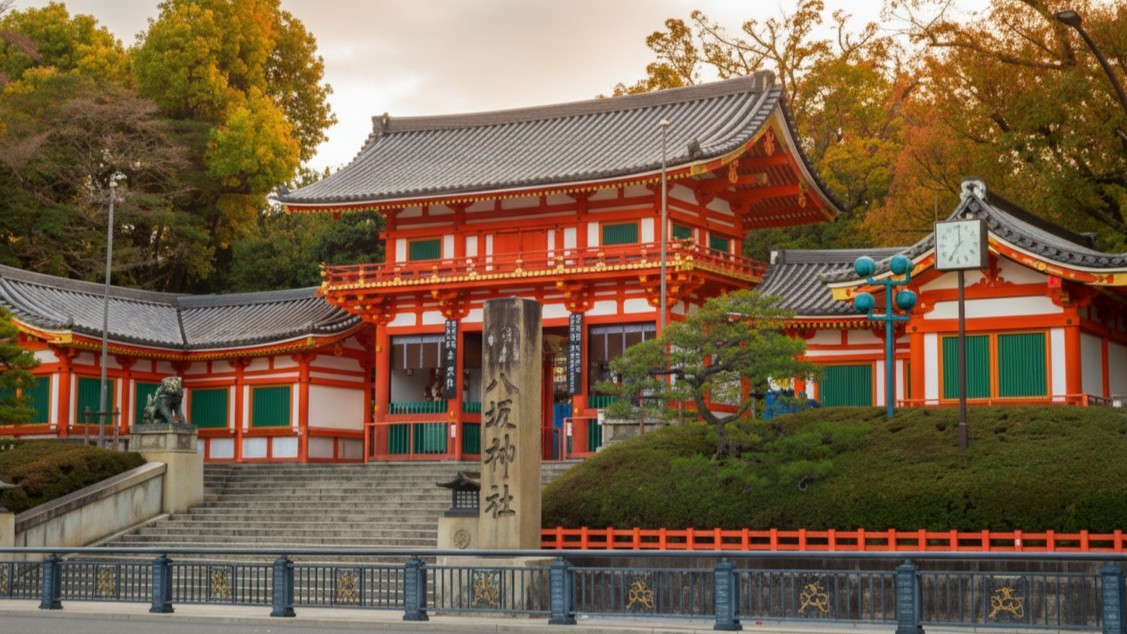
Yasaka Shrine stands at the east end of Shijo-dori, at the edge of Gion, and is the shrine behind the Gion Matsuri every July. It is free and open 24 hours; the vermilion West Gate faces the Shijo-Higashioji intersection, 5 minutes' walk from Keihan Gion-Shijo Station. Allow 20 to 30 minutes, or longer in the evening, when the lanterns on the dance hall are lit.
- Area
- Gion, Higashiyama
- Best For
- Shinto Culture, Festivals, Night Visits, Free Entry
Visiting Yasaka Shrine
Yasaka Shrine traces its origins to 656 by its own records, or to 876 by another account, and was known for most of its history as Gion-sha or Gion Kanshin-in, a shrine and temple in one. It enshrines Susanoo-no-mikoto, the storm god who in myth slew an eight-headed serpent, along with his wife and their eight children. It took the name Yasaka Shrine in the Meiji era, when Shinto and Buddhism were officially separated.
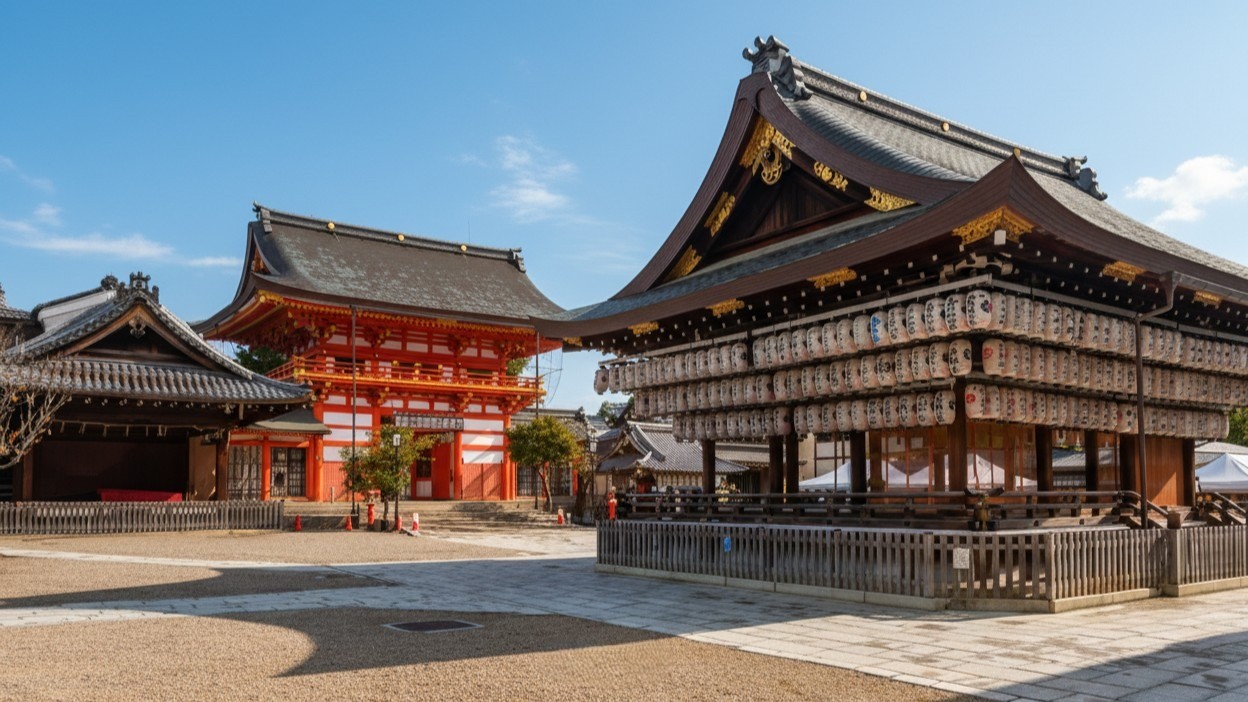
Most visitors arrive through the vermilion West Gate at the top of Shijo-dori, though the formal main gate is the South Gate, where the Gion Matsuri portable shrines set out. In the middle of the precinct, the dance hall is hung with rows of paper lanterns. Behind it, the main hall and worship hall share a single great roof, a form found at no other shrine; it was designated a National Treasure in 2020.
The Gion Matsuri began in 869 as rites to end an epidemic and runs through the whole of July. Its highlights are the parades of 34 decorated floats through central Kyoto on the mornings of July 17 and 24, and the night processions of three portable shrines between Yasaka and the city center on the same days.
The route through Yasaka Shrine
Short answer
Climb to the West Gate from Shijo-dori, cross to the lantern-hung dance hall and the main hall, then leave east into Maruyama Park or south toward Kodai-ji.
Start
The West Gate
The vermilion gate at the top of the steps from the Shijo-Higashioji crossing.
Center
The dance hall
Hung with rows of paper lanterns, lit in the evening.
Then
The main hall
Main hall and worship hall under one roof; a National Treasure since 2020.
Exit
Maruyama Park or the South Gate
East into the park, or south toward Kodai-ji and the Higashiyama lanes.
When to go
Short answer
At any hour; early morning and late evening are quietest. Plan around July and New Year, when crowds are heavy.
- Every day
- Grounds open 24 hours; shrine office 9:00 a.m. to 5:00 p.m.
- July
- Gion Matsuri all month; parades on July 17 and 24.
- December 31
- Okera-mairi from about 7:30 p.m. to 5:00 a.m.
Fitting Yasaka Shrine into a Kyoto day
Short answer
Yasaka Shrine is where the Higashiyama walk meets Gion. Start at Kiyomizu-dera, walk down to the shrine, and finish in Gion.
On foot, downhill from the south
The Higashiyama walk
Kiyomizu-dera, Sannenzaka and Ninenzaka and Kodai-ji lead here.
Better on another day
Arashiyama
Arashiyama is at the opposite edge of the city; keep it for another day.
Things to do at Yasaka Shrine
How to Get to Yasaka Shrine
Yasaka Shrine closes the east end of Shijo-dori, so you can walk to it from anywhere in Gion or downtown.
- •Keihan Gion-Shijo Station is 5 minutes' walk; follow Shijo-dori east to the gate.
- •City Bus 100 or 206 from Kyoto Station stops at Gion, in front of the shrine.
- •Walk down from Kiyomizu-dera through Sannenzaka, Ninenzaka and Kodai-ji to arrive from the south.
Map
Best Time to Visit Yasaka Shrine
Best time to visit Yasaka Shrine: early morning or after dark, when Gion is quieter. Weekday mornings are generally quieter than weekends and public holidays.
- •The grounds are open around the clock; the shrine office is open 9:00 a.m. to 5:00 p.m.
- •In July the whole of central Kyoto is busy with the Gion Matsuri, especially on and before July 17 and 24.
- •From New Year's Eve into the first days of January the shrine is at its most crowded.
Gion Matsuri: float parades in the morning, portable shrine processions at night.
Okera-mairi: sacred fire carried home on ropes, until about 5:00 a.m.
Dances by geiko and maiko, and bean throwing.
Entry Fee & Hours
- •Entry is free at any hour. Amulets and seals are available at the shrine office from 9:00 a.m. to 5:00 p.m., and prayers are received from 9:00 a.m. to 4:00 p.m.
- •Drones are banned throughout the precinct and at every festival, and professional commercial photography is not allowed.
Nearby Attractions
Places that pair with Yasaka Shrine

Gion District
Kodai-ji Temple

Sannenzaka and Ninenzaka

Kiyomizu-dera Temple
- •Gion District (Directly west, down Shijo-dori): Gion is the historic geiko district of Kyoto, east of the Kamo River around Hanamikoji-dori and the Shirakawa canal, next to Yasaka Shrine. Its streets of wooden teahouses are free to walk, while the private lanes off Hanamikoji are signposted no entry for sightseers.
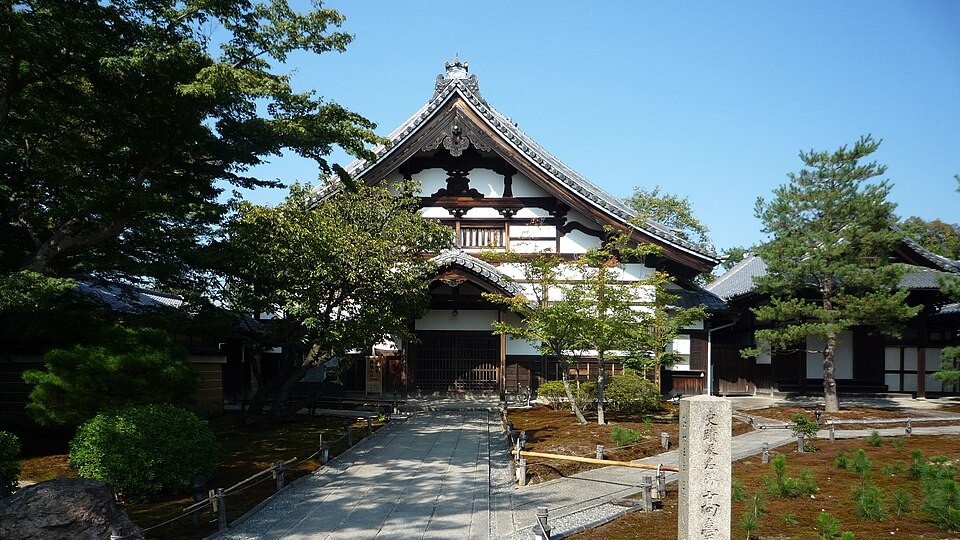
- •Kodai-ji Temple (South, through Maruyama Park): Kodai-ji is a Rinzai Zen temple in Higashiyama founded in 1606 by Nene, the widow of Toyotomi Hideyoshi. Its pond garden, the Otamaya shrine with its gold lacquer, two hillside tea houses and a bamboo grove are all inside one ticket.
- •Sannenzaka and Ninenzaka (South, past Kodai-ji): Sannenzaka and Ninenzaka are stone-stepped lanes below Kiyomizu-dera in Kyoto's Higashiyama district, lined with late-Edo to Taisho-era townhouses. They lie in the Sanneizaka preservation district, designated for its historic townscape in 1976.
- •Kiyomizu-dera Temple (Uphill at the south end of the Higashiyama walk): Kiyomizu-dera is a Buddhist temple on the slopes of Mt. Otowa in eastern Kyoto, founded in 778. Its Main Hall stands on a wooden stage held up by 18 zelkova pillars, with a view across the city. The temple is a UNESCO World Heritage site.
Two ways to build a day around Yasaka Shrine
One follows the Higashiyama walk downhill; the other is an evening in Gion.
Higashiyama, downhill
Kiyomizu-dera to Gion on foot.
Morning
Kiyomizu-dera early, then down Sannenzaka and Ninenzaka.
Late morning
Kodai-ji and Maruyama Park.
Midday
Yasaka Shrine, then lunch in Gion.
Frequently Asked Questions
Planning Your Kyoto Trip?
See the full Kyoto destination guide or browse Japan itineraries that include this city.
See all Temples & Shrines across Japan →Explore all attractions in Kyoto or browse nearby destinations.
Back to Kyoto Guide →