SCMAGLEV and Railway Park
ExploreJapanDaily Editorial Team · Last updated: July 9, 2026 · Facts verified: September 1, 2026

- Area
- Kinjofuto / Port
- Best For
- Families, Trains, Technology, Photography
Visiting SCMAGLEV and Railway Park
The SCMAGLEV and Railway Park opened in March 2011 on reclaimed land at Kinjofuto Pier in Minato-ku, Nagoya, Aichi Prefecture, built by Central Japan Railway Company (JR Central) as both a public museum and a working showcase for the technology behind Japan's high-speed rail network. The museum's name reflects its dual focus: SCMAGLEV, short for superconducting magnetic levitation, refers to the experimental maglev trains JR Central has developed for a planned Tokyo-Nagoya-Osaka Chuo Shinkansen line, while the broader Railway Park half of the museum covers the full history of the Tokaido Shinkansen and its predecessor lines.
The museum's centerpiece exhibit is a genuine L0 series maglev test car, the same design that set a world speed record of 603 km/h (about 375 mph) during a manned test run in April 2015 on JR Central's Yamanashi test track. Visitors can walk directly up to and in some cases board this car, a rare opportunity to see record-setting rail technology up close rather than behind glass, and accompanying displays explain the magnetic levitation principle in terms accessible to visitors without a technical background.
Beyond the maglev centerpiece, the museum's main hall displays 39 retired train cars in total, arranged roughly chronologically and spanning from an early 20th-century steam locomotive through multiple generations of Shinkansen rolling stock, including a 0 series car, the original bullet train design that entered service for the 1964 Tokyo Olympics and came to define the visual identity of Japanese high-speed rail worldwide. Seeing the 0 series alongside its much later, more aerodynamic successors gives a clear, visual sense of how dramatically Shinkansen design evolved across six decades of continuous development.

The museum takes a hands-on approach beyond static display cases, with a large scale model railway diorama recreating the Tokaido Shinkansen route between Tokyo and Osaka in miniature, running scheduled shows throughout the day, and several train-driving simulators available to visitors for an additional fee. The N700 Shinkansen simulator and a conventional-line crew simulator cost ¥500 per session and are ticketed at the information desk on a first-come basis, while a simpler conventional driving simulator costs ¥100 per session via an on-site vending machine; both tend to draw queues, particularly on weekends and school holidays.
A dedicated section of the museum addresses the history and mechanics of the SCMAGLEV technology in more depth, including the physics of superconducting magnets and linear motor propulsion, aimed at visitors who want to understand not just what the maglev looks like but how it achieves speeds well beyond what conventional wheeled trains can reach. This section positions the museum as more than a nostalgia-driven collection of retired trains, framing the exhibits as a continuous story from steam power through to a still-unfinished next generation of Japanese rail technology.
The museum sits on Kinjofuto Pier, a reclaimed waterfront district roughly 24 minutes from Nagoya Station via the Aonami Line, a route that itself offers views of Nagoya's port and industrial waterfront along the way. Kinjofuto has developed into something of a family-day-out destination beyond the railway museum alone, and Legoland Japan Resort sits immediately adjacent to the park, making it straightforward for families to combine both attractions in a single visit to the pier.
Because the museum draws heavily on rail enthusiasts as well as families with young children, weekends and Japanese school holidays bring noticeably larger crowds, particularly around the simulators and the scale model diorama shows. A weekday visit, especially soon after the 10:00 AM opening, offers the most space to view the maglev car and walk the main hall's 39 retired cars without competing for sightlines.
For visitors building a Nagoya itinerary around the city's manufacturing and engineering heritage, the SCMAGLEV and Railway Park pairs naturally with the Toyota Commemorative Museum of Industry and Technology on the opposite side of the city, together forming a coherent half-day or full-day theme covering two of Japan's defining industries: rail transport and automotive manufacturing.
Things to Do at SCMAGLEV and Railway Park
How to Get to SCMAGLEV and Railway Park
The SCMAGLEV and Railway Park sits on Kinjofuto Pier in Minato-ku, a reclaimed waterfront district south of central Nagoya reached by a dedicated rail line.
- •Nearest station: Kinjofuto Station (Aonami Line), approx. 2-minute walk; the Aonami Line departs from Nagoya Station and is not covered by the Japan Rail Pass
- •IC cards (Suica, Pasmo, or ICOCA) are accepted on trains, subways, and buses throughout Japan. Tap in and out at every gate.
- •Avoid traveling during rush hour on weekdays: 7am to 9am and 5pm to 8pm. Trains are significantly more crowded.
- •Google Maps provides accurate real-time transit directions in Nagoya. Download offline maps before you arrive.
Map
Best Time to Visit SCMAGLEV and Railway Park
Best time to visit SCMAGLEV and Railway Park: Weekday mornings shortly after the 10:00 AM opening, before school groups and weekend family crowds arrive. Weekday mornings are generally quieter than weekends and public holidays.
- •Best time to visit: Weekday mornings shortly after the 10:00 AM opening, before school groups and weekend family crowds arrive
- •Arriving on a weekday morning avoids the largest crowds. Weekends and public holidays are significantly busier.
- •Spring (late March to early May) and autumn (October to November) are the most popular seasons for visiting Nagoya.
- •Golden Week (late April to early May) is the busiest week of the year in Japan. Book accommodation and tickets well in advance.
Entry Fee & Hours
| Category | Price (JPY) | Approx. (USD) |
|---|---|---|
| Adult | ¥1,200 | ~$8 |
| School child (elementary through high school) | ¥500 | ~$3.50 |
| Child (age 3 and up, pre-elementary) | ¥200 | ~$1.50 |
| Child (under age 3) | Free | Free |
| Category | Price (JPY) | Approx. (USD) |
|---|---|---|
| Adult | ¥1,000 | ~$7 |
| School child | ¥400 | ~$3 |
| Child (age 3 and up) | ¥100 | ~$1 |
- •Simulators are an additional cost on top of general admission: ¥500 per session for the N700 Shinkansen and conventional crew simulators (tickets from the information desk, first-come), and ¥100 per session for a simpler conventional driving simulator (vending machine on-site).
- •The Aonami Line to Kinjofuto Station is a separate private railway not covered by the Japan Rail Pass; a one-way fare from Nagoya Station is approximately ¥360.
- •The museum closes on Tuesdays, shifting to Wednesday if Tuesday falls on a public holiday; confirm the current calendar before a same-week visit.
- •The building is step-free throughout, with elevators connecting all levels and wheelchair-accessible ramps for boarding the retired train cars on display. Accessible restrooms are available on-site, and the train-driving simulators can be used from a wheelchair, though the driver's seat itself is fixed in place.
Nearby Attractions
Combine with SCMAGLEV and Railway Park on the same day
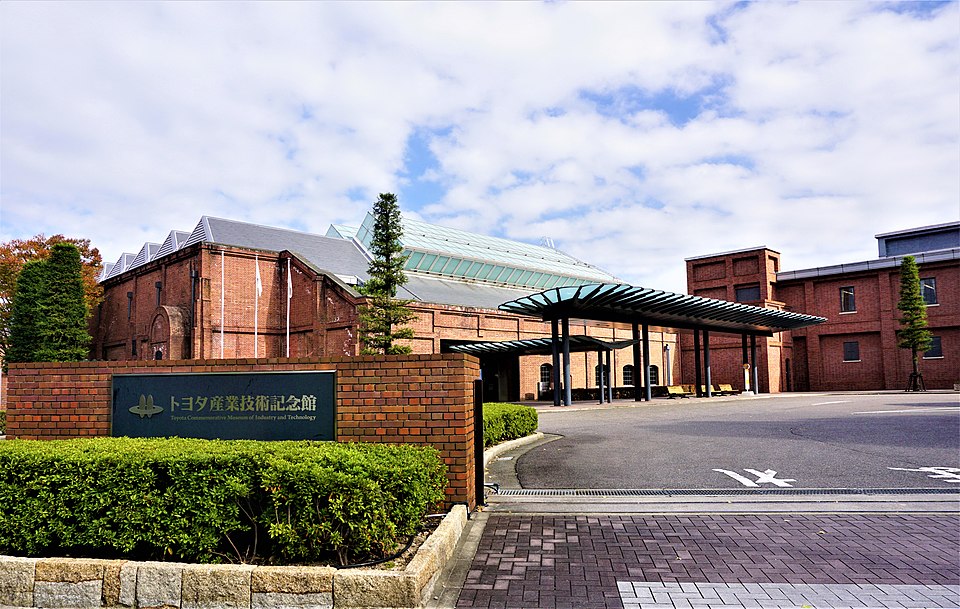
Toyota Commemorative Museum of Industry and Technology

Port of Nagoya Public Aquarium

LEGOLAND Japan Resort
Maker's Pier
Distance: Approx. 5-minute walk- •Toyota Commemorative Museum of Industry and Technology (Approx. 9 km, about 30-35 minutes via a Nagoya Station transfer): A working-machinery museum in a converted 1911 textile factory tracing Toyota's origins from automatic looms to automobiles, with live demonstrations of historic weaving and manufacturing equipment.
- •Port of Nagoya Public Aquarium (Approx. 4.8 km, requires a transfer via Kanayama or Nagoya Station (no direct connection)): Japan's largest public aquarium by tank volume, split into a North Building marine mammal wing and a South Building 'Journey to Antarctica' route, on the Nagoya Port waterfront in Minato-ku.
- •LEGOLAND Japan Resort (Same pier, a short walk from the same Kinjofuto Station): A LEGO-themed family theme park at Kinjofuto in Nagoya's Minato-ku, with seven zones, roughly 40 rides built from about 17 million LEGO bricks, and a Miniland Japan section recreating famous Japanese landmarks in brick form.
- •Maker's Pier (Approx. 5-minute walk): A waterfront complex of shops, restaurants, and gardens built around shipping containers on the same Kinjofuto Pier as the museum.
Suggested Itinerary
Pair SCMAGLEV and Railway Park with these nearby stops for a full day in Kinjofuto / Port.
Frequently Asked Questions
Planning Your Nagoya Trip?
See the full Nagoya destination guide or browse Japan itineraries that include this city.
See all Museums across Japan →Explore all attractions in Nagoya or browse nearby destinations.
Back to Nagoya Guide →