Gangoji Temple
By Andrew Liyan · Last updated: September 10, 2026 · Facts verified: September 10, 2026

- Area
- Naramachi
- Best For
- Temples & Shrines, History & Culture, UNESCO World Heritage, Quiet sightseeing
Visiting Gangoji Temple
Gangoji Temple traces its origins to Asuka-dera, one of Japan's earliest Buddhist temples, built in the Asuka region in the late 6th century. When Japan's capital moved to Nara in 710, the temple was relocated and rebuilt around 718, taking the name Gangoji. That lineage makes Gangoji one of the oldest continuously traced Buddhist institutions in Japan, even though its current buildings are smaller and less visited than Nara's larger temple complexes.
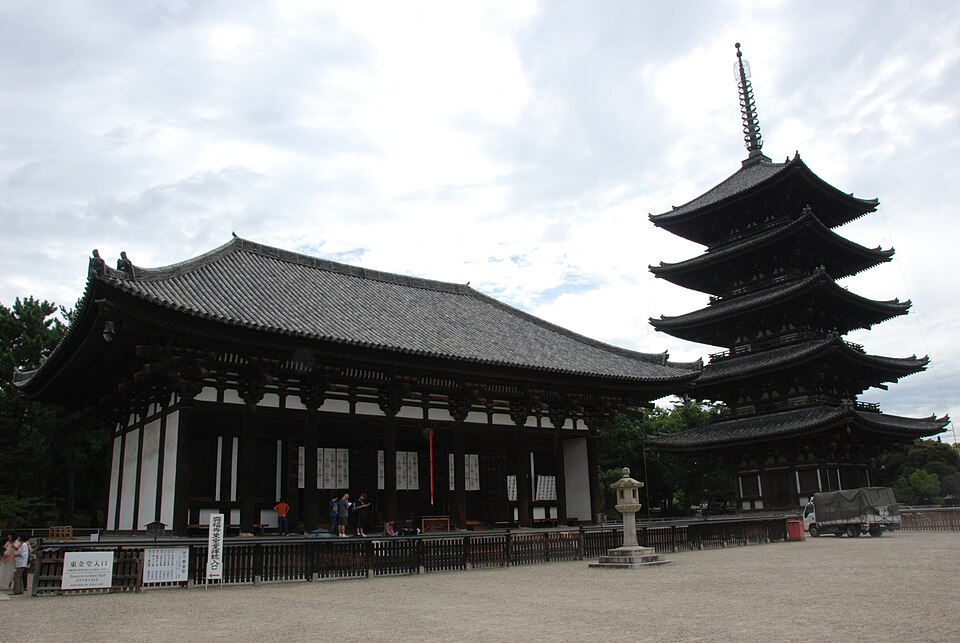
The temple's most distinctive feature is physical rather than architectural: part of the roof of its Gokurakubo Hondo (Main Hall) is tiled with roof tiles that date to the original Asuka-dera period, making them among the oldest architectural building materials still in place anywhere in Japan. Visitors who know to look for the irregular, weathered tiles among the more uniform surrounding roofing are looking at construction material more than 1,300 years old.
A major fire in 1451 destroyed much of Gangoji's original temple complex, including its Golden Hall. The Gokurakubo, originally a monks' dormitory building, was converted into the temple's core hall and survives today as the UNESCO-listed Gokurakubo Hondo and Zenshitsu (Zen Room), registered as a component of the "Historic Monuments of Ancient Nara" World Heritage inscription and also designated National Treasures.
As Gangoji's grounds shrank after the fire and through the Edo period, the surrounding land gradually urbanized into a merchant district. That district is now known as Naramachi, and Gangoji sits at its historic heart, a compact, quiet UNESCO temple surrounded by the machiya townhouses, shops, and cafes that now define the neighborhood.
Because of its modest scale, Gangoji is easy to underestimate next to Todai-ji or Kofuku-ji. For visitors who know its history, though, it offers something those larger complexes cannot: physical building material connecting directly back to the very beginning of Buddhism's institutional presence in Japan.
Things to Do at Gangoji Temple
See the Gokurakubo Hondo's Historic Roof Tiles
Part of the Gokurakubo Hondo's roof retains tiles from the original Asuka-dera temple, dating to the late 6th or 7th century, among the oldest building materials still in place in Japan.
Visit the Gokurakubo Hondo and Zenshitsu
These two former monks' dormitory buildings, converted into the temple's core halls after a 1451 fire destroyed the original Golden Hall, are jointly registered as a UNESCO World Heritage component and National Treasures.
Learn the Asuka-dera Connection
Gangoji traces its lineage to Asuka-dera, relocated to Nara around 718 when the capital moved to Heijo-kyo, making it one of the oldest continuously traced Buddhist institutions in Japan.
Combine with a Naramachi Walk
Gangoji sits at the historic heart of the Naramachi district; most visitors pair a temple visit with time spent wandering the surrounding machiya lanes.
How to Get to Gangoji Temple
Gangoji Temple sits inside the Naramachi district, within easy walking distance of both of Nara's main stations.
From Kintetsu Nara Station
Gangoji Temple is within Naramachi's walkable radius from Kintetsu Nara Station; most visitors walk through the district's streets rather than taking a bus.
From JR Nara Station
JR Nara Station is slightly farther than Kintetsu Nara Station but still within comfortable walking distance through central Nara and into Naramachi.
Parking
Free parking for up to 10 cars is available at the temple's East Gate parking lot, per the temple's own official site.
Best Time to Visit Gangoji Temple
Any time within opening hours.
Entry Fee & Hours
| Category | Price (JPY) | Approx. (USD) |
|---|---|---|
| Adult | ¥700 | ~$5 |
Single flat admission rate; no separate special-exhibition ticket identified in research.
- •Free parking for up to 10 cars is available at the temple's East Gate parking lot.
Nearby Attractions
Combine with Gangoji Temple on the same day

Frequently Asked Questions
Planning Your Nara Trip?
See the full Nara destination guide or browse Japan itineraries that include this city.
See all Temples & Shrines across Japan →