Kofuku-ji Temple
ExploreJapanDaily Editorial Team · Last updated: September 10, 2026 · Facts verified: September 10, 2026
- Area
- Central Nara
- Best For
- History, Buddhist sculpture, Photography, UNESCO heritage
Visiting Kofuku-ji Temple
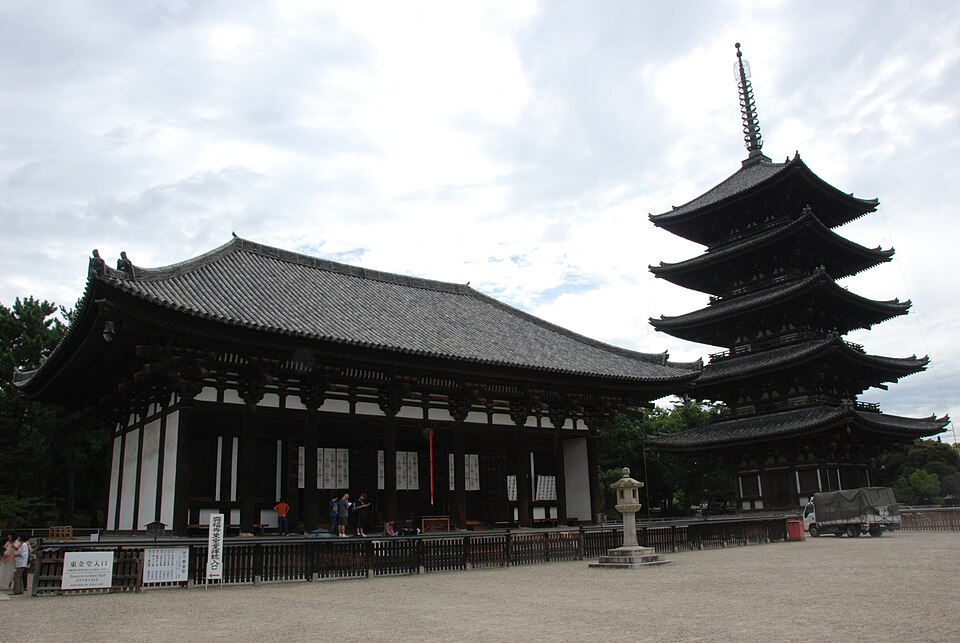
Kofuku-ji Temple stands at the heart of Nara's historical landscape, a place where centuries of Japanese religious, political, and cultural history converge within a setting that remains remarkably connected to daily life. Located on the edge of Nara Park and within walking distance of many of the city's most important landmarks, Kofuku-ji is best known for its elegant five-story pagoda, one of the most recognizable symbols of Nara and among the tallest wooden pagodas in Japan. Yet the temple's significance extends far beyond its famous silhouette. For more than 1,300 years, Kofuku-ji has played a central role in shaping the identity of Nara as Japan's first permanent capital and one of the country's most important centers of Buddhism.
The temple's origins date back to the 7th century, when it was established by the influential Fujiwara clan, one of the most powerful aristocratic families in Japanese history. Initially founded near Kyoto, the temple was later relocated to Nara when the city became the capital of Japan in 710. Over time, Kofuku-ji grew into a vast religious complex with dozens of buildings, becoming both a spiritual institution and a symbol of the Fujiwara family's political influence. During its peak, the temple held enormous authority, shaping religious life and regional governance throughout much of Japan's classical period.
Today, visitors encounter a site that feels both historically monumental and surprisingly approachable. Unlike temple complexes hidden deep within mountains or forests, Kofuku-ji exists as part of Nara's everyday urban landscape. Deer wander freely across nearby lawns, local residents pass through the grounds during daily routines, and travelers move between temples, museums, gardens, and shopping streets surrounding the area. This integration with the modern city creates an atmosphere where history feels present rather than isolated behind museum walls.
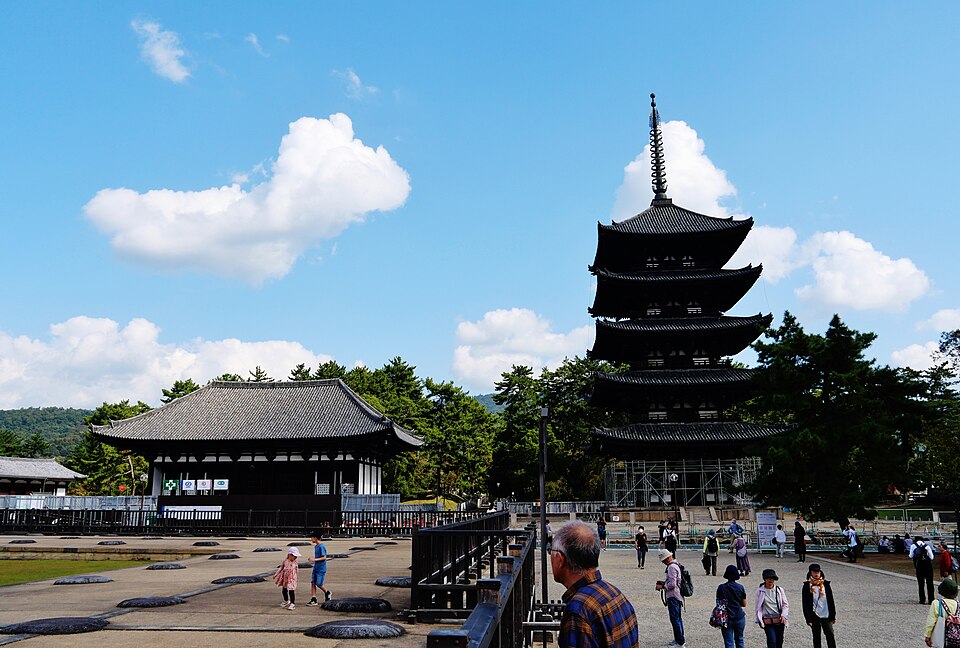
The five-story pagoda dominates the skyline and serves as the visual centerpiece of the temple grounds. Rising gracefully above the surrounding landscape, the structure reflects centuries of Japanese architectural refinement. Its layered roofs create a striking profile that changes depending on the light, weather, and season. Seen from nearby pathways, across open lawns, or reflected in surrounding ponds, the pagoda often becomes one of the most photographed landmarks in Nara. Yet despite its popularity, it rarely feels overwhelmed by commercialization. The surrounding space remains open and calm, allowing visitors to appreciate the structure within its historical and cultural context.
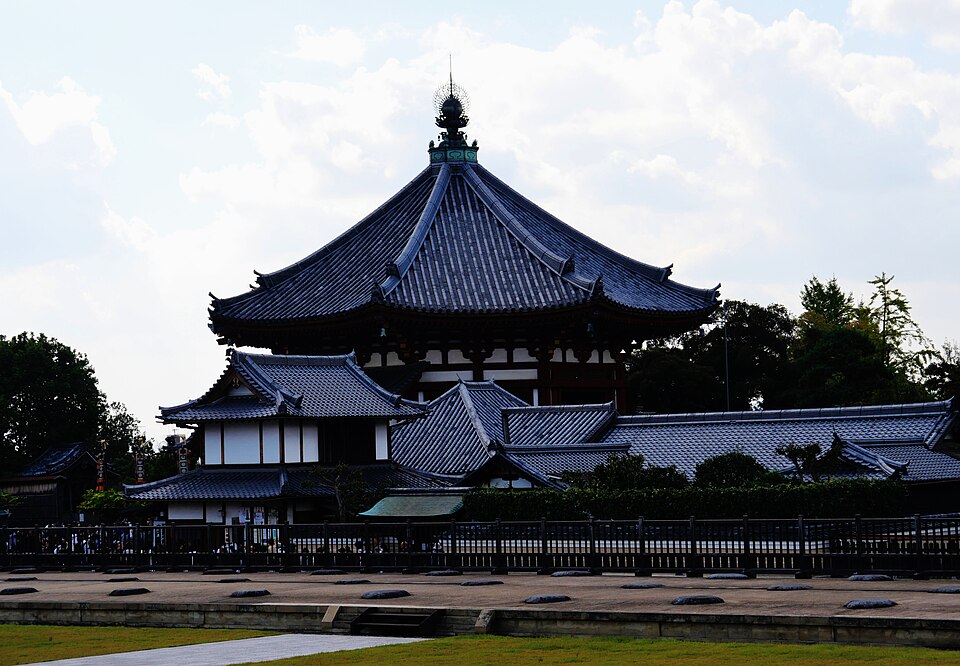
Beyond the pagoda, Kofuku-ji contains several important halls and cultural treasures that reveal the depth of its religious heritage. Traditional wooden buildings, temple gates, and museum spaces preserve Buddhist sculptures, artifacts, and architectural elements that span many centuries. The temple has experienced numerous fires, reconstructions, and periods of decline throughout its long history, yet each rebuilding effort has maintained continuity with the original spiritual and artistic vision. This layered history gives the site a sense of resilience that many visitors find particularly compelling.
One of the most appealing aspects of Kofuku-ji is its atmosphere. The temple grounds are spacious without feeling overwhelming, allowing visitors to move at a comfortable pace between buildings, gardens, and viewpoints. The sounds of the city remain distant enough to preserve a sense of calm, while the presence of deer, open sky, and surrounding greenery softens the urban environment. Early mornings are especially peaceful, when sunlight illuminates the wooden structures and the pathways remain relatively quiet. During these moments, it becomes easier to imagine the temple's role within the ancient capital that once stood here more than a millennium ago.
Seasonal changes add another dimension to the experience. In spring, cherry blossoms frame sections of the temple grounds, creating beautiful contrasts between pale pink flowers and dark wooden architecture. Summer brings lush greenery that surrounds the buildings and open spaces. Autumn transforms the area with warm shades of red, orange, and gold, while winter reveals a quieter and more contemplative side of the temple. Because the architecture remains visually striking throughout the year, Kofuku-ji rewards repeat visits during different seasons, each offering a distinct atmosphere.
The surrounding neighborhood contributes significantly to the temple's appeal. Nara Park stretches nearby, connecting Kofuku-ji to Kasuga Taisha Shrine, Todai-ji Temple, Isuien Garden, and other major cultural landmarks. This concentration of historical sites allows visitors to experience multiple layers of Japanese history within a relatively compact area. Yet Kofuku-ji often feels less crowded than some of its neighboring attractions, providing opportunities for quieter observation and reflection. Its central location makes it a natural part of any exploration of Nara's historical district.
For international travelers, Kofuku-ji offers a valuable introduction to the relationship between Buddhism, politics, and cultural development in early Japan. The temple's story reflects the rise of Nara as the nation's first permanent capital, the influence of aristocratic families such as the Fujiwara clan, and the enduring importance of Buddhist institutions within Japanese society. At the same time, visitors do not need deep historical knowledge to appreciate the site. The beauty of the architecture, the open atmosphere of the grounds, and the visual elegance of the pagoda create an immediate connection regardless of background.

What makes Kofuku-ji Temple memorable is the balance it achieves between historical importance and everyday accessibility. It is unquestionably one of Japan's major cultural landmarks, yet it remains welcoming and approachable rather than intimidating. The combination of ancient architecture, living religious tradition, seasonal beauty, and central location allows visitors to experience Nara's heritage in a way that feels both educational and deeply personal. Standing beneath the pagoda or walking quietly through the temple grounds, it becomes clear why Kofuku-ji has remained one of Nara's defining landmarks for more than thirteen centuries.
Things to Do at Kofuku-ji Temple
How to Get to Kofuku-ji Temple
Kofuku-ji Temple is located in central Nara near Nara Park and is one of the easiest attractions in the city to access.
- •Nearest station: Kintetsu Nara Station (5-min walk)
- •IC cards (Suica, Pasmo, or ICOCA) are accepted on trains, subways, and buses throughout Japan. Tap in and out at every gate.
- •Avoid traveling during rush hour on weekdays: 7am to 9am and 5pm to 8pm. Trains are significantly more crowded.
- •Google Maps provides accurate real-time transit directions in Nara. Download offline maps before you arrive.
Map
Best Time to Visit Kofuku-ji Temple
Best time to visit Kofuku-ji Temple: Autumn for foliage backdrop against the pagoda; note the Five-Story Pagoda is enclosed in repair scaffolding as of 2026 (multi-year project, expected into the early-to-mid 2030s), so its Sarusawa Pond reflection is not currently visible. Weekday mornings are generally quieter than weekends and public holidays.
- •Best time to visit: Autumn for foliage backdrop against the pagoda; note the Five-Story Pagoda is enclosed in repair scaffolding as of 2026 (multi-year project, expected into the early-to-mid 2030s), so its Sarusawa Pond reflection is not currently visible
- •Arriving on a weekday morning avoids the largest crowds. Weekends and public holidays are significantly busier.
- •Spring (late March to early May) and autumn (October to November) are the most popular seasons for visiting Nara.
- •Golden Week (late April to early May) is the busiest week of the year in Japan. Book accommodation and tickets well in advance.
Cherry trees along Sarusawa Pond frame reflections of the Five-Story Pagoda, one of the most photographed scenes in central Nara.
Maple trees around Sarusawa Pond and the temple precinct add warm color to views of the pagoda and Golden Halls.
Entry Fee & Hours
| Category | Price (JPY) | Approx. (USD) |
|---|---|---|
| Temple Grounds | Free | Free |
| Central Golden Hall (Chukondo) | ¥500 | ~$3.50 |
| Eastern Golden Hall (Tokondo) | ¥300 | ~$2 |
| National Treasure Museum (Kokuhokan) | ¥700 | ~$5 |
| Category | Price (JPY) | Approx. (USD) |
|---|---|---|
| Museum + Eastern Golden Hall | ¥900 | ~$6 |
| Central Golden Hall + Eastern Golden Hall + Museum | ¥1,600 | ~$11 |
Temple grounds are free to enter; the Central Golden Hall, Eastern Golden Hall, and National Treasure Museum each require separate admission, with discounted combination tickets available.
- •The National Treasure Museum is wheelchair accessible, with a gently sloped path from the adjacent parking area, a wide automatic entrance door, a fully carpeted interior with no steps, an accessible restroom, and a free loaner wheelchair available without reservation.
- •The Eastern Golden Hall (Tokondo) is not wheelchair accessible.
Nearby Attractions
Combine with Kofuku-ji Temple on the same day

Nara Park

Sarusawa Pond

Todai-ji Temple
Isuien Garden

Naramachi
- •Nara Park: A 502-hectare park surrounding Nara's great temples where over 1,200 wild sika deer roam freely among visitors — Japan's most extraordinary wildlife encounter in an urban setting.
- •Sarusawa Pond: A historic, always-open pond beside Kofuku-ji Temple, built in 749 CE and known as one of the Eight Views of Nara. Its famous pagoda reflection is not currently visible while Kofuku-ji's Five-Story Pagoda undergoes multi-year repair.
- •Todai-ji Temple: Japan's largest wooden structure, housing the awe-inspiring 15-meter bronze Daibutsu (Great Buddha) cast in 752 CE — the spiritual heart of Nara and a UNESCO World Heritage Site.
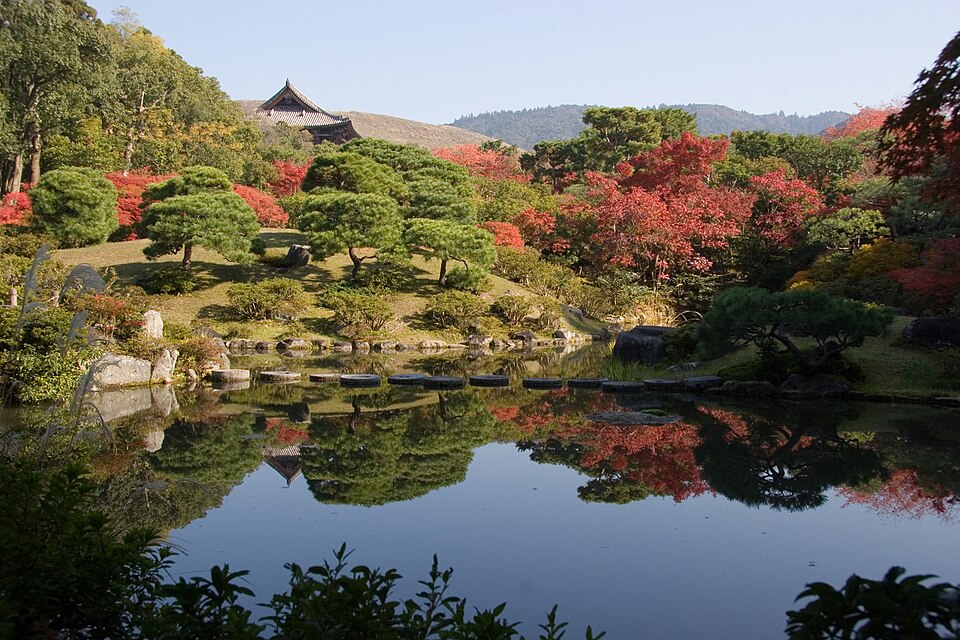
- •Isuien Garden: A masterful Meiji-era strolling garden that frames Todai-ji's rooftops and the Wakakusa hills as living borrowed scenery across two interconnected ponds.
- •Naramachi: Nara's historic merchant district, not a single attraction: a free, walkable network of Edo-period machiya townhouses just southeast of Nara Park.
Suggested Itinerary
Pair Kofuku-ji Temple with these nearby stops for a full day in Central Nara.
Frequently Asked Questions
Planning Your Nara Trip?
See the full Nara destination guide or browse Japan itineraries that include this city.
See all Temples & Shrines across Japan →Explore all attractions in Nara or browse nearby destinations.
Back to Nara Guide →