Osanbashi Pier
By Andrew Liyan · Last updated: September 1, 2026 · Facts verified: September 1, 2026

- Area
- Naka-ku, Yokohama
- Best For
- Free harbor views, Architecture and photography, Sunset, Waterfront walking routes
Visiting Osanbashi Pier
Osanbashi Pier, officially the Osanbashi Yokohama International Passenger Terminal, is one of Yokohama's most distinctive waterfront landmarks and one of its easiest to misunderstand. The building is a genuine international cruise terminal, used by ships and their passengers throughout the year, but most of it is also a free, open-air public rooftop that anyone can walk onto at any hour, cruise ticket or not. That dual identity, a working port facility that doubles as one of the city's best free harbor viewpoints, is the single most important thing to know before visiting, and it is the first thing this guide wants to make clear: you do not need a booking, a ticket, or a passport check to enjoy the rooftop and pier walkway.
The confusion is understandable. From a distance, Osanbashi looks like exactly what part of it is, an international passenger terminal with immigration counters, baggage areas, and a schedule tied to cruise ship arrivals. But the terminal's roof is also its park. A gently sloped, pillar-free wooden deck rises from ground level and opens onto a wide plaza with lawns and unobstructed views across Yokohama Bay. That rooftop and the pier walkway beneath it are open 24 hours a day, free of charge, to sightseers as much as to anyone waiting on a ship. The only genuinely restricted area is the customs, immigration, and quarantine (CIQ) lobby on the second floor, which is reserved for passengers actually boarding or disembarking a cruise. Everything else at ground level and on the roof, including the public shop, cafe, and Osanbashi Hall event space, is open to any visitor.
The rooftop's nickname, the Whale's Back (Kujira no Senaka in Japanese), comes from its shape: a long, undulating wooden surface built without visible columns or support pillars, so the deck reads as one continuous curved plane rather than a conventional flat rooftop. The walking surface is built from Brazilian Ipe wood, and the pillar-free structural design was the winning entry in an international architecture competition held in the mid-1990s, credited to the firm Foreign Office Architects and architects Farshid Moussavi and Alejandro Zaera-Polo. The result is one of the more architecturally ambitious pieces of public infrastructure in Japan, and it draws photographers and architecture enthusiasts as reliably as it draws travelers simply looking for a harbor view.
Osanbashi occupies a historically significant stretch of Yokohama's waterfront. The original pier on this site was built between 1889 and 1896, making it the port's oldest berth and one of the physical gateways through which Japan opened to international trade during the Meiji era. That structure aged over the following century, and the current building replaced it after a 1988 to 2002 reconstruction project, opening to the public in 2002 following the design competition mentioned above. So while the building itself is a 21st-century structure, the ground it stands on has been central to Yokohama's identity as an international port for well over a hundred years.
Once on the rooftop, the main draw is simply the view. The open plaza offers a close to 360-degree sightline across Yokohama Harbor, taking in the Minato Mirai skyline, the Cosmo Clock 21 Ferris wheel, Yokohama Bay Bridge, and Yokohama Marine Tower across the water. On clear winter days, when the air is driest, Mount Fuji is sometimes visible in the distance, a detail worth planning around if that specific view matters to your visit. The grass lawns scattered across the deck invite visitors to sit and linger rather than just walk through, and because there is no admission gate, no queue, and no fixed circuit, a visit can be as short as a ten-minute photo stop or as long as an unhurried hour spent watching ships move through the harbor.
Timing matters more here than at a typical indoor attraction. Independent sources consistently point to late afternoon into sunset as the best window, and the reasoning holds up: the open, west-facing deck has an unobstructed sightline across the water, so the golden-hour light and the sunset itself are rarely blocked by buildings the way they might be elsewhere in the city. Winter evenings add the Mount Fuji possibility on top of that. The trade-off is that Osanbashi's rooftop is entirely open-air with very little shade, so a midday visit in the height of summer means full sun exposure on a wooden deck with nowhere obvious to escape the heat. Spring brings some seasonal color from cherry blossoms near the pier approach, and the operator has referenced a rooftop illumination event that runs sometime in the fall and winter months, though no fixed, confirmed recurring dates were found for it, so treat it as a general seasonal possibility rather than something to plan a specific trip around.
Because it is a real, working cruise terminal and not a purpose-built tourist attraction, Osanbashi's rhythm shifts a little on days when a ship is actually in port. Expect somewhat more activity, and possibly some extra security presence, around a scheduled cruise call, and be aware that the second-floor CIQ area is genuinely off-limits to non-passengers at those times, though this has no effect on rooftop or pier access. No official source gives a precise rule for exactly what changes on a cruise day, so this is worth treating as a general heads-up rather than a fixed policy: if you're visiting on a day when a large ship happens to be docked, expect a bit more foot traffic and possibly a security presence near the terminal entrance, not a closure of the public spaces.
Osanbashi sits at the center of Yokohama's most walkable waterfront cluster, which is a large part of why it rewards a visit even for travelers with limited time. Yamashita Park is roughly a ten-minute walk away, Minato Mirai 21 is fifteen to twenty minutes in the other direction, and Yokohama Chinatown is a similarly short walk past Yamashita Park. That makes Osanbashi less of a standalone destination and more of a natural stop along a longer waterfront route, the kind of place you fold into a Minato Mirai to Yamashita Park to Chinatown walk rather than the sole reason to travel to this part of the city.
For travelers weighing where to spend limited sightseeing time along Yokohama's harbor, Osanbashi's biggest practical advantage is that it removes the usual hesitation entirely: there's no admission fee to weigh, no ticket to plan around, and no reservation to make. It is best suited to anyone who wants a genuinely wide, open-air harbor panorama and finds the building's architecture interesting in its own right. Travelers who specifically want a weather-independent, elevated indoor viewing experience, with an elevator ride and glass-enclosed observation floors, are better served by a dedicated paid tower such as nearby Yokohama Marine Tower; those who want waterfront shopping, dining, and event space are better served by the Yokohama Red Brick Warehouse a short walk away. Osanbashi's own strength is the combination of a free, wide-open outdoor deck, striking architecture, and one of the more unobstructed harbor views in the city, particularly at sunset.
Ultimately, Osanbashi Pier's appeal comes from how little it asks of a visitor and how much it offers in return. There is no gate to pass through, no ticket window to find, and no set path to follow, only a sloped wooden deck that opens onto one of Yokohama's widest harbor views, free and accessible at any hour of the day or night. For a first-time visitor already planning a walk along the Yokohama waterfront, it is one of the easiest additions to make to that route, and for anyone specifically chasing sunset photography or striking modern architecture, it is worth treating as a genuine destination in its own right.
Things to Do at Osanbashi Pier
Before anything else, it helps to know the actual boundary: the rooftop, the pier walkway, and the terminal-level shop, cafe, and Osanbashi Hall are all open to any visitor, free, 24 hours a day. The only area that is genuinely off-limits to non-passengers is the second-floor CIQ (customs, immigration, and quarantine) lobby, used exclusively by people boarding or disembarking a cruise ship. If you're not sailing that day, you can walk straight up to the rooftop without needing to explain yourself to anyone.
How to Get to Osanbashi Pier
Osanbashi Pier sits on Yokohama's central waterfront, between Yamashita Park and the Minato Mirai district, and is reachable on foot from either area or directly by train.
From Tokyo Station
Take the JR Tokaido Line, Yokosuka Line, or Keihin-Tohoku Line to Yokohama Station, then transfer to the Minatomirai Line and travel to Nihon-odori Station. The full journey typically takes around 45 to 55 minutes.
By Minatomirai Line
The nearest station is Nihon-odori Station. Leave via Exit 3 and follow signs toward the waterfront; Osanbashi Pier is approximately a 5 to 7-minute walk from the exit.
From Yokohama Station
Take the Minatomirai Line directly to Nihon-odori Station, a journey of about 6 to 8 minutes, then walk the remaining 5 to 7 minutes to the pier.
From Kannai Station
Kannai Station, served by the JR Negishi Line and the Yokohama Municipal Subway, is an alternative approach. The walk from Kannai to Osanbashi Pier takes approximately 15 minutes.
By Bus
The Akaikutsu Loop Bus, which circles Yokohama's main waterfront sights, stops directly in front of the terminal. The Yokohama City Bus "Osanbashi-iriguchi" stop is also close by, about a 3-minute walk from the pier.
By Car
On-site parking exists at Osanbashi, with capacity for roughly 400 vehicles according to the City of Yokohama, though current parking fees were not confirmed for this guide. Check signage or the operator's site on arrival for current rates.
From Haneda Airport
Take the Keikyu Line to Yokohama Station, then transfer to the Minatomirai Line for Nihon-odori Station. The full trip typically takes 45 to 60 minutes depending on connections.
By Taxi
A taxi from Yokohama Station generally takes around 10 to 15 minutes depending on traffic.
Walking From Yamashita Park, Chinatown, or Minato Mirai
Osanbashi is an easy walk from several nearby attractions: about 10 minutes from Yamashita Park, a similar distance from Yokohama Chinatown, and 15 to 20 minutes from Minato Mirai 21. Many visitors treat it as a midpoint stop along a longer waterfront route rather than a separate trip.
Best Time to Visit
Late afternoon into sunset is the most consistently recommended time to arrive, when the open, west-facing deck catches the golden-hour light across the harbor. Winter evenings add the possibility of a clear Mount Fuji sightline. If visiting at midday in summer, be prepared for full sun exposure on an entirely open-air deck with little shade.
Best Time to Visit Osanbashi Pier
Late afternoon into sunset for golden-hour harbor views; winter evenings for the best chance of seeing Mount Fuji.
Entry Fee & Hours
- •The rooftop plaza and pier walkway are free and open to the public 24 hours a day, with no ticket, reservation, or entry gate. The only restricted area is the second-floor CIQ (customs, immigration, and quarantine) lobby, which is reserved for passengers actually boarding or disembarking a cruise ship. The public shop, cafe, and Osanbashi Hall event space on the terminal level are open to any visitor, not just passengers.
- •Free wheelchair and stroller rental is available at the second-floor Information Counter, along with WHILL electric wheelchairs for on-site test use (no reservation, limited availability). The rooftop is reached by a ramped, step-free walkway rather than stairs.
- •Expect somewhat more activity and a security presence near the terminal entrance on days when a cruise ship is scheduled to arrive or depart, since Osanbashi is a genuine working port facility. This does not restrict access to the rooftop or pier, only the passenger-only CIQ area.
Nearby Attractions
Combine with Osanbashi Pier on the same day
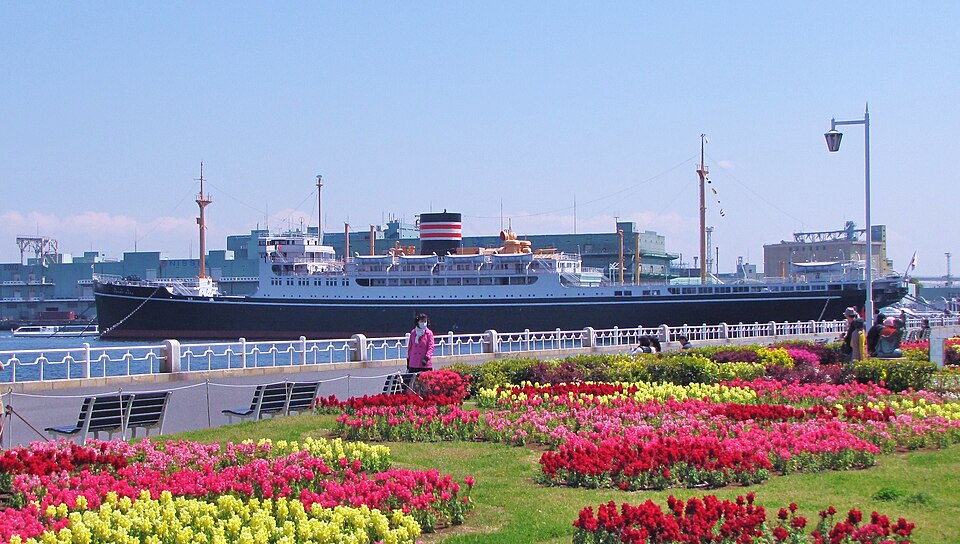
Yamashita Park

Yokohama Red Brick Warehouse

Yokohama Marine Tower

Minato Mirai 21
Frequently Asked Questions
Planning Your Yokohama Trip?
See the full Yokohama destination guide or browse Japan itineraries that include this city.
See all Towers & Views across Japan →