Hakone Shrine
ExploreJapanDaily Editorial Team · Last updated: June 28, 2026

- Area
- Moto-Hakone
- Best For
- Photography, Spirituality, Mt Fuji views, Nature
Visiting Hakone Shrine
Hakone Shrine is one of Japan's most atmospheric Shinto shrines, a sacred place where ancient cedar forests, mountain landscapes, and the waters of Lake Ashi come together to create a setting that feels both timeless and deeply connected to nature. Nestled along the shores of the lake in the heart of Hakone, the shrine has welcomed worshippers, pilgrims, and travelers for more than twelve centuries. Today, it remains one of the region's most significant spiritual landmarks and one of the most photographed destinations in the area, known especially for its iconic vermilion torii gate standing gracefully at the edge of the water.
Founded in 757, Hakone Shrine has long been regarded as a place of spiritual importance. Throughout Japan's history, military leaders, emperors, samurai, and ordinary travelers visited the shrine to pray for protection, safe journeys, prosperity, and good fortune. Its location along historic travel routes helped establish its reputation as a guardian of those passing through the mountainous Hakone region. Even today, many visitors arrive not only to admire the scenery but also to participate in traditional acts of worship, continuing customs that have been observed here for centuries.
One of the most memorable aspects of visiting Hakone Shrine is the approach itself. The journey begins beneath towering cedar trees that line stone pathways leading toward the shrine grounds. These ancient trees create a natural canopy overhead, filtering sunlight and surrounding visitors with a sense of calm that contrasts sharply with the pace of modern life. The sounds of traffic and daily activity gradually fade, replaced by rustling leaves, birdsong, and the quiet atmosphere that has defined the shrine for generations. The forest feels as much a part of the sacred experience as the shrine buildings themselves.
The shrine's lakeside setting contributes significantly to its distinctive character. Few religious sites in Japan enjoy such a dramatic natural backdrop. The waters of Lake Ashi stretch beyond the shoreline, while the surrounding mountains frame the landscape in every direction. Depending on the season and weather, mist may drift across the lake, sunlight may sparkle on the water, or distant mountain ridges may emerge through shifting clouds. This constantly changing scenery gives each visit a slightly different mood while reinforcing the close relationship between Shinto spirituality and the natural world.
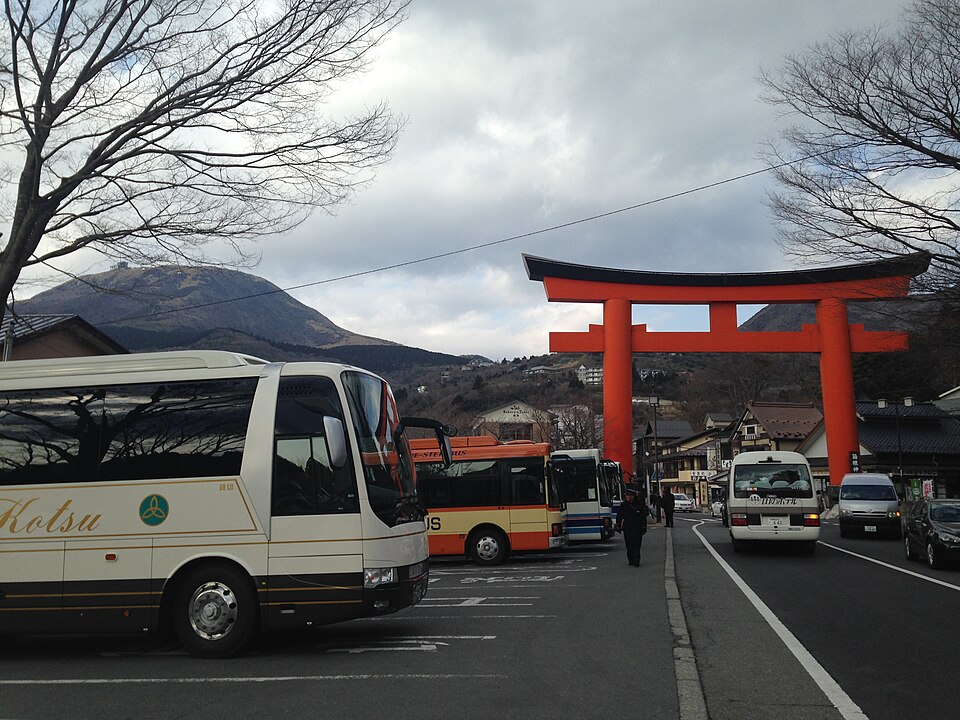
Perhaps no feature of Hakone Shrine is more recognizable than the Peace Torii, the vermilion gate that stands partially in the waters of Lake Ashi. This striking structure has become one of the defining images of Hakone and one of the most photographed shrine landmarks in Japan. Seen against the backdrop of the lake and surrounding mountains, the torii creates a powerful visual symbol of transition between the everyday world and the sacred realm. While photographs capture its beauty, standing nearby often reveals a deeper appreciation for how naturally the structure fits within the landscape.
The shrine grounds themselves maintain a quiet elegance that reflects centuries of devotion and preservation. Traditional wooden buildings, decorative details, stone lanterns, and carefully maintained pathways create an environment that feels both welcoming and respectful. Unlike some larger shrine complexes that can feel overwhelming in scale, Hakone Shrine encourages a slower pace of exploration. Visitors are invited to pause, observe, and absorb the atmosphere rather than rush from one landmark to another. This sense of calm is one of the qualities that many travelers remember most vividly after their visit.

Seasonal changes transform Hakone Shrine throughout the year. Spring brings fresh greenery and flowering trees that brighten the forested surroundings. Summer deepens the lush character of the cedar groves and highlights the vibrant colors of the shrine structures. Autumn introduces rich shades of red, orange, and gold across the surrounding mountains, creating some of the most beautiful scenery in the region. Winter offers a quieter atmosphere, with crisp air and occasional views of snow-covered Mount Fuji visible from parts of the Hakone area. Each season adds a new dimension to the shrine's character while preserving its underlying sense of tranquility.
Hakone Shrine is also closely linked to the broader cultural identity of the Hakone region. The shrine exists within a landscape shaped by volcanic activity, hot springs, mountain passes, and centuries of travel. Nearby Lake Ashi, Owakudani, traditional ryokan inns, and historic routes all contribute to a destination where natural beauty and cultural heritage remain closely intertwined. As a result, the shrine often serves as more than an isolated attraction. It becomes part of a larger experience that helps visitors understand the historical and spiritual significance of Hakone itself.
For international travelers, Hakone Shrine provides an accessible introduction to Shinto traditions while remaining deeply authentic. Visitors can observe traditional rituals, admire sacred architecture, and experience the profound connection between spirituality and nature that lies at the heart of Shinto belief. Yet the shrine does not require extensive cultural knowledge to appreciate. The beauty of the setting, the peaceful forest environment, and the visual impact of the lakeside torii create an immediate sense of place that resonates with travelers from all backgrounds.
What makes Hakone Shrine especially memorable is the harmony it achieves between landscape, history, and spirituality. The ancient cedar forest, the tranquil waters of Lake Ashi, the centuries-old traditions, and the iconic torii gate all work together to create an experience that feels uniquely Japanese while remaining universally appealing. Whether visitors arrive seeking cultural insight, scenic beauty, spiritual reflection, or simply a quiet moment in nature, Hakone Shrine offers an atmosphere that lingers long after the visit ends. It stands as one of Hakone's most enduring landmarks and one of the region's most meaningful connections to Japan's spiritual heritage.
Things to Do at Hakone Shrine
How to Get to Hakone Shrine
Hakone Shrine is located in the Moto-Hakone area on the shores of Lake Ashi in Hakone, Kanagawa Prefecture.
- •Nearest station: Moto-Hakone Bus Stop (Hakone Tozan Bus)
- •IC cards (Suica, Pasmo, or ICOCA) are accepted on trains, subways, and buses throughout Japan. Tap in and out at every gate.
- •Avoid traveling during rush hour on weekdays: 7am to 9am and 5pm to 8pm. Trains are significantly more crowded.
- •Google Maps provides accurate real-time transit directions in Hakone. Download offline maps before you arrive.
Map
Best Time to Visit Hakone Shrine
Best time to visit Hakone Shrine: Clear mornings for torii gate and Fuji views. Weekday mornings are generally quieter than weekends and public holidays.
- •Best time to visit: Clear mornings for torii gate and Fuji views
- •Arriving on a weekday morning avoids the largest crowds. Weekends and public holidays are significantly busier.
- •Spring (late March to early May) and autumn (October to November) are the most popular seasons for visiting Hakone.
- •Golden Week (late April to early May) is the busiest week of the year in Japan. Book accommodation and tickets well in advance.
Entry Fee & Hours
- •The shrine grounds, main hall, and lakeside torii gate are free to visit at any time; only the treasure hall (Homotsuden) charges a small separate admission.
- •The main approach climbs a stone stairway through the cedar forest, which involves uneven, sloped terrain that is difficult for wheelchairs or strollers.
- •The lakeside torii gate and the flat path along the Moto-Hakone waterfront are step-free and easily accessible without using the forest stairway.
Nearby Attractions
Combine with Hakone Shrine on the same day

Lake Ashi (Ashinoko)
Hakone Checkpoint
Nearby AttractionNarukawa Art Museum
Nearby Attraction
Lake Ashi Sightseeing Cruise
Old Tokaido Road
Nearby Attraction- •Lake Ashi (Ashinoko): A scenic volcanic crater lake offering iconic Mt Fuji reflections, the famous floating torii gate of Hakone Shrine, and beautiful lakeside views.
- •Hakone Checkpoint: This reconstructed Edo-period checkpoint once controlled travel along the historic Tokaido Road and provides fascinating insights into Japan's feudal history.
- •Narukawa Art Museum: Known for its collection of traditional Japanese paintings, the museum also offers one of the best panoramic viewpoints overlooking Lake Ashi and Mount Fuji.
- •Lake Ashi Sightseeing Cruise: A scenic cruise across Lake Ashi offering panoramic views of Mt Fuji, forested shorelines, and the famous torii gate of Hakone Shrine.
- •Old Tokaido Road: A historic cedar-lined walking route that once connected Kyoto and Edo (Tokyo), allowing visitors to experience a preserved section of Japan's ancient travel network.
Suggested Itinerary
Pair Hakone Shrine with these nearby stops for a full day in Moto-Hakone.
Frequently Asked Questions
Planning Your Hakone Trip?
See the full Hakone destination guide or browse Japan itineraries that include this city.
See all Temples & Shrines across Japan →Explore all attractions in Hakone or browse nearby destinations.
Back to Hakone Guide →