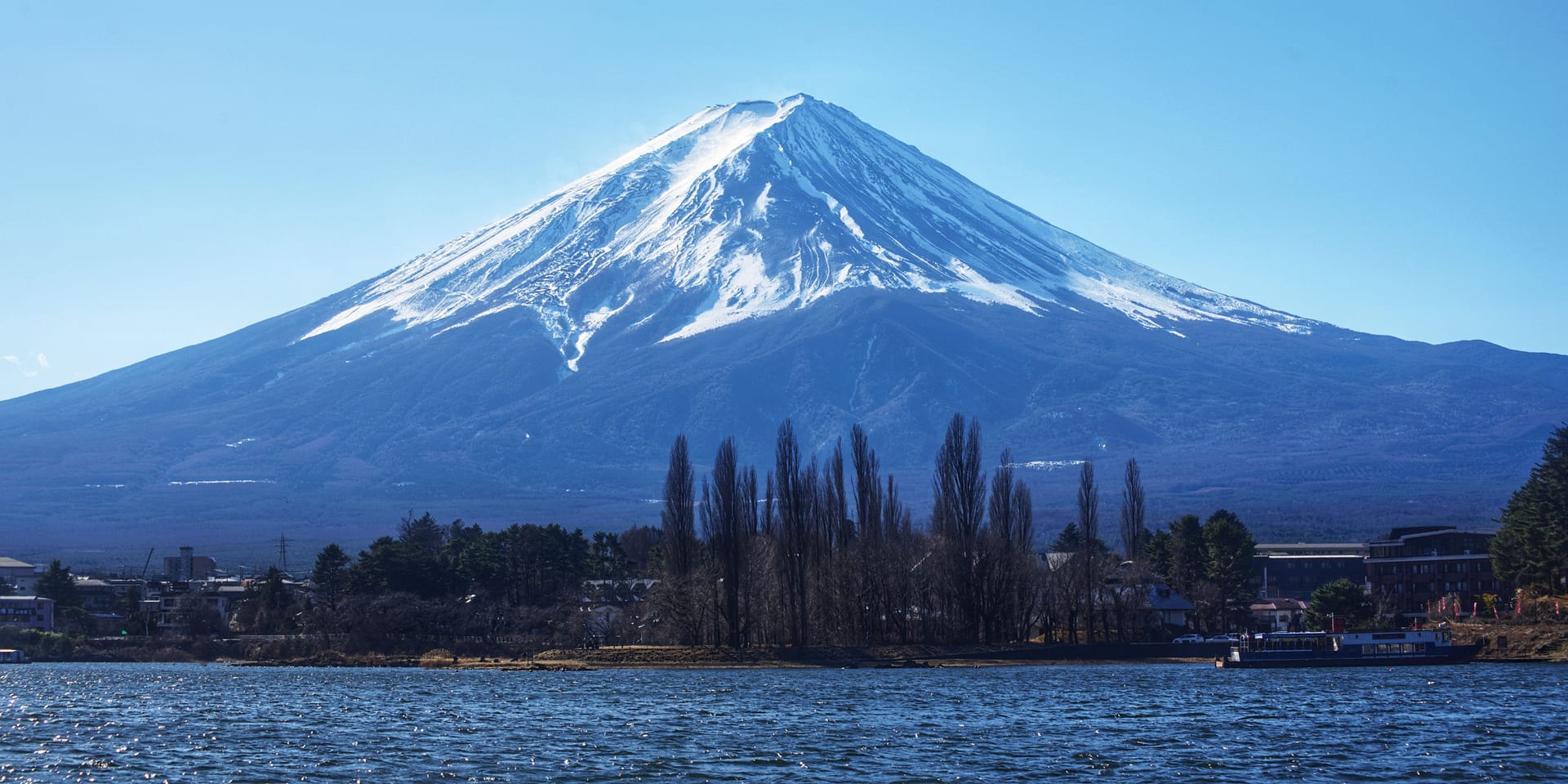
Mount Fuji perfect snow-capped volcanic cone reflection Japan

Mount Fuji, Japan

Japan's Sacred Symbol

Mount Fuji at a Glance

region
Chubu (Yamanashi / Shizuoka Prefecture)
best For
Iconic views, summer climbing, photography
best Time
Summer (July–August) for climbing; winter/spring for clearest views
suggested Stay
Day trip from Tokyo or 1 overnight near Fuji Five Lakes
main Station
Fujisan Station (Fujikyuko Line) or Kawaguchiko Station
nearby Destinations
Hakone, Tokyo, Kyoto

Visiting Mount Fuji: Japan's Iconic Volcanic Peak

Mount Fuji is Japan's most recognizable landmark, a perfectly symmetrical volcanic peak and UNESCO World Heritage Site that has inspired artists, pilgrims, and travelers for centuries. The surrounding region offers scenic lakes, traditional villages, hot springs, and some of the country's most celebrated viewpoints. Mount Fuji rewards photographers, outdoor enthusiasts, and anyone chasing that one iconic view of Japan beyond the major cities. Continue reading to discover the best places to view, explore, and experience Mount Fuji throughout the year.

8 min read

Top Attractions in Mount Fuji

The must-see sights, ranked by traveler impact

Why Visit Mount Fuji?

Quick Answer

Mount Fuji is Japan's most enduring natural symbol, and the surrounding Fuji Five Lakes region offers iconic photo viewpoints, traditional villages, and hot springs well beyond the summit itself. It suits photographers, hikers, and anyone chasing that classic view of Japan.

Mount Fuji is worth visiting because it is Japan's most enduring natural and cultural symbol, with the Fuji Five Lakes region offering iconic photo viewpoints, traditional villages, and hot springs beyond just the summit itself. Rising 3,776 meters above the surrounding countryside, the country's highest peak is more than a mountain. It is a national symbol woven into Japanese art, literature, spirituality, and daily life. Seeing Fuji for the first time, whether reflected in a still lake, framed by cherry blossoms, or capped with winter snow, is often a defining moment of a trip to Japan.

What makes the region especially rewarding is that the experience extends far beyond the summit. The Fuji Five Lakes area, traditional villages such as Oshino Hakkai, scenic viewpoints like Chureito Pagoda, and relaxing hot spring resorts all offer different perspectives of the mountain. The landscape changes dramatically throughout the year, creating entirely different experiences from season to season.

Mount Fuji appeals to photographers chasing iconic views, hikers seeking a memorable challenge, nature lovers looking for open landscapes, and travelers wanting to connect with one of Japan's most enduring cultural symbols. Whether you spend a few hours admiring the mountain or several days exploring the surrounding region, Mount Fuji delivers some of the most recognizable and rewarding scenery in the country.

How to Get to Mount Fuji

Quick Answer

Most visitors reach the Mount Fuji region by direct highway bus or train from Tokyo's Shinjuku Station to Kawaguchiko, taking about 2 hours. Hakone is a similarly timed alternative base with its own Fuji views.

The Mount Fuji region has no airport of its own — most visitors arrive by direct highway bus or train from Tokyo (Shinjuku) to Kawaguchiko, a trip of roughly 2 hours, or combine it with a stay in nearby Hakone.

Getting to Mount Fuji from Tokyo

Getting to Mount Fuji from Tokyo's Airports

Getting to Mount Fuji 5th Station

Organized Day Tours

Many visitors choose guided tours that include Lake Kawaguchiko, Chureito Pagoda, Oshino Hakkai, Mount Fuji 5th Station, and Hakone. Typical cost is ¥10,000–20,000 ($70–140 USD), making this a good option for travelers short on time.

  • JR Pass coverage: Covered for JR trains from Tokyo to Otsuki; not covered for the Fujikyuko Railway from Otsuki to Kawaguchiko or for most buses within the Fuji Five Lakes region. Because much of the journey is on non-JR lines, the JR Pass provides limited value for travelers visiting only Mount Fuji from Tokyo.

Recommended

For most first-time visitors, the Fuji Excursion Limited Express from Shinjuku to Kawaguchiko is the easiest and most convenient way to reach Mount Fuji. Budget travelers may prefer the highway bus, while those planning to climb Mount Fuji should continue from Kawaguchiko to the 5th Station during the official climbing season.

Best Time to Visit Mount Fuji

Quick Answer

Autumn (October–November) and winter (December–February) offer the clearest views of Mount Fuji thanks to dry air. Climbing the mountain itself is only permitted in summer (July–August), the one season when the trails and huts are open.

The best time to see Mount Fuji clearly is autumn (October–November) or winter (December–February), when the air is driest, though summer (July–August) is the only season when climbing the mountain itself is permitted. Mount Fuji is one of Japan's most iconic landmarks and can be enjoyed throughout the year, though the experience varies greatly depending on the season.

Spring (March–May): Cherry Blossoms and Classic Fuji Views

Spring is one of the most popular times to visit Mount Fuji. Cherry blossoms bloom around the Fuji Five Lakes region, creating some of Japan's most famous landscapes.

Popular viewing spots include:

  • Chureito Pagoda
  • Lake Kawaguchiko
  • Oshino Hakkai
  • Oishi Park

Temperatures typically range from 45°F–75°F (7°C–24°C). While spring offers beautiful scenery, Mount Fuji can occasionally be hidden by clouds, especially during the afternoon.

Summer (June–August): Climbing Season

Summer is the official Mount Fuji climbing season. Most climbing routes are open from early July through early September, allowing visitors to hike to Japan's highest peak.

Temperatures around the lakes range from 65°F–85°F (18°C–29°C), but conditions at higher elevations are much cooler.

Although summer is the most popular time to climb Mount Fuji, it is not the best season for viewing the mountain. Humidity, haze, and cloud cover frequently obscure the summit, especially during the daytime.

Autumn (October–November): Fall Colors and Excellent Visibility

Autumn is widely considered one of the best times to visit Mount Fuji. Cooler temperatures and lower humidity improve visibility, while colorful foliage creates spectacular scenery around the Fuji Five Lakes region.

Top autumn viewing locations include:

  • Lake Kawaguchiko
  • Oishi Park
  • Momiji Corridor
  • Lake Yamanakako

Temperatures generally range from 40°F–70°F (4°C–21°C).

Winter (December–February): Best Season for Mount Fuji Views

Winter is often the best time of year to see Mount Fuji. Cold, dry air dramatically improves visibility, making the mountain visible on more days than any other season.

The snow-covered summit creates the classic Mount Fuji image seen on postcards, calendars, and travel brochures. Clear skies are common, particularly during the morning hours.

Temperatures typically range from 25°F–50°F (-4°C–10°C) around the Fuji Five Lakes region.

For photographers, winter provides the highest chance of capturing unobstructed views of the mountain.

Times to Avoid

Rainy Season (Mid-June to Early July)

Clouds, rain, and poor visibility often make it difficult to see Mount Fuji during Japan's rainy season.

Golden Week (Late April to Early May)

This major holiday period brings heavy crowds to Lake Kawaguchiko, Hakone, Chureito Pagoda, and other popular viewing areas.

Obon Holiday (Mid-August)

Domestic tourism peaks during Obon, leading to crowded transportation, accommodations, and sightseeing locations.

Summer Afternoons

Even outside the rainy season, Mount Fuji is frequently hidden by clouds during summer afternoons. Visitors seeking the best views should plan sightseeing early in the morning.

Best Overall Months

For the best combination of weather, scenery, and mountain visibility, visit Mount Fuji during:

  • December to February for the clearest views of the mountain
  • October and November for autumn foliage and excellent visibility
  • Late March to early April for cherry blossoms
  • July to early September if your goal is climbing Mount Fuji

When Is Mount Fuji Most Visible?

If your primary goal is simply seeing Mount Fuji clearly, winter is the best season. The cold, dry air creates significantly better visibility than spring or summer, and the snow-covered summit produces the classic Mount Fuji scenery that many travelers dream of experiencing. For the highest chance of clear views, visit between December and February and plan your sightseeing during the early morning hours.

Where to Stay in Mount Fuji

Quick Answer

Lake Kawaguchiko is the best base for most first-time visitors, with the region's most iconic photo viewpoints. Fujiyoshida suits budget travelers and climbers, Lake Yamanakako suits nature lovers, and Hakone or Gotemba work well for a combined onsen or shopping trip.

The best areas to stay near Mount Fuji are Lake Kawaguchiko, Fujiyoshida, Lake Yamanakako, Hakone, and Gotemba, each suiting a different travel style and budget. Mount Fuji is surrounded by several towns and lake regions, each offering a different experience.

🗻

Lake Kawaguchiko

from $55/night

Best for: First-timers & iconic photo views

⛩️

Fujiyoshida

from $35/night

Best for: Budget travelers & climbers

🚣

Lake Yamanakako

from $50/night

Best for: Nature & families

♨️

Hakone

from $55/night

Best for: Hot springs & luxury

🛍️

Gotemba

from $40/night

Best for: Shopping & accessibility

Nearby Destinations

Easy day trips or next stops from Mount Fuji

📍Nearby
  • Hakone: Mt Fuji views, Onsen, Relaxation, Couples, Art
  • Nagoya: Nagoya Castle and Hommaru Palace, Atsuta Jingu and the Kusanagi sword tradition, Hitsumabushi and miso katsu, Toyota and railway industrial heritage, A convenient Shinkansen stopover between Tokyo and Kyoto/Osaka
  • Kanazawa: Kenroku-en Garden, one of Japan's three great gardens, Kanazawa Castle and its reconstructed turrets, Higashi Chaya District's preserved geisha quarter and gold leaf craft, Omicho Market's 300-year-old seafood stalls, The 21st Century Museum of Contemporary Art

Frequently Asked Questions

Plan Your Trip

Ready to Experience Mount Fuji?

Browse curated itineraries that include Mount Fuji, or build your own with our free planning tools.

➡️Suggested Next Guide

Next: Explore all attractions in Mount Fuji or browse nearby destinations.

Back to All Destinations →