Enoshima Island
ExploreJapanDaily Editorial Team · Last updated: September 22, 2026 · Facts verified: September 22, 2026

- Area
- Fujisawa, Kanagawa
- Best For
- Coastal scenery, Sunset views, Seafood, Day trips
Visiting Enoshima Island
Enoshima is a small, hilly island connected to the Shonan coast by a causeway, and it sits in Fujisawa city, not in Kamakura. Travelers group the two together because they are a short Enoden ride apart and are commonly visited on the same day, but Enoshima has its own shrine complex, its own observation tower and gardens, its own sea caves, and its own seafood culture. It is a coastal day-trip destination that pairs well with Kamakura when the schedule allows, not an extension of Kamakura's temple district.
A focused visit covering Enoshima Shrine, Samuel Cocking Garden, and the Sea Candle observation tower takes about 3 to 4 hours, most of it on foot and on stairs. Add roughly 1 to 2 hours for the Iwaya Caves, a walk out to Chigogafuchi on the western coast, or a sit-down seafood meal. Treat the shorter estimate as a genuine, worthwhile visit, not a rushed one, and the longer estimate as the version that covers the whole island.
The island rises steeply from the causeway, and most of its attractions sit above a long run of stairs and sloped paths. The Enoshima Escar, a three-section paid escalator system (¥500 adults, ¥250 children, running roughly 8:50 AM to 7:05 PM), climbs the steepest stretch from the shopping street past the shrine buildings up to the garden and tower. Walking the same route is entirely possible and free, it simply takes longer and involves real elevation gain. Travelers with mobility limitations or a stroller should budget for the Escar rather than assume the stairs are optional.

Enoshima is an outdoor, exposed destination in a way most Kamakura temples are not. Its core appeal, the coastline, the shrine's open-air approach, the garden, and the Sea Candle's outdoor deck, depends on being outside. Rain does not close the island, but it makes the stone stairs slippery and removes most of the reason to visit, and wind off Sagami Bay is a real factor at the exposed western viewpoints. A clear day matters here more than it does at an indoor museum or a temple interior.
Enoshima Shrine is not one building but three, spread across the island's ascent: Hetsunomiya near the base, Nakatsunomiya partway up, and Okutsunomiya near the top, each linked to one of the shrine's three Benzaiten-associated goddesses. The Hoanden treasure hall (8:30 AM to 4:30 PM, ¥200 adults) holds the shrine's well-known Benzaiten statue. Visitors short on time typically see Hetsunomiya and Nakatsunomiya and treat the climb past the other buildings as part of the visit rather than a detour.
The island's shopping street and its restaurants are built around shirasu, the small local whitebait. Fresh raw shirasu is seasonal and depends on that day's catch, with the local fishing season running roughly March 11 through December 31. During the annual closure from January 1 to March 10, restaurants serve it boiled (kama-age) instead, a version available essentially year-round.

Combining Enoshima with central Kamakura in a single day is genuinely popular and genuinely doable, connected by a roughly 25-minute Enoden ride, but it works best with realistic expectations. Packaged Kamakura-and-Enoshima day tours typically run 9 to 10 hours in total and still allot only around 90 minutes to two hours on the island itself, enough for the shrine and one viewpoint, not the caves or a sit-down meal. Travelers who want unhurried time at both places, or who also plan to see the Great Buddha, Hasedera, and Kamakura's temple district in the same day, are usually better served splitting the two across separate days or half-days rather than compressing both into one.
Things to Do at Enoshima Island
How to Get to Enoshima Island
Enoshima Island is reachable from Tokyo, Yokohama, and Kamakura by train.
- •Nearest station: Enoshima Station (Enoden / Odakyu Enoshima Line)
- •IC cards (Suica, Pasmo, or ICOCA) are accepted on trains, subways, and buses throughout Japan. Tap in and out at every gate.
- •Avoid traveling during rush hour on weekdays: 7am to 9am and 5pm to 8pm. Trains are significantly more crowded.
- •Google Maps provides accurate real-time transit directions in Kamakura. Download offline maps before you arrive.
Map
Best Time to Visit Enoshima Island
Best time to visit Enoshima Island: Clear winter days for Mount Fuji views; sunset year-round from Chigogafuchi. Weekday mornings are generally quieter than weekends and public holidays.
- •Best time to visit: Clear winter days for Mount Fuji views; sunset year-round from Chigogafuchi
- •Arriving on a weekday morning avoids the largest crowds. Weekends and public holidays are significantly busier.
- •Spring (late March to early May) and autumn (October to November) are the most popular seasons for visiting Kamakura.
- •Golden Week (late April to early May) is the busiest week of the year in Japan. Book accommodation and tickets well in advance.
The Enoshima Illumination (Shonan Jewel) lights the gardens and the Sea Candle after dark, typically 5:00 PM to 8:00 PM on weekdays and later on weekends, holidays, and late December. The most recently confirmed season ran November 22, 2025 to February 28, 2026; the next season is expected in the same window, with exact 2026-2027 dates confirmed by the official Enoshima Sea Candle site closer to the season. Clear winter days also give the best chance of seeing Mount Fuji across Sagami Bay.
Nearby beaches, seafood restaurants, and the island's walking trails are busiest during the summer beach season, especially on weekends.
Entry Fee & Hours
| Category | Price (JPY) | Approx. (USD) |
|---|---|---|
| Enoshima Sea Candle, Adult | ¥800 | ~$5.50 |
| Enoshima Sea Candle, Child | ¥400 | ~$3 |
| Samuel Cocking Garden after 5:00 PM, Adult | ¥500 | ~$3.50 |
| Samuel Cocking Garden after 5:00 PM, Child | ¥250 | ~$1.75 |
| Enoshima Escar (3 sections), Adult | ¥500 | ~$3.50 |
| Enoshima Escar (3 sections), Child | ¥250 | ~$1.75 |
| Iwaya Caves, Adult (junior high and up) | ¥500 | ~$3.50 |
| Iwaya Caves, Child (elementary) | ¥200 | ~$1.50 |
| Enoshima Shrine Hoanden (treasure hall), Adult | ¥200 | ~$1.50 |
| Enoshima Shrine Hoanden, Elementary | ¥50 | ~$0.35 |
| Category | Price (JPY) | Approx. (USD) |
|---|---|---|
| Adult | ¥1,100 | ~$7.50 |
| Child | ¥550 | ~$4 |
Prices reflect current admission per the official Enoshima Sea Candle ticket page and Fujisawa city tourism information. USD amounts are approximate and change with the exchange rate.
- •The island involves a significant number of stairs and uphill paths from the bridge entrance to the shrine and observation tower. The Enoshima Escar, a paid three-section escalator system (¥500 adult, ¥250 child for the full run, roughly 8:50 AM to 7:05 PM), covers most of the steepest sections and helps visitors with limited mobility reach the upper parts of the island.
- •The Iwaya Caves close without notice in high surf, storms, or unsafe tide conditions. If the caves are a specific reason for visiting, treat them as weather-dependent and have a backup plan for that time slot.
Nearby Attractions
Combine with Enoshima Island on the same day
Enoshima Aquarium
Distance: Approx. 10 minutes walkKatase Higashihama Beach
Distance: Approx. 10 minutes walkKamakura High School Crossing
Distance: Approx. 15 minutes by Enoden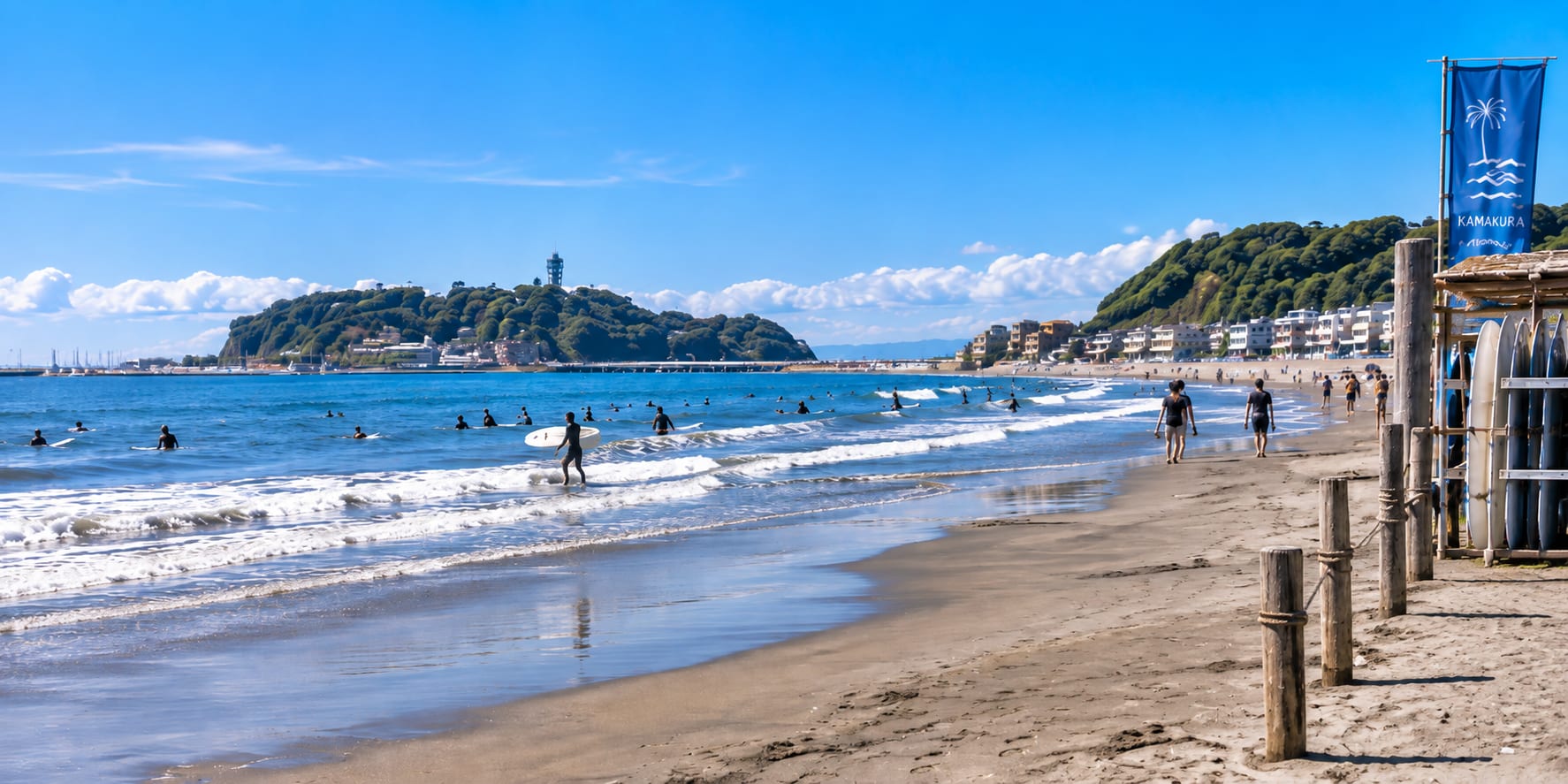
Yuigahama Beach

Hasedera Temple

Great Buddha of Kamakura (Kotoku-in)
- •Enoshima Aquarium (Approx. 10 minutes walk): One of Japan's most popular aquariums, featuring marine life from Sagami Bay, dolphin shows, and impressive jellyfish exhibits.
- •Katase Higashihama Beach (Approx. 10 minutes walk): A popular sandy beach known for swimming, sunbathing, and beautiful views of Enoshima Island.
- •Kamakura High School Crossing (Approx. 15 minutes by Enoden): The famous railway crossing featured in the anime Slam Dunk, attracting visitors and photographers from around the world.
- •Yuigahama Beach (Short Enoden ride east): Kamakura's main public beach, a free, year-round stretch of shoreline near Hasedera and the Great Buddha, with a summer swimming season and strong autumn-winter sunset value.
- •Hasedera Temple (Approx. 25 minutes by Enoden): A hillside Buddhist temple in Kamakura, home to a 9.18-meter gilded Kannon statue, a sea view over Sagami Bay, and a hydrangea path that draws crowds each June.
- •Great Buddha of Kamakura (Kotoku-in) (Approx. 30 minutes by Enoden): Kamakura's 13.35-meter outdoor bronze Buddha at Kotoku-in Temple, Japan's second-tallest bronze Buddha statue, standing in the open air since a tsunami destroyed its hall in the 1400s.
Suggested Itinerary
Pair Enoshima Island with these nearby stops for a full day in Fujisawa, Kanagawa.
Frequently Asked Questions
Planning Your Kamakura Trip?
See the full Kamakura destination guide or browse Japan itineraries that include this city.
See all Shopping & Entertainment across Japan →Explore all attractions in Kamakura or browse nearby destinations.
Back to Kamakura Guide →