Arashiyama Bamboo Grove
ExploreJapanDaily Editorial Team · Last updated: September 28, 2026
The Arashiyama Bamboo Grove is a short public path through tall bamboo in western Kyoto, free and with no gate. The path itself takes little time, so the planning questions are when to arrive before the crowds and what to walk it with: Tenryu-ji's garden at one end, Okochi Sanso at the top and Nonomiya Shrine off to the side. JR Saga-Arashiyama and Randen Arashiyama stations are each about 10 minutes' walk away.

- Area
- Arashiyama
- Best For
- Photography, Early Morning Walks, Nature, Zen Gardens
Visiting Arashiyama Bamboo Grove
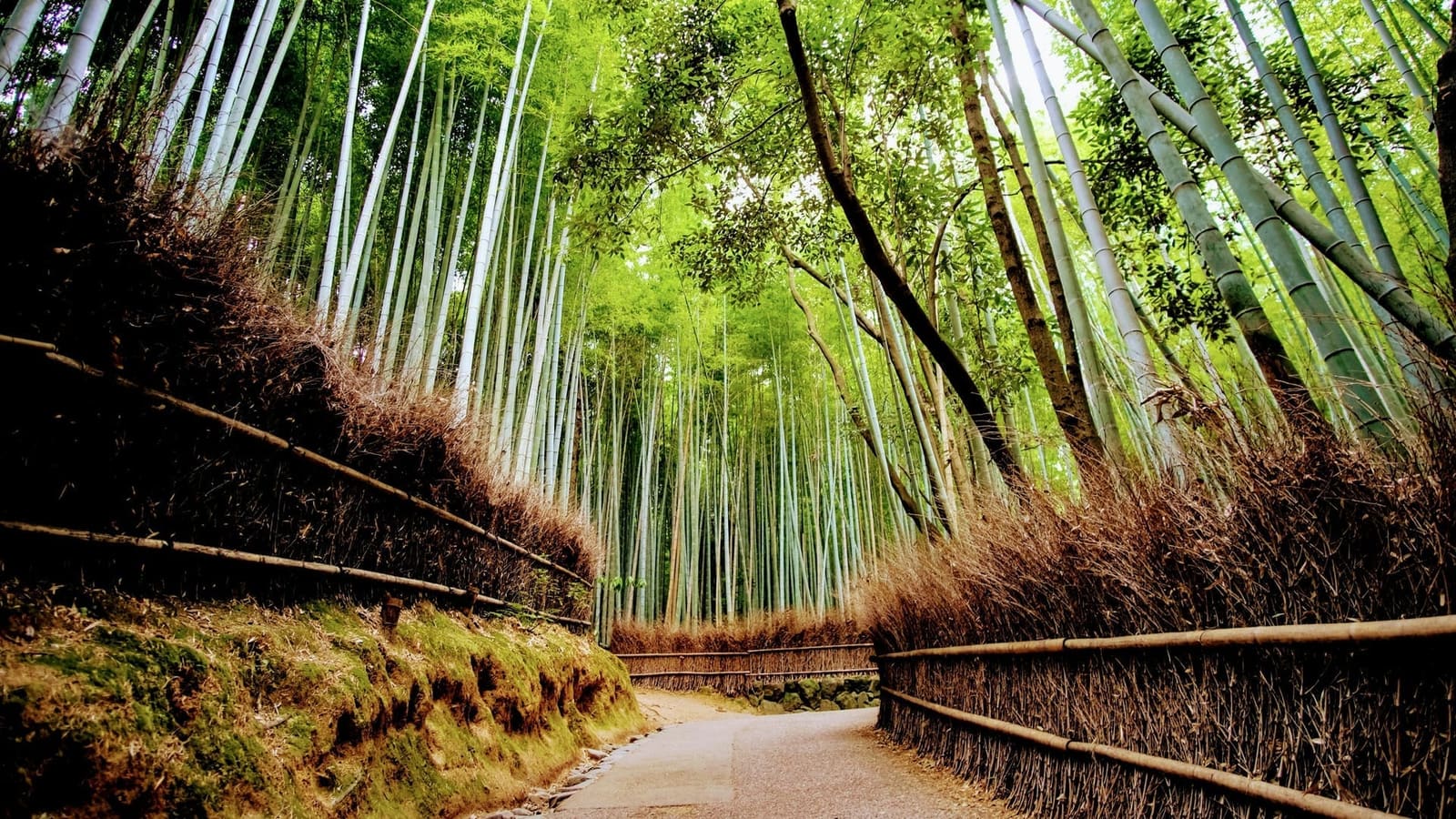
The bamboo grove, known in Japanese as the Chikurin no Komichi, is a walking path through a dense stand of bamboo in Sagano, the northern part of the Arashiyama district. Japan's national tourism organization describes the path as short: it is a walk of minutes, not a hike, and photos taken with a long lens make it look larger than it is.

What fills a visit is what surrounds it. Tenryu-ji, a Zen temple and UNESCO World Heritage site, has a garden gate that opens toward the grove. Okochi Sanso, the former villa of the film actor Okochi Denjiro, sits at the top of the path, and a side section of bamboo leads to Nonomiya Shrine. The route below puts them in order.
The grove is a public path with no gate, no ticket and no posted hours. The exception is the autumn light-up, when the path is lit in the evening and entry after dark is ticketed.
Walking the grove, from Tenryu-ji to Nonomiya Shrine
Short answer
The path is short, so walk it as part of a loop: Tenryu-ji's garden first, out through its north gate to the bamboo, up to Okochi Sanso, and back down past the turn for Nonomiya Shrine. From either JR or Randen, the grove is about 10 minutes on foot.
From 8:30 a.m.
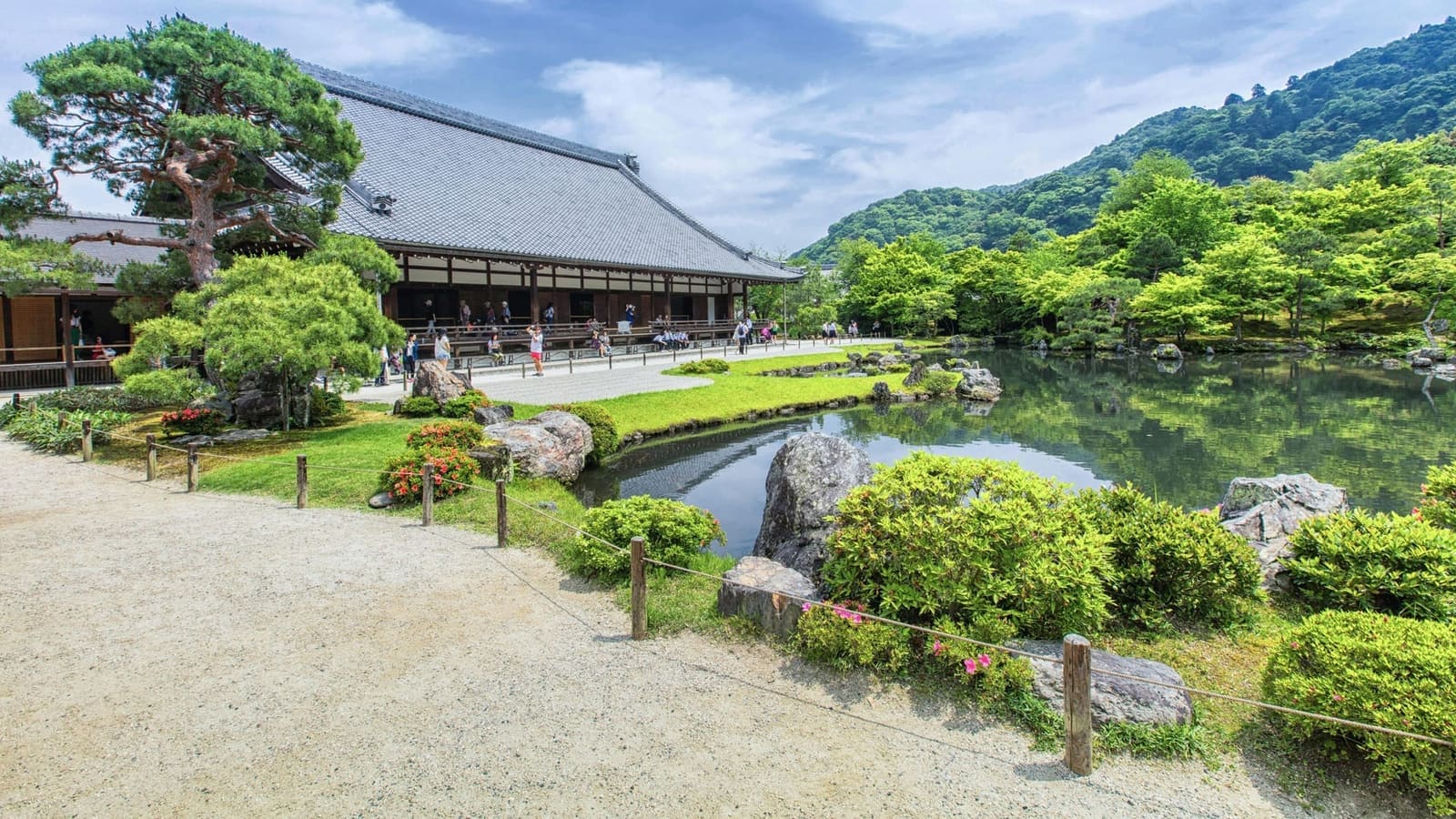
Tenryu-ji garden
The temple garden opens at 8:30 a.m. (¥500). Tenryu-ji sells tickets at its north gate too, the side facing the grove, and JNTO suggests approaching the bamboo from the temple's side gate.
Next
The bamboo path
The main section of the grove: a narrow path between tall bamboo and low brushwood fences. It is free, and short enough that crowds, not distance, decide how long it takes.
Top of the path
Okochi Sanso
The villa garden of the actor Okochi Denjiro, from 9:00 a.m. Admission (¥1,000) includes matcha and a sweet at the teahouse, and JNTO describes it as generally free of crowds.
On the way back
Nonomiya Shrine
A side section of bamboo leads to this small shrine, linked with the imperial princesses who purified themselves here before serving at Ise Jingu.

When to go
Short answer
Go early. The path is narrow and fills through the day, most of all on weekends and in the spring and autumn high seasons. From 30 September to 8 November 2026, evenings are the ticketed light-up.
- Early morning
- The path has no gate, so you can walk it before Tenryu-ji opens at 8:30 a.m. and before the day crowds arrive.
- Late morning to afternoon
- The busiest time. Expect to walk at the pace of the crowd on the narrowest sections.
- Autumn evenings
- During the light-up (30 September to 8 November 2026, 6:00 to 9:00 p.m.), entry is ¥1,500 at the booth inside the path, cash only, or ¥2,000 online with guaranteed entry. It closes in bad weather.
Fitting the grove into a Kyoto day
Short answer
Arashiyama is on the western edge of Kyoto, so give it a morning and do not try to pair it with eastern Kyoto the same morning. Tenryu-ji and Okochi Sanso are part of the same walk; Ryoan-ji and Kinkaku-ji are the natural afternoon on the same side of the city.
Beside the grove
Tenryu-ji
The garden gate at Tenryu-ji faces the bamboo, so the temple and the grove are one walk.
Northwest Kyoto
Ryoan-ji and Kinkaku-ji
The rock garden at Ryoan-ji and the Golden Pavilion at Kinkaku-ji are on the same side of the city and fill an afternoon.
JR Sagano Line toward Kyoto Station
Nijo Castle
Nijo Station is on the line back to Kyoto Station, which makes Nijo Castle an easy afternoon stop.
Better on another day
Kiyomizu-dera, Gion or Fushimi Inari
These are on the opposite, eastern and southern sides of the city. Fushimi Inari and the Higashiyama temples are better on another day or another half day.
For comparing trains and buses across the city, see Getting Around Kyoto.
What to see along the grove
How to Get to Arashiyama Bamboo Grove
Three railways serve Arashiyama, and each station is a walk of 10 to 15 minutes from the grove. Trains are the reliable choice: the district's roads are narrow and congested at busy times.
- •From Kyoto Station, the JR Sagano Line to Saga-Arashiyama is the direct route and is covered by the JR Pass.
- •Randen Arashiyama Station puts you in the middle of the shopping street; Hankyu Arashiyama is across the river.
- •Arrive by train rather than bus or car: the roads through the district are narrow and congested.
Map
Best Time to Visit Arashiyama Bamboo Grove
Best time to visit Arashiyama Bamboo Grove: Early morning, before the day crowds; autumn evenings for the ticketed light-up. Weekday mornings are generally quieter than weekends and public holidays.
- •Early morning, before the day crowds build along the narrow path.
- •Weekends, public holidays and the spring and autumn high seasons are busiest.
- •From 30 September to 8 November 2026, evenings on the path are ticketed for the light-up.
Entry Fee & Hours
- •The grove path itself is free. Tenryu-ji charges ¥500 for its garden (¥300 for elementary and junior high students), 8:30 a.m. to 5:00 p.m. Okochi Sanso charges ¥1,000 for adults, including matcha and a sweet.
- •Accessible Japan describes the path as smooth and paved, with some sloping sections. There are no toilets on the path itself.
Nearby Attractions
Kyoto guides that fit the same side of the city

Tenryu-ji Temple

Ryoan-ji Temple

Kinkaku-ji (Golden Pavilion)

Nijo Castle
- •Tenryu-ji Temple (Beside the grove): Tenryu-ji is a Rinzai Zen temple in Arashiyama, founded in 1339 by the shogun Ashikaga Takauji with Muso Soseki as its first abbot, and part of the Kyoto UNESCO World Heritage site. Its Sogenchi Garden was the first in Japan designated a Site of Special Historic and Scenic Importance.
- •Ryoan-ji Temple (Northwest Kyoto): Ryoan-ji is a Rinzai Zen temple in northwest Kyoto, founded in 1450 by Hosokawa Katsumoto and part of the Historic Monuments of Ancient Kyoto World Heritage site. Its rock garden sets 15 stones in about 248 square meters of white gravel, and no one knows who designed it.
- •Kinkaku-ji (Golden Pavilion) (Northwest Kyoto): Kinkaku-ji, the Golden Pavilion, is a Zen temple in northwest Kyoto whose three-story relics hall has its upper two stories covered in gold leaf. Visitors see it across Kyoko-chi pond on a single walking route through the garden. The temple is a UNESCO World Heritage site.
- •Nijo Castle (Central Kyoto): Nijo Castle is a UNESCO World Heritage castle in central Kyoto, built for the Tokugawa shoguns. Its Ninomaru Palace, a National Treasure, is the only surviving example of a fortified palace complex, with wall paintings by the Kano school; the end of shogunate rule was proclaimed here in 1867.
Two ways to build a day around the bamboo grove
Both start early at the grove and differ in where the afternoon goes.
All of Arashiyama
The slower day, staying in the west.
Early morning
The bamboo path, before the crowds.
From 8:30 a.m.
Tenryu-ji garden, then up to Okochi Sanso for matcha.
Late morning
Nonomiya Shrine, then down through the shopping street to Togetsukyo Bridge.
West Kyoto temples
The fuller day, moving on to northwest Kyoto.
Early morning
The bamboo path and Tenryu-ji.
Midday
The rock garden at Ryoan-ji.
Afternoon
Kinkaku-ji, open until 5:00 p.m.
Frequently Asked Questions
References
View references
Japan National Tourism Organization
Kyoto City Tourism Association
Accessible Japan
Planning Your Kyoto Trip?
See the full Kyoto destination guide or browse Japan itineraries that include this city.
See all Nature & Scenic Spots across Japan →Explore all attractions in Kyoto or browse nearby destinations.
Back to Kyoto Guide →