Kinkaku-ji (Golden Pavilion)
ExploreJapanDaily Editorial Team · Last updated: September 27, 2026
Kinkaku-ji is one walking route: from the gate to the pond view of the Golden Pavilion, then up through the garden and out past the Fudo Hall. You see the pavilion from outside, so the planning questions are when to arrive and what to pair it with. It is open 9:00 a.m. to 5:00 p.m. every day of the year, costs ¥500, and is reached by city bus in northwest Kyoto.

- Area
- Kita / Northern Kyoto
- Best For
- Photography, History, UNESCO Heritage, Gardens
Visiting Kinkaku-ji (Golden Pavilion)
Kinkaku-ji's official name is Rokuon-ji. It is a Rinzai Zen temple of the Shokoku-ji branch, built on the Kitayama villa of the third Ashikaga shogun, Yoshimitsu (1358-1408), and turned into a temple after his death, as he had wished. The Golden Pavilion is its relics hall, the Shariden, and it has given the whole temple its popular name.
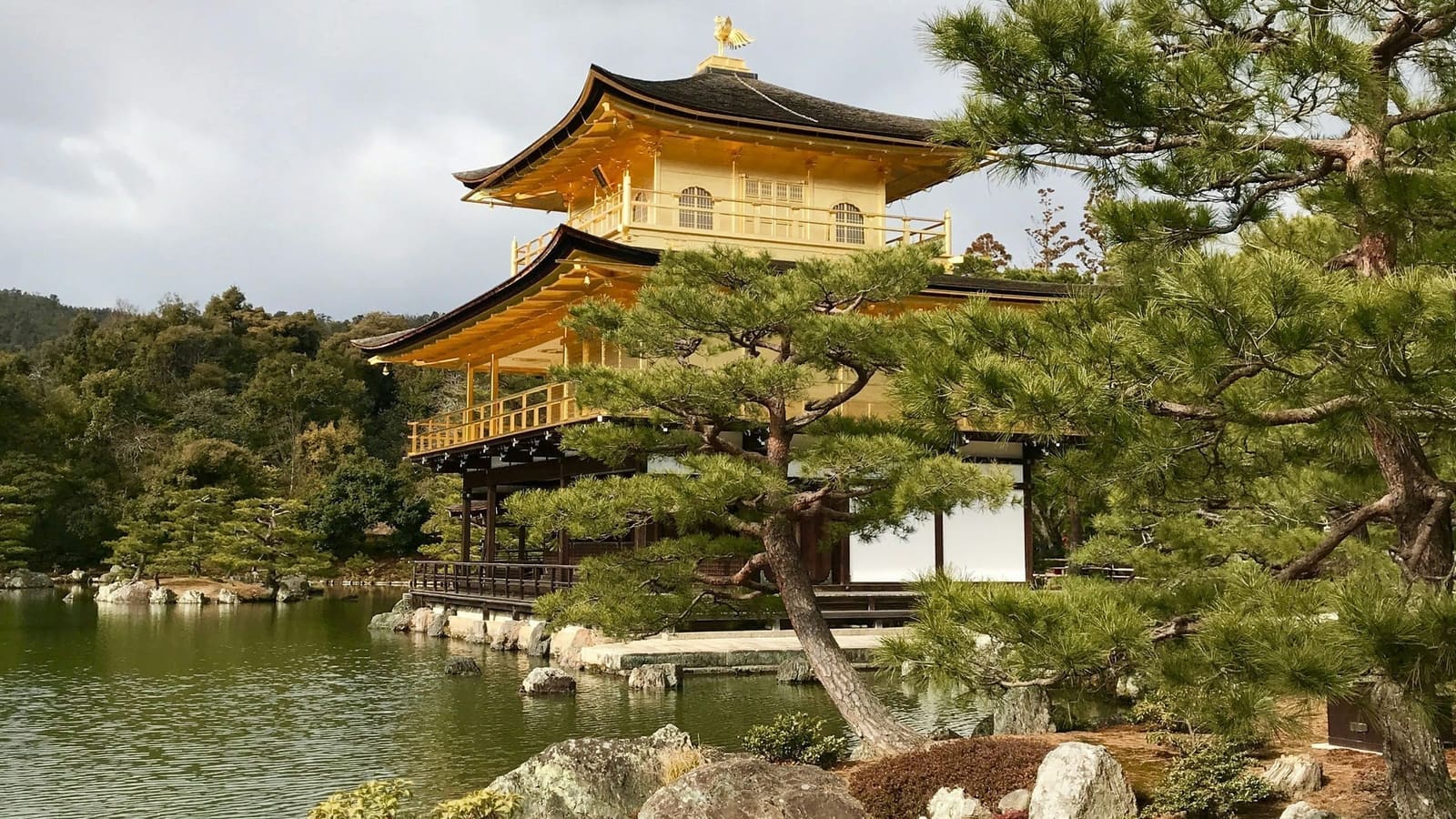
Each of the pavilion's three stories follows a different style: the first the Heian palace style, the second the samurai-house style of the Kamakura period, and the third the style of a Chinese Zen temple. The second and third stories are lacquered and covered in pure gold leaf, last reapplied in 1987, and a gilded phoenix stands on the roof.

The pavilion is seen from outside, across Kyoko-chi pond, and the garden takes up most of the grounds. A visit is one walking route through it, set out below with what to look for along the way.
The walking route, from the pond to the exit
Short answer
There is one route. It starts at the pond view of the pavilion, passes beside it, climbs through the garden past springs, a waterfall, a second pond and a tea house, and ends near the Fudo Hall. The path is step-free only as far as the pavilion.
Start
The pond view across Kyoko-chi
The classic view of the pavilion, across a pond of about 6,600 square meters set with islands such as Ashihara-jima and named rocks such as the Hatakeyama stone. This is where the crowd gathers.
Turn back here if you use a wheelchair or stroller, or want to avoid steps. The path is step-free to the pavilion and has steps beyond it, so the temple asks wheelchair and stroller users to return to the entrance to exit.
Next
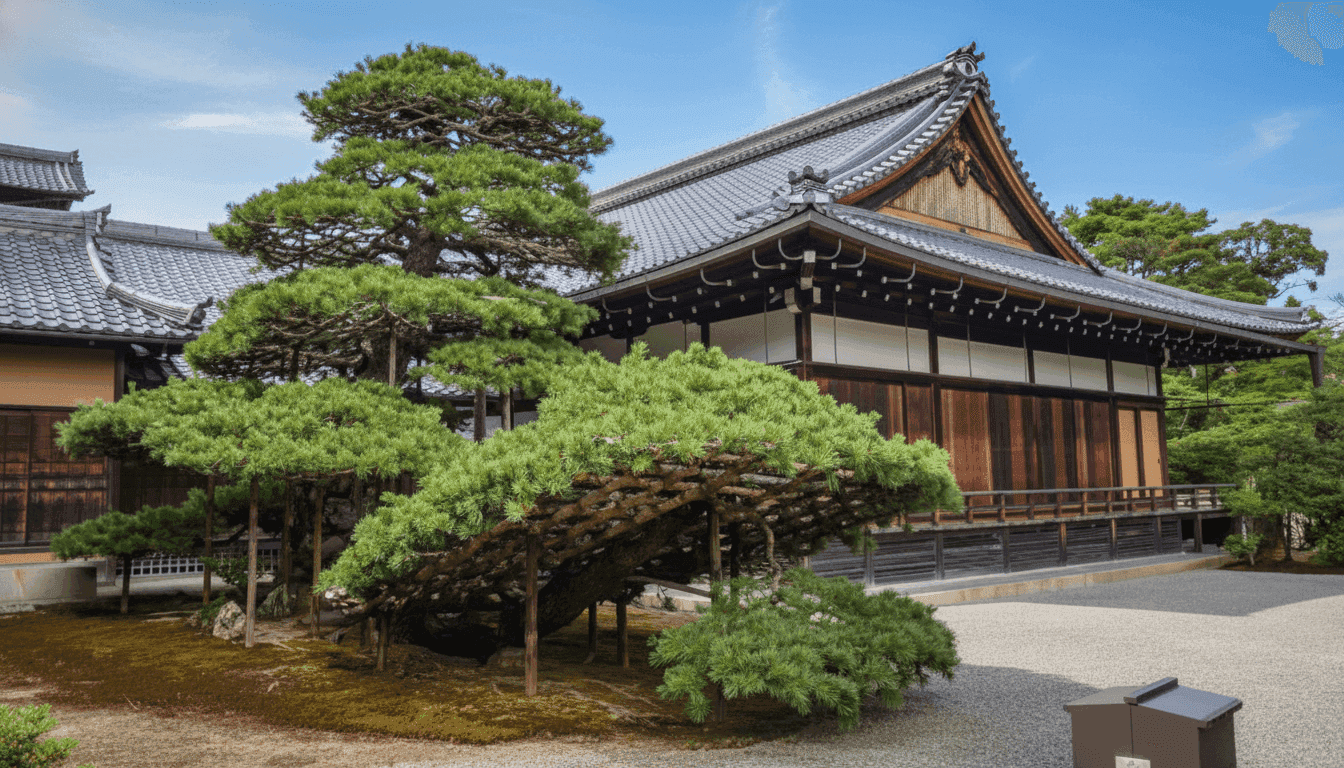
Beside the pavilion and the Hojo
The path passes close to the pavilion, with a nearer view of its gold upper stories and the phoenix on the roof, and past the Hojo (main hall) with the Rikushu Pine, trained into a long, low shape on wooden props.
Up the slope
Springs, falls and Anmin-taku pond
Beyond the pavilion are the Gingasen spring, said to be where Yoshimitsu drew water for tea, and the Gankasui stream; the 2.3-meter Ryumon Falls, topped by a carp stone from the Chinese legend of a carp that became a dragon; then Anmin-taku, a pond said never to dry up, once used to pray for rain.
End of the route
Sekka-tei and the Fudo Hall
Up the path is Sekka-tei, an Edo-period tea house named for the view of the setting sun over the pavilion. The route ends near the Fudo Hall, whose stone statue of Fudo Myo-o is hidden except when the doors open at Setsubun in early February and on August 16.


When to go
Short answer
Kinkaku-ji is open 9:00 a.m. to 5:00 p.m. every day of the year, and the pond view at the start of the route is where crowds build first. Be at the gate at opening if an uncrowded view matters to you. On a winter morning after snow, check the temple's live image before you set out.
- At opening, 9:00 a.m.
- The best chance of room at the pond view. Buses from Kyoto Station are the slowest way to make it, so allow for the subway route in the getting there section.
- Late morning to afternoon
- The busiest window, at the pond view above all. Weekends, public holidays and the spring and autumn high seasons are busiest.
- Before closing
- The temple closes at 5:00 p.m. Arrive with enough time to walk the whole route, which ends up the slope rather than back at the gate.
- After snow
- Snow on the pavilion roof is the view many people come for. The temple's website shows a live image of the pavilion, updated every three minutes, and the temple itself suggests checking it to see whether there is snow.
Fitting Kinkaku-ji into a Kyoto day
Short answer
Kinkaku-ji is in northwest Kyoto, away from the main rail lines, so pair it with places reached on the same buses. Ryoan-ji is the natural next stop, and City Bus 102 and 204 link it with Ginkaku-ji across the city. The suggested itineraries turn the first two pairings into a day.
Northwest Kyoto, the same side of the city
Ryoan-ji
The rock garden at Ryoan-ji is the classic contrast to the gold pavilion and close enough for the same morning.
City Bus 102 or 204
Ginkaku-ji and the Philosopher's Path
Ginkaku-ji, the Silver Pavilion, is on the opposite side of the city, but buses 102 and 204 run between the two temples' stops. Continue on foot along the Philosopher's Path.
Toward central Kyoto
Nijo Castle or the Imperial Palace
Nijo Castle or the Kyoto Imperial Palace fill an afternoon on the way back toward the center.
Better on another day
Fushimi Inari
Fushimi Inari is in the far south of the city and is a long walk in itself, so most itineraries give it a separate half day.
For choosing between trains and buses across the city, see Getting Around Kyoto.
Things to know before you go
Short answer
Kinkaku-ji has no lockers or luggage storage and nowhere to eat in the garden, and the route has steps beyond the pavilion. Plan around those three things and the visit is simple.
Arriving with a suitcase
Instead: The temple has no luggage storage and no lockers. Leave bags at a station locker or your hotel first.
Planning a picnic in the garden
Instead: There is nowhere to eat a meal in the garden. Eat before or after your visit.
Taking a wheelchair or stroller onto the full route
Instead: The path is step-free to the pavilion, then has steps, so wheelchair and stroller users return to the entrance to exit. Wheelchairs can be borrowed on arrival, without a reservation, when one is free, and there are accessible toilets.
Bringing a pet
Instead: Service dogs are allowed. Other pets must stay in a cage or bag.
Expecting a group discount
Instead: There is none. Visitors with a disability certificate can be exempted from the fee by showing it on the day.
Things to look for at Kinkaku-ji
How to Get to Kinkaku-ji (Golden Pavilion)
Kinkaku-ji is in northwest Kyoto with no train station beside it, so every route ends on a city bus to the Kinkakuji-michi stop, a short walk from the temple across Nishioji-dori.
The bus stop serves routes 12, 59, 204, 205 and M1.
- •From Kyoto Station, the Karasuma subway to Kitaoji and then bus 204 or 205 avoids the most crowded direct buses.
- •At the Kitaoji Bus Terminal, check the route number: bus 206 shares a stop with 204 but does not go to Kinkaku-ji.
- •Buses 102 and 204 link Kinkaku-ji with Ginkaku-ji directly.
Map
Best Time to Visit Kinkaku-ji (Golden Pavilion)
Best time to visit Kinkaku-ji (Golden Pavilion): At the 9:00 AM opening; after snowfall in winter. Weekday mornings are generally quieter than weekends and public holidays.
- •Be at the gate at the 9:00 a.m. opening for the least crowded pond view.
- •Weekends, public holidays and the spring and autumn high seasons are busiest.
- •After snowfall, check the temple's live image of the pavilion before you set out.
Entry Fee & Hours
| Category | Price (JPY) | Approx. (USD) |
|---|---|---|
| Adult / High school and above | ¥500 | ~$3.3 |
| Child (elementary/junior high, ages 6-15) | ¥300 | ~$2 |
- •The path is wheelchair accessible as far as the pavilion; beyond it there are steps, so wheelchair and stroller users return to the entrance to exit. Wheelchairs can be borrowed on arrival without a reservation, and there are accessible toilets.
- •There is no group discount. Visitors with a disability certificate can be exempted from the admission fee by showing it on the day.
Nearby Attractions
Combine with Kinkaku-ji (Golden Pavilion) on the same day

Ryoan-ji Temple

Nijo Castle

Ginkaku-ji (Silver Pavilion)

Kyoto Imperial Palace

Arashiyama Bamboo Grove
- •Ryoan-ji Temple (Northwest Kyoto, the same side of the city): Ryoan-ji is a Rinzai Zen temple in northwest Kyoto, founded in 1450 by Hosokawa Katsumoto and part of the Historic Monuments of Ancient Kyoto World Heritage site. Its rock garden sets 15 stones in about 248 square meters of white gravel, and no one knows who designed it.
- •Nijo Castle (Toward central Kyoto by city bus): Nijo Castle is a UNESCO World Heritage castle in central Kyoto, built for the Tokugawa shoguns. Its Ninomaru Palace, a National Treasure, is the only surviving example of a fortified palace complex, with wall paintings by the Kano school; the end of shogunate rule was proclaimed here in 1867.
- •Ginkaku-ji (Silver Pavilion) (Across the city on City Bus 102 or 204): Ginkaku-ji, officially Jisho-ji, is a Rinzai Zen temple in eastern Kyoto built on the Higashiyama villa of the shogun Ashikaga Yoshimasa. Its Kannon Hall, the Silver Pavilion, and the Togudo are National Treasures, set in a garden of raked sand, pond and hillside. It is a UNESCO World Heritage site.
- •Kyoto Imperial Palace (Toward central Kyoto by city bus): The Kyoto Imperial Palace (Kyoto Gosho) was the emperor's residence from 1331 until 1869; the present buildings date from 1855. It stands in Kyoto Gyoen park in the center of the city and is managed by the Imperial Household Agency, which opens it free to walk-in visitors.
- •Arashiyama Bamboo Grove (Western Kyoto, usually its own half day): The Arashiyama Bamboo Grove is a short public path through tall bamboo in the Sagano area of western Kyoto, free to walk and with no gate. Most visitors combine it with Tenryu-ji's garden, Okochi Sanso and Nonomiya Shrine, which sit along it.
Two ways to build a day around Kinkaku-ji
Both start at the 9:00 a.m. opening and differ in which side of the city you head to next.
Gold and stone: Kinkaku-ji and Ryoan-ji
The calmer day, staying in northwest Kyoto until the afternoon.
9:00 a.m.
Kinkaku-ji at opening: the pond view first, then the full route to the Fudo Hall.
Late morning
The rock garden at Ryoan-ji.
Afternoon
Back toward the center for Nijo Castle.
Gold and silver: Kinkaku-ji and Ginkaku-ji
The fuller day, crossing the city by bus.
9:00 a.m.
Kinkaku-ji at opening.
Late morning
Bus 102 or 204 from Kinkakuji-michi to Ginkakuji-michi.
Afternoon
Ginkaku-ji, then south along the Philosopher's Path.
Frequently Asked Questions
References
View references
Kinkaku-ji (Shokoku-ji)
Kyoto City Tourism Association
Planning Your Kyoto Trip?
See the full Kyoto destination guide or browse Japan itineraries that include this city.
See all Temples & Shrines across Japan →Explore all attractions in Kyoto or browse nearby destinations.
Back to Kyoto Guide →