Atsuta Jingu
ExploreJapanDaily Editorial Team · Last updated: July 9, 2026 · Facts verified: September 1, 2026

- Area
- Atsuta / Southern Nagoya
- Best For
- Culture, History, Nature, Photography
Visiting Atsuta Jingu
Atsuta Jingu ranks among the most important Shinto shrines in Japan, second in traditional prestige only to Ise Grand Shrine, and its significance rests on a single claim: that its inner sanctuary houses Kusanagi no Tsurugi, the sacred sword and one of the three Imperial Regalia of Japan passed down through the imperial line. The sword itself is never displayed to the public and its existence at the shrine cannot be independently verified, but the belief has shaped Atsuta Jingu's status for over a thousand years, and the shrine continues to receive imperial messengers for major festivals in a tradition matched by only a handful of shrines nationwide.
The shrine's precinct covers about 19 hectares of forest in Atsuta-ku, south of central Nagoya in Aichi Prefecture, and its buildings follow the shinmei-zukuri architectural style, an austere design of unpainted cypress wood and thatched roofs shared with Ise Grand Shrine and considered one of the oldest continuous shrine architecture traditions in Japan. Unlike Ise, however, Atsuta Jingu does not follow a fixed rebuilding cycle, and its current main hall dates from a 1935 reconstruction that replaced an earlier Edo-period style building in favor of a design closer to the shinmei-zukuri tradition associated with the imperial shrines.
Walking the main approach from the East Gate near Jingu-mae Station takes visitors through a forest of camphor trees, some estimated at over a thousand years old, planted or grown up around the shrine since its earliest centuries. The largest of these, a camphor tree near the main hall traditionally attributed to the 9th-century Buddhist monk Kobo Daishi, has become an informal pilgrimage point in its own right, its trunk wrapped with a sacred rope (shimenawa) marking it as a sanctified tree. The quiet of the forest, particularly in early morning before tour groups arrive, is one of the shrine's most distinctive qualities relative to more built-up temple and shrine sites elsewhere in Japan.

The Treasure Hall, a separate museum building on the shrine grounds, displays a rotating selection from a collection of roughly 6,000 items donated to the shrine over its history, including ancient swords, armor, mirrors, and ceremonial objects, some designated Important Cultural Properties. Because items rotate on a schedule, the specific pieces on display vary between visits, and the hall does not display the Kusanagi sword itself, which remains within the shrine's inner sanctuary and outside public or scholarly access. A separate Kusanagi Museum on the grounds focuses more specifically on sword-making history and technique rather than shrine artifacts generally.
Atsuta Jingu functions as a working shrine rather than a static historical site, and visitors are likely to see wedding parties in traditional dress, ema (wooden prayer plaques) tied at small sub-shrines throughout the grounds, and priests conducting ceremonies at the main hall on any given day. The shrine hosts several major annual festivals, most notably the Atsuta Festival on June 5, which includes traditional sumo and a fireworks display, and Rei-taisai, the shrine's most significant ceremonial festival held on the same date with imperial offerings.
The shrine's role in Nagoya's identity predates the modern city itself; Atsuta was a significant settlement and post town on the historic Tokaido road centuries before Tokugawa Ieyasu founded Nagoya Castle, and the shrine's precinct has anchored the surrounding neighborhood since well before the area was absorbed into greater Nagoya. That history gives Atsuta-ku a noticeably different character from the commercial districts around Nagoya Station and Sakae, with narrower streets and older buildings clustered near the shrine's approach roads.
New Year's is by far the busiest period at Atsuta Jingu, when the shrine draws one of the largest hatsumode (first shrine visit) crowds in the Chubu region, with lines that can stretch well beyond the main approach in the days immediately following January 1. Visitors specifically seeking a quiet, contemplative experience should avoid this period and instead consider an early weekday morning, when the forest paths are close to empty and the scale of the trees is easiest to appreciate without competing for space on the main approach.
For most travelers, Atsuta Jingu pairs naturally with a broader day exploring southern and central Nagoya. The Meijo subway line connects Atsuta Jingu Nishi Station directly to Shiyakusho Station near Nagoya Castle without a transfer, and the shrine's proximity to the Osu shopping district makes it straightforward to combine a morning at the shrine with an afternoon of shopping and street food.
Things to Do at Atsuta Jingu
How to Get to Atsuta Jingu
Atsuta Jingu sits in Atsuta-ku, south of central Nagoya, with three separate stations serving different gates around the shrine's perimeter.
- •Nearest station: Jingu-mae Station (Meitetsu Nagoya Main Line), approx. 3-minute walk to the East Gate; Atsuta-Jingu-Nishi Station (Nagoya Municipal Subway Meijo Line), approx. 7-minute walk to the West Gate; JR Atsuta Station, approx. 8-minute walk
- •IC cards (Suica, Pasmo, or ICOCA) are accepted on trains, subways, and buses throughout Japan. Tap in and out at every gate.
- •Avoid traveling during rush hour on weekdays: 7am to 9am and 5pm to 8pm. Trains are significantly more crowded.
- •Google Maps provides accurate real-time transit directions in Nagoya. Download offline maps before you arrive.
Map
Best Time to Visit Atsuta Jingu
Best time to visit Atsuta Jingu: Early morning on a weekday for a quiet forest walk; avoid the days immediately after January 1 unless you want the hatsumode crowds. Weekday mornings are generally quieter than weekends and public holidays.
- •Best time to visit: Early morning on a weekday for a quiet forest walk; avoid the days immediately after January 1 unless you want the hatsumode crowds
- •Arriving on a weekday morning avoids the largest crowds. Weekends and public holidays are significantly busier.
- •Spring (late March to early May) and autumn (October to November) are the most popular seasons for visiting Nagoya.
- •Golden Week (late April to early May) is the busiest week of the year in Japan. Book accommodation and tickets well in advance.
Plum and cherry blossoms bloom in scattered spots around the grounds, though the forest canopy makes Atsuta Jingu less of a dedicated sakura destination than Nagoya Castle.
The Atsuta Festival on June 5 brings traditional sumo and fireworks to the grounds; the dense tree canopy also keeps the shrine noticeably cooler than open-air sites in central Nagoya during peak summer heat.
Cooler temperatures make the forest approach especially pleasant for walking, with fewer crowds than the New Year's period.
The days immediately following January 1 bring the year's largest crowds for hatsumode (first shrine visit); visiting in late January or February instead offers a much quieter experience.
Entry Fee & Hours
- •The shrine's outer grounds, main hall, and forest paths are free to enter at any time; only the separate Treasure Hall museum building charges admission.
- •The Treasure Hall closes on a rotating schedule (the last Wednesday and Thursday of each month) in addition to the year-end closure, so check the day of the week before planning a visit specifically around the museum.
- •The main approach paths from the East and West Gates are wide, but sections are packed gravel rather than paved, so wheelchair users should expect to need extra effort or assistance in places; the main hall itself sits at ground level with no steps at the entrance. Strollers can manage the gravel with some care, though a carrier is easier in the busiest sections during festivals or New Year's.
Nearby Attractions
Combine with Atsuta Jingu on the same day
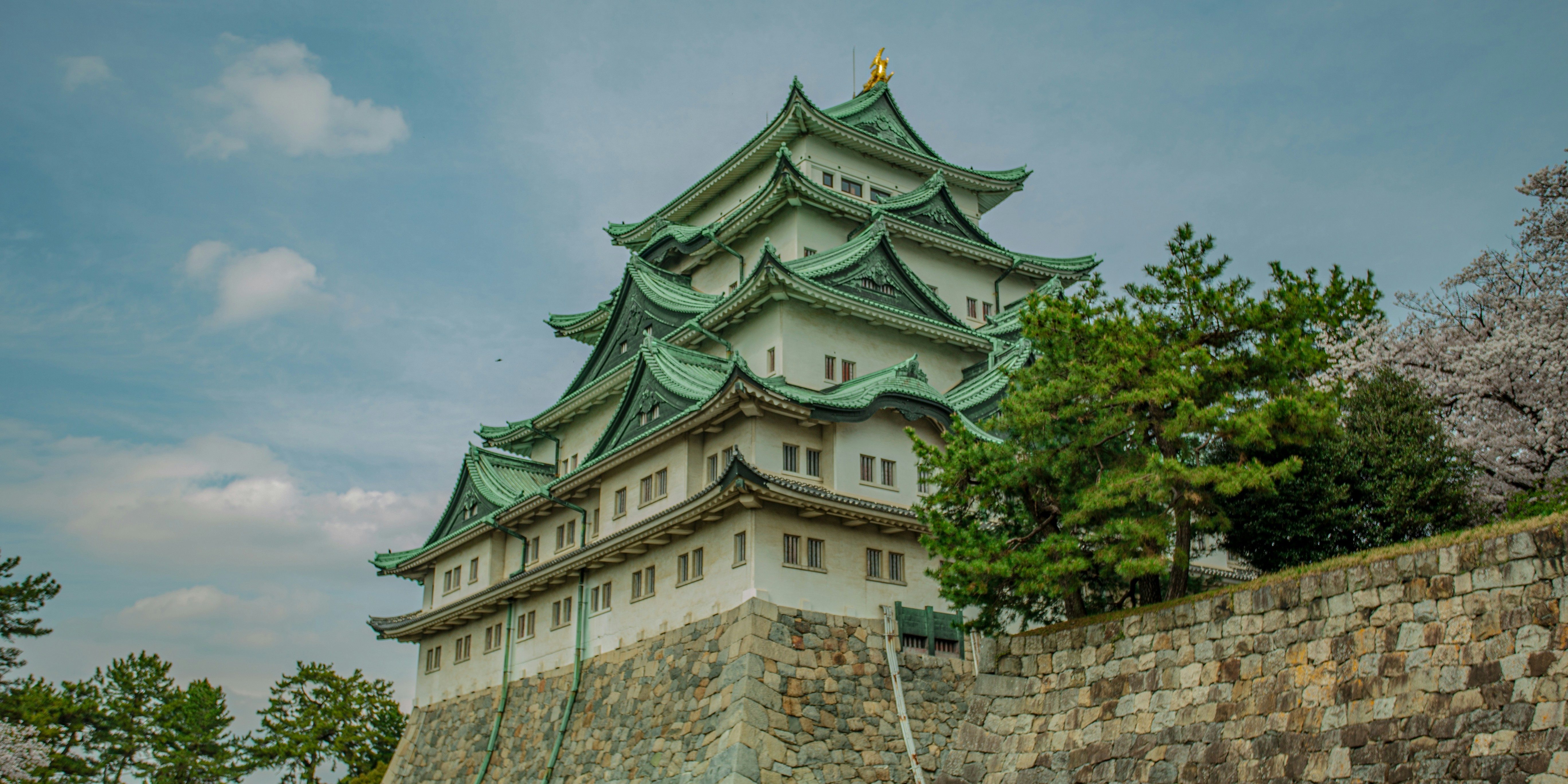
Nagoya Castle

Osu Shopping District
Atsuta Park
Distance: Adjacent to the shrine
Shirotori Garden
- •Nagoya Castle (Approx. 6 km, about 15 minutes by subway): The reconstructed castle built for the Tokugawa family in 1610-1612, known today for its gilded shachihoko roof ornaments and the meticulously restored Hommaru Palace.
- •Osu Shopping District (Approx. 3 km, about 10 minutes by subway): A dense, 1,200-shop covered arcade district built around the 14th-century Osu Kannon Temple, mixing vintage clothing, electronics, anime and manga shops, and street food.
- •Atsuta Park (Adjacent to the shrine): A small park adjoining the shrine grounds with a pond and seasonal plantings, a quiet spot to rest after visiting the shrine.
- •Shirotori Garden (Approx. 10-15 minutes on foot via Atsuta Jingu-nishi Station): A traditional Japanese garden in Atsuta Ward designed around a pond and streams representing the landscape of central Japan, a short walk from Atsuta Jingu.
Suggested Itinerary
Pair Atsuta Jingu with these nearby stops for a full day in Atsuta / Southern Nagoya.
Frequently Asked Questions
Planning Your Nagoya Trip?
See the full Nagoya destination guide or browse Japan itineraries that include this city.
See all Temples & Shrines across Japan →Explore all attractions in Nagoya or browse nearby destinations.
Back to Nagoya Guide →