Nagoya Castle
ExploreJapanDaily Editorial Team · Last updated: July 9, 2026 · Facts verified: September 1, 2026
- Area
- Nagoya Castle / Meijo
- Best For
- History, Architecture, Families, Photography
Visiting Nagoya Castle
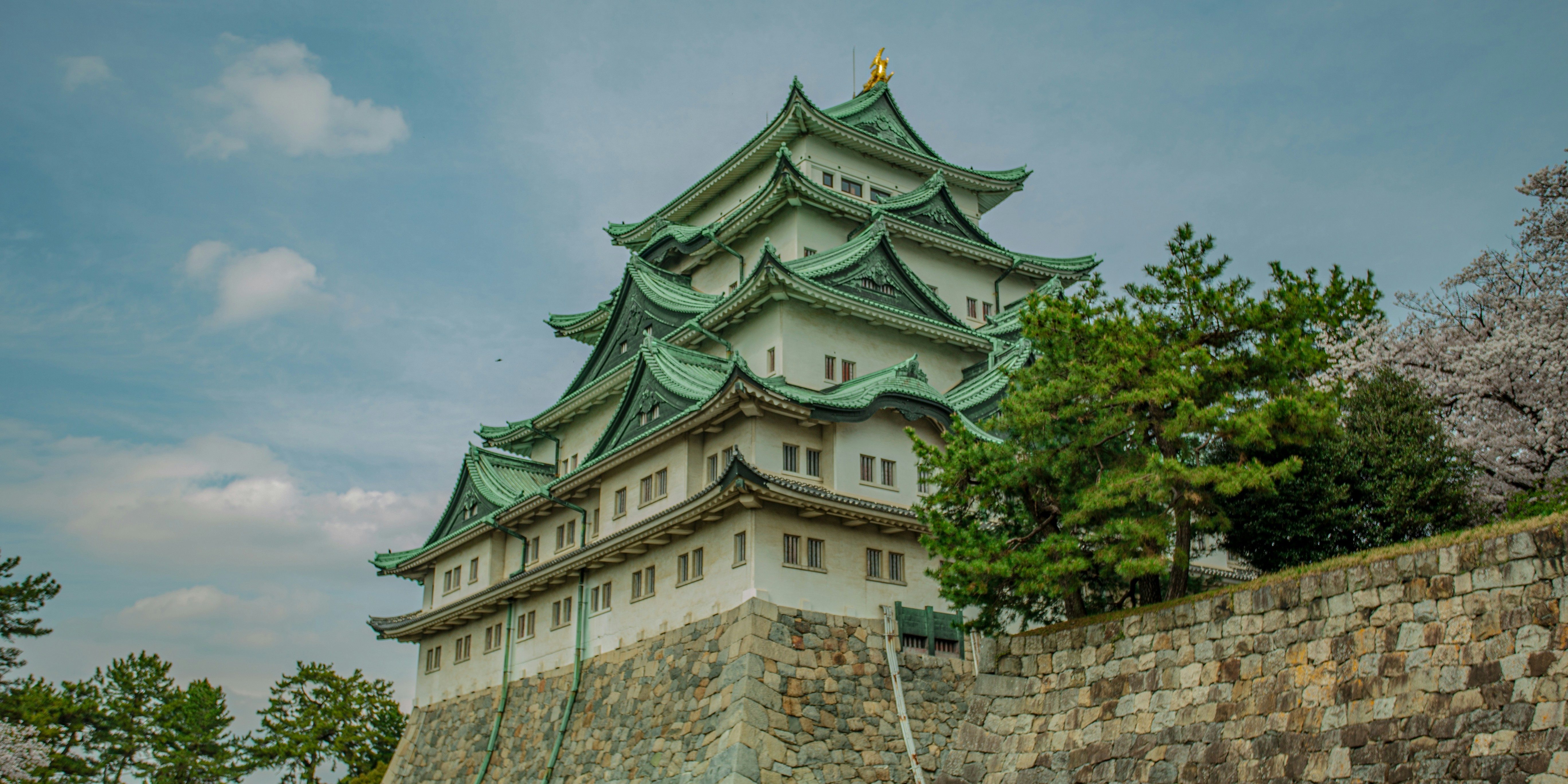
Nagoya Castle stands in Naka-ku, in the Aichi Prefecture capital of Nagoya, on a low bluff that Tokugawa Ieyasu chose in 1610 as the anchor point for a new castle town, built to secure the Tokaido road and watch over a rival Toyotomi stronghold in Osaka. Construction of the keep and stone walls finished in 1612, using labor drawn from allied feudal lords across the country under the sankin-kotai system. The castle takes its most recognizable feature, a pair of gilded shachihoko (mythical tiger-headed carp) on the roof ridge, from that original design, and the golden ornaments remain the castle's visual signature today, appearing on everything from city manhole covers to local snack packaging.
The wooden keep that stood for over three centuries burned in a 1945 air raid, and the current concrete tower dates from a 1959 reconstruction that approximated the original exterior. That concrete keep closed to the public in 2018 after an engineering review found it did not meet current earthquake safety standards, and it remains closed today while the city pursues a more ambitious plan: a full wooden reconstruction built to the original 1612 specifications, using traditional joinery and timber sourced partly from Gifu Prefecture forests. The wooden rebuild has faced repeated delays over accessibility requirements and cost, and a completion date has not been finalized, so visitors in 2026 should plan around a keep they can view from outside but not enter.
What remains fully open, and arguably more historically significant, is the Hommaru Palace, the shogun's ceremonial residence rebuilt between 2009 and 2018 using traditional construction methods and surviving pre-war photographs, blueprints, and fragments of the original interior. Hommaru Palace was originally completed in 1615 as a residence for the ruling Owari branch of the Tokugawa family and later served as a rest stop for the shogun traveling between Edo and Kyoto, before it too was destroyed in the 1945 air raid. Its reconstruction used cypress wood joinery without nails, matching the original construction technique, and the interior recreates dozens of gold-leaf sliding door paintings (fusuma-e) by Kano school artists depicting tigers, leopards, and pine trees.
Walking through the palace rooms in sequence follows the original protocol for visitors received by the Owari lord, moving from more public reception halls decorated with tigers and leopards toward the private inner chambers finished in a quieter style with willow and plum motifs. The Jorakuden wing, added for a 1634 visit by the shogun himself, is the most elaborate section, with carved transoms and ceiling paintings that took conservators years to recreate using period-accurate pigments and gold leaf application techniques. Photography is permitted throughout most of the palace, and English-language panels explain the significance of each room.

Beyond the palace, the castle grounds cover roughly 34 hectares enclosed by stone walls and a dry moat on the west side and a water-filled moat elsewhere, with several original corner turrets (yagura) still standing from the Edo period, including the Southwest and Northwest turrets. The Ninomaru Garden, a traditional strolling garden on the castle's eastern side, is one of the more overlooked corners of the site, with a teahouse, seasonal plantings, and quieter paths than the main palace approach. Around 1,000 cherry trees line the moat and grounds, making the castle one of the more popular sakura viewing spots in the Chubu region during late March and early April.
The castle's role in local identity runs deeper than its architecture. Nagoya grew as a castle town organized around this site, with the merchant and samurai districts laid out in a grid that still partly defines the modern city's central wards, and the gold shachihoko became a civic symbol used across Nagoya long before modern tourism marketing existed. Seasonal illumination events light the walls and turrets after dark in spring and autumn, and the castle occasionally hosts special exhibitions in the Nishinomaru Okura Museum building, which displays artifacts, armor, and historical documents connected to the site.
For visitors weighing whether the keep's closure makes the castle less worthwhile, the honest answer is that Hommaru Palace alone justifies the visit for anyone interested in Edo-period architecture or craftsmanship, and it takes considerably longer to appreciate properly than the concrete keep interior ever did. The exterior of the keep, viewed from the palace approach or the Ninomaru Garden, still photographs well, particularly with its gold ornaments catching late afternoon light. Visitors specifically hoping to climb to an observation floor for a skyline view should adjust expectations accordingly, since that experience is not currently available anywhere on site.
Nagoya Castle sits close enough to the city's central business and shopping districts that it pairs naturally with a broader day in central Nagoya. The Meijo subway line, which loops around much of the city center, connects the castle directly to both Atsuta Jingu to the south and the Sakae shopping and entertainment district, making it straightforward to combine a castle visit with other central Nagoya stops without backtracking through Nagoya Station.
Things to Do at Nagoya Castle
How to Get to Nagoya Castle
Nagoya Castle sits in the northern part of central Naka-ku, a short subway ride from both Nagoya Station and the Sakae shopping district.
- •Nearest station: Shiyakusho Station (Nagoya Municipal Subway Meijo Line), Exit 7, approx. 5-minute walk; also reachable via Meitetsu Bus routes to the Shiyakusho stop
- •IC cards (Suica, Pasmo, or ICOCA) are accepted on trains, subways, and buses throughout Japan. Tap in and out at every gate.
- •Avoid traveling during rush hour on weekdays: 7am to 9am and 5pm to 8pm. Trains are significantly more crowded.
- •Google Maps provides accurate real-time transit directions in Nagoya. Download offline maps before you arrive.
Map
Best Time to Visit Nagoya Castle
Best time to visit Nagoya Castle: Weekday mornings for the smallest crowds, or late March to early April when the moat's cherry trees bloom. Weekday mornings are generally quieter than weekends and public holidays.
- •Best time to visit: Weekday mornings for the smallest crowds, or late March to early April when the moat's cherry trees bloom
- •Arriving on a weekday morning avoids the largest crowds. Weekends and public holidays are significantly busier.
- •Spring (late March to early May) and autumn (October to November) are the most popular seasons for visiting Nagoya.
- •Golden Week (late April to early May) is the busiest week of the year in Japan. Book accommodation and tickets well in advance.
Around 1,000 cherry trees bloom along the moat and grounds, and evening illumination events are sometimes held during peak bloom, drawing the largest crowds of the year.
Hot, humid conditions make the largely unshaded Hommaru Palace approach tiring by midday; an early morning visit is more comfortable.
The Ninomaru Garden's maples turn color and the site is noticeably quieter than during spring, making this a favored season among repeat visitors.
The clearest skies of the year make for sharp photos of the keep's gold ornaments, though the site may adjust hours briefly around New Year.
Entry Fee & Hours
- •Current adult admission is ¥500 through September 30, 2026. The official site announces ¥1,000 adult admission from October 1, 2026; check the official notice if your trip falls after that date.
- •The main keep (tenshukaku) has been closed to the public since 2018 for a planned wooden reconstruction. Hommaru Palace, the Ninomaru Garden, and the surviving corner turrets remain fully open.
- •The site closes around New Year; confirm exact dates on the official website if visiting in late December or early January.
Nearby Attractions
Combine with Nagoya Castle on the same day

Osu Shopping District

Atsuta Jingu
Toyota Commemorative Museum of Industry and Technology

Nagoya City Science Museum

Nagoya Noh Theater
- •Osu Shopping District (Approx. 2.5 km, about 10 minutes by subway via Kamimaezu): A dense, 1,200-shop covered arcade district built around the 14th-century Osu Kannon Temple, mixing vintage clothing, electronics, anime and manga shops, and street food.
- •Atsuta Jingu (Approx. 6 km, about 15 minutes by subway on the Meijo Line): One of Japan's most revered Shinto shrines, traditionally said to enshrine the sacred sword Kusanagi no Tsurugi, set within a wooded precinct in southern Nagoya.
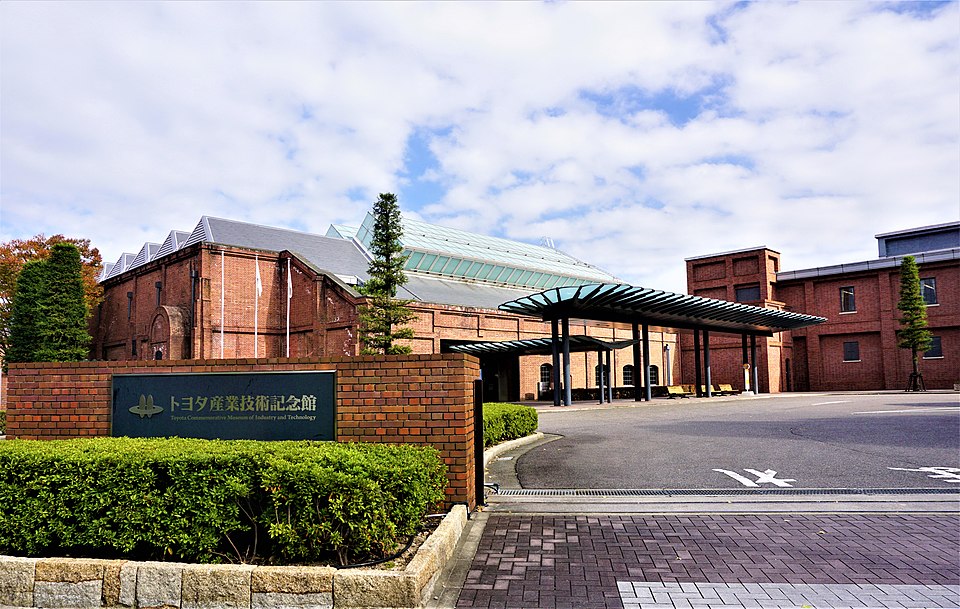
- •Toyota Commemorative Museum of Industry and Technology (Approx. 2 km, about 10 minutes by taxi or bus): A working-machinery museum in a converted 1911 textile factory tracing Toyota's origins from automatic looms to automobiles, with live demonstrations of historic weaving and manufacturing equipment.
- •Nagoya City Science Museum (Approx. 2 km, about 10 minutes by subway): A science museum and planetarium in central Nagoya's Sakae district, known for one of the largest planetarium domes in the world and hands-on exhibits including an indoor tornado simulator and a -30C deep-freeze room.
- •Nagoya Noh Theater (Effectively adjacent, a few minutes on foot): A city-run Noh theater and free exhibition hall just south of Nagoya Castle's main gate, with masks, costumes, and a mask try-on experience open to visitors without a ticketed performance.
Suggested Itinerary
Pair Nagoya Castle with these nearby stops for a full day in Nagoya Castle / Meijo.
Frequently Asked Questions
Planning Your Nagoya Trip?
See the full Nagoya destination guide or browse Japan itineraries that include this city.
See all Castles across Japan →Explore all attractions in Nagoya or browse nearby destinations.
Back to Nagoya Guide →