Sarusawa Pond
By Andrew Liyan · Last updated: September 10, 2026 · Facts verified: September 10, 2026

- Area
- Nara Park Area
- Best For
- Photography, History & Culture, Traditional Culture, First-Time Visitors
Visiting Sarusawa Pond
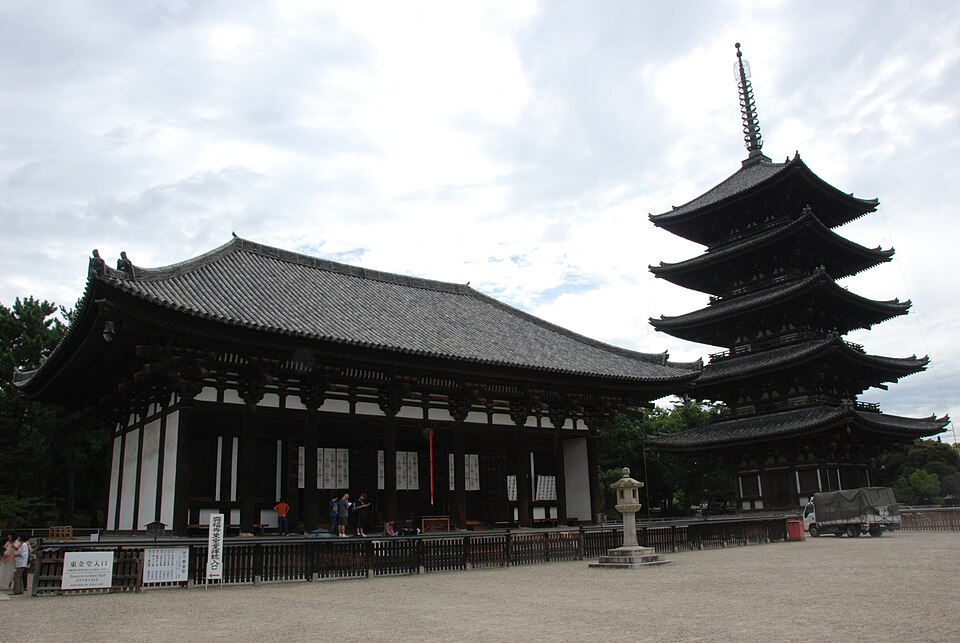
Sarusawa Pond is a free, always-open historic pond immediately beside Kofuku-ji Temple in central Nara, built in 749 CE as a pond for one of Kofuku-ji's own Buddhist ceremonies. With a circumference of about 360 meters and a position directly beneath the temple's Five-Story Pagoda, it was formally recognized as one of the traditional "Eight Views of Nara," and for generations, its reflection of the pagoda has been the single image most associated with the pond.
That reflection is not currently obtainable, and this guide leads with that fact rather than treating it as a footnote. As of 2026, Kofuku-ji's Five-Story Pagoda is fully enclosed in construction scaffolding as part of a large-scale repair project, and its exterior, including the reflection effect the pond is famous for, cannot currently be seen. Official sources give differing completion estimates: Nara Prefecture's own project page states March 2031, the temple's own official English project site states 2033, and an independent secondary source states 2034. The honest summary is that this is a multi-year project with an estimated completion sometime in the early-to-mid 2030s, not a single settled year, and visitors planning a trip specifically for the pagoda-reflection photo should know the view is unavailable for the foreseeable future.
None of this erases the pond's own history and identity, which stand apart from Kofuku-ji's temple significance. Sarusawa Pond was built for Kofuku-ji's Hojo-e ceremony, a Buddhist rite of releasing captured creatures back into the wild, giving it a genuine religious origin distinct from being simply a scenic backdrop for the pagoda.
The pond also carries its own local legend, tied to the small Uneme Shrine that sits on its bank. According to the story, a Nara-period court lady named Uneme drowned herself in the pond after the Emperor's favor toward her waned. Local legend holds that the shrine built in her memory turned to face away from the water, so as not to look upon the site of her death. That legend is marked each year by the Uneme Festival, held on the night of the harvest moon, when dragon-headed boats are floated on the pond in her memory.
Beyond the shrine and its legend, the pond is a genuinely pleasant place to spend fifteen to thirty minutes: a stone-edged path lined with willow trees circles the water, and turtles are a regular sight for visitors walking the perimeter. A stone staircase of 52 steps, the Goju-ni-dan, connects the pond's northern edge up to Kofuku-ji's grounds, making the pond a natural stop on the walking route between Kofuku-ji and Naramachi rather than a separate detour.
There is no admission fee and no fixed opening hours. The pond is part of the open Nara Park landscape and is accessible at all hours, year-round, with the Nara Park Administrative Office as its official point of contact. Most visitors pass through it naturally while moving between Kofuku-ji, immediately to the north across the Goju-ni-dan steps, and Naramachi, which borders the pond's southern edge.
Visitor sentiment on the pond itself is genuinely mixed. Some visitors find it a peaceful, photogenic rest stop even without the pagoda visible, appreciating the willow trees, the shrine, and the historical layers packed into a small space. At least one reviewer has described the water itself as unremarkable, even unattractive, up close. Reviewers also note the pond gets more crowded as the day goes on, so an early visit generally means a quieter walk.
Given the pagoda's current repair status, Sarusawa Pond is best framed honestly: it is not worth a special detour purely for the reflection photo right now, but it remains worth a short stop for anyone already walking between Kofuku-ji and Naramachi, particularly for the Uneme Shrine and legend, and especially if a visit happens to coincide with the autumn Uneme Festival.
It is worth being clear about how Sarusawa Pond relates to its neighbors. Kofuku-ji Temple, directly north across the Goju-ni-dan steps, owns its own temple history, halls, admission, and hours; this page covers the pond itself, not the temple. Naramachi, bordering the pond's southern edge, is the free historic merchant district; the pond sits at its edge but is administratively and historically its own distinct feature, not part of the district itself.
No official source documents accessibility for Sarusawa Pond specifically. The perimeter path is generally described in general terms as flat and walkable, but visitors with mobility needs should not treat that as a confirmed accessibility guarantee, and may want to check current conditions before planning a visit around it.
Things to Do at Sarusawa Pond
Understand the Pagoda's Current Repair Status
Before visiting for photography, know that Kofuku-ji's Five-Story Pagoda is currently fully enclosed in repair scaffolding and not visible, so the pond's famous reflection view is unavailable. The project is expected to finish sometime in the early-to-mid 2030s, with sources giving 2031, 2033, or 2034 as the completion year.
Visit the Uneme Shrine
A small shrine on the pond's bank commemorates Uneme, a Nara-period court lady tied to the pond's central local legend.
Learn the Uneme Legend
According to the legend, Uneme drowned herself in the pond after losing the Emperor's favor, and local tradition holds that her memorial shrine turned to face away from the water so as not to look upon the site of her death.
Time a Visit for the Uneme Festival
Held annually on the night of the harvest moon, the Uneme Festival floats dragon-headed boats on the pond in her memory, a distinctive event no competing guide covers in much depth.
Walk the Willow-Lined Perimeter Path
A stone-edged path lined with willow trees circles the pond's roughly 360-meter circumference, making for an easy, unhurried walk.
Look for Turtles
Turtles are a regular sight in the pond and a small highlight for visitors walking the perimeter, per multiple visitor reviews.
Climb the Goju-ni-dan Steps to Kofuku-ji
This 52-step stone staircase connects the pond's northern edge directly up to Kofuku-ji's grounds, the natural route between the two.
Visit in the Morning for a Quieter Walk
Reviewers note the pond gets more crowded as the day goes on, so an early visit generally means fewer people around the water.
Combine With a Naramachi Walk
The pond borders Naramachi's northern edge, so it fits naturally into a walk that continues south into the historic district.
Learn the Pond's 749 CE Origin
Sarusawa Pond was built in 749 CE for Kofuku-ji's Hojo-e ceremony, a Buddhist rite of releasing captured creatures back into the wild, giving it a genuine religious origin independent of its later fame as a scenic view.
How to Get to Sarusawa Pond
Sarusawa Pond sits in central Nara immediately beside Kofuku-ji Temple, within easy walking distance of Kintetsu Nara Station.
From Kintetsu Nara Station
Kintetsu Nara Station is the closest station, about a 5-minute walk to the pond, per official sources.
From JR Nara Station
JR Nara Station is farther, with official sources giving a 15 to 20 minute walk depending on the exact route.
Best Time to Visit Sarusawa Pond
Morning for a quieter walk.
The annual Uneme Festival is held at the pond on the night of the harvest moon, featuring dragon-headed boats in memory of the Uneme legend. Check current-year dates in advance.
Entry Fee & Hours
- •The pond is free and always accessible, with no gate or admission control.
- •As of 2026, Kofuku-ji's Five-Story Pagoda beside the pond is enclosed in repair scaffolding, so the pond's famous pagoda-reflection view is not currently available; expected completion is sometime in the early-to-mid 2030s (2031, 2033, or 2034 depending on the source).
Nearby Attractions
Combine with Sarusawa Pond on the same day


Frequently Asked Questions
Planning Your Nara Trip?
See the full Nara destination guide or browse Japan itineraries that include this city.