
Shirakawa-go at a Glance
- region
- Chubu (Gifu Prefecture)
- best For
- UNESCO gassho-zukuri village, flooded rice-paddy reflections, winter light-up, gateway day trip from Takayama or Kanazawa
- best Time
- Late April for cherry blossoms, or the first half of May into early June for the flooded rice-paddy reflection window
- suggested Stay
- 2-3 hours as a day trip, or one night for the winter light-up
- main Station
- No train station; the village bus terminal in Ogimachi is the main arrival point
- nearby Destinations
- Takayama, Kanazawa
Visiting Shirakawa-go: Japan's UNESCO Gassho-Zukuri Village
This Shirakawa-go travel guide covers Ogimachi, a UNESCO World Heritage village of gassho-zukuri thatched-roof farmhouses in Shirakawa Village, Gifu Prefecture, at the foot of Mount Hakusan in the Japan Alps. There is no train station here. Every visitor arrives by highway bus, most commonly from Takayama, about 50 minutes away, or Kanazawa, about 75 to 90 minutes away. Ogimachi holds Japan's largest concentration of gassho-zukuri houses and forms the Gifu Prefecture half of the UNESCO property "Historic Villages of Shirakawa-go and Gokayama," inscribed in 1995, a listing it shares with the separate villages of Ainokura and Suganuma in Nanto City, Toyama Prefecture, known collectively as Gokayama. The gassho-zukuri style, its name meaning "constructed like praying hands" for the steep angle of its thatched roof, developed in this remote, historically isolated Shogawa river valley to shed the region's exceptionally heavy snowfall and to accommodate multi-generational households that once raised silkworms in the houses' spacious attic lofts. Ogimachi's oldest surviving houses date back more than 250 years. The village was cut off from easy outside access for centuries, and road and bridge improvements through the 20th century, followed by UNESCO inscription in 1995, transformed it from a remote farming settlement into one of Japan's most visited rural destinations, a shift that now drives the overtourism concerns covered later in this guide. Ogimachi sits on a crescent-shaped river terrace on the east bank of the Sho River, stretching roughly 1,500 meters north to south and up to 350 meters east to west, at about 500 meters elevation, within Shirakawa Village, Ono District, Gifu Prefecture. It lies along the Sho River valley between Takayama to the southeast and Kanazawa to the northwest, with the separate Gokayama villages further northwest across the prefectural border in Toyama. This is a heavy-snow region even by Japan Alps standards, precisely why the gassho-zukuri roof pitch exists, and the village's UNESCO-designated houses are deliberately oriented with their gable ends facing the same north-south direction, so both roof faces receive even sunlight to help the thick thatch dry in the region's humid, snowy climate. Most visitors treat Shirakawa-go as a half-day to full-day extension of a wider Japan Alps or Chubu itinerary rather than a standalone destination, reached from Takayama, Kanazawa, Nagoya, Tokyo, Kyoto, or Osaka, since none of these routes involve a train and the Japan Rail Pass does not cover any of them. A fast visit covers the village's highlights in roughly two to three hours, and an overnight stay in an Ogimachi minshuku is the only way to see the village outside daytime tourist hours, or to attend the reservation-only winter light-up at all.
•10 min read
Top Attractions in Shirakawa-go
The must-see sights, ranked by traveler impact
View all Shirakawa-go attractions →
Ogimachi, Shirakawa village, Ono District, Gifu Prefecture
Ogimachi Village
- Entry
- No general admission fee to walk the village. Parking at Seseragi Park costs ¥2,000 per car
- Best time
- Early morning
- Time needed
- 2-3 hours as a practical minimum to avoid feeling rushed

Ogimachi, Shirakawa Village, Gifu Prefecture
Wada House
- Entry
- Adult
- Best time
- July and August
- Time needed
- About 1 hour

Ogimachi, Shirakawa Village, Gifu Prefecture
Kanda House
- Entry
- 400 yen adults, 200 yen children
- Best time
- Any time within opening hours. No source indicates a meaningful time-of-day or seasonal difference to the interior visit itself
- Time needed
- About 30 to 45 minutes

Ogimachi, Shirakawa-go, Gifu Prefecture
Gassho-zukuri Minka-en Open-Air Museum
- Entry
- Adult ¥600
- Best time
- Morning
- Time needed
- 1 to 3 hours

Ogimachi, Shirakawa-go, Gifu Prefecture
Myozenji Temple Museum
- Entry
- ¥300 adult, ¥100 child
- Best time
- Morning
- Time needed
- About 30 to 60 minutes

Above Ogimachi village, Shirakawa-mura, Gifu Prefecture
Shiroyama Viewpoint
- Entry
- Free. There is no admission fee
- Best time
- Morning gives soft
- Time needed
- Roughly 45-90 minutes
Why Visit Shirakawa-go?
Quick Answer
Shirakawa-go is a UNESCO World Heritage village in Gifu Prefecture's Japan Alps, home to Japan's largest concentration of centuries-old gassho-zukuri thatched-roof farmhouses, distinct from the separate Gokayama villages that share the same UNESCO listing in neighboring Toyama Prefecture.
Shirakawa-go is worth visiting for the sheer concentration of gassho-zukuri architecture in one place. Ogimachi holds Japan's largest cluster of these steep-roofed thatched farmhouses, several of them open to the public as house museums rather than viewed only from the street. The roof style exists for a practical reason: its steep pitch, built without nails using rope and wooden pegs, sheds the valley's heavy winter snowfall, while the open attic lofts once housed multiple generations of a family raising silkworms for the local silk trade.
That said, the village's popularity has a real cost. Traveler reviews are genuinely mixed rather than uniformly glowing. The bus terminal is frequently described as overcrowded, with insufficient seating and lockers that fill by mid-morning, and one reviewer called the density of souvenir shops among the historic houses "the least charming place I have seen in Japan so far." Arriving early in the day, before the tour-bus groups, and budgeting at least two to three hours rather than treating Shirakawa-go as a quick photo stop, helps the visit read as a UNESCO village rather than a shopping strip.
Ogimachi's UNESCO listing, "Historic Villages of Shirakawa-go and Gokayama," inscribed in 1995, actually covers three villages, not one. Ogimachi is in Shirakawa Village, Gifu Prefecture, the destination this guide covers. Ainokura and Suganuma, together known as Gokayama, form a genuinely separate municipality, Nanto City, in a different prefecture, Toyama, reached from Ogimachi by a further bus transfer rather than on foot or within the same village. Gokayama is smaller, less visited, and has its own distinct character. It is not a neighborhood or a section of Shirakawa-go, and this guide does not cover its access or accommodation logistics in depth.
Shirakawa-go vs. Gokayama
| Feature | Shirakawa-go (Ogimachi) | Gokayama (Ainokura, Suganuma) |
|---|---|---|
| Municipality | Shirakawa Village, Gifu Prefecture | Nanto City, Toyama Prefecture |
| Size and character | The larger of the two areas, with the most gassho-zukuri houses in one place | Smaller and quieter, split across two separate villages |
| Access from Ogimachi | This is the destination itself | A further bus transfer is required |
| Visitor volume | The busier of the two, especially midday and on tour-bus days | Genuinely less visited |
Shirakawa-go's food carries the same mountain character as neighboring Takayama. Hida beef, the same regional wagyu associated with Takayama, appears here too, alongside hoba miso, a mix of miso and mountain vegetables grilled on a magnolia leaf, and gohei mochi, a skewered rice dumpling glazed with a miso or walnut sauce. Hand-ground soba, made with local stone-milled buckwheat and mountain water, and ishi-dofu, a firmer style of tofu using roughly double the usual soybean content, are both distinctly local specialties. Doburoku, an unfiltered, home-brew-style sake, is legally served here only because Shirakawa-go holds a special exemption tied to the annual Doburoku Festival.
The Doburoku Festival runs every year on October 14-15 at Shirakawa Hachiman Shrine, with related harvest celebrations at other village shrines continuing through October 19. It is a harvest-thanksgiving tradition with a history of more than a thousand years, featuring lion dances and the distribution of doburoku to visitors, a rare chance to try the sake outside the festival's own exemption.
Shopping is limited to small craft and souvenir shops along Ogimachi's main street, where doburoku-flavored confections such as kintsuba and doburoku yokan make a distinctive, place-specific souvenir. Nightlife is essentially nonexistent for day visitors, and the village's own official rules explicitly discourage nighttime tourism outside the sanctioned winter light-up event, a stricter stance than a typical small town's quiet evening scene.
How to Get to Shirakawa-go
Quick Answer
There is no train station in Shirakawa-go. Every visitor arrives by highway bus, most commonly Nohi Bus from Takayama (about 50 minutes) or a direct Hokutetsu/Nohi Bus from Kanazawa (about 75 to 90 minutes), and the Japan Rail Pass does not cover any of these routes.
Shirakawa-go has no train station of its own. Every route into the village is a highway bus, most commonly from Takayama, the fastest and most frequent gateway, or Kanazawa, the second major gateway. None of these bus operators are JR-affiliated, so the Japan Rail Pass does not cover any of the six routes below.
Chubu Centrair International Airport (NGO)
- Travel time
- About 3.5 to 4.5 hours total to Shirakawa-go, via train to Nagoya Station then a direct highway bus (about 2.5 to 3.5 hours)
- Distance
- In the Chubu region, near Nagoya
- Best for
- Most international visitors, who typically fly into the Chubu region and continue to Shirakawa-go via Nagoya, or via Takayama or Kanazawa if already routing through the Japan Alps
Getting to Shirakawa-go from Takayama
Getting to Shirakawa-go from Kanazawa
Getting to Shirakawa-go from Nagoya
Getting to Shirakawa-go from Tokyo
Getting to Shirakawa-go from Kyoto
Getting to Shirakawa-go from Osaka
Arriving in Ogimachi
There is no train station in Shirakawa-go. Every route above ends at the village's bus terminal in Ogimachi, within walking distance of the historic gassho-zukuri houses. From here, you can easily reach:
- •Ogimachi Village's main street and gassho-zukuri house cluster (on foot)
- •Wada House, Kanda House, and Myozenji Temple & Museum (on foot)
- •Gassho-zukuri Minka-en Open-Air Museum (a short walk from the main village)
- •Shiroyama Viewpoint (a steep uphill walk, or a paid shuttle bus when running)
- •Takayama, Kanazawa, Nagoya, Tokyo, Kyoto, and Osaka (via highway bus)
Recommended
For most visitors, Nohi Bus from Takayama is the fastest and most frequent way in, at about 50 minutes. Travelers already routing through Kanazawa have a direct, no-transfer alternative at about 75 to 90 minutes. From Nagoya, Tokyo, Kyoto, or Osaka, expect a longer trip with at least one transfer, and reserve a seat well ahead, since some routes, particularly the Kanazawa line, sell out roughly a month ahead in peak season. None of these routes are covered by the national Japan Rail Pass, though the regional Takayama-Hokuriku Area Tourist Pass covers the relevant bus lines for travelers combining several of these gateway cities in one trip.
Best Time to Visit Shirakawa-go
Quick Answer
Late April brings cherry blossoms, the first half of May into early June brings the flooded rice-paddy reflection, and select winter evenings bring a reservation-only light-up whose exact dates change every year, so check the Tourist Association's official site before planning around it.
The best time to visit Shirakawa-go depends on what you want to see: late April for cherry blossoms, the first half of May into early June for the flooded rice-paddy reflection, autumn for foliage and the fixed-date Doburoku Festival, or select winter evenings for the reservation-only light-up. Shirakawa-go is a heavy-snow region even by Japan Alps standards, and winter travel here needs real planning rather than romanticizing.
Spring: Cherry Blossoms and the Flooded Rice-Paddy Reflection
Cherry blossoms bloom in late April, followed almost immediately by the flooded rice-paddy reflection window, roughly the first half of May into early June, when the newly flooded paddies mirror the gassho-zukuri rooflines in what's often called the "upside-down gassho" effect. The window drains naturally as rice seedlings grow tall through late May, so it narrows quickly rather than lasting the whole spring.
Summer: Lush Rice Fields and a Milder Mountain Climate
Summer brings lush green rice fields and a milder mountain-basin climate than lowland cities, though this is not the destination's most distinctive season photographically compared with the spring reflection window or the winter roofline.
Autumn: Foliage and the Doburoku Festival
Autumn brings foliage color across the surrounding hills alongside the Doburoku Festival, held every year on October 14-15 at Shirakawa Hachiman Shrine, with related harvest celebrations at other village shrines continuing through October 19. This date range is a stable, fixed annual fact, unlike the winter light-up below.
Winter: Heavy Snow and the Village's Signature Look
Winter snow transforms Shirakawa-go's uniform thatched roofline into the "fairytale village" image most associated with the destination, but this is a heavy-snow region even by Japan Alps standards, and winter travel here requires real planning. Roads into the valley cross mountain-pass sections where winter tires are mandated roughly December through March, and bus schedules can run late or be disrupted by heavy snowfall. Sturdy, waterproof winter footwear matters on the village's own streets, which are not always fully cleared.
A realistic winter-visit checklist: confirm your return bus is reserved before you arrive, since seats on the last bus can sell out; wear boots rated for snow and ice, not ordinary sneakers or dress shoes; and check road and weather conditions the morning of travel, since mountain-pass disruption is a real, recurring risk in this season.
The Winter Light-Up (check current dates before planning around it)
On select weekend and holiday evenings most winters, typically within January and February, Shirakawa-go holds a reservation-only light-up event that illuminates the snow-covered gassho-zukuri houses after dark. The exact dates change every year and are announced by the Shirakawa-go Tourist Association each autumn, so this guide does not state a specific date. Check the Tourist Association's official site directly for the current season's confirmed dates before planning a trip around it.
Regular scheduled buses stop running before the light-up begins each evening, so a same-day round trip on a normal bus is not possible during the event. The only ways to attend are an overnight stay at a village lodging, itself allocated by lottery due to limited rooms, or a seat on a specially reserved light-up tour bus operated by Nohi Bus, Toyama Chihou Railway Bus, or Kaetsunou Bus. Since 2022, no general shuttle bus has run to the Shiroyama Tenshukaku Observation Deck during the light-up, and visitors must walk up and present a reserved ticket. Both accommodation and tour-bus seats sell out well in advance, so this is not a trip to plan last minute.
When Should First-Time Visitors Go?
For most first-time visitors, late April through early June offers the most rewarding combination of cherry blossoms and the flooded-paddy reflection window, while autumn pairs comfortable walking weather with the fixed-date Doburoku Festival. Winter suits travelers specifically chasing the snow-covered roofline or the winter light-up, provided the reservation and travel-timing requirements above are built into the plan well ahead.
Where to Stay in Shirakawa-go
Quick Answer
An overnight stay in an Ogimachi gassho-zukuri minshuku is the only way to see the village outside daytime tourist hours or attend the winter light-up, since regular buses stop running before it begins. Most travelers instead day-trip from a Takayama or Kanazawa base with far more lodging choice.
Where to stay in Shirakawa-go comes down to one real choice: an overnight stay inside the village itself, or a day trip based in Takayama or Kanazawa. Shirakawa-go has no dedicated hotel district, and this guide names no specific hotels or prices, only the two approaches below.
An Ogimachi Gassho-Zukuri Minshuku: Best for Atmosphere and the Light-Up
Staying overnight in one of Ogimachi's own gassho-zukuri minshuku, a traditional farmhouse guesthouse, is the only way to see the village outside daytime tourist hours, once the tour buses and day-trippers have left. Rooms are limited and book out well in advance, especially for the winter light-up, when accommodation is allocated by lottery due to how few rooms exist. This is the only path to the light-up itself, since regular buses stop running before the event begins each evening.
Best For: Travelers prioritizing atmosphere and quiet, dedicated winter light-up visitors, anyone who wants to experience Ogimachi before and after the day-trip crowds
A Takayama or Kanazawa Base: Best for Convenience and Amenities
Basing in Takayama or Kanazawa and day-tripping into Shirakawa-go offers far more lodging choice and amenities than Ogimachi itself, including onsen access in Takayama's case. Both cities are live gateway destinations with direct highway bus service, about 50 minutes from Takayama and about 75 to 90 minutes from Kanazawa, so a day trip does not require an early start to make the most of the village.
Best For: Travelers wanting more lodging choice, those combining Shirakawa-go with a wider Takayama or Kanazawa stay, travelers not visiting during the winter light-up
Which Should First-Time Visitors Choose?
For most first-time visitors, a day trip from a Takayama or Kanazawa base is the simpler choice, especially outside the winter light-up season, since neither city requires giving up lodging amenities to see Shirakawa-go's highlights in a two- to three-hour visit. Travelers specifically chasing the winter light-up, or wanting to see the village at a quieter pace, should plan an overnight minshuku stay well ahead.
Nearby Destinations
Easy day trips or next stops from Shirakawa-go

Hakone
Mt Fuji views • Onsen • Relaxation • Couples • Art
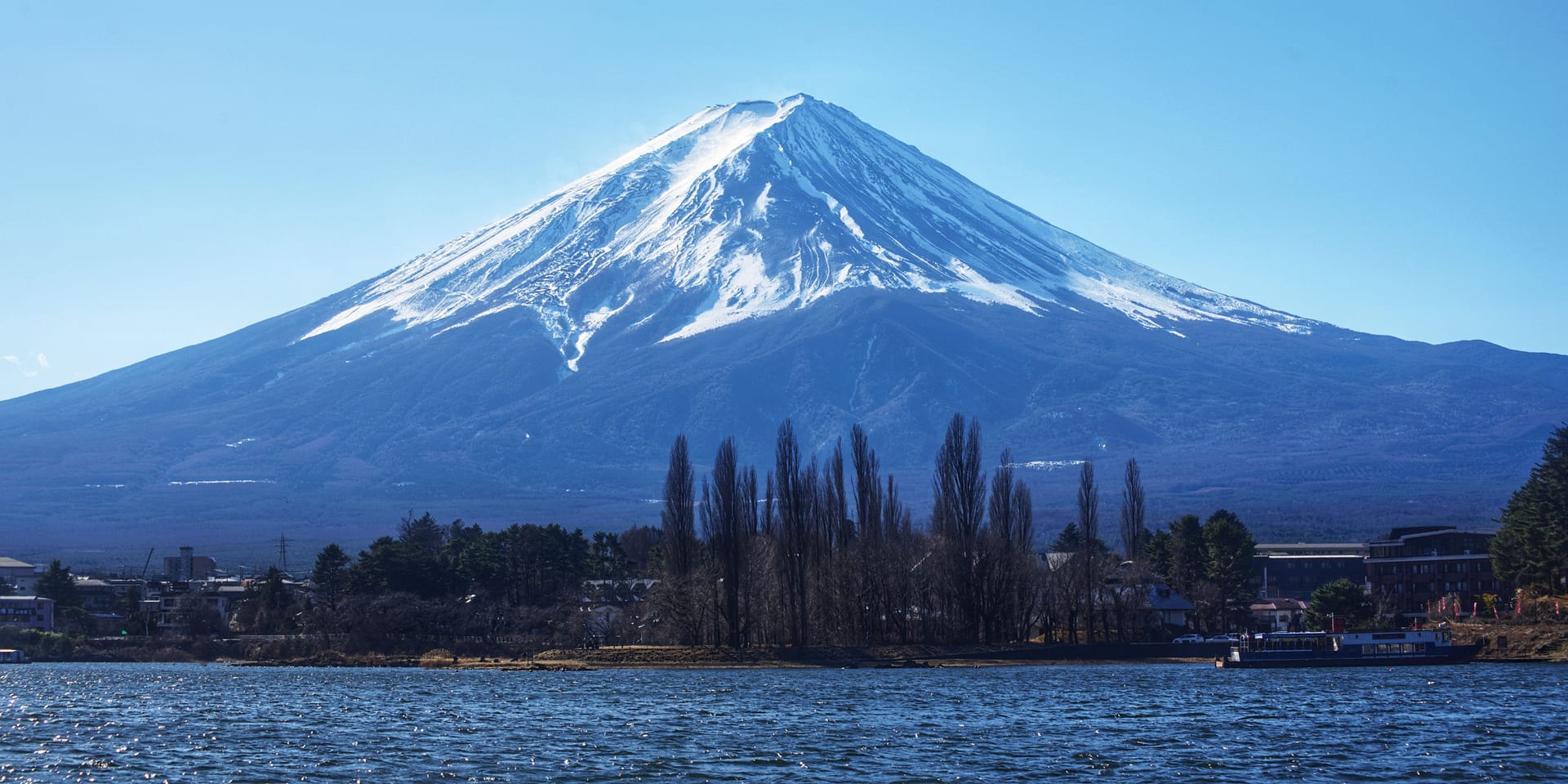
Mount Fuji
Mount Fuji views • Lake scenery • Shrines and pilgrimage history • Photography

Nagoya
Nagoya Castle and Hommaru Palace • Atsuta Jingu and the Kusanagi sword tradition • Hitsumabushi and miso katsu • Toyota and railway industrial heritage • A convenient Shinkansen stopover between Tokyo and Kyoto/Osaka
- •Hakone: Mt Fuji views, Onsen, Relaxation, Couples, Art
- •Mount Fuji: Mount Fuji views, Lake scenery, Shrines and pilgrimage history, Photography
- •Nagoya: Nagoya Castle and Hommaru Palace, Atsuta Jingu and the Kusanagi sword tradition, Hitsumabushi and miso katsu, Toyota and railway industrial heritage, A convenient Shinkansen stopover between Tokyo and Kyoto/Osaka
Frequently Asked Questions
Free Itinerary Builder
Build Your Own Shirakawa-go Itinerary
Choose Shirakawa-go attractions, organize them by day, and see opening hours, admission fees and your trip pace in one place.
Plan This Trip
Guides and tools for the parts of a Shirakawa-go trip that take the most planning
Ready to Experience Shirakawa-go?
Browse curated Japan itineraries, or build your own with our free planning tools.
Next: Explore all attractions in Shirakawa-go or browse nearby destinations.
Back to All Destinations →