Hiroshima Peace Memorial Museum
ExploreJapanDaily Editorial Team · Last updated: October 4, 2026 · Facts verified: October 3, 2026
The Hiroshima Peace Memorial Museum is the ticketed museum inside Peace Memorial Park that documents the atomic bombing of August 6, 1945. Adult admission is 200 yen. The main planning question is timing: tickets are sold on site for most of the day, but only web-ticket holders can enter in the first hour and the last 90 minutes, and the museum is busiest from 11:00 AM to 3:00 PM. Allow at least an hour, and more if you use the audio guide.

- Area
- Naka, Hiroshima
- Nearest Station
- Fukuro-machi tram stop (Line 1) or Genbaku Dome-mae tram stop (Lines 2 and 6); Heiwa Kinen Koen bus stop
- Best For
- History, Rainy Days, Education
Visiting Hiroshima Peace Memorial Museum
The Hiroshima Peace Memorial Museum (広島平和記念資料館, Hiroshima Heiwa Kinen Shiryokan) is the museum run by the City of Hiroshima at the southern edge of Peace Memorial Park, in central Hiroshima, Hiroshima Prefecture, in the Chugoku region of western Japan. Through belongings left by victims, damaged objects, photographs and survivors' testimony, it documents the atomic bombing of August 6, 1945, and what it did to the people of the city.
The museum has two connected buildings. The East Building holds the entrance, ticket counters, an introductory exhibit, and floors on nuclear weapons and on Hiroshima's history. The Main Building, designed by Kenzo Tange, completed in 1955 and raised on concrete pillars, holds the core exhibition on August 6 and on the victims and survivors. In 2006 it became the first postwar building designated an Important Cultural Property of Japan. A renovation of both buildings was completed in April 2019.
The museum is a separate visit from the park around it. Peace Memorial Park is free, always open, and holds the Cenotaph, the Peace Flame and the Children's Peace Monument; the Atomic Bomb Dome is the preserved ruin across the river. Of the three, only the museum has tickets, opening hours and a timed-entry system.
How tickets and entry work
Short answer
You can buy a ticket at the counters or ticket machines from 8:30 AM until 90 minutes before closing, but the museum recommends a web ticket bought in advance, because same-day queues can be long. Outside counter hours, in the first hour after the 7:30 AM opening and in the last 90 minutes, only web-ticket holders can enter.
- March to July, September to November
- Open 7:30 AM to 7:00 PM. Counters and ticket machines sell tickets from 8:30 AM to 5:30 PM; before and after that, entry is by web ticket only. Last entry 6:30 PM.
- August
- Open 7:30 AM to 8:00 PM (9:00 PM on August 5 and 6). Counters sell tickets from 8:30 AM to 6:30 PM; web tickets only outside those hours. Last entry 30 minutes before closing.
- December to February
- Open 7:30 AM to 6:00 PM. Counters sell tickets from 8:30 AM to 4:30 PM; web tickets only outside those hours. Last entry 5:30 PM.
- Closed
- December 30 and 31, and several days in mid-February while exhibits are changed (February 15 to 20 in 2027).
When the museum is busiest
Short answer
The museum's own guidance is that it is most crowded from 11:00 AM to 3:00 PM, and that the web-ticket-only hours at opening and before closing are quieter. December to February is the quietest season; spring, the school-trip seasons and August 5 and 6 are the busiest.
- Opening to 8:30 AM
- Web tickets only, with limited numbers. The museum recommends this window for seeing the exhibits at your own pace.
- 11:00 AM to 3:00 PM
- The museum's most crowded hours. Expect queues for same-day tickets and possible pauses in entry.
- Last 90 minutes
- Web tickets only again, and quieter. Last entry is 30 minutes before closing, so a late slot leaves about an hour inside.
- By season
- Busiest in cherry blossom season, the spring holidays, the May to June and October to November school-trip seasons, around August 6 and during Obon. Quietest in January and February.
The route through the museum
Short answer
The visit runs in one direction: up through the East Building, across a corridor into the Main Building, then back. The museum's own guide for visitors with limited time covers the Main Building's key exhibits in about 30 minutes, and the East Building's floors take about as long again.
Start
East Building, 1st floor
Tickets, the information counter, audio guide rental, coin lockers and the Video Theater. This floor and the basement are open without a ticket.
A few minutes
Introductory exhibit, East Building 3rd floor
An escalator takes you to the 3rd floor, where a projection-mapped model shows the city before the bombing and the devastated city afterward.
About 30 to 45 minutes in total
Main Building
The core exhibition, reached by a connecting corridor. It covers August 6 and the victims and survivors through about 500 items: victims' belongings, photographs of the destroyed city and of injured people, a human shadow etched in stone, damage from radiation, and survivors' accounts and drawings.
Turn back here if you are short on time. The museum suggests returning through the corridor and taking the elevator from the East Building's 3rd floor down to the 1st floor.
About 1 hour or more in total
East Building, 3rd and 2nd floors
The Dangers of Nuclear Weapons, on the 3rd floor, covers how the atomic bomb was developed and used, its effects, nuclear testing and the movement to abolish nuclear weapons. Hiroshima History, on the 2nd floor, covers the city's role in the war and its reconstruction.
Add about 1 hour for a talk
East Building basement
Temporary exhibitions, a library and the room used for the daily talks by A-bomb Legacy Successors, all open without a ticket.
Visiting with children
Short answer
The museum does not set a minimum age. The Main Building shows, directly and in detail, what happened to people on August 6, including children. Whether to bring a child, and how much of the route to see together, is a judgment about your own child's age, sensitivity and understanding of the history.
- What the Main Building shows
- Clothing and belongings of children and students who died, photographs of people with burns and other injuries, a section on children killed in the bombing, the effects of radiation, and survivors' drawings and testimony.
- Less graphic parts of the route
- The East Building's introductory exhibit on the city before the bombing, and the 2nd floor on Hiroshima's history. The East Building's 1st floor and basement are free areas you can use as a break.
- Practical help
- Priority entry for visitors with preschool children, 4 strollers to borrow free, a stroller check at the information counter, and a nursing room on request.
- Outside the museum
- The Children's Peace Monument in Peace Memorial Park, linked to the story of Sadako Sasaki and paper cranes, is outdoors and free. The Main Building also displays paper cranes Sadako folded.
The museum, the park and the Dome
Short answer
These are three different visits within a few minutes' walk. The museum is the ticketed indoor visit; Peace Memorial Park is the free memorial landscape around it; the Atomic Bomb Dome is the ruin across the river, seen from outside.
Directly outside the museum
Peace Memorial Park
Walk north from the museum past the Cenotaph and the Peace Flame toward the Dome. The Peace Memorial Park guide covers the monuments and how long the walk takes.
Across the park, about 10 minutes on foot
Atomic Bomb Dome
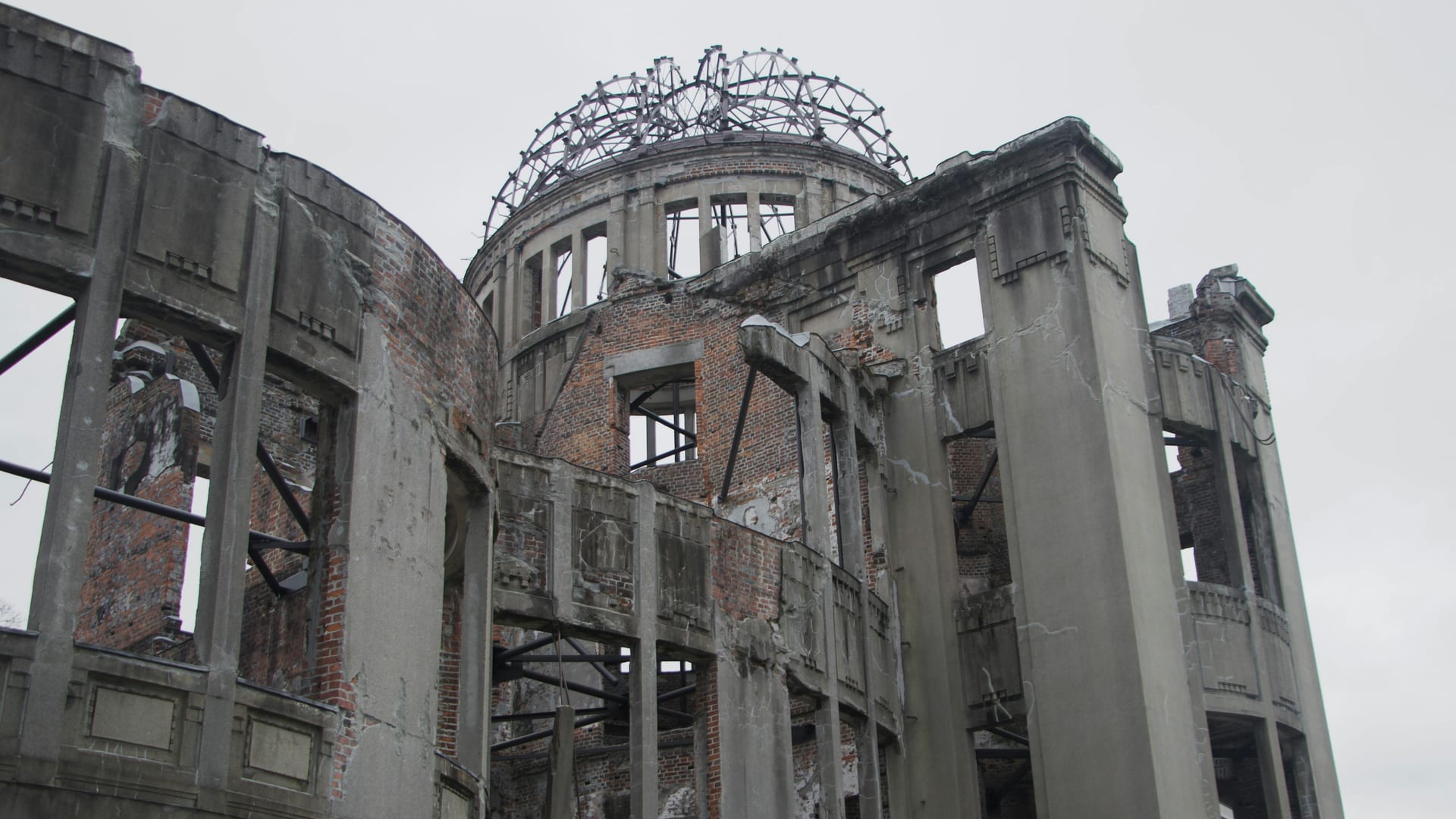
The preserved ruin of the former Industrial Promotion Hall, a World Heritage Site. See the Atomic Bomb Dome guide.
East toward Shintenchi
Okonomimura
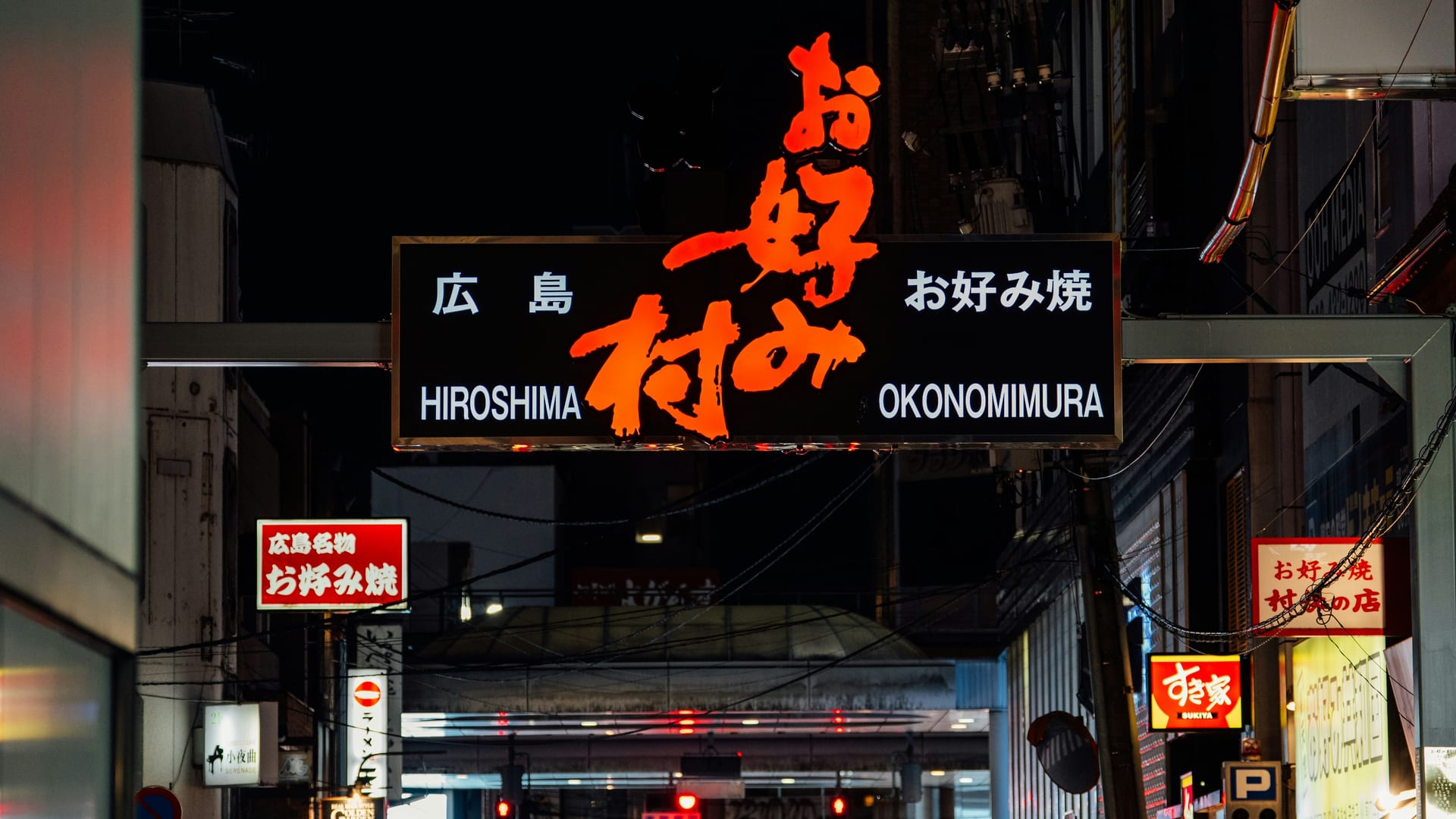
For a meal after the museum, Okonomimura is a building of Hiroshima-style okonomiyaki stalls downtown.
What to do at the museum
How to Get to Hiroshima Peace Memorial Museum
The museum's East Building faces Heiwa Odori (Peace Boulevard) on the south side of Peace Memorial Park, in central Hiroshima. Streetcars, city buses and the sightseeing loop bus all stop nearby.
- •Fukuro-machi tram stop (Line 1) and the Heiwa Kinen Koen bus stop are closest to the museum entrance; Genbaku Dome-mae is about 10 minutes away through the park.
- •Large bags are not allowed inside; the coin lockers on the East Building's 1st floor return your 100 yen coin.
- •Hiroden streetcars are not covered by the Japan Rail Pass.
For IC cards, tickets, and full transit basics for Hiroshima, see the complete transportation guide.
Getting Around Hiroshima →Map
Best Time to Visit Hiroshima Peace Memorial Museum
Best time to visit Hiroshima Peace Memorial Museum: At opening or in the last 90 minutes with a web ticket; avoid 11:00 AM to 3:00 PM. Weekday mornings are generally quieter than weekends and public holidays.
- •The museum says it is most crowded from 11:00 AM to 3:00 PM; the web-ticket-only windows at opening and in the last 90 minutes are quieter.
- •December to February is the quietest season, though the museum closes earlier, at 6:00 PM.
- •On a rainy day the museum is the main indoor visit in central Hiroshima, so expect same-day queues and book a web ticket.
The museum stays open until 9:00 PM on both days, and survivor testimonies and successor talks move to a special schedule. The museum marks these two days among its busiest of the year.
Cherry blossom season, consecutive holidays and the school-trip seasons are the museum's busiest periods. Book a web ticket for an early or late slot.
The quietest months, with a 6:00 PM closing. The museum closes on December 30 and 31 and for several days in mid-February while exhibits are changed.
Entry Fee & Hours
| Category | Price (JPY) | Approx. (USD) |
|---|---|---|
| Adults (college students and up) | ¥200 | ~$1.3 |
| High School Students | ¥100 | ~$0.7 |
| Visitors 65 and Over (with passport) | ¥100 | ~$0.7 |
| Junior High Students and Younger | Free | Free |
Group rates: adults 160 yen each for 30 or more; high school students free in groups of 20 or more. Visitors 65 and over pay 100 yen on showing a passport. The audio guide is a separate 500 yen rental.
- •Elevators serve the exhibition floors, a multipurpose restroom is on the East Building's 3rd floor, and 6 wheelchairs and 4 strollers can be borrowed free at the information counter. Assistance dogs are allowed.
- •Visitors with disabilities, expectant mothers, visitors with preschool children, and their helpers can use priority entry without queuing; ask the staff at the entrance.
- •Large bags are not allowed in the museum. The East Building's 1st floor has 96 coin lockers, including extra-large sizes; they take a 100 yen coin, which is returned.
- •Photography and video without flash are allowed for personal use. Tripods and selfie sticks are not.
- •Eating and drinking are allowed only in the Visitor's Lounge on the East Building's 1st floor.
Nearby Attractions
Combine with Hiroshima Peace Memorial Museum on the same day

Hiroshima Peace Memorial Park
Atomic Bomb Dome
Okonomimura

Hiroshima Castle
- •Hiroshima Peace Memorial Park (The museum stands at the park's southern edge): The free, always-open memorial park in central Hiroshima, with the Cenotaph, the Peace Flame, the Children's Peace Monument and the National Peace Memorial Hall. The Atomic Bomb Dome stands across the river and the ticketed museum at its southern end.
- •Atomic Bomb Dome (About 10 minutes on foot through the park): The ruin of the Hiroshima Prefectural Industrial Promotion Hall, left standing close to the hypocenter of the 1945 atomic bomb and preserved as a World Heritage Site. Seen from outside its fence, free, at any hour.
- •Okonomimura (Downtown, east of the park): A building in Shintenchi, central Hiroshima, where about two dozen independent Hiroshima-style okonomiyaki counters fill the 2nd to 4th floors. Each stall sets its own menu, prices and hours.
- •Hiroshima Castle (North of the park, by streetcar or on foot): The site of the castle begun in 1589, with moats, original stone walls and free reconstructed Ninomaru buildings. The 1958 keep closed to visitors in March 2026 and is seen from outside only.
Suggested Itinerary
Pair Hiroshima Peace Memorial Museum with these nearby stops for a full day in Naka, Hiroshima.
Frequently Asked Questions
References
View references
Hiroshima Peace Memorial Museum
- Hours and Admission (opens in a new tab)
- Things to know before you visit (web tickets and crowd levels) (opens in a new tab)
- Visitor Guide for the Main Building (opens in a new tab)
- Permanent Exhibitions (opens in a new tab)
- Accessibility (opens in a new tab)
- Guide Services (opens in a new tab)
- Talks by A-bomb Legacy Successors (opens in a new tab)
- Access (opens in a new tab)
- Outline of the facilities (opens in a new tab)
Planning Your Hiroshima Trip?
See the full Hiroshima destination guide or browse Japan itineraries that include this city.
See all Museums across Japan →Explore all attractions in Hiroshima or browse nearby destinations.
Back to Hiroshima Guide →