Okonomimura
ExploreJapanDaily Editorial Team · Last updated: October 3, 2026
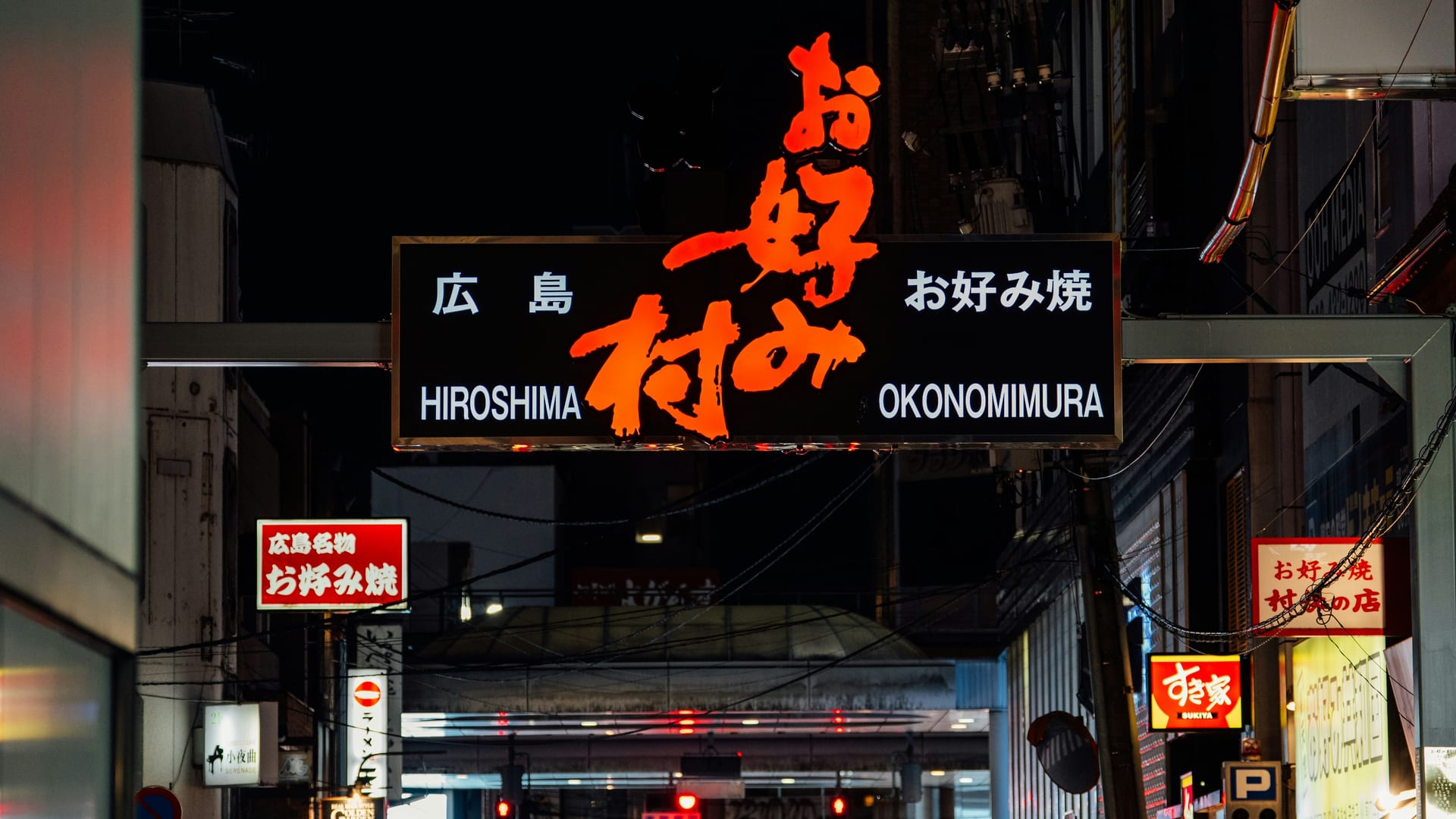
Okonomimura (お好み村) is a building in Shintenchi, central Hiroshima, where about two dozen independent okonomiyaki counters fill the 2nd to 4th floors. Each stall is its own small restaurant with its own griddle, menu, prices and hours; there is no building-wide opening time and no shared ordering system. You walk the floors, pick a counter with free seats, and eat Hiroshima-style okonomiyaki cooked in front of you.
- Area
- Naka, Hiroshima
- Best For
- Food, Local Culture, Nightlife
How Okonomimura works
Hiroshima-style okonomiyaki is built in layers rather than mixed: a thin crepe of batter, then a heap of cabbage, bean sprouts and pork, then noodles, usually soba, and an egg, finished with sauce. Watching the layers go together on the griddle is part of the meal, and at Okonomimura every seat is at a counter in front of one.

The building traces its name and its stalls to the food stalls that gathered around Shintenchi after the war and later moved indoors together. It works like a vertical food court of family- and chef-run counters rather than one restaurant, so style, prices and atmosphere vary from stall to stall.
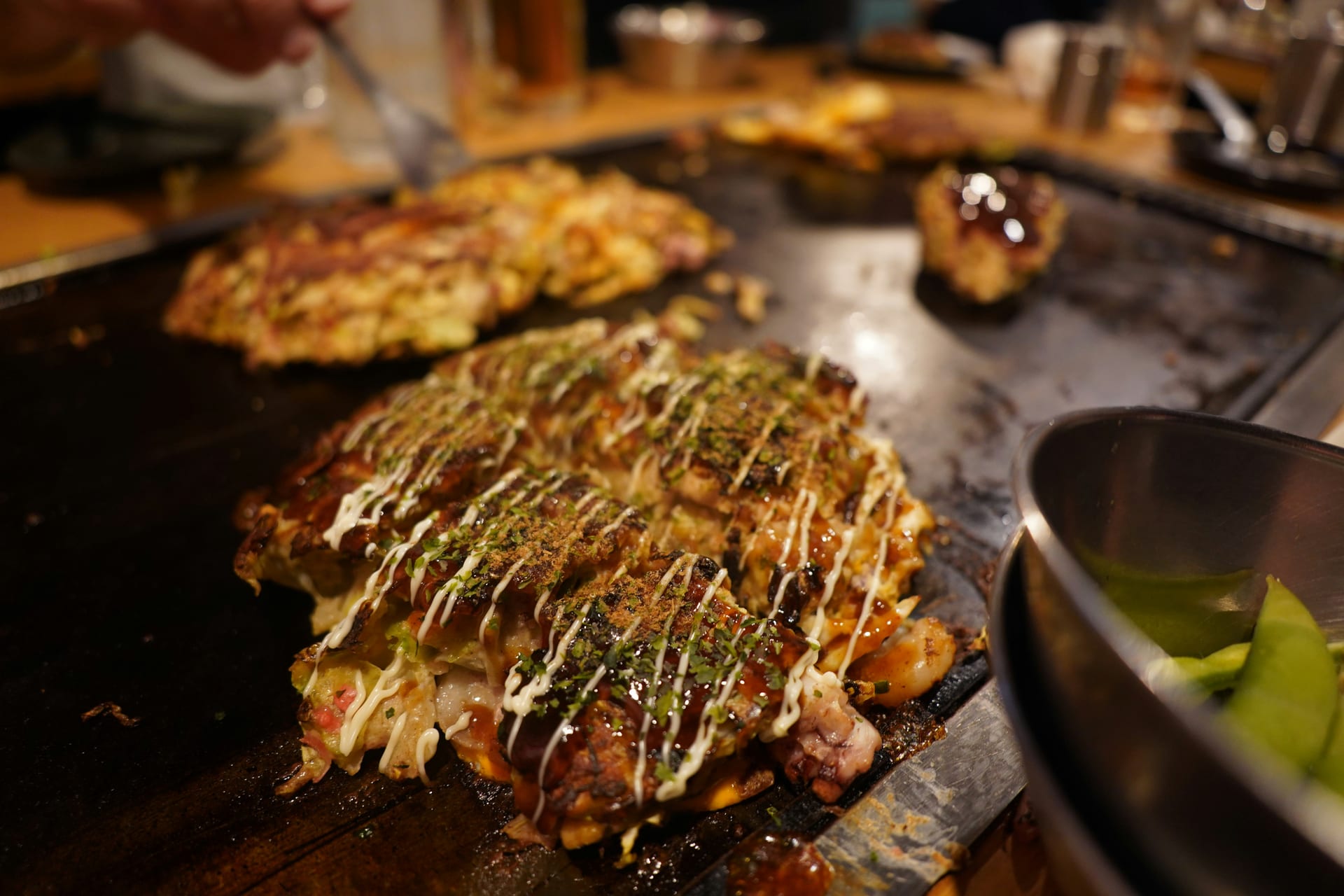
Choosing a counter is the main decision. Most stalls post their menu and prices at the entrance, and many have picture or English menus. Look at how busy each one is, whether it offers what you want, such as udon instead of soba or toppings like squid and green onion, and whether there are seats together for your group; counters seat only a handful of people.
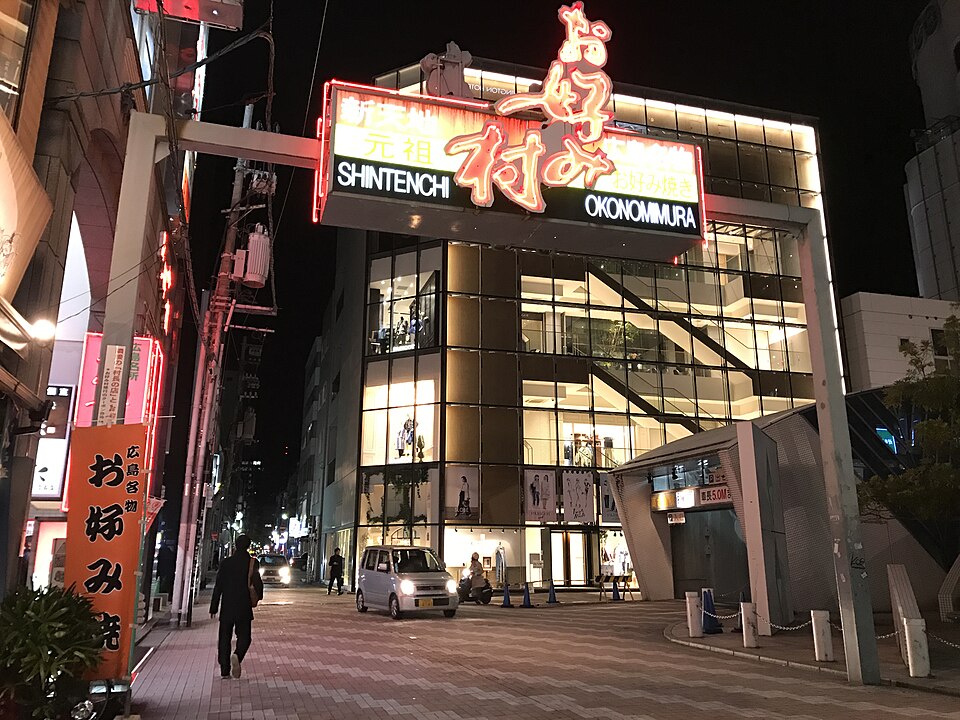
Okonomimura is one place to eat okonomiyaki in Hiroshima, not the only one; the dish is cooked at counters all over the city. Its advantage is choice in one building, a couple of minutes from the Hondori arcade and 10 to 15 minutes on foot from Peace Memorial Park, which makes it an easy dinner after the Peace Memorial area.
How to eat at Okonomimura
How to Get to Okonomimura
Okonomimura is in Shintenchi, in the downtown shopping and dining district around the Hondori arcade, between the Peace Memorial area and Hiroshima Station.
- •Hatchobori tram stop is a few minutes' walk away; from Peace Memorial Park, walking east takes 10 to 15 minutes.
- •The stalls are on the 2nd to 4th floors; the street level is the entrance.
- •The Hondori shopping arcade is a couple of minutes away on foot.
For IC cards, tickets, and full transit basics for Hiroshima, see the complete transportation guide.
Getting Around Hiroshima →Map
Best Time to Visit Okonomimura
Best time to visit Okonomimura: Dinner is liveliest; at lunch fewer stalls are open but waits are shorter. Weekday mornings are generally quieter than weekends and public holidays.
- •Each stall sets its own hours and closing days; there is no building-wide schedule.
- •Weekend and holiday evenings are busiest; arriving before the main dinner rush helps if you want a particular counter.
- •It is indoors, so it works in any weather.
Entry Fee & Hours
- •Seating is on stools at narrow counters with tight aisles, which can be difficult with a wheelchair or stroller at busy times.
Nearby Attractions
Combine with Okonomimura on the same day

Hiroshima Peace Memorial Park
Atomic Bomb Dome

Hiroshima Peace Memorial Museum

Shukkeien Garden
- •Hiroshima Peace Memorial Park (About 10 to 15 minutes on foot west): The free, always-open memorial park in central Hiroshima, with the Cenotaph, the Peace Flame, the Children's Peace Monument and the National Peace Memorial Hall. The Atomic Bomb Dome stands across the river and the ticketed museum at its southern end.
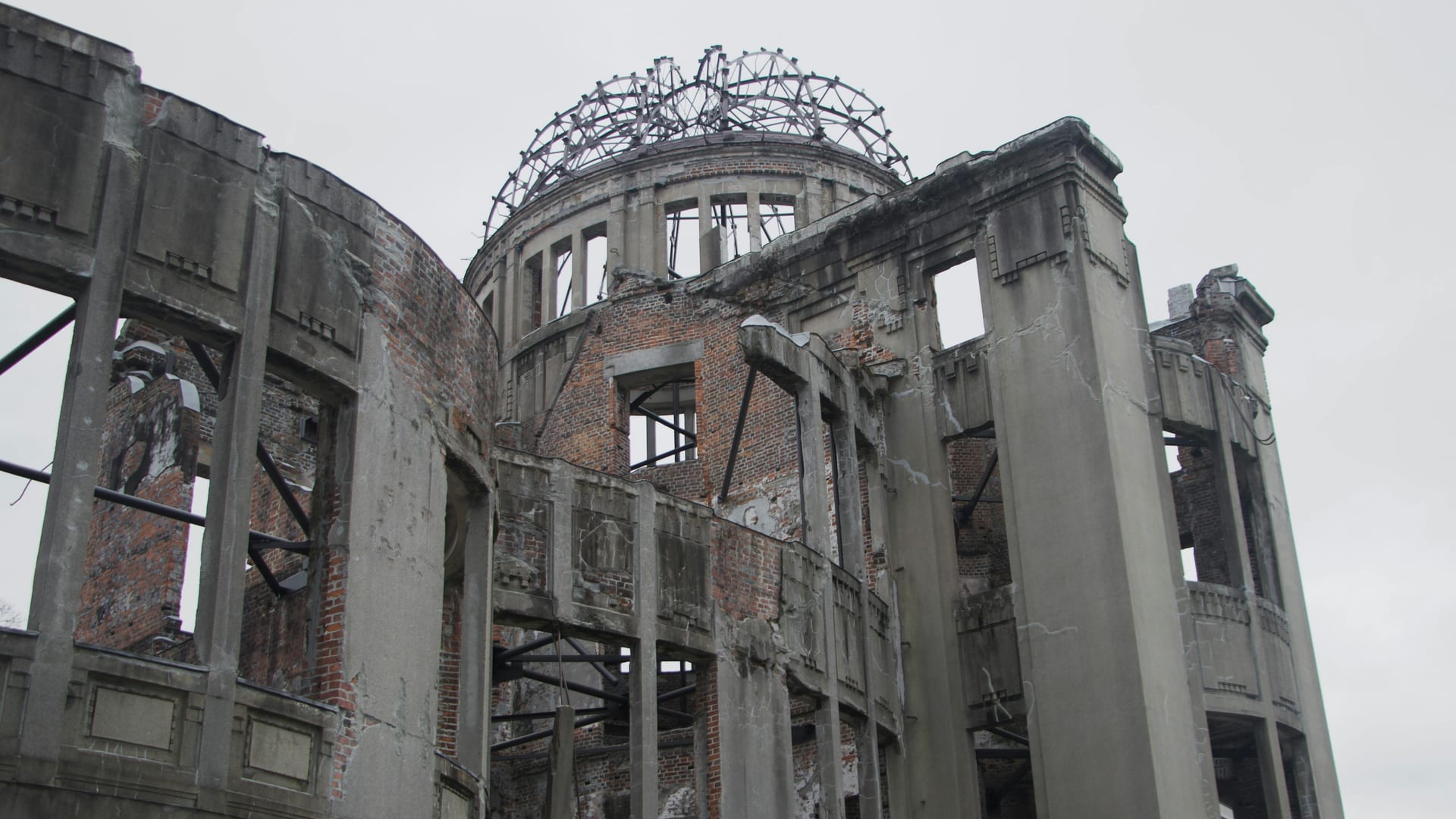
- •Atomic Bomb Dome (About 10 to 15 minutes on foot west): The ruin of the Hiroshima Prefectural Industrial Promotion Hall, left standing close to the hypocenter of the 1945 atomic bomb and preserved as a World Heritage Site. Seen from outside its fence, free, at any hour.
- •Hiroshima Peace Memorial Museum (About 15 minutes on foot southwest): The city-run museum in Peace Memorial Park that documents the atomic bombing of August 6, 1945, through victims' belongings, photographs and survivor testimony. Adult admission is 200 yen, and the museum recommends buying a web ticket in advance.
- •Shukkeien Garden (About 15 minutes on foot north): A strolling garden built from 1620 for the lords of Hiroshima, around a central pond with islands, bridges and pavilions. A 10 to 15 minute walk from Hiroshima Station and from Hiroshima Castle.
Where Okonomimura fits in a day
Okonomimura works best as the meal at the end of central sightseeing.
Central Hiroshima, then dinner
Morning
The Peace Memorial Museum, Peace Memorial Park and the Atomic Bomb Dome
Afternoon
Shukkeien Garden and Hiroshima Castle, or Miyajima
Evening
Walk the floors at Okonomimura, choose a counter and eat
Frequently Asked Questions
Planning Your Hiroshima Trip?
See the full Hiroshima destination guide or browse Japan itineraries that include this city.
See all Shopping & Entertainment across Japan →Explore all attractions in Hiroshima or browse nearby destinations.
Back to Hiroshima Guide →