Kitaguchi Hongu Fuji Sengen Shrine
ExploreJapanDaily Editorial Team · Last updated: October 9, 2026 · Facts verified: October 9, 2026
Kitaguchi Hongu Fuji Sengen Shrine (北口本宮冨士浅間神社) in Fujiyoshida is where the Yoshida Trail up Mount Fuji traditionally begins, and a component of the Mount Fuji World Heritage site. A long avenue of cedars and stone lanterns leads to a cluster of shrine buildings, 11 of them Important Cultural Properties. The grounds are open to walk with no admission charge listed, and it is about 20 minutes on foot from Fujisan Station.

Photo: 江戸村のとくぞう, Wikimedia Commons, CC BY-SA 4.0; resized
- Area
- Fujiyoshida
- Best Time
- Mornings for a quiet approach; early November for autumn color; 26-27 August for the fire festival
- Best For
- History, Shrine architecture, Mount Fuji pilgrimage, Quiet walk
Why this shrine matters
Before roads reached the 5th Station, climbing Mount Fuji from the north began here. The shrine stands at the foot of the Yoshida Trail, and the prefecture describes the trail as starting from it. A torii on the west side of the grounds marks the trail entrance, which the shrine calls the starting point of the Mount Fuji pilgrimage. Most climbers today start at the Fuji Subaru Line 5th Station, so the shrine is where you see what the climb once meant.
That meaning came from the Fuji-ko, the pilgrimage societies that grew in Edo-period Tokyo and sent members to climb as an act of worship. In 1733 to 1738 Murakami Kosei, leader of one of the largest groups, paid for a major rebuilding that set most of the layout you see today. The shrine is one of the World Heritage components of Mount Fuji, alongside the Yoshida Trail and two oshi (pilgrim-lodge) houses in the town.
The visit is a walk. A road-side torii opens onto a long approach under tall cedars lined with mossy stone lanterns, through the great torii to the oratory and the main hall. Allow time to circle behind the buildings, where the older halls and the trail gate are.

Photo: 江戸村のとくぞう, Wikimedia Commons, CC BY-SA 4.0; resized
What to see at the shrine
How to Get to Kitaguchi Hongu Fuji Sengen Shrine
The shrine is in Kamiyoshida, Fujiyoshida, on the road toward Lake Yamanakako.
- •Walking from Fujisan Station takes about 20 minutes; buses to the Sengen Jinja-mae stop save the walk.
- •Parking is free, with extra temporary lots at festival times.
- •On 26-27 August the town center is busy with the fire festival; allow extra time.
Map
Best Time to Visit Kitaguchi Hongu Fuji Sengen Shrine
Best time to visit Kitaguchi Hongu Fuji Sengen Shrine: Mornings for a quiet approach; early November for autumn color; 26-27 August for the fire festival. Weekday mornings are generally quieter than weekends and public holidays.
- •Weekday mornings are the quietest time on the approach.
- •Early November brings autumn leaves and ginkgo to the grounds.
- •The Yoshida Fire Festival on 26-27 August is the shrine's biggest event; the town fills on the night of the 26th.
- •The shrine looks the same in any weather, which makes it a good stop on a day when Mount Fuji is hidden.
The eve-of-season festival before the Mount Fuji climbing season opens, with kagura dance.
About 80 torches about 3 meters tall are lit along the town's main street on the night of 26 August. The festival is a designated intangible folk cultural property of Yamanashi.
The prefectural tourism body gives early November as the peak for autumn leaves and ginkgo.
Entry Fee & Hours
- •The official tourism listing gives no admission fee for the grounds, and parking is free.
- •Goshuin (shrine stamps) are available for the main shrine, for Suwa Shrine inside the grounds, and for Otsukaoka, the site where the shrine is said to have begun.
- •The shrine does not publish fixed hours for the grounds or its counters; visit in daylight and allow for festival-day crowds in late August.
Nearby Attractions
Easy to combine around Fujisan Station

Chureito Pagoda

Fuji-Q Highland

Oshino Hakkai
Mt. Fuji 5th Station
- •Chureito Pagoda (Fujisan Station, then two stops by train to Shimoyoshida): A five-story memorial pagoda on the hillside above Fujiyoshida, 398 steps up, framed against Mount Fuji from its viewing deck.
- •Fuji-Q Highland (Fujisan Station, then one stop by train): A free-entry roller coaster park at the foot of Mount Fuji, with record-setting coasters, Thomas Land for small children and a variable-price One-Day Pass.
- •Oshino Hakkai (Bus from Fujisan Station): Eight spring-fed ponds in Oshino village, fed by Mount Fuji's underground water, with thatched buildings and views of the mountain on clear days.
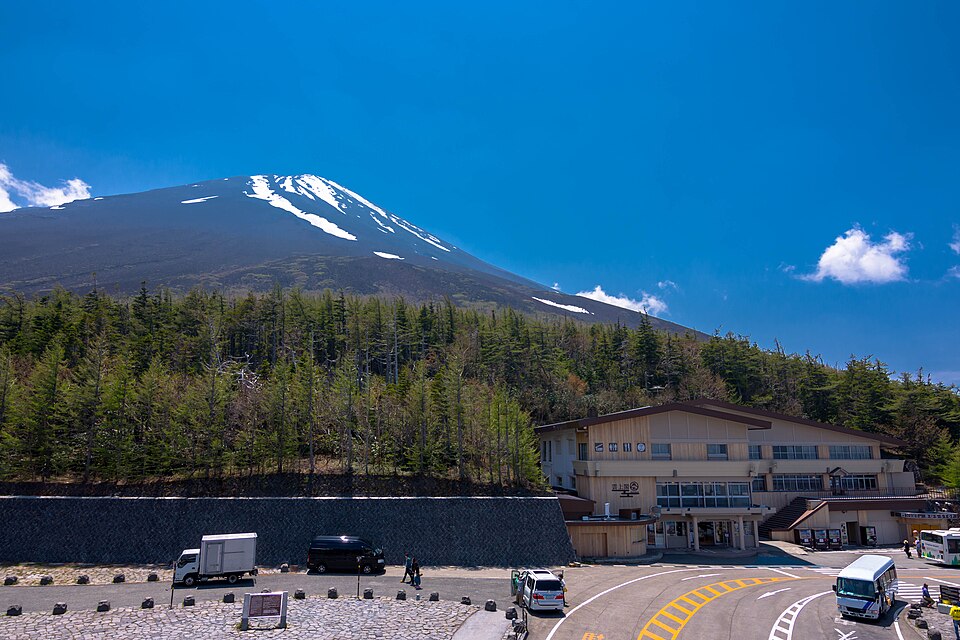
- •Mt. Fuji 5th Station (Bus from Fujisan Station when the Fuji Subaru Line is open): The Fuji Subaru Line 5th Station at 2,305 m, the Yoshida Trail trailhead and the 5th Station most visitors reach by bus from Kawaguchiko.
The shrine in a Fujiyoshida day
The shrine pairs naturally with the other Fujiyoshida stops on the Fujikyuko Line.
Fujiyoshida on foot and by train
Morning
Fujisan Station, then walk about 20 minutes to the shrine for a quiet approach
Late morning
Back to Fujisan Station and two stops to Shimoyoshida for Chureito Pagoda
Afternoon
On to Kawaguchiko for the Mt. Fuji Panoramic Ropeway if Mount Fuji is clear
Frequently Asked Questions
References
View references
Kitaguchi Hongu Fuji Sengen Shrine
Yamanashi Prefecture
Yamanashi Tourism Organization
Planning Your Mount Fuji Trip?
See the full Mount Fuji destination guide or browse Japan itineraries that include this city.
See all Temples & Shrines across Japan →Explore all attractions in Mount Fuji or browse nearby destinations.
Back to Mount Fuji Guide →