Oshino Hakkai
ExploreJapanDaily Editorial Team · Last updated: October 9, 2026 · Facts verified: October 9, 2026
Oshino Hakkai (忍野八海) is a group of eight spring-fed ponds in Oshino village, between Lake Kawaguchiko and Lake Yamanakako, fed by Mount Fuji's underground water. Seven of the eight sit in the open village with no hours; the eighth, Sokonuke-ike, is inside the paid Hannoki Bayashi Shiryokan, open 9:00 AM to 5:00 PM. The ponds are a National Natural Monument and part of the Fujisan World Heritage Site. The bus from Fujisan Station takes about 15 minutes.

- Area
- Oshino
- Best Time
- Early morning for space and the best chance of Mount Fuji; the ponds are worth seeing in any season
- Best For
- Spring water, Rural village, Mount Fuji views, Short stop
What you are looking at
Oshino village was once a lake. Repeated eruptions of Mount Fuji and erosion drained it, leaving springs fed by the mountain's underground water, and the eight best known became Oshino Hakkai. Followers of Fuji-ko, the Mount Fuji pilgrimage tradition, made the ponds a circuit of eight sacred stations, each with a dragon king enshrined and a poem carved on a stone beside it.
The ponds are spread through the village rather than in one enclosure. Waku-ike, the pond most people photograph, has the strongest flow, rising from an underwater cave, and its water was used in 1983 in an experiment to make snow in space; Nigori-ike lies next to it. Deguchi-ike, the first station, sits away from the rest. Kagami-ike is named for the way it can mirror Mount Fuji.

The central lanes by the shops get crowded, so an early start gives more space and a better chance of seeing the mountain. The ponds are protected: do not touch the water, step in or throw coins.
What to do at Oshino Hakkai
How to Get to Oshino Hakkai
Oshino Hakkai is in Oshino village, Yamanashi Prefecture, on the road between Fujiyoshida and Lake Yamanakako.
- •Fujisan Station, not Kawaguchiko, is the nearest railway station.
- •The bus from Fujisan Station takes about 15 minutes, then a 5-minute walk.
- •Drivers should use the private paid lots; there is no official free parking.
Map
Best Time to Visit Oshino Hakkai
Best time to visit Oshino Hakkai: Early morning for space and the best chance of Mount Fuji; the ponds are worth seeing in any season. Weekday mornings are generally quieter than weekends and public holidays.
- •Arrive early for space in the central lanes and the best chance of seeing Mount Fuji.
- •The springs keep the ponds clear year-round, so a cloudy day is still worthwhile.
- •Winter mornings give the clearest air for the mountain.
The ponds are spring-fed, so the water stays clear through the year.
Clear, cold mornings give the best chance of Mount Fuji above the thatched roofs.
Entry Fee & Hours
- •Seven of the eight ponds are in the open village and free to see.
- •Sokonuke-ike is inside the Hannoki Bayashi Shiryokan, a folk museum that charges admission and opens from 9:00 AM to 5:00 PM. Secondary sources give 300 yen for adults; the village tourism listing does not state the fee.
- •There is no official free parking; use the private paid lots around the village.
- •Do not touch, enter or throw coins into the ponds. They are a National Natural Monument.
Nearby Attractions
Combine with Oshino Hakkai on the same day

Chureito Pagoda

Lake Kawaguchiko
Mt. Fuji 5th Station

Lake Yamanakako

Fuji-Q Highland
- •Chureito Pagoda (Bus to Fujisan Station, then two stops by train): A five-story memorial pagoda on the hillside above Fujiyoshida, 398 steps up, framed against Mount Fuji from its viewing deck.
- •Lake Kawaguchiko (Bus to Fujisan Station, then two stops by train): The Fuji Five Lakes base most visitors use, with free shoreline views of Mount Fuji, a sightseeing cruise and easy train and bus links to Tokyo.
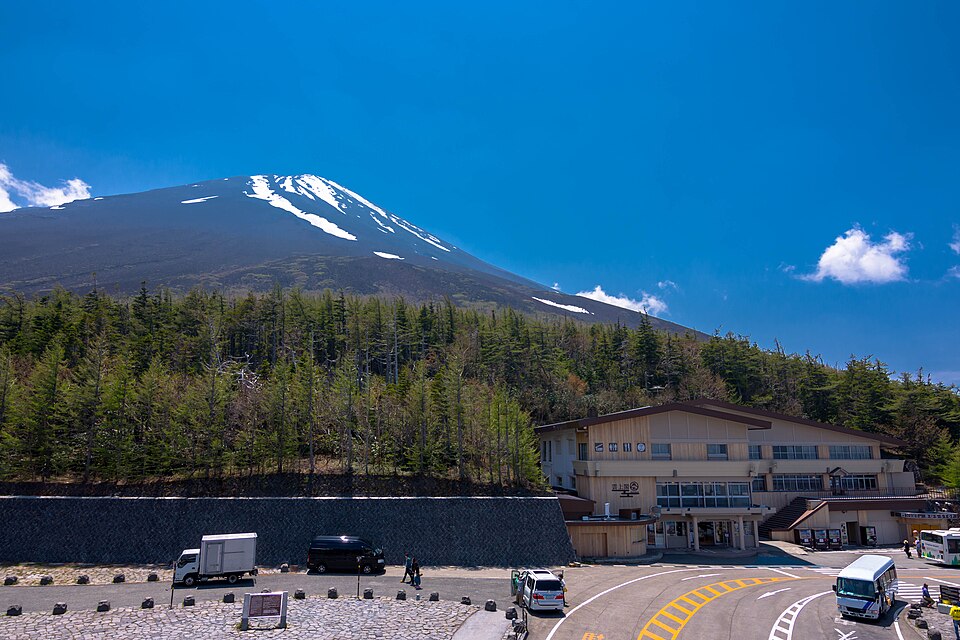
- •Mt. Fuji 5th Station (Bus to Fujisan Station, then the Fujikyu bus up the mountain): The Fuji Subaru Line 5th Station at 2,305 m, the Yoshida Trail trailhead and the 5th Station most visitors reach by bus from Kawaguchiko.
- •Lake Yamanakako (Both are reached by bus from Fujisan Station): The largest of the Fuji Five Lakes by area, on Mount Fuji's northeast side, known for Diamond Fuji sunsets in autumn and winter.
- •Fuji-Q Highland (Bus to Fujisan Station, then one stop by train): A free-entry roller coaster park at the foot of Mount Fuji, with record-setting coasters, Thomas Land for small children and a variable-price One-Day Pass.
Oshino Hakkai in a Fuji day
Oshino is on its own bus axis from Fujisan Station, so pair it with Fujiyoshida rather than the far side of Kawaguchiko.
Fujiyoshida and the spring ponds
Morning
Chureito Pagoda from Shimoyoshida Station
Midday
Train two stops to Fujisan Station and the bus to Oshino Hakkai
Afternoon
Bus back to Fujisan Station and on to Lake Kawaguchiko or Tokyo
Frequently Asked Questions
References
View references
Yamanashi Tourism Organization
Planning Your Mount Fuji Trip?
See the full Mount Fuji destination guide or browse Japan itineraries that include this city.
See all Nature & Scenic Spots across Japan →Explore all attractions in Mount Fuji or browse nearby destinations.
Back to Mount Fuji Guide →