Lake Kawaguchiko
ExploreJapanDaily Editorial Team · Last updated: October 9, 2026 · Facts verified: October 9, 2026
Lake Kawaguchiko (河口湖) is the Fuji Five Lakes base most visitors use: Kawaguchiko Station, the end of the Fujikyuko Line, is near its eastern shore, and trains and highway buses run there from Tokyo in about two hours. It has the longest shoreline of the five lakes, and the shore is free. On clear days Mount Fuji rises to the south across the water, best seen from the north shore around Oishi Park.

- Area
- Fujikawaguchiko
- Best For
- Mount Fuji views, First Fuji Five Lakes base, Autumn colors, Easy access from Tokyo
How the lake works for a visit
Kawaguchiko is a lake-level visit rather than a single sight. The north shore faces Mount Fuji across the water, which is why Oishi Park and the shore around it are where most of the classic photographs are taken. The south and east shores, around Kawaguchiko Station, hold most of the hotels, the sightseeing cruise and the ropeway. Unoshima, a small island, sits in the middle of the lake.
Mount Fuji is the reason to come, and it is often hidden. Cloud tends to build through the day, summer brings haze, and the rainy season from mid-June to mid-July is the weakest time. Winter mornings give the best odds. On a cloudy day the lake still works as a base for museums and onsen, but if you can stay a night, keep the next morning free for a second try.

This page covers the lake and its shore. Chureito Pagoda and Oishi Park have their own guides, and the Mt. Fuji Panoramic Ropeway up Mount Tenjo from the east shore is a separate paid ride with its own fares, hours and inspection closures.
Things to do at Lake Kawaguchiko
How to Get to Lake Kawaguchiko
Lake Kawaguchiko is in Fujikawaguchiko, Yamanashi Prefecture, roughly two hours from central Tokyo by direct train or highway bus.
- •Kawaguchiko Station is the end of the Fujikyuko Line and the hub for local sightseeing buses.
- •The Fujikyuko Line is not covered by the Japan Rail Pass.
- •For the Fuji view, head to the north shore; the station side faces away from the mountain's best angle.
Map
Best Time to Visit Lake Kawaguchiko
Best time to visit Lake Kawaguchiko: Clear winter mornings for Mount Fuji; early to mid-April for cherry blossoms; late October to November for autumn color. Weekday mornings are generally quieter than weekends and public holidays.
- •Mount Fuji is most often visible on winter mornings; cloud and haze build through summer days.
- •The rainy season, roughly mid-June to mid-July, is the least reliable time for views.
- •Clear weekends and the cherry blossom and autumn color seasons bring the heaviest traffic around the shore.
Cherry trees along the shore bloom with Mount Fuji behind on clear days.
The hillsides and lakeside maples change color.
Cold, dry air gives the clearest long-distance views and the best chance of a reflection on calm water.
Entry Fee & Hours
- •The shoreline, lakeside parks and viewpoints are free.
- •The sightseeing cruise, the Mt. Fuji Panoramic Ropeway and the lakeside museums each charge their own fares, and their hours change with the season. The ropeway also closes for scheduled inspections, so check the operator before planning around it.
- •Lakeside parking near popular viewpoints fills on clear weekends and in blossom and foliage seasons.
Nearby Attractions
Combine with Lake Kawaguchiko on the same day

Oishi Park

Chureito Pagoda
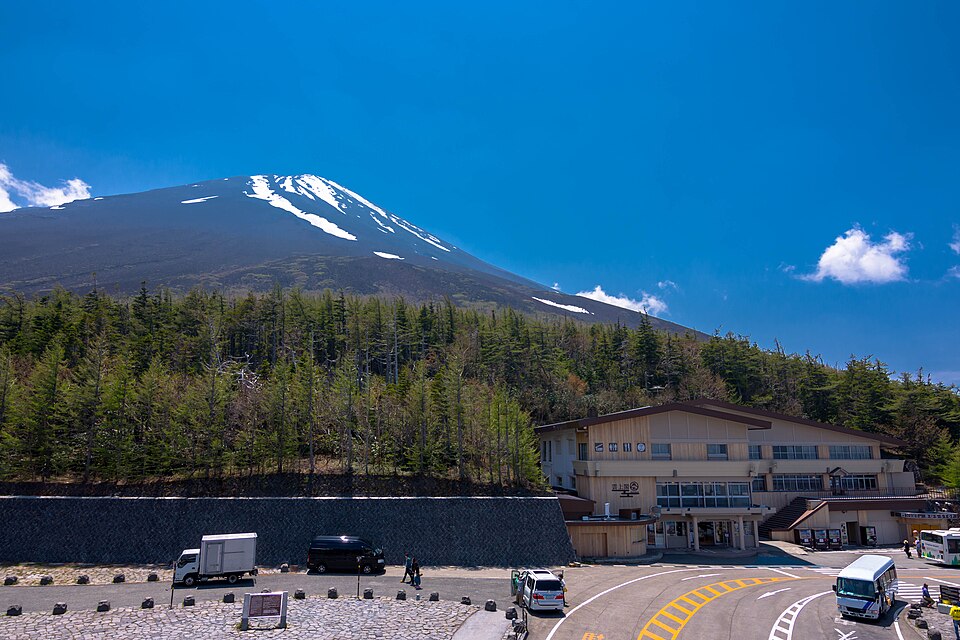
Mt. Fuji 5th Station

Oshino Hakkai

Mt. Fuji Panoramic Ropeway

Fuji-Q Highland
- •Oishi Park (About 30 minutes by retro bus from Kawaguchiko Station): A free flower walk on Lake Kawaguchiko's north shore, facing Mount Fuji across the water, best known for early-summer lavender and red autumn kochia.
- •Chureito Pagoda (Four stops east on the Fujikyuko Line to Shimoyoshida): A five-story memorial pagoda on the hillside above Fujiyoshida, 398 steps up, framed against Mount Fuji from its viewing deck.
- •Mt. Fuji 5th Station (By Fujikyu bus from Kawaguchiko Station): The Fuji Subaru Line 5th Station at 2,305 m, the Yoshida Trail trailhead and the 5th Station most visitors reach by bus from Kawaguchiko.
- •Oshino Hakkai (Two stops to Fujisan Station, then about 15 minutes by bus): Eight spring-fed ponds in Oshino village, fed by Mount Fuji's underground water, with thatched buildings and views of the mountain on clear days.
- •Mt. Fuji Panoramic Ropeway (About 15 minutes from Kawaguchiko Station on foot or by sightseeing bus): A three-minute ropeway from Lake Kawaguchiko up Mount Tenjo to a deck facing Mount Fuji, with a fare rise from 1 November 2026 and a December inspection closure.
- •Fuji-Q Highland (One stop by train from Kawaguchiko Station): A free-entry roller coaster park at the foot of Mount Fuji, with record-setting coasters, Thomas Land for small children and a variable-price One-Day Pass.
A day around Kawaguchiko
Start on the north shore while the mountain is most likely to be clear, then use the middle of the day for paid activities.
One day at the lake
Morning
Retro bus to Oishi Park for the north-shore view of Mount Fuji
Midday
Back to the east shore for the sightseeing cruise or the Panoramic Ropeway
Afternoon
Train four stops to Shimoyoshida for Chureito Pagoda, or a museum if the mountain is hidden
Overnight for a second chance
Afternoon
Arrive at Kawaguchiko Station and walk the shore near your hotel
Next morning
North shore at first light, when Mount Fuji is most often clear
Late morning
Continue to Oshino Hakkai or the 5th Station when the road is open
Frequently Asked Questions
References
View references
Yamanashi Prefecture
Yamanashi Tourism Organization
Fuji Kyuko Railway
Planning Your Mount Fuji Trip?
See the full Mount Fuji destination guide or browse Japan itineraries that include this city.
See all Nature & Scenic Spots across Japan →Explore all attractions in Mount Fuji or browse nearby destinations.
Back to Mount Fuji Guide →