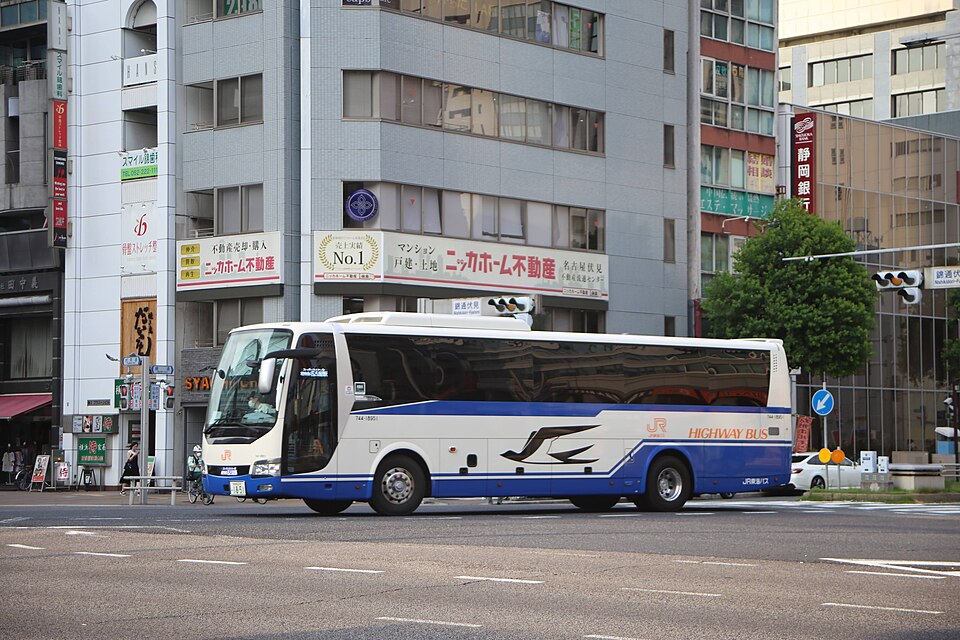
Highway & Overnight Buses in Japan When the bus beats the train, what a night on board is like, and how to book
Buses cost a fraction of the Shinkansen and take far longer. A night bus can swap a travel day, and sometimes a hotel night, for a night sitting up. Every operator sets its own rules.
Highway buses in Japan: quick answer
Highway buses are usually the cheapest way between Japanese cities, and the slowest. A night bus travels while you sleep and can sometimes replace a hotel night, but you sleep sitting up and arrive around dawn. Between Tokyo and Kyoto or Osaka the Shinkansen is far faster and more comfortable; the bus wins when money matters more than time, or when it runs straight to a place trains serve badly. Luggage, toilets and refunds are set by each operator, so check your exact bus.
- Choose the bus
- Budget matters more than time, the bus runs straight to where you are going, and you are happy to sleep sitting up.
- Compare both
- Tokyo to Kyoto, Osaka or Kanazawa, where a night bus might replace a hotel night but the train is far faster.
- Take the train or fly
- Time, sleep or a tight connection matters, or the trip is Tokyo to Fukuoka, Sapporo or Okinawa.
- ¥4,000 vs ¥14,170Night bus vs reserved Shinkansen seat, Tokyo to Kyoto, on 4 October 2026.
- 5:00 a.m. to 7:50 a.m.When Tokyo night buses reached Kyoto.
- Rules varyLuggage, toilets and refunds belong to each operator.
- No JR PassIt does not cover JR highway buses.
1 · The decision
Should you take a highway bus at all?
Price is only the start. Sleep, the next morning and the exact stop decide whether the bus is a good idea for you.
Are highway buses good in Japan? Yes, when budget matters more than time or the bus runs straight to your destination. They are reliable, reserved-seat coaches, but slower than the Shinkansen and at the mercy of road traffic.
You are on a tight budget and can sleep in a reclining seat
Use: Take a night busBook a three-across seat for a long night if you can stretch the budget.
You are heading to the Fuji Five Lakes, Takayama or Shirakawa-go
Use: Look at the bus firstBuses run there directly; Shirakawa-go has no train at all.
Your next morning is planned and you need to be sharp
Use: Take the ShinkansenArriving at 5:30 a.m. after a broken night wrecks a sightseeing day.
You have a flight or another train to catch at the other end
Use: Take the trainRoad traffic and weather make bus arrival times unreliable.
You have a JR Pass
Use: Use the trainThe pass does not cover highway buses, so the bus is an extra cost.
Tokyo to Fukuoka, Sapporo or Okinawa
Use: Compare flightsThese are the trips where flying saves the most time.
Traveling with small children or with limited mobility
Use: Usually the trainNight buses are hard on small children, and boarding a coach with limited mobility needs arranging with the operator first.
Plenty of good trips mix them: the Shinkansen for the long Tokyo to Kyoto leg, then a bus to Takayama or Shirakawa-go where the bus is simply the better route. You do not have to pick one mode for the whole trip.
2 · The comparison
Bus vs Shinkansen vs flight
Compare the whole journey, not the ticket. Time, where you board, sleep and what happens when things run late all count.
| Factor | Highway or night bus | Shinkansen | Domestic flight |
|---|---|---|---|
| Price, Tokyo to Kyoto | Lowest fares ¥3,400 to ¥11,400 by date; more for roomier seats | ¥14,170 for a reserved seat | Not a practical route; flights matter for longer trips |
| Journey time | A full night, or a working day by daytime bus | From 2 hours 21 minutes, Tokyo to Shin-Osaka | Short in the air; add airport transfers and check-in |
| Travel overnight | Yes, leaving in the evening and arriving around dawn | No | No |
| Where you board | Terminals and roadside stops; check the exact one | Major stations in city centers | Airports, often outside the city |
| Comfort | Depends heavily on the seat type | Consistent, with room to stand and walk | Cramped but short |
| Large luggage | Set by each operator; some refuse big suitcases | Rail rules; see the Shinkansen guide | Airline allowances by fare |
| If it runs late | Road traffic and weather; WILLER pays no compensation | Refunds of a set amount for delays of 2 hours or more | Weather and air traffic; airline rules apply |
Price, Tokyo to Kyoto
Highway or night bus: Lowest fares ¥3,400 to ¥11,400 by date; more for roomier seats
Shinkansen: ¥14,170 for a reserved seat
Domestic flight: Not a practical route; flights matter for longer trips
Journey time
Highway or night bus: A full night, or a working day by daytime bus
Shinkansen: From 2 hours 21 minutes, Tokyo to Shin-Osaka
Domestic flight: Short in the air; add airport transfers and check-in
Travel overnight
Highway or night bus: Yes, leaving in the evening and arriving around dawn
Shinkansen: No
Domestic flight: No
Where you board
Highway or night bus: Terminals and roadside stops; check the exact one
Shinkansen: Major stations in city centers
Domestic flight: Airports, often outside the city
Comfort
Highway or night bus: Depends heavily on the seat type
Shinkansen: Consistent, with room to stand and walk
Domestic flight: Cramped but short
Large luggage
Highway or night bus: Set by each operator; some refuse big suitcases
Shinkansen: Rail rules; see the Shinkansen guide
Domestic flight: Airline allowances by fare
If it runs late
Highway or night bus: Road traffic and weather; WILLER pays no compensation
Shinkansen: Refunds of a set amount for delays of 2 hours or more
Domestic flight: Weather and air traffic; airline rules apply
Bus fares: WILLER TRAVEL listings for October 2026 (opens in a new tab). Train fare: JR fare search (opens in a new tab); fastest time: JR Central (opens in a new tab); delay refunds: SmartEX (opens in a new tab).
Why the price gap is not fixed
Many bus companies price by date and demand. On 4 October 2026, WILLER TRAVEL's cheapest Tokyo to Kyoto bus on each October date ran from ¥3,400 on quiet dates to ¥11,400 before a holiday weekend, while the reserved Shinkansen fare stays at ¥14,170. On a busy date in a roomy seat, the bus can cost more than half the train.
Bus or plane on long trips
On long routes the bus avoids airport check-in and lands you in the city center, but it costs a night or most of a day. Flying is fast in the air and slow at both ends. For Tokyo to Fukuoka, Sapporo or Okinawa, our domestic flights guide compares the options properly.
3 · Two kinds of bus
Daytime highway buses vs overnight buses
Not every highway bus runs at night. The two suit different trips.
Daytime highway bus
- Links cities, and runs into places trains reach awkwardly, such as the Fuji Five Lakes and Takayama.
- Tokyo to Osaka takes most of a day: about 8 to 9 hours on the buses we checked.
- You see the country go by, and on WILLER daytime buses every rest stop is announced.
- Usually far cheaper than the train, and sometimes the only one-seat ride.
Overnight (night) bus
- Typically leaves between 7 p.m. and midnight and arrives between 5 and 8 a.m.
- Lights go off after departure. You travel while you would otherwise sleep.
- Can replace a hotel night, if the timing really works.
- Comfort depends almost entirely on the seat you book, and arrival is very early.
Times: Tokyo to Osaka daytime buses (opens in a new tab), and typical night-bus hours (opens in a new tab).
4 · Where it works
Routes where the bus makes sense
A handful of routes visitors actually ask about, grouped by our verdict. This is not a timetable: fares change, so book on the operator's site.
The bus is a strong choice
Shinjuku to Lake Kawaguchiko (Mount Fuji)
A direct daytime bus from Shinjuku drops you at Kawaguchiko Station for about half the fare of the direct train.
By train: A direct limited express also runs from Shinjuku, at a higher fare.
Bus example: Keio Bus, ¥2,200, about 1 hr 45 min.
Shinjuku to Matsumoto or Takayama
Takayama has no direct train from Tokyo, and the bus gets there in one seat. To Matsumoto the bus is the cheaper of two direct options.
By train: Matsumoto: the Azusa limited express, about 2 hours 30 minutes from Shinjuku. Takayama: Shinkansen to Nagoya, then the Hida limited express.
Bus example: Keio Bus, ¥8,000, about 5 hr 30 min; to Matsumoto ¥4,100 to ¥4,500, about 3 hr 20 min.
Kanazawa or Takayama to Shirakawa-go
There is no train station in Shirakawa-go. Every visitor arrives by highway bus, so this is not a choice, only a booking to make early in peak season.
By train: None.
Bus for budget, train for time
Tokyo to Kyoto or Osaka
On one October day in 2026, 18 night buses ran from Tokyo to Kyoto, in every seat type from four across to near-flat shells. A night bus turns a travel day into a night, if you can sleep.
By train: The Tokaido Shinkansen, from 2 hours 21 minutes to Shin-Osaka.
Bus example: JAM JAM EXPRESS, ¥3,400 on 4 October 2026.
Tokyo to Kanazawa
Night buses arrive at Kanazawa Station in time for breakfast, for a fraction of the Shinkansen fare.
By train: The Hokuriku Shinkansen, about two and a half hours.
Bus example: WILLER EXPRESS, ¥3,500 on 4 October 2026.
Osaka or Kyoto to Hiroshima
Daytime buses take about five and a half hours and night buses arrive in the early morning, both far cheaper than the train.
By train: The Sanyo Shinkansen, direct from Shin-Osaka or Kyoto.
Bus example: WILLER EXPRESS, ¥2,200 on 4 October 2026.
Fly or take the train
Tokyo to Fukuoka, Sapporo or Okinawa
These are the journeys where a flight saves the most time, and Okinawa has no land link at all. A bus saving here usually costs you a whole day.
By train: The Shinkansen reaches Fukuoka. For Sapporo and Okinawa, fly.
The pattern: buses are strongest where they go somewhere the train does not go directly, and a budget choice on the big Shinkansen corridors. For long trips across the country, a flight usually beats both.
5 · The signature question
Is the overnight saving actually worth it?
"A night bus saves a hotel night" is only half true. Here is what the bus really replaces.
Bus fare
Tokyo to Kyoto was ¥4,000 in a WILLER Prime seat on 4 October 2026, and ¥6,000 to ¥7,900 for three across. Fares change by date (opens in a new tab), so price your own night.
The hotel night it replaces
Only if you would otherwise book a room that night. A bus that leaves at 9 p.m. after you checked out at 11 a.m. still leaves you with a long day and no room.
The early morning
Somewhere for your bags, breakfast, and time until check-in. Night buses usually arrive between 5:00 a.m. and 8:00 a.m., before most hotels let you in. If you book the room from the night before so you can check in at dawn, the saving is gone.
The next day
If you sleep badly, you lose part of the next morning. Count that as a cost, especially on a short trip.
Your real saving
Set this against the Shinkansen fare plus one hotel night. On our example date the bus was ¥10,170 cheaper than the train before the hotel is counted.
Is a night bus right for you?
A cheap night bus is poor value if you arrive too tired to enjoy the next day.
- Strong candidate
- Budget matters, you sleep reasonably well sitting up, the bus goes straight where you need, and an arrival around dawn is fine because you have a plan for it.
- Compare carefully
- Your next day is busy, you need good sleep, you have big luggage, or the Shinkansen fare gap on your date is small after you add the early-morning costs.
- Take the train or fly
- You need reliable rest, you have a tight connection, the journey is very long, or physical comfort matters more than the money.
A night bus works best in the middle of a trip, between two cities where you have a bed booked from the next evening and an easy first morning planned. It works worst at the start of a trip, after a long flight, or the night before a day you have paid for. When pricing the hotel side, our where to stay guide covers capsule hotels and hostels, which can make the train plus a cheap bed close in price.
6 · Booking
How to book a highway bus in Japan
Booking is easy once you know one thing: no single website sells every bus.
- Pick your date and the two cities, then look at the stop names, not just the city.
- Search WILLER TRAVEL and Japan Bus Online. For Mount Fuji and the Japanese Alps add highway-buses.jp; for JR Dream buses, Kousokubus.net.
- Compare departure and arrival times with your hotel check-out, check-in and first plans.
- Choose the seat layout, then check the icons for a toilet, power outlets and women-only seats.
- Read the luggage and cancellation notes for that exact bus before you pay.
- Book with a card, and note any fees added at checkout.
- Save the confirmation email, e-ticket or QR code so it works offline.
- Open the stop map in your booking and find the stop before travel day.
- Be at the stop at least 10 minutes before departure.
- In bad weather, check the operator’s service status on the day.
Where to book in English
Japan Bus Online alone sells routes from more than 120 bus companies, and the big operators each run their own systems. These are the ones that work well for visitors:
| Where to book | What it sells | English | Watch for |
|---|---|---|---|
| WILLER TRAVEL (opens in a new tab) | WILLER EXPRESS buses plus many other companies, mostly on long routes | Full English booking, seat choice on WILLER buses | A 330 yen arrangement fee on many trips. Changes to other companies’ buses count as a cancellation. |
| Japan Bus Online (opens in a new tab) | The English side of Hassha Orai Net, a network of over 120 bus companies | English booking with e-tickets | Each route lists its own luggage and cancellation notes. Read them before you pay. |
| Highwaybus.com (Keio) (opens in a new tab) | Keio Bus and partner routes from Shinjuku and Shibuya: Mount Fuji, the Japanese Alps, Matsumoto, Takayama | English site at highway-buses.jp | Strongest for daytime routes west of Tokyo. |
| Kousokubus.net (JR buses) (opens in a new tab) | JR bus companies’ routes, including West JR Bus Dream buses | English site (Japan Expressway Bus Net), but it does not accept bookings from residents of the EEA or UK | Booking opens later than on WILLER: one month and one day ahead for West JR Bus. West JR Bus tickets bought here cannot be changed, only refunded for a fee. |
| Terminal ticket counters (opens in a new tab) | Only the booking systems that terminal supports | Busta Shinjuku’s counter has English-speaking staff | Busta Shinjuku sells only Highwaybus.com, Kousokubus.net and Hassha Orai Net routes plus airport limousines. |
WILLER TRAVEL (opens in a new tab)
What it sells: WILLER EXPRESS buses plus many other companies, mostly on long routes
English: Full English booking, seat choice on WILLER buses
Watch for: A 330 yen arrangement fee on many trips. Changes to other companies’ buses count as a cancellation.
Japan Bus Online (opens in a new tab)
What it sells: The English side of Hassha Orai Net, a network of over 120 bus companies
English: English booking with e-tickets
Watch for: Each route lists its own luggage and cancellation notes. Read them before you pay.
Highwaybus.com (Keio) (opens in a new tab)
What it sells: Keio Bus and partner routes from Shinjuku and Shibuya: Mount Fuji, the Japanese Alps, Matsumoto, Takayama
English: English site at highway-buses.jp
Watch for: Strongest for daytime routes west of Tokyo.
Kousokubus.net (JR buses) (opens in a new tab)
What it sells: JR bus companies’ routes, including West JR Bus Dream buses
English: English site (Japan Expressway Bus Net), but it does not accept bookings from residents of the EEA or UK
Watch for: Booking opens later than on WILLER: one month and one day ahead for West JR Bus. West JR Bus tickets bought here cannot be changed, only refunded for a fee.
Terminal ticket counters (opens in a new tab)
What it sells: Only the booking systems that terminal supports
English: Busta Shinjuku’s counter has English-speaking staff
Watch for: Busta Shinjuku sells only Highwaybus.com, Kousokubus.net and Hassha Orai Net routes plus airport limousines.
One terminal, three booking systems
Busta Shinjuku's ticket counter and machines (opens in a new tab) sell only Highwaybus.com, Kousokubus.net and Hassha Orai Net routes, plus airport limousines. A WILLER ticket cannot be bought there. Book online ahead, and the counter becomes a backup, not the plan.
When to book
WILLER EXPRESS opens seats 3 months ahead (opens in a new tab); West JR Bus opens one month and one day ahead (opens in a new tab), both from 10:00 Japan time. For weekends, holidays and night buses on popular routes, book as soon as your plans are fixed. WILLER sells empty seats right up to departure, so a same-day bus is possible on a quiet date, but do not count on it.
Fees, changes and cancellations
WILLER TRAVEL adds a ¥330 arrangement fee (opens in a new tab) per trip on reserved-seat intercity buses, except routes where the basic adult fare is ¥5,000 or less, and does not refund it. Cancellation fees vary by fare and are shown in your booking, and on WILLER TRAVEL changing another company's bus counts as a cancellation and a new booking. West JR Bus tickets bought on Kousokubus.net cannot be changed (opens in a new tab) at all: you refund them, for a fee, and buy again. A missed bus is gone: West JR Bus says the ticket becomes invalid (opens in a new tab).
JR Pass holders: the Japan Rail Pass does not cover highway buses (opens in a new tab), including JR's own. Bus passes: WILLER stopped selling its nationwide Japan Bus Pass after 30 September 2025 (opens in a new tab), so ignore guides that still recommend it. Regional bus passes are separate products; check the issuing company's own site before relying on one.
7 · The stop
Find the exact boarding stop
One of the easiest ways to miss a highway bus is to go to the wrong stop in the right city.
"Tokyo" is not a bus stop.
On one day, buses from Tokyo to Kyoto left from more than a dozen named stops across the Tokyo area. Bus Terminal Tokyo Yaesu warns (opens in a new tab) that there are many bus terminals around Tokyo Station, that stops can change on the day, and that buses leave even if passengers are missing. Open the stop map in your booking and find it before travel day.
Stop names from one day's listings
All of these appeared in WILLER TRAVEL searches on 4 October 2026, from Tokyo to Kyoto (opens in a new tab), Osaka (opens in a new tab) and Kanazawa (opens in a new tab). Some are the same building; some are a walk apart. Do not assume.
- Tokyo
- Bus Terminal Tokyo Yaesu, Underground A (TOFROM YAESU) · Bus Terminal Tokyo Yaesu, Underground B · Tokyo Station Yaesu · Tokyo Station (JR highway bus terminal) · Tokyo Station Yaesu South Gate · Tokyo Otemachi
- Shinjuku
- Shinjuku BusTerminal 4F (Busta Shinjuku) · Shinjuku Station (WILLER listings)
- Kyoto
- Kyoto Station Hachijo Gate (G2 bus stop) · Kyoto Sta Hachijo (1st floor) · Kyoto Station, only for getting off · Gion-shijo
- Osaka
- WBT Umeda · Osaka Station · Osaka Eki-mae (Higashi-Umeda) · OCAT (JR Namba) · Osaka Sta. JR Expressway Bus Terminal
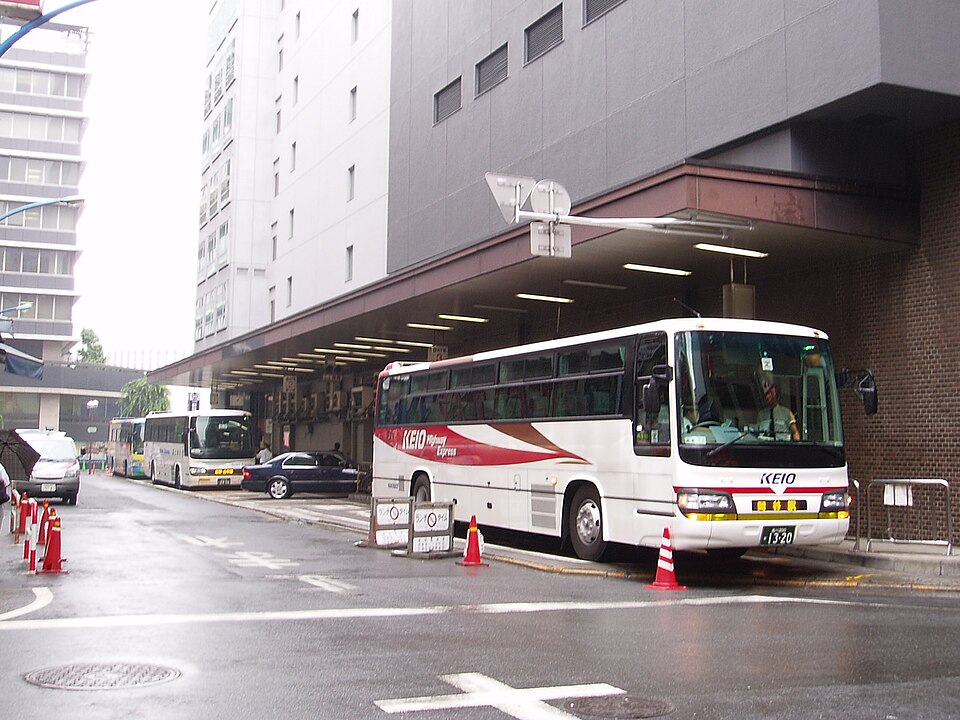
Busta Shinjuku
Busta Shinjuku is the Shinjuku Expressway Bus Terminal, beside Shinjuku Station. Buses leave from the 4th floor and arrive on the 3rd (opens in a new tab). The terminal has a waiting room with an English and Japanese information counter, a convenience store, coin lockers on the 4th floor and accessible toilets. Not every bus listed as "Shinjuku" uses it.
Bus Terminal Tokyo Yaesu
The underground terminal on Tokyo Station's Yaesu side has two areas since 20 March 2026: Underground A, under TOFROM YAESU TOWER, and Underground B, the original terminal. The terminal warns they are separate boarding areas (opens in a new tab), and after 11 p.m. the underground mall closes, so you cannot walk between them through it. Check which area your ticket names, then match the service name and number (opens in a new tab) on the boards, because several night buses to the same city leave within minutes of each other.
8 · Comfort
Overnight bus seat types
The seat decides your night more than the operator does. Names differ by company, but layouts fall into three groups.
| Seat layout | What you get | Tokyo to Kyoto example | Suits |
|---|---|---|---|
| 4 seats per row | Two pairs either side of one aisle, so a stranger may sit next to you. WILLER’s Relax and Prime seats add a canopy over your head, and Prime a partition. | ¥3,400 to ¥4,000 | Tight budgets, couples sharing a pair, shorter nights |
| 3 separate seats per row | Three single seats with two aisles, so nobody sits beside you. Deeper recline, and curtains on many. | ¥6,000 to ¥7,900 | Solo travelers who want to sleep |
| Premium shells and 2 per row | Shell seats with a hood, near-flat seats such as WILLER’s ReBorn (18 seats per bus), or West JR Bus’s two-across Dream Relier. | ¥10,400 to ¥11,500 (ReBorn); from ¥13,000 (Dream Relier 2 per row) | Travelers who want real rest but still less than the train plus a hotel |
4 seats per row
What you get: Two pairs either side of one aisle, so a stranger may sit next to you. WILLER’s Relax and Prime seats add a canopy over your head, and Prime a partition.
Tokyo to Kyoto example: ¥3,400 to ¥4,000
Suits: Tight budgets, couples sharing a pair, shorter nights
3 separate seats per row
What you get: Three single seats with two aisles, so nobody sits beside you. Deeper recline, and curtains on many.
Tokyo to Kyoto example: ¥6,000 to ¥7,900
Suits: Solo travelers who want to sleep
Premium shells and 2 per row
What you get: Shell seats with a hood, near-flat seats such as WILLER’s ReBorn (18 seats per bus), or West JR Bus’s two-across Dream Relier.
Tokyo to Kyoto example: ¥10,400 to ¥11,500 (ReBorn); from ¥13,000 (Dream Relier 2 per row)
Suits: Travelers who want real rest but still less than the train plus a hotel
Seat details: WILLER EXPRESS (opens in a new tab) and West JR Bus (opens in a new tab). Example fares are for 4 October 2026 and change daily.
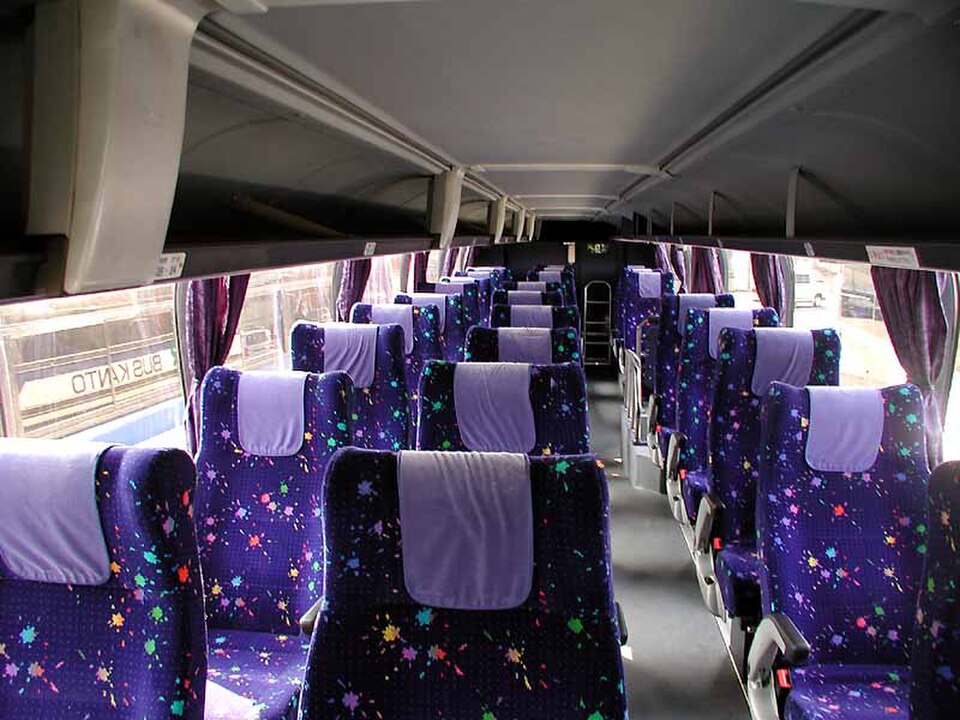
Will you actually sleep?
Maybe. A three-across seat with a curtain is a real step up from four across, and near-flat shells are better again, but it is still a seat on a moving coach. Side sleepers and light sleepers struggle most. If you have never slept on a night bus, try one on a night when the following day is light.
Small things that help
Pick a seat away from the door and the toilet if you can choose. Front-row seats can have less legroom (opens in a new tab). Ask before you recline, since the person behind you is trying to sleep too. Blankets are provided on many buses; check the "Blanket" icon on WILLER.
9 · The night itself
What an overnight bus is actually like
Quiet, dark and orderly, and not a bed. This is how a typical Tokyo to Kyoto night runs.
Evening
Boarding
Tokyo to Kyoto buses left central Tokyo stops between 9:00 p.m. and 11:15 p.m., and the crew checks your booking at the door. On WILLER and West JR Bus you load your own case into the hold, and WILLER's buses leave on the minute.
Soon after
Lights out
The driver announces it, then the cabin goes dark (opens in a new tab) except for footlights, which stay on by law. No phone calls, no loud talk, and no eating after this point.
Every few hours
Rest stops
Buses stop at expressway service areas. On WILLER night buses only the first stop is announced (opens in a new tab), and none after 1 a.m. If you get off, you must be back on time.
Through the night
On the expressway
You feel the road, hear the engine and the occasional snore, and the seat in front reclines toward you. The temperature is set for the whole bus, so bring a layer; you can usually turn the air vent above your seat.
Around dawn
Arrival
Usually between 5:00 a.m. and 8:00 a.m., often in the half-light. Arrival announcements may be in Japanese only (opens in a new tab), so follow your stop on a map, and tell the driver "trunk" if you get off before the last stop.
Toilets and rest stops
Two questions nearly everyone asks, and the honest answer to both is: it depends on the bus.
Do highway buses in Japan have toilets? Some do, some do not. On WILLER TRAVEL you can filter for buses "With a toilet", and WILLER says buses without one stop every 2 to 3 hours. Check the toilet icon for your exact bus.
- No toilet on board. On WILLER, the bus stops every 2 to 3 hours (opens in a new tab) at an expressway service or parking area. Other companies set their own breaks.
- Toilet on board. West JR Bus has toilets on all but some routes (opens in a new tab). On WILLER, a bus with a toilet still stops so the driver can rest, but passengers may not be allowed off.
- At night. On WILLER buses only the first stop is announced, and none after 1 a.m. If you step off, note the departure time and the bus.
- Smoking. Not on board, including e-cigarettes. Smoke at the rest stops.
10 · Luggage
Luggage on highway buses
Luggage rules belong to each operator and even each vehicle. There is no national allowance to rely on.
| Operator | Luggage hold | Size limit | Also note |
|---|---|---|---|
| WILLER EXPRESS | 2 pieces per person | One piece up to 155 cm, two up to 240 cm combined (height + width + length) | Skis, snowboards and golf bags accepted on single-deck buses. No bicycles, not even folding ones. |
| Other companies sold on WILLER TRAVEL | 1 piece per person | Set by each company; see the route notes | Sports equipment refused by a long list of companies. Some take folding bicycles. |
| JAM JAM EXPRESS | 1 piece per person | 10 kg; 120 or 160 cm total, depending on which WILLER page you read | Over the limit, you are refused boarding and charged the cancellation fee. No large instruments, bicycles or boards. |
| West JR Bus | 1 piece per person | 150 cm total | Large travel suitcases, skis, snowboards and bicycles are refused. Partner operators on shared routes set their own sizes. |
| General ceiling quoted by Japan Bus Online | Up to 30 kg | Checked under 2 m total, carry-on under 1 m and 10 kg | The outer limit under Japanese rules. Each company and vehicle can set lower limits. |
WILLER EXPRESS
Luggage hold: 2 pieces per person
Size limit: One piece up to 155 cm, two up to 240 cm combined (height + width + length)
Also note: Skis, snowboards and golf bags accepted on single-deck buses. No bicycles, not even folding ones.
Other companies sold on WILLER TRAVEL
Luggage hold: 1 piece per person
Size limit: Set by each company; see the route notes
Also note: Sports equipment refused by a long list of companies. Some take folding bicycles.
JAM JAM EXPRESS
Luggage hold: 1 piece per person
Size limit: 10 kg; 120 or 160 cm total, depending on which WILLER page you read
Also note: Over the limit, you are refused boarding and charged the cancellation fee. No large instruments, bicycles or boards.
West JR Bus
Luggage hold: 1 piece per person
Size limit: 150 cm total
Also note: Large travel suitcases, skis, snowboards and bicycles are refused. Partner operators on shared routes set their own sizes.
General ceiling quoted by Japan Bus Online
Luggage hold: Up to 30 kg
Size limit: Checked under 2 m total, carry-on under 1 m and 10 kg
Also note: The outer limit under Japanese rules. Each company and vehicle can set lower limits.
Sources: WILLER TRAVEL luggage policy (opens in a new tab), West JR Bus riding notes (opens in a new tab) and Japan Bus Online (opens in a new tab).
How the luggage hold works
Big cases go in the hold under the floor, and WILLER and West JR Bus both ask you to load your own. The operator provides space, not care: WILLER does not compensate for lost or damaged bags (opens in a new tab), nor does West JR Bus, and both ask you to keep valuables and fragile items out of the hold. Plan on not reaching your case until you get off. Carry-on bags go on the rack or under the seat: WILLER sets 10 kg in total, and some seats have heaters underneath.
Big items
WILLER EXPRESS takes skis, snowboards and golf bags on single-deck buses, but no bicycles, not even folding ones. West JR Bus refuses skis, snowboards and bicycles. JAM JAM EXPRESS limits checked luggage to 10 kg per person and refuses boarding over its limits; its size cap reads 120 cm on WILLER's luggage page but 160 cm on its own bus listings, so go by your booking. If you are carrying a big case on a strict operator, send it ahead by luggage forwarding and travel light.
The outer limit under Japanese rules, as Japan Bus Online quotes it (opens in a new tab), is a checked bag under 30 kg and 2 m in total dimensions. None of the operators we checked allow that much, and West JR Bus caps the hold at one piece of 1.5 m total (opens in a new tab).
Women, families, safety and accessibility
What operators actually offer, and where you need to ask before booking.
Women traveling alone
Several operators offer seating options, but each sets its own. WILLER's "Lady seat policy" seats (opens in a new tab) put a woman traveling alone next to another woman, though the seats across the aisle may be men. West JR Bus has a women-only seating area (opens in a new tab) on its Grand Dream and Seishun Eco Dream buses, and the booking agency kosokubus.com labels some services women-only buses (opens in a new tab), where the whole bus is for women. Japan Bus Online says (opens in a new tab) it seats men and women apart unless they travel together. Three-across seats avoid the question entirely.
Families and children
On WILLER, children from 6 pay half the adult fare (opens in a new tab) and must have their own seat and seat belt; an infant who cannot sit alone can ride free on a parent's lap, which WILLER itself warns is tiring on a long trip. Some companies, such as JAM JAM EXPRESS, have no child fare. A daytime bus works for many families; a night bus with small children rarely does. None of the operators we checked publish a separate stroller rule, so treat a stroller as hold luggage and ask before you book.
Safety and accessibility
Highway bus routes need approval from the transport ministry (opens in a new tab), and seat belts are required in every seat (opens in a new tab). Large operators publish their measures: WILLER monitors driver drowsiness (opens in a new tab) in real time. Many coaches require passengers to step up into the cabin, and none of the English booking sites we checked set out a wheelchair procedure, so travelers with mobility needs should confirm boarding arrangements with the operator before booking. Busta Shinjuku and Bus Terminal Tokyo Yaesu have accessible toilets. See accessible travel in Japan.
11 · The morning
Planning a very early arrival
Night buses arrive before hotels, cafes and most sights open. A plan for the first three hours makes or breaks the saving.
5:00 a.m. to 7:50 a.m.
Tokyo to Kyoto night buses, arriving at Kyoto, mostly the Hachijo (south) side of Kyoto Station
6:20 a.m. to 7:50 a.m.
Tokyo to Kanazawa night buses, arriving at Kanazawa Station West Exit
6:20 a.m. to 7:30 a.m.
Osaka to Hiroshima night buses, arriving at Hiroshima Station and Hiroshima Bus Center
Arrival times from WILLER TRAVEL listings (opens in a new tab) for travel on 4 October 2026; yours will be on your ticket.
Make a plan for the morning
- Bags. Ask your hotel whether it will hold luggage before check-in, or use station coin lockers, which fill early on busy days.
- Breakfast. A convenience store is the reliable 6 a.m. option; cafes often open later.
- Onward travel. Check the first train or bus to your hotel before you leave; early services can be sparse.
- First stop. Pick something outdoors or early-opening, such as a park, a shrine or a morning market, and save the museum for later.
When early check-in matters
If you know you will need a shower and a bed at dawn, the only sure way is to book the room from the night before, and then the night bus has saved you nothing. In that case the Shinkansen the next morning is usually the better buy. On a short trip, a lost morning matters more than a saved fare.
Delays, weather and winter buses
Buses use the same roads as everyone else. That is the biggest practical difference from the train.
When buses run late
Traffic jams, accidents, typhoons and snow can all delay a bus. WILLER refunds nothing for a late arrival (opens in a new tab) and pays nothing toward a missed connection, a taxi or a hotel, and West JR Bus says the same (opens in a new tab). Compare the Shinkansen, where long delays bring a set refund. kosokubus.com suggests at least 2 hours (opens in a new tab) between a bus and a connecting bus; before a flight, leave far more, or take the train.
If you miss the bus
WILLER asks you to be at the stop 10 minutes early (opens in a new tab), longer at stops with a separate meeting point such as Nagoya Station West Exit. The bus leaves on time and will not wait (opens in a new tab), even if you phone ahead, and a train delay on your way to the stop is not grounds for a refund. If you know you cannot make it, cancel before departure; after departure, WILLER charges the full fare.
Suspensions and weather
For typhoons and snow, WILLER decides by 3 hours before departure (opens in a new tab) where it can, emails passengers and refunds suspended buses without a cancellation fee. If you cancel yourself because the forecast looks bad but the bus still runs, the normal cancellation fee applies, so wait for the operator's decision if you can.
Winter
Snow is the main winter risk, on mountain routes such as those to Takayama and Shirakawa-go and across the north. Expect slower journeys and the odd suspension, keep the day after a winter bus flexible, and check the Shirakawa-go and Takayama guides for seasonal access. Driving yourself in snow is a different question, covered in winter driving.
Common highway bus mistakes
Most of them happen before the bus leaves.
Going to "Tokyo Station" when the ticket says somewhere else
Instead: Otemachi, Yaesu South Gate and Bus Terminal Tokyo Yaesu are different stops, and the Yaesu terminal itself has two separate areas, A and B. Open the map in your booking.
Booking the cheapest seat for a long night
Instead: Check the layout. Four across with a stranger beside you is a different night from a curtained single seat.
Assuming there is a toilet on board
Instead: Many buses have one, some do not. Check the icon when you book.
Packing for train luggage rules
Instead: West JR Bus refuses large suitcases, and some double-deckers have no hold. Read your bus’s rules or send the case ahead.
Leaving medicine or your passport in the hold
Instead: Do not count on reaching the hold during the night. Keep essentials at your seat.
Arriving at the departure time
Instead: Operators and terminals say buses leave on time, with or without you. Be there 10 minutes early, more at busy terminals.
Planning a tight connection after the bus
Instead: Traffic and weather delay buses. Leave at least 2 hours before another bus, and much more before a flight.
Counting the night as a free hotel
Instead: At 5:30 a.m. you have bags, no room and a long wait. Plan the morning before you count the saving.
Cancelling early for "uncertain" weather
Instead: If the bus is scheduled to run, the normal cancellation fee applies. If the operator suspends it, you get a full refund.
Buying a bus pass from an old guide
Instead: WILLER stopped selling its nationwide Japan Bus Pass after 30 September 2025. Many guides still recommend it.
Highway bus checklist
Screenshot this before you book.
Before you book
- Exact boarding and arrival stop names.
- Seat layout, toilet and women-only seat icons.
- Luggage limit for this exact bus.
- Cancellation deadline and fees.
- Arrival time against your hotel check-in.
Before you board
- Booking saved offline.
- Stop found on the map, ideally in daylight.
- At the stop 10 minutes early.
- Passport, medicine and power bank in your day bag.
- Earplugs, eye mask and a warm layer.
Arrival morning
- Where your bags go until check-in.
- Where to eat breakfast early.
- First train or bus to your hotel.
- An easy first stop for a tired morning.
- No tight connections planned.
Highway and night buses in Japan: questions
References
View references
WILLER TRAVEL
- How far ahead you can book (opens in a new tab)
- Women traveling alone: the Lady seat policy (opens in a new tab)
- Restrooms on buses (opens in a new tab)
- Rest-stop announcements (opens in a new tab)
- Lights on night buses (opens in a new tab)
- When to arrive at the boarding point (opens in a new tab)
- If you miss the bus (opens in a new tab)
- Compensation when a bus arrives late (opens in a new tab)
- When suspensions are decided (opens in a new tab)
- Child and infant fares (opens in a new tab)
- Bus luggage policy (opens in a new tab)
- Cancellation policy and arrangement fee (opens in a new tab)
- WILLER EXPRESS seat types (opens in a new tab)
- Japan Bus Pass (opens in a new tab)
- Bus search: Tokyo to Kyoto (opens in a new tab)
- Bus search: Tokyo to Osaka (opens in a new tab)
- Bus search: Osaka to Hiroshima (opens in a new tab)
- Bus search: Tokyo to Kanazawa (opens in a new tab)
- Safety and security initiatives (opens in a new tab)