Todai-ji Temple
ExploreJapanDaily Editorial Team · Last updated: June 29, 2026 · Facts verified: September 10, 2026

- Area
- Nara Park Area
- Best For
- History, UNESCO heritage, Great Buddha, Architecture
Visiting Todai-ji Temple
Todai-ji Temple is one of Japan's most important religious and historical landmarks, a place where monumental architecture, Buddhist tradition, and more than a thousand years of history come together in the heart of Nara. Located within the expansive grounds of Nara Park, the temple is best known for housing the Great Buddha, one of the largest bronze Buddha statues in the world, and for its immense wooden main hall that ranks among the most impressive architectural achievements in Japanese history. For many travelers visiting Nara, Todai-ji becomes the defining experience of the city, offering a powerful introduction to Japan's spiritual heritage and cultural legacy.
Founded in the 8th century during the Nara period, Todai-ji was established under the orders of Emperor Shomu at a time when Buddhism was becoming increasingly important to the Japanese state. The temple was conceived as more than a local place of worship. It served as the head temple of a nationwide network of provincial temples and symbolized the government's efforts to unite the country through religion, culture, and centralized authority. The scale of the project was unprecedented, requiring vast resources and the participation of people from across Japan. Even today, the ambition behind its construction remains evident in every aspect of the complex.
Approaching Todai-ji Temple is an experience that gradually builds anticipation. Visitors typically enter through spacious grounds shared with Nara Park, where deer wander freely among ancient trees and open lawns. The path leads toward the Nandaimon, or Great South Gate, a massive wooden structure guarded by towering statues of fierce Buddhist protectors. Standing beneath this gate offers the first sense of the immense scale that defines Todai-ji. The weathered timber, powerful sculptures, and wide approach create an atmosphere that feels both welcoming and deeply significant.

Beyond the gate stands the Daibutsuden, or Great Buddha Hall, the temple's most iconic structure. Although the current building is smaller than the original version constructed centuries ago, it remains one of the largest wooden buildings in the world. Its vast roofline dominates the surrounding landscape, rising above the trees and visible from many points throughout the park. Photographs can convey its size, but standing directly in front of the hall is a different experience entirely. The proportions are difficult to fully appreciate until viewed in person, where the scale of the architecture creates an immediate sense of awe.
Inside the hall sits the Great Buddha, known as Daibutsu, a colossal bronze statue representing Vairocana Buddha. Towering above visitors, the statue serves as both a religious icon and a masterpiece of ancient engineering and artistic craftsmanship. The atmosphere inside the hall is markedly different from the open spaces outside. Natural light filters through the wooden interior, illuminating the statue's features while creating a sense of quiet reverence. Visitors often lower their voices instinctively as they take in the immense figure and the centuries of devotion associated with it. Regardless of personal religious beliefs, the experience tends to leave a lasting impression.
Todai-ji's significance extends beyond its architecture and religious importance. The temple has endured fires, wars, political upheaval, and periods of reconstruction throughout its long history. Several of its buildings have been rebuilt multiple times, yet the spirit and purpose of the complex have remained remarkably consistent. This continuity gives the site a unique sense of resilience. Walking through the grounds, visitors encounter not just individual structures but an ongoing story of preservation, renewal, and cultural continuity stretching across more than twelve centuries.

The surrounding environment plays a major role in shaping the atmosphere of the temple. Ancient trees frame pathways and courtyards, while deer move freely between visitors and temple buildings. The nearby forests and hills create a natural backdrop that enhances the feeling of stepping into a landscape where history and nature remain closely connected. Unlike some historic sites that feel isolated from their surroundings, Todai-ji exists as part of a broader cultural landscape that includes Nara Park, Kasuga Taisha Shrine, Kofuku-ji Temple, and other significant landmarks. Together, these sites form one of Japan's most important historical districts.
Seasonal changes bring different moods to Todai-ji throughout the year. Spring introduces cherry blossoms around sections of Nara Park, creating beautiful contrasts between delicate flowers and monumental wooden architecture. Summer deepens the greenery surrounding the temple grounds and highlights the rich textures of the ancient timber structures. Autumn transforms the area with vibrant foliage that frames pathways and temple buildings in shades of red, orange, and gold. Winter offers perhaps the most contemplative atmosphere, when cooler temperatures and fewer visitors allow the scale and serenity of the complex to stand out even more clearly.
For international travelers, Todai-ji Temple provides a rare opportunity to experience multiple dimensions of Japanese culture in one location. It is a masterpiece of architecture, a center of Buddhist worship, a symbol of national history, and an enduring part of Nara's identity. At the same time, it remains approachable and accessible, welcoming visitors from around the world while continuing to serve its religious function. The combination of historical significance and living tradition creates a depth that goes far beyond sightseeing alone.

What makes Todai-ji Temple truly memorable is its ability to inspire both intellectual appreciation and emotional response. The immense scale of the Great Buddha Hall, the quiet power of the Daibutsu, the presence of centuries-old wooden structures, and the peaceful setting within Nara Park combine to create an experience that feels uniquely Japanese while remaining universally meaningful. Whether viewed through the lens of history, architecture, religion, or simple curiosity, Todai-ji stands as one of Japan's most remarkable cultural landmarks and one of the defining experiences of any visit to Nara.
Things to Do at Todai-ji Temple
How to Get to Todai-ji Temple
Todai-ji Temple is located within Nara Park and is easily accessible from both Kintetsu Nara Station and JR Nara Station.
- •Nearest station: Todaiji-Daibutsuden bus stop (bus from Kintetsu/JR Nara Station); 20-min walk from Kintetsu Nara Station
- •IC cards (Suica, Pasmo, or ICOCA) are accepted on trains, subways, and buses throughout Japan. Tap in and out at every gate.
- •Avoid traveling during rush hour on weekdays: 7am to 9am and 5pm to 8pm. Trains are significantly more crowded.
- •Google Maps provides accurate real-time transit directions in Nara. Download offline maps before you arrive.
Map
Best Time to Visit Todai-ji Temple
Best time to visit Todai-ji Temple: Early morning (8am–9am) before tour groups; weekdays for shorter queues. Weekday mornings are generally quieter than weekends and public holidays.
- •Best time to visit: Early morning (8am–9am) before tour groups; weekdays for shorter queues
- •Arriving on a weekday morning avoids the largest crowds. Weekends and public holidays are significantly busier.
- •Spring (late March to early May) and autumn (October to November) are the most popular seasons for visiting Nara.
- •Golden Week (late April to early May) is the busiest week of the year in Japan. Book accommodation and tickets well in advance.
One of Japan's oldest continuously performed Buddhist rituals, held at Nigatsu-do Hall since 752 CE, draws large crowds for its dramatic torch-lit evening processions.
Maple and ginkgo trees around the temple grounds and Nigatsu-do Hall create vivid contrasts with the dark wooden architecture.
Entry Fee & Hours
| Category | Price (JPY) | Approx. (USD) |
|---|---|---|
| Great Buddha Hall (incl. Hokke-do & Kaidan-do) | ¥800 | ~$5.50 |
| Joint Pass: Great Buddha Hall + Todai-ji Museum | ¥1,200 | ~$8 |
The Great Buddha Hall admission fee also covers Hokke-do and Kaidan-do; a joint pass adds the Todai-ji Museum at a discounted combined rate.
- •The Great Buddha Hall is largely barrier-free, with a paved path from the parking area and a wheelchair-accessible slope on the west side of the main entrance; free wheelchair rental is available at the security office near the central gate with no reservation needed.
- •The path between the security office and the Great Buddha Hall includes some uneven and gently sloped sections.
- •Nigatsu-do Hall, a short walk uphill from the main complex, involves stone stairs that are not wheelchair accessible.
Nearby Attractions
Combine with Todai-ji Temple on the same day

Nara Park
Nigatsu-do Hall
Nearby Attraction
Kasuga Taisha Shrine
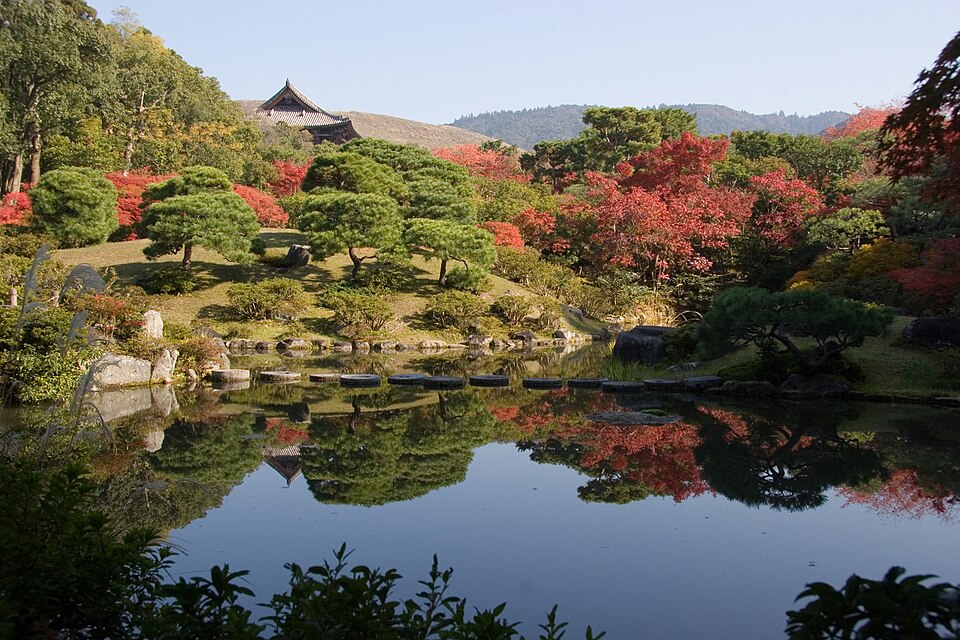
Isuien Garden

Yoshikien Garden
- •Nara Park: A 502-hectare park surrounding Nara's great temples where over 1,200 wild sika deer roam freely among visitors — Japan's most extraordinary wildlife encounter in an urban setting.
- •Nigatsu-do Hall: Part of the Todai-ji complex, Nigatsu-do is known for its large wooden terrace and panoramic views over Nara. It is one of the city's best sunset viewpoints.
- •Kasuga Taisha Shrine: Nara's most sacred Shinto shrine, founded in 768 CE, where 3,000 stone and bronze lanterns line an ancient cedar forest approach to the vermilion inner sanctuary.
- •Isuien Garden: A masterful Meiji-era strolling garden that frames Todai-ji's rooftops and the Wakakusa hills as living borrowed scenery across two interconnected ponds.
- •Yoshikien Garden: A free, three-part traditional Japanese garden directly beside Isuien Garden, offering a quieter and more compact alternative or add-on to Nara's better-known strolling garden.
Suggested Itinerary
Pair Todai-ji Temple with these nearby stops for a full day in Nara Park Area.
Frequently Asked Questions
Planning Your Nara Trip?
See the full Nara destination guide or browse Japan itineraries that include this city.
See all Temples & Shrines across Japan →Explore all attractions in Nara or browse nearby destinations.
Back to Nara Guide →