Yoshikien Garden
By Andrew Liyan · Last updated: September 10, 2026 · Facts verified: September 10, 2026

- Area
- Nara Park Area
- Best For
- Gardens, Photography, Tranquil atmosphere, Budget travelers
Visiting Yoshikien Garden
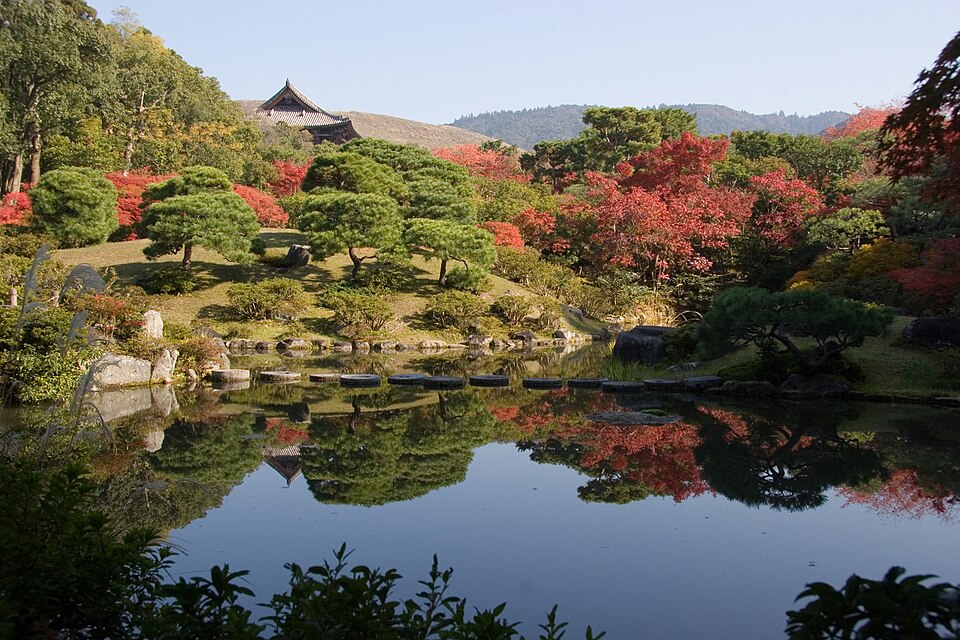
Yoshikien Garden is a compact traditional Japanese garden in central Nara, standing directly beside its far more famous neighbor, Isuien Garden. Unlike Isuien, Yoshikien has no on-site museum, no combined ticket, and no admission fee at all, making it one of the few genuinely free garden experiences inside Nara's historic core. Within a single, walkable property of roughly 8,900 square meters, the garden brings together three distinct traditional styles: a pond garden centered on Horai Pond, a moss garden built around a detached tea house, and a tea ceremony and camellia garden.
The site's own history runs through several distinct eras. It was formerly occupied by Manishu-in, a branch temple of Kofuku-ji, before passing into private ownership during the Meiji period. The residence and garden layout seen today date to 1919, during the Taisho era, and the property was opened to public visitors toward the end of the Showa era. In 2011, the garden residence was formally designated a Nara Prefectural Cultural Property.
That 2011 designation is worth stating precisely, because it is easy to conflate with the much higher-profile status held by several of Yoshikien's neighbors. Todai-ji, Kasuga Taisha, and Kofuku-ji are all component properties of the UNESCO World Heritage inscription "Historic Monuments of Ancient Nara." Yoshikien is not part of that inscription and holds no UNESCO status of any kind. A Nara Prefectural Cultural Property is a real, legitimate designation, but it sits at a different, narrower tier than a national scenic-beauty listing or a UNESCO World Heritage component, and the garden's own marketing should never be read as implying otherwise.
The garden takes its name from the adjacent Yoshiki River, itself referenced in the Man'yoshu, Japan's oldest surviving anthology of poetry, which lends the site a quiet literary resonance beyond its physical scenery. Walking the grounds today, visitors move between the three garden rooms in a short, self-contained circuit: still water and stone lanterns in the pond garden, filtered light and cushioned green in the moss garden, and a more intimate, planted setting built around tea ceremony in the third section.
Visitor accounts consistently describe Yoshikien as the quietest of Nara's central gardens, noticeably less crowded than Isuien and far less busy than the temple circuit around Todai-ji and Kasuga Taisha. Some visitors also describe the planting as slightly wilder and less manicured than Isuien's more formal design, a difference that some find charming and others find less polished; it is a genuine matter of taste rather than a flaw.
Admission deserves a clear, dated explanation, since it has changed before and outdated information still circulates. Nara Prefecture's own site states plainly that admission is free, and explicitly attributes this to a policy change effective April 2020. That is corroborated independently by several other travel-information sites. Some older or third-party sources, however, still describe an earlier policy under which the garden was free only for foreign passport-holders and paid for everyone else. That older claim should not be relied on: the property manager's own current statement, dated and corroborated, is that admission is simply free for all visitors.
The most common practical question is whether Yoshikien is worth visiting given its immediate adjacency to Isuien Garden, and whether the two should be combined. Since Yoshikien's admission is free and the two gardens sit roughly 100 meters apart, adding Yoshikien to an Isuien visit costs time only, not money. Genuine visitor sentiment is split: some describe the two gardens as complementary and easily worth combining, while others find that Yoshikien, being smaller and less manicured, does not add fundamentally new scenery if time is limited. If only one garden can be visited, Isuien holds the stronger, more widely recognized reputation, thanks to its national Place of Scenic Beauty designation, its Neiraku Museum, and its shakkei views toward Todai-ji. Yoshikien is the better pick specifically as a free, quiet, quick add-on, or for a repeat Nara visitor who has already seen Isuien and wants a related but different garden experience.
Combining the two is straightforward. There is no separate detour required, and a relaxed pace through both gardens typically takes about 2 to 2.5 hours in total, compared with under an hour for Yoshikien alone. One point of visitor confusion worth avoiding directly: Yoshikien is not included in Isuien's admission ticket. The two properties are separately operated and separately ticketed, even though they sit side by side.
Beyond the free general admission, Yoshikien's detached tea house can be rented separately for tea ceremony use, in morning, afternoon, and full-day slots, at rates reported in the range of roughly ¥12,560 to ¥25,130 depending on the slot and whether indoor or outdoor service is used. This is a niche booking-required option rather than something most general visitors will use, but it is a distinctive facility worth knowing about.
Autumn is the most frequently cited highlight of a Yoshikien visit, when maple trees color the grounds near the tea house, while spring brings a lighter, softer palette of fresh greenery and blossom. The garden closes for a short annual maintenance window in late February each year; sources disagree on the exact date range, so visitors planning a late-February trip should confirm current closure dates directly before visiting.
Things to Do at Yoshikien Garden
Stroll the Pond Garden Around Horai Pond
The pond garden, centered on Horai Pond, is Yoshikien's largest of the three garden rooms, with stone lanterns and plantings arranged around still water in a classic strolling-garden layout.
Wander the Moss Garden and Its Detached Tea House
A cushioned carpet of moss surrounds a detached tea house in the garden's second section, creating a shaded, quieter atmosphere than the open pond garden nearby.
Visit the Tea Ceremony and Camellia Garden
The third garden room is built specifically around tea ceremony use and camellia plantings, offering a more intimate, enclosed setting distinct from the other two.
Learn the Garden's 1919 Taisho-Era History
The residence and garden layout seen today were built in 1919, on a site formerly occupied by Manishu-in, a Kofuku-ji branch temple, before the property passed into private hands during the Meiji era.
Understand the Nara Prefectural Cultural Property Designation
The garden residence was designated a Nara Prefectural Cultural Property in 2011, a genuine but narrower designation than the UNESCO World Heritage status held by nearby Todai-ji, Kasuga Taisha, and Kofuku-ji; Yoshikien itself is not a UNESCO component.
Enjoy Free Admission
Admission has been free for all visitors since an April 2020 policy change stated on Nara Prefecture's own site; disregard older sources that describe a "free for foreign passport-holders only" policy, as that information predates the change.
See Autumn Maple Foliage Near the Tea House
Autumn is the garden's most frequently cited highlight, with maple trees coloring the grounds near the detached tea house from roughly mid-November.
Enjoy a Quieter Alternative to Nara's Busier Gardens
Yoshikien is consistently described as the quietest of Nara's central gardens, even quieter than adjacent Isuien Garden and far less busy than the nearby temple circuit.
Consider Renting the Tea House for a Ceremony
The detached tea house can be booked separately for tea ceremony use in morning, afternoon, or full-day slots, at rates reported around ¥12,560 to ¥25,130 depending on the slot and service type; booking in advance is required.
Decide: Yoshikien vs Isuien, or Visit Both
Since Yoshikien is free and sits roughly 100 meters from Isuien Garden, most visitors with 30-45 spare minutes find it worth adding on; if choosing only one garden, Isuien's national designation and Neiraku Museum make it the stronger single stop.
How to Get to Yoshikien Garden
Yoshikien Garden sits in the heart of Nara's historic district, directly beside Isuien Garden and within the same general area as Todai-ji and Kofuku-ji.
From Kintetsu Nara Station on Foot
Yoshikien Garden is approximately a 10 to 15-minute walk from Kintetsu Nara Station, passing through parts of central Nara and Nara Park.
From JR Nara Station
JR Nara Station is farther, reported at roughly 20 to 30 minutes on foot depending on the route; the Nara Kotsu city loop bus is a faster alternative from this station.
From Isuien Garden
Yoshikien is directly adjacent to Isuien Garden, roughly 100 meters away, making it an easy walk-on addition for any visitor already at or leaving Isuien.
By Loop Bus
The Nara Kotsu City Loop Bus stops at Todaiji Daibutsuden-Kasugataisha-mae, the same stop used for Isuien Garden, from which Yoshikien is a short walk.
Best Time to Arrive
Morning offers the quietest experience and the best light for photography, before crowds build at the neighboring temples and at Isuien Garden.
Best Time to Visit Yoshikien Garden
Morning for the quietest visit; autumn (November) for maple foliage.
Fresh greenery and lighter blossom color soften the garden's three sections; a secondary highlight to autumn.
Maple trees near the detached tea house turn red and gold, repeatedly cited as the garden's most photogenic season.
Entry Fee & Hours
- •Admission is free per the property manager's own site (Nara Prefecture), effective an April 2020 policy change. Some older or third-party sources still describe an outdated "free for foreign passport-holders only" policy; this should not be relied on.
- •The garden closes annually in late February; sources disagree on the exact date range (February 24-28 per one set of sources, February 15-28 per another), so confirm current closure dates before a late-February visit.
- •Accessibility for wheelchairs and strollers has not been independently confirmed; the traditional garden layout likely includes stepping stones and uneven paths similar to the adjacent Isuien Garden.
Nearby Attractions
Combine with Yoshikien Garden on the same day


Frequently Asked Questions
Planning Your Nara Trip?
See the full Nara destination guide or browse Japan itineraries that include this city.
See all Nature & Scenic Spots across Japan →