Isuien Garden
ExploreJapanDaily Editorial Team · Last updated: June 29, 2026 · Facts verified: September 10, 2026
- Area
- Nara Park Area
- Best For
- Gardens, Photography, Tranquil atmosphere, Traditional culture
Visiting Isuien Garden
Isuien Garden is one of Nara's most refined cultural treasures, a traditional Japanese landscape garden where architecture, nature, and historical scenery come together with remarkable harmony. Located near some of Nara's most famous landmarks, including Todai-ji Temple and Nara Park, the garden offers a quieter and more intimate experience than many of the city's larger attractions. While thousands of visitors gather each day around Nara's temples and freely roaming deer, Isuien Garden provides a space where the pace slows noticeably, inviting visitors to appreciate subtle details, carefully framed views, and centuries of Japanese garden design.
The name Isuien can be translated as "Garden Founded on Water," a fitting description for a landscape shaped by ponds, streams, and carefully managed water features. The garden was created during different periods of Japanese history, with sections dating back to the 17th and 19th centuries. Rather than being designed all at once, Isuien evolved gradually under the stewardship of wealthy merchants and local patrons who sought to create a place of beauty and contemplation. The result is a garden that feels layered and mature, reflecting generations of artistic vision while remaining remarkably cohesive in appearance.
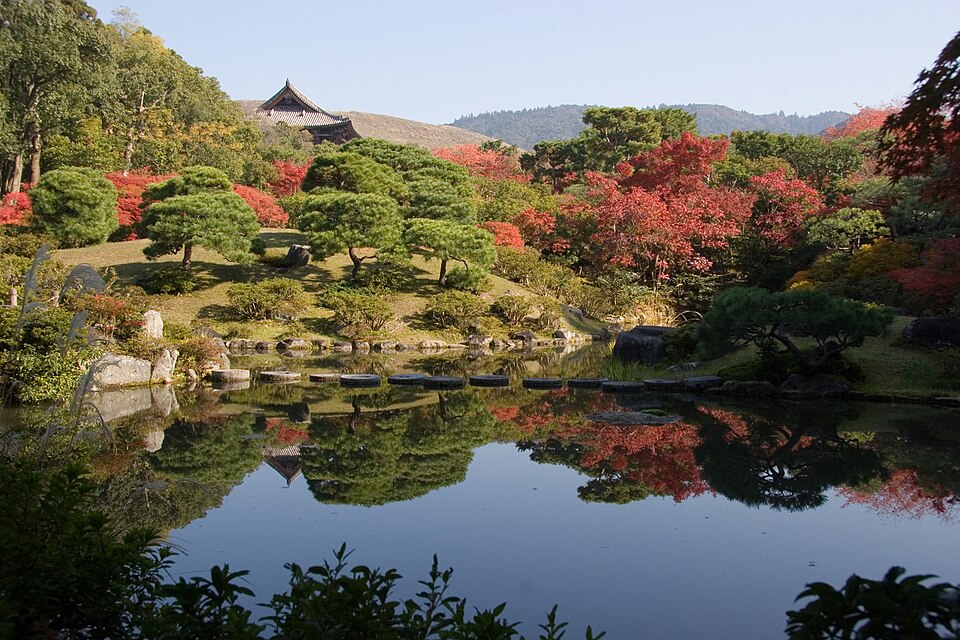
One of the defining characteristics of Isuien Garden is its masterful use of borrowed scenery, a traditional Japanese landscaping technique known as shakkei. Instead of relying solely on features contained within the garden itself, the design incorporates distant natural and architectural elements into the overall composition. From certain viewpoints, the roof of Todai-ji Temple's Nandaimon Gate, the surrounding hills, and the forests beyond appear seamlessly integrated into the landscape. Visitors often find themselves looking beyond the immediate garden without realizing where the designed scenery ends and the surrounding environment begins. This blending of foreground and background creates a sense of depth that makes the garden feel much larger than its actual size.

Walking through Isuien Garden reveals a series of carefully composed scenes that change gradually with every turn of the path. Stone lanterns emerge beside ponds, wooden bridges cross still water, and clusters of trees frame distant views with remarkable precision. The garden does not overwhelm visitors with dramatic displays. Instead, its beauty emerges through proportion, balance, and subtle transitions between open spaces and more intimate corners. Each viewpoint feels intentionally crafted, encouraging visitors to pause and observe rather than rush from one landmark to another.
Water plays a central role in shaping the atmosphere of the garden. Ponds reflect trees, clouds, and seasonal colors while small streams add movement and sound to the landscape. On calm days, the reflections can feel almost painterly, creating mirror-like images of surrounding vegetation and architecture. The gentle sound of flowing water often becomes one of the most memorable aspects of a visit, especially when combined with birdsong and the rustling of leaves. Even though the garden sits close to some of Nara's busiest tourist areas, it feels surprisingly removed from the noise of the surrounding city.
Seasonal changes transform Isuien Garden throughout the year and are central to its appeal. Spring introduces fresh greenery and delicate blossoms that soften the landscape with subtle color. Summer creates a lush atmosphere, with dense foliage reflected across the ponds and shaded pathways providing relief from warmer temperatures. Autumn is particularly admired, as maple trees and other seasonal foliage turn brilliant shades of red, orange, and gold, creating some of the most picturesque scenes in Nara. Winter reveals a quieter beauty altogether, when bare branches, soft light, and occasional frost emphasize the structure and balance of the garden's design.
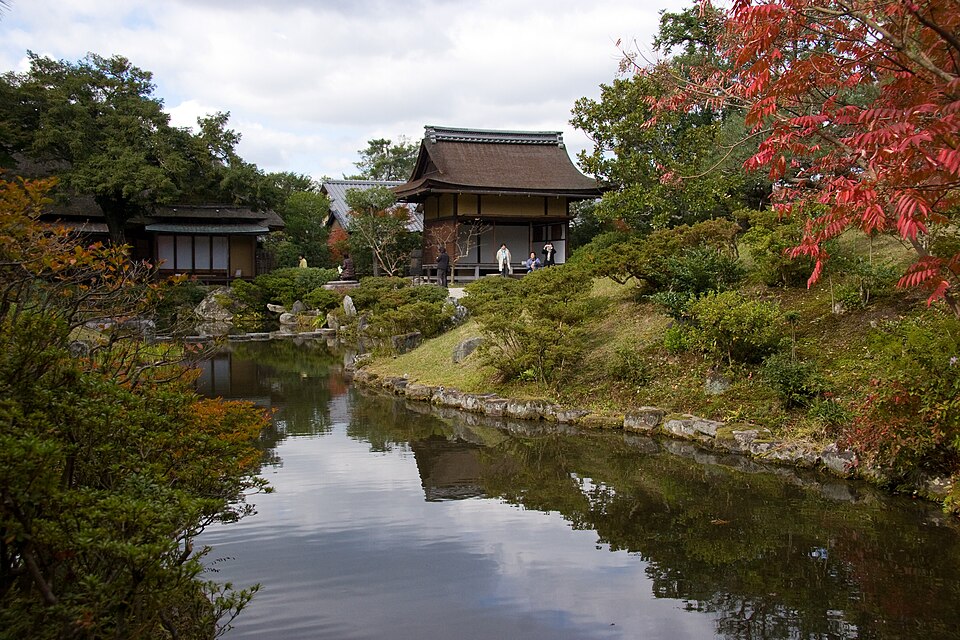
The garden's teahouses and traditional architectural elements add another layer to the experience. Buildings positioned throughout the grounds reflect the deep connection between Japanese garden design and tea culture, where landscapes were often intended to support reflection, conversation, and appreciation of nature. These structures do not dominate the scenery but instead blend naturally into their surroundings, reinforcing the sense of harmony that defines the entire garden. The relationship between architecture and landscape feels particularly strong here, with every element positioned to complement rather than compete with the natural environment.
The surrounding area also contributes to the appeal of Isuien Garden. Nara is often associated with its ancient temples, UNESCO World Heritage Sites, and sacred deer, yet gardens like Isuien reveal another side of the city's cultural heritage. Located near some of Japan's oldest and most important religious landmarks, the garden exists within a landscape shaped by centuries of artistic, spiritual, and historical development. Visiting Isuien helps place Nara's larger attractions into context, showing how aesthetics, nature, and cultural values have long been interconnected in Japanese society.
For international travelers, Isuien Garden often becomes one of the most memorable experiences in Nara precisely because of its understated character. It does not rely on grand monuments, large crowds, or dramatic architecture to leave an impression. Instead, it invites visitors to engage with the landscape more slowly, noticing details that might otherwise go unnoticed. The changing reflections on a pond, the framing of a distant temple roof, or the careful placement of a stone lantern all contribute to a sense of quiet sophistication that rewards attentive observation.
What makes Isuien Garden special is its ability to create a feeling of harmony between human design and the natural world. Every pathway, bridge, tree, and water feature serves a purpose within a carefully composed landscape that continues to evolve with the seasons. In a city celebrated for its temples and historical significance, Isuien Garden offers a different but equally meaningful experience, one centered on beauty, balance, and the enduring Japanese appreciation for nature as both art and inspiration.
Things to Do at Isuien Garden
How to Get to Isuien Garden
Isuien Garden is located in the heart of Nara's historic district, close to Todai-ji Temple, Nara Park, and Yoshikien Garden. It is easily accessible by train, bus, taxi, or on foot.
- •Nearest station: Kintetsu Nara Station (15-min walk) or JR Nara Station (20-min walk)
- •IC cards (Suica, Pasmo, or ICOCA) are accepted on trains, subways, and buses throughout Japan. Tap in and out at every gate.
- •Avoid traveling during rush hour on weekdays: 7am to 9am and 5pm to 8pm. Trains are significantly more crowded.
- •Google Maps provides accurate real-time transit directions in Nara. Download offline maps before you arrive.
Map
Best Time to Visit Isuien Garden
Best time to visit Isuien Garden: Spring (March–May) for cherry blossoms; autumn (October–November) for maple foliage. Weekday mornings are generally quieter than weekends and public holidays.
- •Best time to visit: Spring (March–May) for cherry blossoms; autumn (October–November) for maple foliage
- •Arriving on a weekday morning avoids the largest crowds. Weekends and public holidays are significantly busier.
- •Spring (late March to early May) and autumn (October to November) are the most popular seasons for visiting Nara.
- •Golden Week (late April to early May) is the busiest week of the year in Japan. Book accommodation and tickets well in advance.
Fresh greenery and cherry blossoms soften the garden's ponds and borrowed-scenery views toward Todai-ji.
Maple trees throughout the rear garden turn brilliant red and gold, reflected in the ponds beside the tea houses.
Entry Fee & Hours
| Category | Price (JPY) | Approx. (USD) |
|---|---|---|
| Adult | ¥1,200 | ~$8 |
| University / High School Student | ¥500 | ~$3.50 |
| Middle / Elementary School Student | ¥300 | ~$2 |
| Visitor with Disability (plus one companion free) | ¥500 | ~$3.50 |
One combined ticket covers both garden sections and the adjacent Neiraku Museum.
- •Isuien Garden is not wheelchair accessible; the paths include round stepping stones that are difficult to navigate with mobility aids, so visitors using wheelchairs or other mobility devices are advised to inquire at the entrance before visiting.
- •A discounted ¥500 admission is available for visitors with disabilities, with one companion admitted free.
Nearby Attractions
Combine with Isuien Garden on the same day

Todai-ji Temple

Nara Park

Yoshikien Garden

Kasuga Taisha Shrine
Nigatsu-do Hall
Nearby Attraction- •Todai-ji Temple: Japan's largest wooden structure, housing the awe-inspiring 15-meter bronze Daibutsu (Great Buddha) cast in 752 CE — the spiritual heart of Nara and a UNESCO World Heritage Site.
- •Nara Park: A 502-hectare park surrounding Nara's great temples where over 1,200 wild sika deer roam freely among visitors — Japan's most extraordinary wildlife encounter in an urban setting.
- •Yoshikien Garden: A free, three-part traditional Japanese garden directly beside Isuien Garden, offering a quieter and more compact alternative or add-on to Nara's better-known strolling garden.
- •Kasuga Taisha Shrine: Nara's most sacred Shinto shrine, founded in 768 CE, where 3,000 stone and bronze lanterns line an ancient cedar forest approach to the vermilion inner sanctuary.
- •Nigatsu-do Hall: Part of the Todai-ji Temple complex, Nigatsu-do offers one of the best panoramic views in Nara and is especially beautiful at sunrise, sunset, and during seasonal illuminations.
Suggested Itinerary
Pair Isuien Garden with these nearby stops for a full day in Nara Park Area.
Frequently Asked Questions
Planning Your Nara Trip?
See the full Nara destination guide or browse Japan itineraries that include this city.
See all Nature & Scenic Spots across Japan →Explore all attractions in Nara or browse nearby destinations.
Back to Nara Guide →