Sannenzaka and Ninenzaka
ExploreJapanDaily Editorial Team · Last updated: September 28, 2026
Sannenzaka and Ninenzaka are two stone-stepped lanes in Higashiyama, the old approach to Kiyomizu-dera, lined with wooden townhouses that now hold shops and tea rooms. They are public streets, free to walk, and part of a nationally protected historic district. Walk them downhill after Kiyomizu-dera, early in the morning if you want them quiet; the steps make them hard going with a stroller or wheelchair.

- Area
- Higashiyama
- Best For
- Historic Streets, Photography, Shopping, Early Morning Walks
Visiting Sannenzaka and Ninenzaka
Sannenzaka and Ninenzaka grew up as pilgrim paths to Kiyomizu-dera, Yasaka Shrine and the temples around them. Sannenzaka, the "three-year slope", is said to have been opened in 808, the third year of the Daido era; it is also written with characters meaning "safe childbirth", after the pilgrims who climbed it to pray to Kiyomizu-dera's Koyasu Kannon. Ninenzaka, the "two-year slope", is said to date from 807.
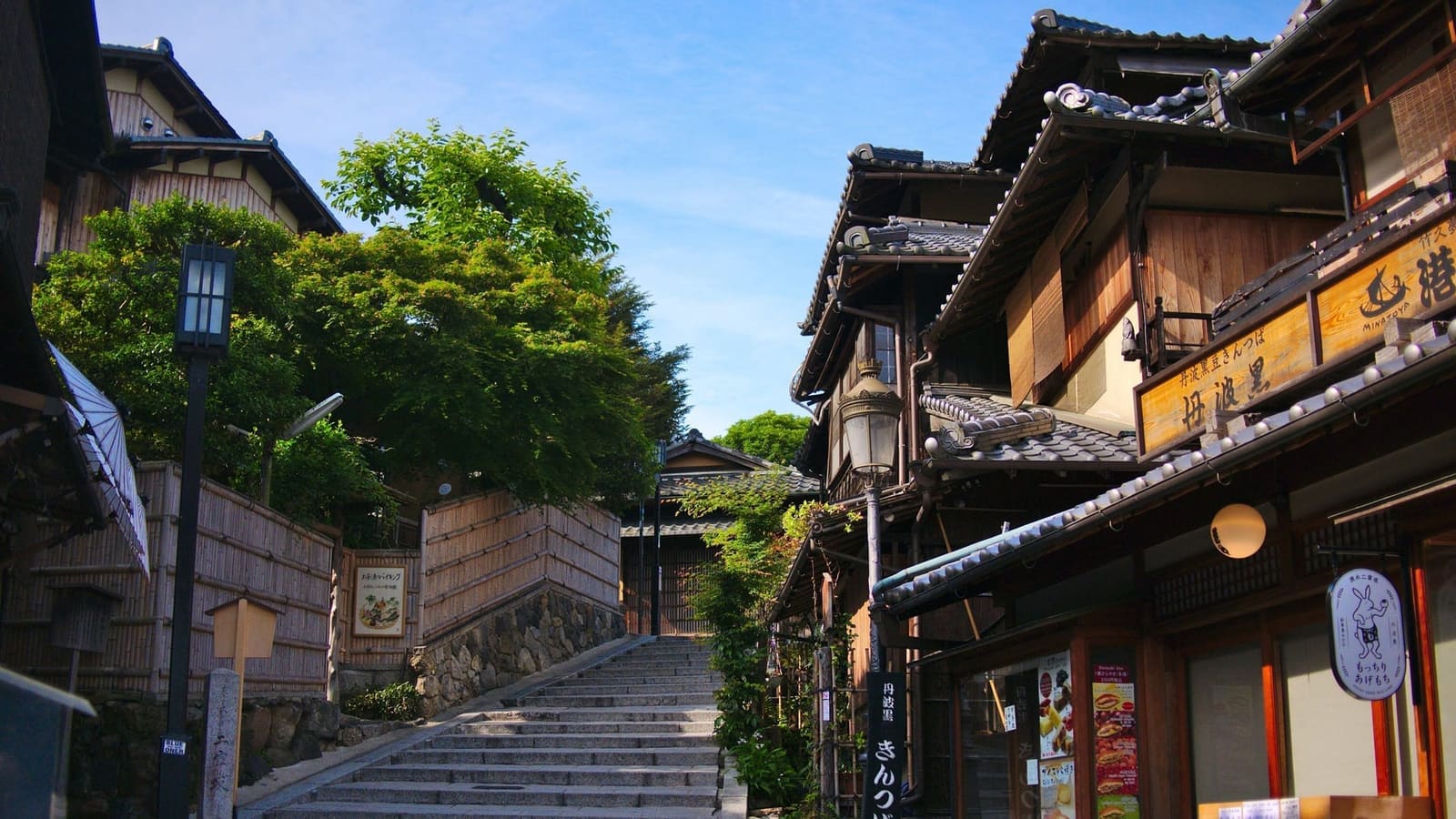
The lanes run through a townscape that Japan designated a nationally important preservation district in 1976. Near the Sannenzaka end, the older townhouses have shops on the ground floor and small slatted upper windows; toward Kodai-ji the houses are later, two-story, and built in a lighter tea-house style. Today they hold ceramics, sweets and craft shops and tea rooms.

A local saying holds that a fall on Sannenzaka brings three years of bad luck, and on Ninenzaka two. It is a reminder that both lanes are mostly stone steps and slopes. The route below takes them downhill from Kiyomizu-dera.
Walking the lanes, downhill from Kiyomizu-dera
Short answer
Start at Kiyomizu-dera, walk down Kiyomizu-zaka, take the Sannenzaka steps, continue along Ninenzaka, and carry on north toward Kodai-ji and Maruyama Park. Going downhill is easier on the steps and ends closer to Gion.
Start, below Kiyomizu-dera
Kiyomizu-zaka
The main approach street to Kiyomizu-dera. Walk down it from the temple gate to the head of the Sannenzaka steps.
The stone steps
Sannenzaka
Stone steps and slopes between townhouses with shops on the ground floor.
Next
Ninenzaka
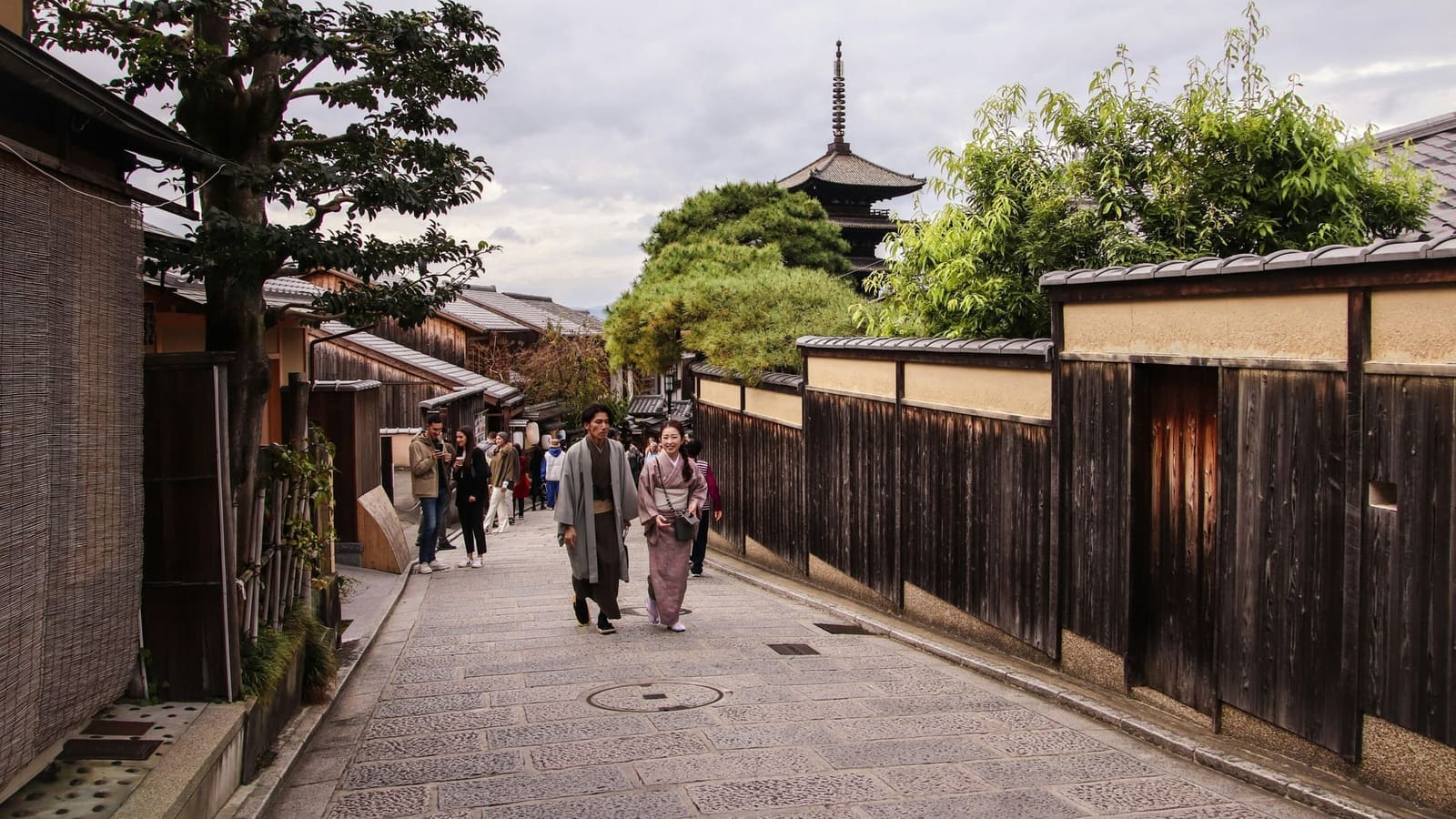
A stepped lane continuing north, with the Yasaka Pagoda of Hokan-ji close by.
North
Toward Kodai-ji and Maruyama Park
The later, two-story townhouses line the way north toward Kodai-ji, Maruyama Park and Yasaka Shrine.


When to go
Short answer
Go early. The lanes are narrow and stepped, and from late morning they fill with the Kiyomizu-dera crowd. Kiyomizu-dera opens at 6:00 a.m., which makes an early start easy to combine.
- Early morning
- The steps are empty and the shops still shut. Pair it with Kiyomizu-dera at its 6:00 a.m. opening.
- Late morning to late afternoon
- The busiest time, when the steps become a slow line of people.
- Seasons
- Cherry blossom and autumn foliage seasons, weekends and public holidays are the most crowded.
Fitting the lanes into a Kyoto day
Short answer
The lanes are the middle of the Higashiyama walk: Kiyomizu-dera above them, Kodai-ji, Yasaka Shrine and Gion below. Walk the whole route north on foot.
Better on another day
Arashiyama or Kinkaku-ji
The Arashiyama Bamboo Grove and Kinkaku-ji are on the far side of the city and better on another day.
What to look for on Sannenzaka and Ninenzaka
How to Get to Sannenzaka and Ninenzaka
There is no station at the lanes. Most people arrive by bus or on foot from Kiyomizu-dera or Gion, and the lanes themselves are stepped and pedestrian.
- •Bus to Gojozaka or Higashiyama Yasui, then about 5 minutes on foot.
- •Walk the lanes downhill from Kiyomizu-dera: Sannenzaka first, then Ninenzaka.
- •Both lanes are stepped; leave large luggage at your hotel or a station locker.
Map
Best Time to Visit Sannenzaka and Ninenzaka
Best time to visit Sannenzaka and Ninenzaka: Early morning, before the shops open and the crowds arrive; weekdays outside the blossom and foliage seasons. Weekday mornings are generally quieter than weekends and public holidays.
- •Early morning, before the shops open, the steps are at their emptiest.
- •Late morning to late afternoon is the busiest time, and the steps become a slow queue.
- •Weekends, holidays and the cherry blossom and autumn foliage seasons are busiest.
Entry Fee & Hours
- •The lanes are free. Both include stone steps and slopes, so they are difficult with a wheelchair, stroller or rolling luggage.
Nearby Attractions
Places on the same Higashiyama walk

Kiyomizu-dera Temple
Kodai-ji Temple
Yasaka Shrine

Gion District
- •Kiyomizu-dera Temple (At the top of the lanes, up Kiyomizu-zaka): Kiyomizu-dera is a Buddhist temple on the slopes of Mt. Otowa in eastern Kyoto, founded in 778. Its Main Hall stands on a wooden stage held up by 18 zelkova pillars, with a view across the city. The temple is a UNESCO World Heritage site.
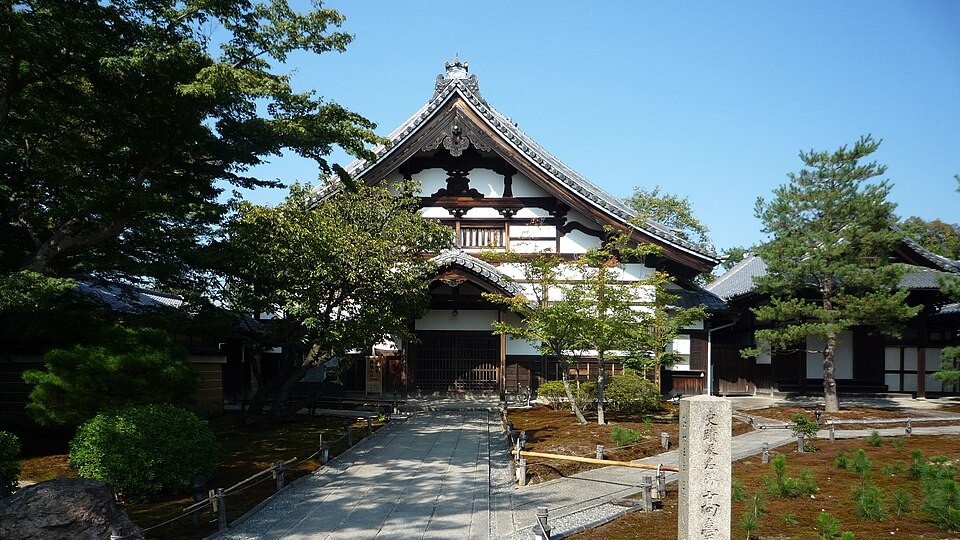
- •Kodai-ji Temple (North, at the end of the walk): Kodai-ji is a Rinzai Zen temple in Higashiyama founded in 1606 by Nene, the widow of Toyotomi Hideyoshi. Its pond garden, the Otamaya shrine with its gold lacquer, two hillside tea houses and a bamboo grove are all inside one ticket.
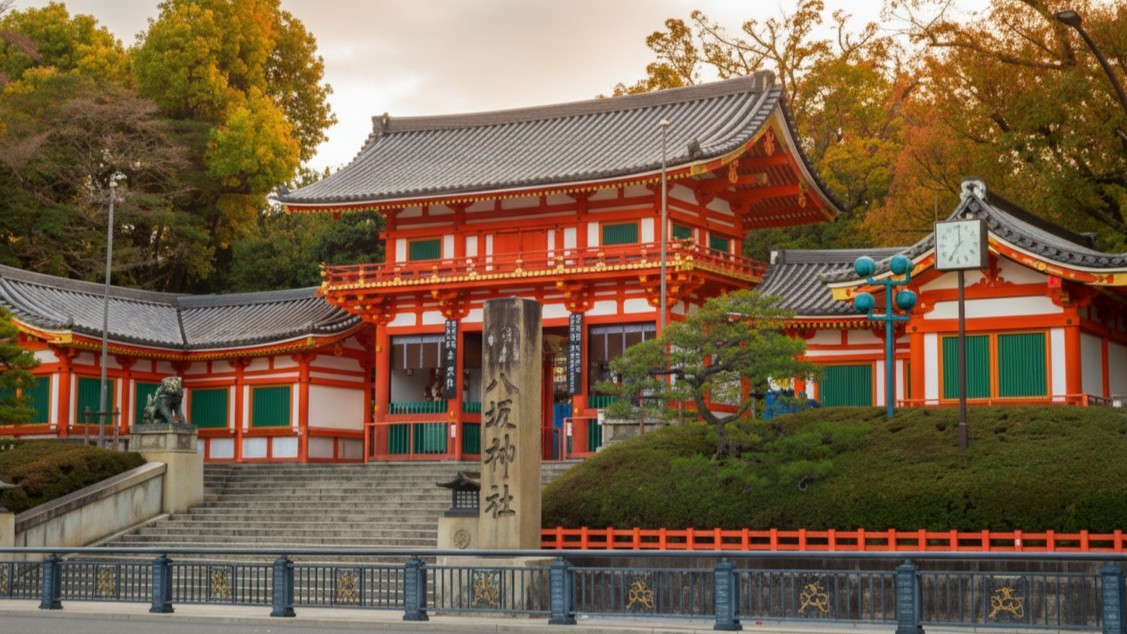
- •Yasaka Shrine (North, past Maruyama Park): Yasaka Shrine (Yasaka Jinja) enshrines Susanoo-no-mikoto and traces its origins to 656 or 876, depending on the account. Its main hall, with the worship hall under the same roof, was designated a National Treasure in 2020, and the shrine runs the Gion Matsuri, held through July for more than 1,150 years.
- •Gion District (North through Higashiyama on foot): Gion is the historic geiko district of Kyoto, east of the Kamo River around Hanamikoji-dori and the Shirakawa canal, next to Yasaka Shrine. Its streets of wooden teahouses are free to walk, while the private lanes off Hanamikoji are signposted no entry for sightseers.
Two ways to build a day around the lanes
Both start early at Kiyomizu-dera and walk the lanes downhill.
Higashiyama on foot
The classic walk, ending in Gion.
From 6:00 a.m.
Kiyomizu-dera at opening.
Morning
Down Sannenzaka and Ninenzaka before the crowds, then Kodai-ji.
Afternoon
Yasaka Shrine, then Gion.
A slower morning
For browsing the shops once they open.
Early morning
The lanes while empty, for the view.
Mid-morning
Late morning
Back down the lanes for the shops and a tea room.
Frequently Asked Questions
References
View references
Kyoto Prefectural Tourism Federation
Kyoto City Tourism Association
Agency for Cultural Affairs (Cultural Heritage Online)
Planning Your Kyoto Trip?
See the full Kyoto destination guide or browse Japan itineraries that include this city.
See all Shopping & Entertainment across Japan →Explore all attractions in Kyoto or browse nearby destinations.
Back to Kyoto Guide →