Kiyomizu-dera Temple
ExploreJapanDaily Editorial Team · Last updated: September 28, 2026
Kiyomizu-dera is a hillside temple in eastern Kyoto whose Main Hall stands on a wooden stage about 13 meters above the slope. It opens at 6:00 a.m. every day and closes at 6:00 p.m. most of the year, later in summer and on its night-viewing dates. Every approach ends with an uphill walk from the bus stops, so the planning questions are how to get there and when to arrive before the stage fills.

- Area
- Higashiyama
- Best For
- Photography, History, UNESCO Heritage, Views, Spring & Autumn Foliage
Visiting Kiyomizu-dera Temple
Kiyomizu-dera was founded in 778, according to the temple, around a spring on Mt. Otowa that gives it its name, "pure water". It is the head temple of the Kita-Hosso sect, and its principal image is an eleven-headed, thousand-armed Kannon, kept in the innermost sanctuary of the Main Hall.
The Main Hall, rebuilt in 1633, stands on a steep cliff. Its veranda, the Kiyomizu stage, is held nearly 13 meters above the slope by 18 zelkova pillars joined by rails that pass through them, without a single nail. The stage floor was relaid with hinoki cypress boards in a restoration that began in 2008 and ran for 12 years.

A visit is one route through the grounds, from the vermilion gates at the top of the approach to the stage, then down to the Otowa Waterfall, set out below. Jishu Shrine, behind the Main Hall, is closed for restoration, with no reopening date.
The route through Kiyomizu-dera
Short answer
Enter through the vermilion Nio-mon at the top of Kiyomizu-zaka, pass the West Gate and pagoda, cross to the Main Hall and its stage, look back from the Okuno-in, then go down the steps to the Otowa Waterfall. A no-step route to the Main Hall runs on the left of the regular path.
Top of the approach
Nio-mon and the West Gate
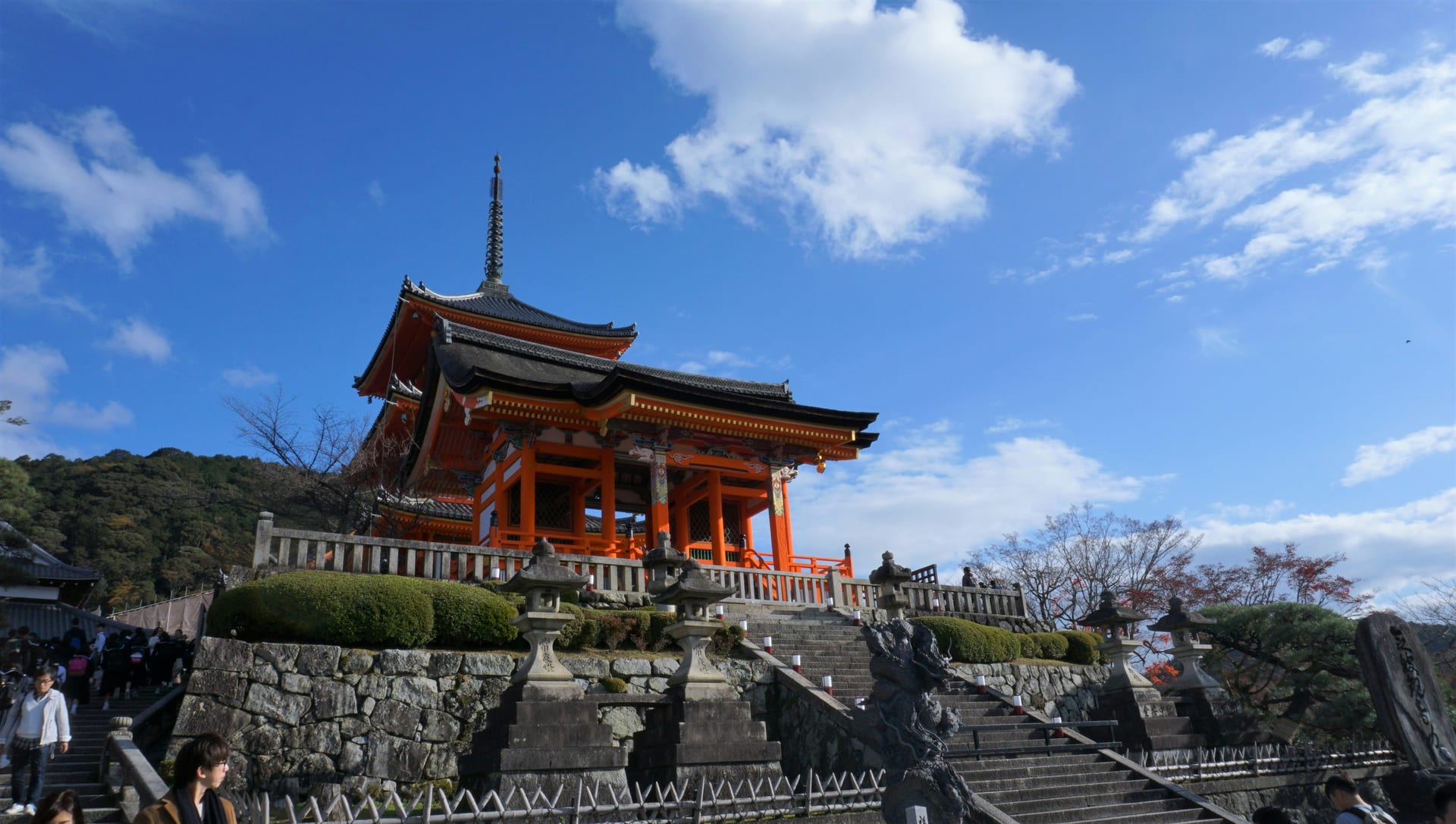
The two-story Nio-mon, rebuilt around 1500, is the main entrance. Beyond it stand the West Gate (Sai-mon), rebuilt in 1633, and the three-story pagoda.
Next
The Main Hall and the stage
The Main Hall enshrines the temple's Kannon. Its stage, about 200 square meters of hinoki boards nearly 13 meters above the slope, has the city view. Arrive early and it has room.
Beyond the Main Hall
Okuno-in Hall
A smaller hall with its own stage, directly above the waterfall. The view back to the Main Hall stage is the temple's own recommended photo.
End of the route
The Otowa Waterfall
Down the steps below the Okuno-in, three streams fall from the spring the temple was founded on. Visitors catch the water with ladles. From here the path leads back toward the approach streets.
When to go
Short answer
The temple opens at 6:00 a.m. every day, and the stage is easiest to enjoy in the first hours. Closing time depends on the season. In spring, mid-August and late November, special night viewings keep it open until 9:30 p.m.
- January 1 to March 26
- Opens: 6:00 a.m.
- Closes: 6:00 p.m.
- March 27 to April 5 (spring night viewing)
- Opens: 6:00 a.m.
- Closes: 9:30 p.m. (last entry 9:00)
- April 6 to June 30
- Opens: 6:00 a.m.
- Closes: 6:00 p.m.
- July 1 to August 31
- Opens: 6:00 a.m.
- Closes: 6:30 p.m. (9:30 p.m. August 14 to 16)
- September 1 to November 20
- Opens: 6:00 a.m.
- Closes: 6:00 p.m.
- November 21 to 30 (autumn night viewing)
- Opens: 6:00 a.m.
- Closes: 9:30 p.m. (last entry 9:00)
- December 1 to 31
- Opens: 6:00 a.m.
- Closes: 6:00 p.m.
| Period | Opens | Closes |
|---|---|---|
| January 1 to March 26 | 6:00 a.m. | 6:00 p.m. |
| March 27 to April 5 (spring night viewing) | 6:00 a.m. | 9:30 p.m. (last entry 9:00) |
| April 6 to June 30 | 6:00 a.m. | 6:00 p.m. |
| July 1 to August 31 | 6:00 a.m. | 6:30 p.m. (9:30 p.m. August 14 to 16) |
| September 1 to November 20 | 6:00 a.m. | 6:00 p.m. |
| November 21 to 30 (autumn night viewing) | 6:00 a.m. | 9:30 p.m. (last entry 9:00) |
| December 1 to 31 | 6:00 a.m. | 6:00 p.m. |
- At opening, 6:00 a.m.
- The stage and the approach streets are at their quietest. The shops on Kiyomizu-zaka open later.
- Late morning to afternoon
- The busiest window, especially on the stage and at the waterfall line. Weekends, holidays and the blossom and foliage seasons are busiest.
- Seasons
- The temple gives late March to early April for cherry blossoms and mid-November to early December for autumn leaves, and posts updates on its news page each season.
Fitting Kiyomizu-dera into a Kyoto day
Short answer
Kiyomizu-dera is the southern end of the Higashiyama walk. Start here early, then walk north and downhill through Sannenzaka and Ninenzaka, past Kodai-ji and Yasaka Shrine, to Gion. The suggested itineraries turn this into a day.
Downhill on foot
Sannenzaka and Ninenzaka
The stone-paved lanes of Sannenzaka and Ninenzaka lead north from the temple's approach.
North on foot
Kodai-ji and Yasaka Shrine
Kodai-ji and Yasaka Shrine are on the same walk, ending at the top of Shijo-dori.
Keihan line from Kiyomizu-Gojo
Fushimi Inari
The Keihan Main Line runs from Kiyomizu-Gojo toward Fushimi Inari, which makes a morning there and an afternoon here workable.
Better on another day
Kinkaku-ji or Arashiyama
Kinkaku-ji and the Arashiyama Bamboo Grove are on the opposite side of the city and better on another day.
For choosing between buses and trains across the city, see Getting Around Kyoto.
Things to know before you go
Short answer
Kiyomizu-dera has no parking, bans tripods and drones, and can only be entered from Kiyomizu-zaka or Chawan-zaka. Jishu Shrine is closed. Plan around those and the visit is simple.
Following a map app up the wrong lane
Instead: Only Kiyomizu-zaka (to the Nio-mon) and Chawan-zaka (to the emergency road entrance) reach the grounds. The temple warns that some apps suggest routes that do not.
Planning to visit Jishu Shrine
Instead: It is closed for restoration with no reopening date announced.
Bringing a tripod or drone
Instead: Tripods, monopods and drones are banned, as are wedding, cosplay and model shoots.
Snacking as you walk
Instead: Eat and drink only in the cafes and tea houses; take all trash with you.
Driving there
Instead: There is no temple parking and nearby lots fill in busy seasons. Take the bus or a taxi.
Bringing a pet
Instead: Only service dogs are allowed.
Things to look for at Kiyomizu-dera
How to Get to Kiyomizu-dera Temple
Kiyomizu-dera is on Mt. Otowa, above the Higashiyama streets, and every route ends with an uphill walk of about 10 minutes from the bus stops. There are only two ways into the grounds: through the Nio-mon at the top of Kiyomizu-zaka, or through the emergency road entrance at the top of Chawan-zaka.
The temple warns that some map apps, Google Maps among them, can suggest a route that does not reach the grounds. Follow Kiyomizu-zaka or Chawan-zaka uphill.
- •From Kyoto Station, City Bus 206 to Gojozaka, then about 10 minutes uphill on foot.
- •From Gion-Shijo or Kawaramachi, City Bus 207 to Kiyomizu-michi.
- •Only Kiyomizu-zaka and Chawan-zaka lead into the grounds; some map apps suggest routes that do not.
Map
Best Time to Visit Kiyomizu-dera Temple
Best time to visit Kiyomizu-dera Temple: At the 6:00 AM opening; late March to early April for cherry blossoms and mid-November to early December for autumn leaves. Weekday mornings are generally quieter than weekends and public holidays.
- •The temple opens at 6:00 a.m. every day; that first hour is the best chance of room on the stage.
- •Cherry blossoms: late March to early April. Autumn leaves: mid-November to early December.
- •2026 night viewings, open until 9:30 p.m.: March 27 to April 5, August 14 to 16 and November 21 to 30.
Entry Fee & Hours
| Category | Price (JPY) | Approx. (USD) |
|---|---|---|
| Adult | ¥500 | ~$3.3 |
| Elementary and junior high student | Less than adult |
- •All public areas of the grounds can be reached on no-step, barrier-free routes, and there are wheelchair-accessible toilets; wheelchairs are not lent. The temple received a barrier-free award from the Ministry of Land, Infrastructure, Transport and Tourism in 2011.
- •There is no group discount. A visitor with a disability handbook and one companion enter free on showing it at the gate.
Nearby Attractions
Places on the Higashiyama walk north from Kiyomizu-dera

Sannenzaka and Ninenzaka
Kodai-ji Temple
Yasaka Shrine

Gion District

Nanzen-ji Temple
- •Sannenzaka and Ninenzaka (On the walk down from the temple): Sannenzaka and Ninenzaka are stone-stepped lanes below Kiyomizu-dera in Kyoto's Higashiyama district, lined with late-Edo to Taisho-era townhouses. They lie in the Sanneizaka preservation district, designated for its historic townscape in 1976.
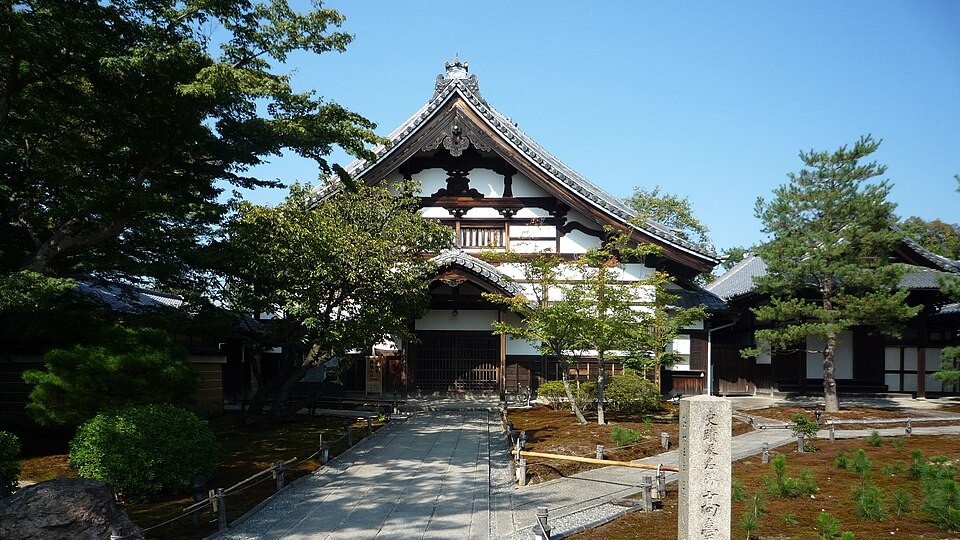
- •Kodai-ji Temple (North along the same walk, toward Gion): Kodai-ji is a Rinzai Zen temple in Higashiyama founded in 1606 by Nene, the widow of Toyotomi Hideyoshi. Its pond garden, the Otamaya shrine with its gold lacquer, two hillside tea houses and a bamboo grove are all inside one ticket.
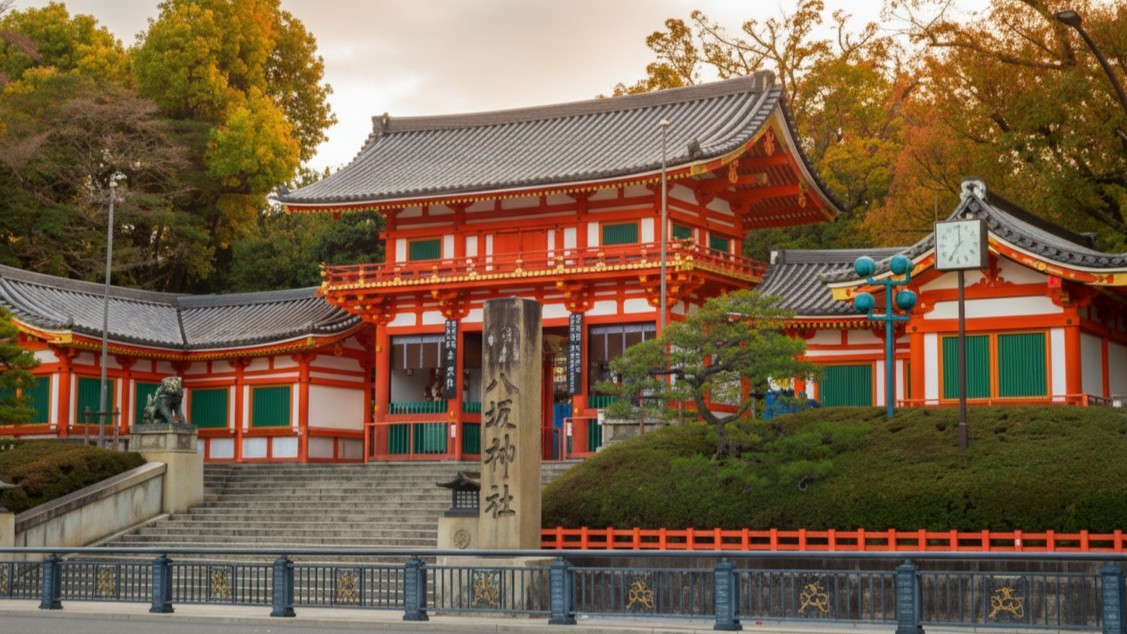
- •Yasaka Shrine (North, where the Higashiyama walk meets Gion): Yasaka Shrine (Yasaka Jinja) enshrines Susanoo-no-mikoto and traces its origins to 656 or 876, depending on the account. Its main hall, with the worship hall under the same roof, was designated a National Treasure in 2020, and the shrine runs the Gion Matsuri, held through July for more than 1,150 years.
- •Gion District (North through Higashiyama on foot): Gion is the historic geiko district of Kyoto, east of the Kamo River around Hanamikoji-dori and the Shirakawa canal, next to Yasaka Shrine. Its streets of wooden teahouses are free to walk, while the private lanes off Hanamikoji are signposted no entry for sightseers.
- •Nanzen-ji Temple (Farther north, by bus or a long walk): Nanzen-ji is the head temple of the Nanzen-ji school of Rinzai Zen, with a 22-meter Sanmon gate, a National Treasure abbot's hall and its tiger garden, and the red-brick aqueduct of the Lake Biwa Canal running through its grounds.
Two ways to build a day around Kiyomizu-dera
Both start early at Kiyomizu-dera and differ in where the afternoon goes.
The Higashiyama walk
All on foot, ending in Gion in the evening.
From 6:00 a.m.
Kiyomizu-dera at opening: the stage, the Okuno-in and the Otowa Waterfall.
Mid-morning
Down through Sannenzaka and Ninenzaka as the shops open, then Kodai-ji.
Afternoon
Yasaka Shrine, then Gion toward evening.
Kiyomizu-dera and Fushimi Inari
Two headline sights, linked by the Keihan line.
Early morning
Fushimi Inari before the crowds.
Late morning
Keihan Main Line to Kiyomizu-Gojo, then about 25 minutes uphill on foot.
Afternoon
Kiyomizu-dera, then down through Sannenzaka and Ninenzaka.
Frequently Asked Questions
References
View references
Kiyomizu-dera
Kyoto City Transportation Bureau
Planning Your Kyoto Trip?
See the full Kyoto destination guide or browse Japan itineraries that include this city.
See all Temples & Shrines across Japan →Explore all attractions in Kyoto or browse nearby destinations.
Back to Kyoto Guide →