
Flights to Japan: International Travel Guide
Routes, arrival airports, and booking timing for travelers from the US, Canada, UK, Europe, Australia, and New Zealand.
Quick Answer
3-5 months ahead; 5-6+ months for cherry blossom, Golden Week, or ski season
January-February and June through mid-November shoulder months, outside peak windows
Tokyo Haneda (HND) or Narita (NRT); Osaka Kansai (KIX) for Kansai-first trips
9-11 hrs from the US West Coast, Canada, Australia & NZ; 11-15 hrs from the East Coast or Europe
Most international travelers reach Japan through Tokyo Haneda (HND), Tokyo Narita (NRT), Osaka Kansai (KIX), or one of a handful of other major airports such as Nagoya Chubu, Fukuoka, or Sapporo New Chitose. The best route depends on where you're flying from, price, how many stops you're willing to accept, and where your trip actually starts and ends. Travelers from the US and Canada generally have the most nonstop options into Tokyo, typically 7-14 hours depending on the departure city; travelers from the UK, Europe, Australia, and New Zealand more often choose between a long direct flight and a one-stop connection through the Middle East or Asia. The sections below cover regional route patterns, flight durations, arrival airport tradeoffs, and booking timing, none of which should be treated as a substitute for checking live fares and schedules with the airline before booking.

Flights from the United States and Canada to Japan
The most nonstop options of any region covered here, concentrated on the West Coast, Hawaii, and Vancouver
US Cities with Nonstop Flights to Japan
Mostly to Tokyo (Narita/Haneda); LAX and SFO also have seasonal Osaka service
| City (Airport) | Airlines | Flight Time |
|---|---|---|
| Los Angeles (LAX) | ANA, JAL, Delta, American, United, ZIPAIR | ~11 hrs |
| San Francisco (SFO) | United, ANA, JAL, ZIPAIR | ~10.5-11 hrs |
| Seattle (SEA) | Delta, Hawaiian, ANA, United | ~10-10.5 hrs |
| Honolulu (HNL) | Hawaiian, Delta, JAL, ANA, ZIPAIR | ~7-7.5 hrs |
| New York (JFK) / Newark (EWR) | American (JFK), United (EWR), ANA, JAL | ~14 hrs |
| Chicago (ORD) | United, ANA, JAL | ~13 hrs |
| Dallas/Fort Worth (DFW) | American | ~13.5-14 hrs |
| Houston (IAH) | United, ANA | ~13.5 hrs |
| Denver (DEN) | United | ~12.5-13 hrs |
| Atlanta (ATL) | Delta | ~14.5 hrs |
| Minneapolis (MSP) | Delta | ~12.5-13 hrs |
| Detroit (DTW) | Delta | ~13 hrs |
| San Jose (SJC), Washington Dulles (IAD) | Varies by season | ~11-13.5 hrs |
Routes and seasonal service change year to year. Confirm current routes directly with the airline before booking connecting flights.
Canadian Cities with Nonstop Flights to Japan
Fewer options than the US, concentrated in Vancouver and Toronto
| City (Airport) | Airlines | Flight Time |
|---|---|---|
| Vancouver (YVR) | Air Canada, ANA, JAL, ZIPAIR, WestJet (select routes) | ~10-10.5 hrs |
| Toronto (YYZ) | Air Canada | ~13 hrs |
| Montreal (YUL) | Air Canada | ~13.5 hrs |
| Calgary (YYC) | WestJet | ~10.5-11 hrs |
Nonstop Flights to Sapporo from North America
Two seasonal gateways for Hokkaido-focused winter trips in 2026-27
Historically, most North American travelers heading to Hokkaido connected through Tokyo, Osaka, Seoul, or another Asian hub before continuing to Sapporo. For the 2026-27 winter season, United and Air Canada plan nonstop flights to Sapporo New Chitose Airport (CTS), the principal airport serving Sapporo. CTS is outside central Sapporo, but it is the practical arrival airport for a Sapporo or Hokkaido-focused itinerary.
| Airline | Route | Starts | Frequency |
|---|---|---|---|
| United | San Francisco (SFO) to Sapporo New Chitose (CTS) | Dec. 11, 2026 | 3 weekly |
| Air Canada | Vancouver (YVR) to Sapporo New Chitose (CTS) | Dec. 17, 2026 | 3 weekly |
Airline schedules are time-sensitive. Both routes are scheduled and bookable for winter 2026-27 as last verified on August 26, 2026; confirm dates, operating days, and availability directly with the airline before booking.
Why fly directly to Sapporo?
These flights can be especially appealing when Sapporo, Niseko, Furano, Rusutsu, the Sapporo Snow Festival, or another Hokkaido ski destination is your first or primary stop. Where the schedule and your origin city make it practical, SFO or YVR to CTS can replace a North America to Tokyo connection followed by a domestic Japan flight to Sapporo. It is not automatically the cheapest or fastest choice for every traveler.
Who can use these flights?
San Francisco is particularly useful for U.S. travelers because United says its hub connects nearly 80 U.S. cities to Sapporo. Vancouver is a natural gateway for Western Canadians, while travelers from Toronto, Montreal, Calgary, and elsewhere may need a connection through YVR. Neither route creates nonstop Sapporo service from every North American city.
Fly to Tokyo if
- Tokyo, Kyoto, or Osaka is the core of your itinerary.
- Hokkaido comes later in the trip.
- A Tokyo route has a better price or schedule, even with the extra domestic flight.
Fly directly to Sapporo if
- Hokkaido is your first or primary destination.
- You are traveling mainly for skiing, snow activities, or the Snow Festival.
- You can conveniently reach SFO or YVR and the seasonal dates fit your trip.
Flights from the United Kingdom and Europe to Japan
A mix of direct-leaning hubs and one-stop routings, depending on airline and season
London, Paris, Frankfurt, Amsterdam, and Helsinki tend to offer the strongest Japan connectivity from Europe, though exactly which routes run direct versus one-stop depends heavily on the airline and time of year. Travelers from cities such as Rome, Madrid, Zurich, or Vienna more often connect through one of those hubs, or through a one-stop routing via the Middle East (Doha, Dubai, Abu Dhabi) or Asia (Singapore, Hong Kong, Bangkok). Istanbul functions mainly as a connection point on Turkish Airlines rather than a typical origin city for most Western European travelers.
| Departure Region | Typical Carriers | Flight Time |
|---|---|---|
| London (LHR) | JAL, ANA, British Airways, and one-stop options via Middle East and Asian hubs | ~11.5-12 hrs nonstop |
| Paris (CDG) | Air France, JAL, ANA (seasonal/codeshare patterns vary) | ~12-12.5 hrs nonstop |
| Frankfurt (FRA) | Lufthansa, ANA, JAL (seasonal/codeshare patterns vary) | ~11.5-12 hrs nonstop |
| Amsterdam (AMS) | KLM and partner carriers, plus one-stop options | ~11-11.5 hrs nonstop |
| Helsinki (HEL) | Finnair and partner carriers | ~9.5-10 hrs nonstop |
| Rome (FCO) | Mostly one-stop via other European or Middle East hubs | ~15-19 hrs total, one-stop |
| Madrid (MAD) | Mostly one-stop via other European or Middle East hubs | ~15-19 hrs total, one-stop |
| Zurich (ZRH) | Mostly one-stop via other European or Middle East hubs | ~14-18 hrs total, one-stop |
| Vienna (VIE) | Mostly one-stop via other European or Middle East hubs | ~15-19 hrs total, one-stop |
| Istanbul (IST) | Turkish Airlines | ~11-11.5 hrs nonstop |
Airline networks and seasonal schedules change often. Confirm current routes and stopovers directly with the airline before booking.
Most UK and European itineraries arrive at Tokyo Haneda or Narita, with Osaka Kansai a common choice for Kansai-first or open-jaw trips, and Nagoya Chubu occasionally relevant for Central Japan itineraries. A one-stop routing through the Middle East or Asia can make sense when it is meaningfully cheaper, offers a more convenient arrival time, or serves an origin city without direct options, though it does add total travel time and a layover to plan around.
Flights from Australia and New Zealand to Japan
Strong connectivity from the largest cities, one-stop options elsewhere
Sydney, Melbourne, and Auckland generally have the best direct or near-direct Japan connectivity in the region, while Brisbane, Perth, and Christchurch travelers more often connect through an Asian hub such as Singapore, Hong Kong, Seoul, or Taipei. Which option makes sense depends on your exact dates and origin city, so it's worth comparing both a direct search and a one-stop search before booking.
| City (Airport) | Typical Carriers | Flight Time |
|---|---|---|
| Sydney (SYD) | Qantas, JAL, ANA, and one-stop options | ~9.5-10 hrs nonstop |
| Melbourne (MEL) | JAL, ANA, and one-stop options via Asian hubs | ~9.5-10.5 hrs nonstop |
| Brisbane (BNE) | Japan Airlines and one-stop options | ~9.5 hrs nonstop, where available |
| Perth (PER) | Mostly one-stop via Asian hubs | ~14-18 hrs total, one-stop |
| Auckland (AKL) | Air New Zealand, JAL, ANA, and one-stop options | ~10.5-11 hrs nonstop |
| Christchurch (CHC) | Mostly one-stop via Auckland or Asian hubs | ~13-17 hrs total, one-stop |
Routes shift seasonally, particularly around ski and cherry blossom demand. Confirm current schedules directly with the airline before booking.
Practical timing notes: Hokkaido's winter ski season (roughly December-February) draws heavy demand from Australian and New Zealand travelers, so book those windows early. Cherry blossom season (late March-early April) often overlaps with Australian and New Zealand autumn school holidays, which can push both flights and hotels up in price. Most arrivals land at Haneda, Narita, or Kansai, with New Chitose worth checking directly for Hokkaido-focused winter trips.
Best Japan Arrival Airports
A quick comparison to help match your itinerary to the right airport
| Airport | Best For |
|---|---|
| Tokyo Haneda (HND) | Central Tokyo access, evening arrivals, business travel |
| Tokyo Narita (NRT) | Widest international route choice into Tokyo |
| Osaka Kansai (KIX) | Kansai-first itineraries (Kyoto, Osaka, Nara) and open-jaw trips |
| Nagoya Chubu (NGO) | Central Japan itineraries (Takayama, Gifu, Ise) |
| Fukuoka (FUK) | Kyushu-first trips |
| Sapporo New Chitose (CTS) | Hokkaido-focused and ski trips |
Route availability at smaller airports changes seasonally. Confirm current international service directly with the airport or airline.
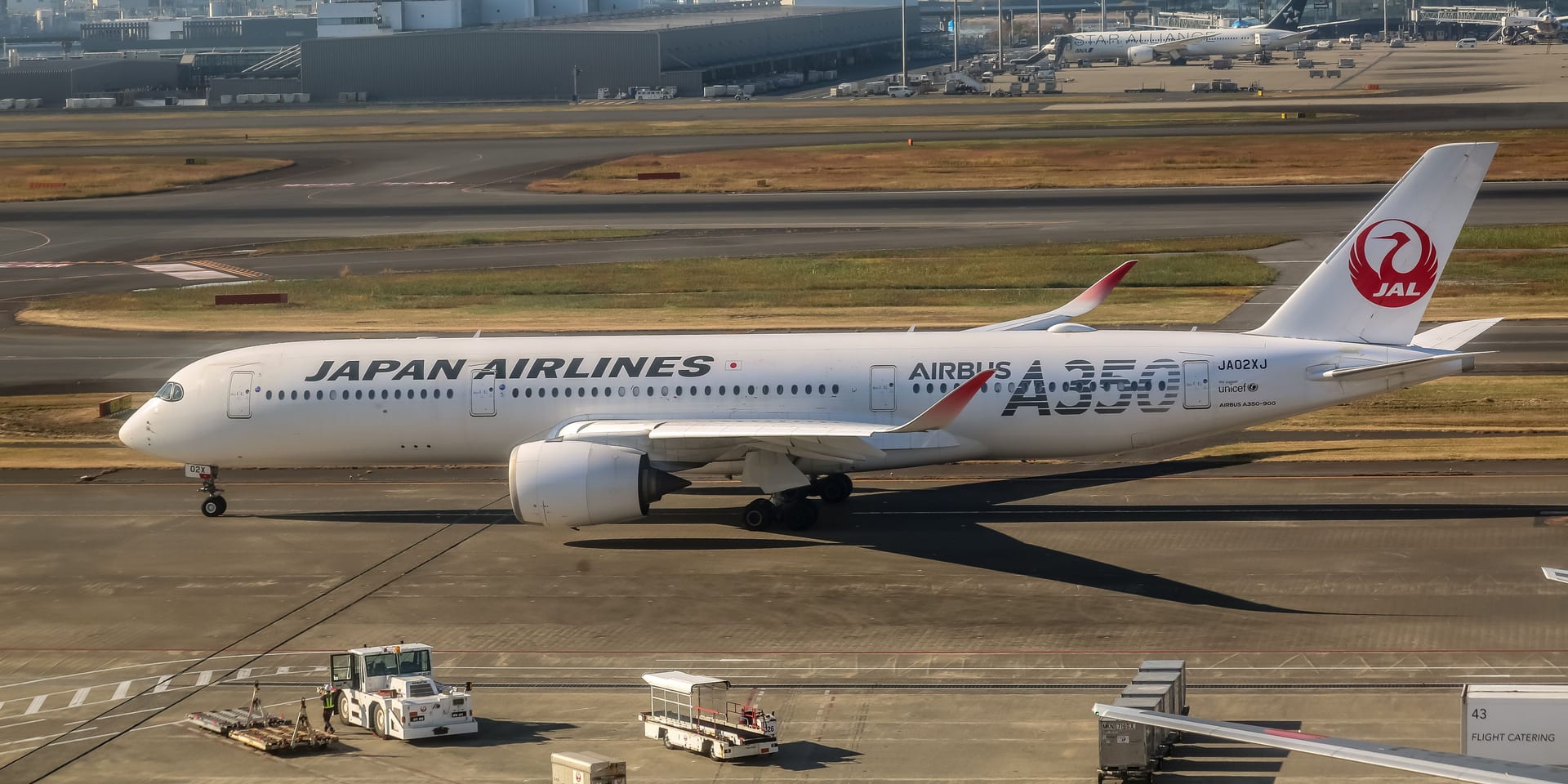
Which Japan Airport Should You Choose?
Match your arrival airport to your itinerary, not just the cheapest fare
Tokyo-only trip
Fly into and out of Haneda or Narita, whichever has the better fare or routing for your dates.
Tokyo + Kyoto + Osaka
Consider an open-jaw ticket, arriving Tokyo and departing Kansai (or vice versa), so you never have to backtrack.
Kansai-first itinerary
If your trip starts in Kyoto or Osaka, flying directly into Kansai (KIX) skips a Tokyo detour entirely.
Hokkaido trip
For winter 2026-27, check the new nonstop SFO and YVR flights to Sapporo New Chitose (CTS) if they fit your dates. Otherwise, connect through Tokyo and continue by domestic flight or train.
Kyushu trip
Check for a reasonable connection into Fukuoka; if none exists, arrive via Tokyo or Kansai and continue by domestic flight or Shinkansen.
Hiroshima / Western Japan trip
Most travelers arrive via Kansai (KIX) and continue west by Shinkansen, since Hiroshima has very limited direct international service.
Open-jaw flights
Flying into one city and out of another usually costs about the same as a round trip and can save significant backtracking time.
Once you've settled on an arrival airport, our getting around Japan guide and accommodation guide can help with the next steps. The Golden Route: 14 Days Through Tokyo, Kyoto & Osaka is built around exactly this kind of open-jaw routing, or browse the full itinerary library for more options.
Continuing to Sapporo, Fukuoka or Okinawa after you land? Our domestic flights in Japan guide explains when a connecting flight beats the Shinkansen and which airport to fly from.
Round-Trip Economy Price Ranges (US & Canada)
Low season to shoulder season, before cherry blossom or summer holiday surcharges. Fares from the UK, Europe, Australia, and New Zealand vary too widely by route and season to estimate reliably here, check live fares directly with the airline or a flight search tool.
🇺🇸 From the US
ZIPAIR and Hawaiian one-way deals can run as low as $350-500 in low season.
🇨🇦 From Canada
Calgary on WestJet runs similar to Vancouver. ZIPAIR deals from Vancouver can dip to C$500-1,000 one-way.
💸 Full-Service vs. Budget Carriers
ANA, JAL, United, Delta, American, and Air Canada are full-service carriers: higher fares, but checked baggage, meals, and seat selection are typically included. ZIPAIR (JAL's low-cost subsidiary, flying from LAX, SFO, HNL, and YVR) and occasional WestJet fares undercut them significantly, but charge extra for baggage, meals, and seat assignment, similar to budget carriers elsewhere. One-way fares on these carriers can be a good way to build an open-jaw itinerary.
When to Book Flights to Japan
General, evergreen guidance, not a guarantee of any specific fare
Cherry blossom season
Roughly late March through early April. This is Japan's highest-demand window; booking 5-6+ months ahead is a reasonable guideline.
Golden Week
Late April into early May. Domestic travel within Japan also surges, so both flights and hotels tighten early; book well ahead.
Summer holidays
Roughly July-August, when North American, European, and other school-holiday travelers overlap. Book 3-5 months ahead where possible.
Autumn foliage
Peaks vary by region but often cluster around mid-to-late November. Increasingly popular; 4-5 months ahead is a sensible target.
Winter ski season
Roughly December through February, especially popular with Australian and New Zealand travelers heading to Hokkaido. Book 4-6 months ahead for peak powder weeks.
General booking window
Outside of peak windows, 3-5 months ahead is a reasonable target, and shoulder months such as January, June, or early December often bring lower fares and more availability.
Flexibility on dates, and sometimes on arrival airport, is consistently one of the biggest levers for a better fare. See our best time to visit guide and seasonal guide for what each window is like beyond flights, and our Japan budget guide for planning costs end to end.
Direct vs. One-Stop Flights to Japan
Weighing time, cost, and flexibility
Direct flights
Pros: Fastest option, simplest logistics, no missed-connection risk
Cons: Typically the most expensive fare, and only available from a limited number of origin cities
One-stop flights
Pros: Often cheaper, and opens up far more origin cities, especially from the UK, Europe, Australia, and New Zealand via Middle East or Asian hubs
Cons: Longer total travel time and some layover risk; worth padding connection times generously
Multi-city / open-jaw
Pros: Matches how your trip actually flows and avoids backtracking; often prices close to a standard round trip
Cons: Takes more planning to book and can occasionally be limited by an airline's fare rules
- •Tokyo Haneda, Tokyo Narita, and Osaka Kansai handle most international arrivals, with Nagoya Chubu, Fukuoka, and Sapporo New Chitose relevant for specific regional itineraries
- •Honolulu often has the cheapest US fares to Japan due to the shorter flight distance, and ZIPAIR frequently undercuts full-service carriers from LAX, SFO, HNL, and Vancouver
- •London, Paris, Frankfurt, Amsterdam, and Helsinki tend to have Europe's strongest Japan connectivity, though exact routes shift by airline and season
- •Sydney, Melbourne, and Auckland generally offer the best direct or near-direct options from Australia and New Zealand
- •Haneda Airport (HND) is closer to central Tokyo than Narita (NRT), about 30 minutes versus 60-90 minutes
- •Open-jaw tickets (arriving one city, departing another) usually cost about the same as a standard round trip and can save significant backtracking
- •Nonstop flight times to Japan run roughly 9-11 hours from the US West Coast, Canada, Australia, and New Zealand, 11-12.5 hours from London and major European hubs, and 13-15 hours from the US East Coast or Midwest
- •Compare a direct search against a one-stop search before booking, especially from the UK, Europe, Australia, or New Zealand, where one-stop routings often open up more origin cities and lower fares
- •Set fare alerts 4-6 months before a spring, autumn, or ski-season trip, since prices for those windows tend to rise fastest
- •Check Haneda and Narita fares separately (and Kansai, if it fits your itinerary), the price difference can be significant even on the same airline
- •Book any connecting flight to a smaller city with enough buffer for delays before the international leg
- •Confirm your visa and entry requirements before booking, they vary by nationality and can affect your travel plans
- •Booking on a Tuesday or Wednesday can shave a modest amount off some fares, though it matters far less than which month you fly
Common Flight Questions
New to planning a Japan trip altogether? Start with our first-trip guide before you book.
Other Planning Topics
Landed. Now What?
Figure out the Japan Rail Pass before you leave, it can't be bought as cheaply once you arrive.
Japan Rail Pass Guide →