
7 Days
Best for: First-Time
Japan in One Week: The 7-Day Essentials Route
Tokyo, Kyoto, and Osaka in a single tight loop
#Budget
From$1,900/person
View Itinerary ->
Snow festivals, world-class skiing, New Year travel, and the lowest crowds and hotel rates of the year.
Winter is Japan's quietest, cheapest, and most overlooked travel season outside New Year week. December brings illuminations and the start of ski season, January and February deliver the lowest crowds and hotel rates of the year alongside the Sapporo Snow Festival and deep Hokkaido and Nagano powder, and the New Year holiday brings a very different kind of trip entirely: Hatsumode shrine visits, nationwide travel demand, and a multi-day service shutdown. Expect real cold and shorter daylight hours in exchange.
Is winter worth visiting Japan for? Yes, outside the New Year closure window (roughly December 29-January 3). Outside that week, winter brings the lowest crowds and hotel rates of the year, plus the Sapporo Snow Festival, deep Hokkaido and Nagano powder, and onsen season at its best. If your dates fall inside New Year week, plan around nationwide closures and higher prices instead.
See the New Year Planning Timeline →No other season pairs Japan's biggest snow festivals with its lowest crowds and prices, or puts reliable, deep powder within a few hours of Tokyo. New Year adds a second, very different draw: a rare look at Japan's most widely observed tradition, Hatsumode, alongside a nationwide travel surge and a multi-day service shutdown. The trade-off is real cold, shorter daylight, and two pockets of higher pricing, New Year week and ski season, inside an otherwise inexpensive, quiet season.
December, January, and February at a glance
| Month | Season | Temp | Crowds |
|---|---|---|---|
| December | ❄️ Winter | 41°F / 5°C | Medium |
| January | ❄️ Winter | 37°F / 3°C | Low |
| February | ❄️ Winter | 39°F / 4°C | Low–Med |
These month-level averages hide real regional swings. Hokkaido and the Sea of Japan coast run noticeably colder and see far more snow than the same month in Tokyo or Osaka, while Kyushu, Shikoku, and Okinawa stay mild enough that snow at low elevation makes local news. See Snow Regions below for how these differences should shape where you actually go.
Where and why heavy snow actually falls
Japan's heaviest snowfall isn't evenly spread. Cold winds crossing the Sea of Japan pick up moisture and dump it as snow the moment they hit land, which is why the coastal side of the country and the mountains behind it see dramatically more snow than the Pacific side at the same latitude. The table below compares five regions by typical cold and snow character, so you can match your own winter goal, deep powder, mild sightseeing, or something in between, to the right part of the country.
| Region | Cold & Snow Character | Key Destinations | Crowds |
|---|---|---|---|
| Hokkaido & Tohoku | The heaviest, most reliable snowfall in the country; temperatures regularly sit well below freezing. | Sapporo, Otaru, Zao Onsen | Medium, high during Snow Festival week |
| Japanese Alps & Nagano | Consistently heavy snowfall at altitude, colder than the lowlands but milder than Hokkaido. | Hakuba, Nozawa Onsen, Jigokudani | Medium to high during peak ski weeks |
| Sea of Japan Coast | Frequent, heavy snowfall driven by cold winds crossing the sea, burying towns other regions barely dust. | Kanazawa, the San'in region | Low |
| Kanto & Kansai Mainland | Cold and dry with mostly clear skies; ground-level snow is rare enough to make local news. | Tokyo, Kyoto, Osaka | Low outside New Year week |
| Kyushu, Shikoku & Okinawa | Mild winters; snow at low elevation is rare enough to be newsworthy when it happens. | Fukuoka, Okinawa | Low |
Which resort region actually fits your trip
Japan's ski season generally runs December through April, with the best snow conditions in January and February. Hokkaido and Nagano are the two headline regions, each home to several distinct resort towns worth comparing before you book.
| Resort | Beginner-Friendly | Crowds |
|---|---|---|
| Niseko | Good, extensive English-language ski schools | Very high in peak weeks, especially around Lunar New Year |
| Hakuba | Good, wide range of terrain across several linked resorts | High on weekends and around Lunar New Year |
| Nozawa Onsen | Good for beginners and intermediate skiers | Moderate |
| Furano | Good, gentler slopes than Niseko | Low to moderate |
| Rusutsu | Good, family-friendly terrain | Low to moderate |
| Zao Onsen | Good for beginners | Low to moderate |
Arguably the best season for hot spring bathing in Japan
Nothing beats sitting in outdoor hot water while snow falls around you, and a handful of towns and one wildlife park make winter onsen a genuine destination in its own right, not just an add-on to a ski trip. Jigokudani Snow Monkey Park, in Nagano, is the best-known: wild Japanese macaques bathe in a natural hot spring most reliably December through March, especially striking against snow. Ginzan Onsen, Kusatsu Onsen, Kurokawa Onsen, and Zao Onsen all offer classic snow-viewing rotenburo (outdoor baths), the pairing of hot water and falling snow that draws travelers to onsen towns specifically in winter.
Tattoo policy is worth checking before you go: many onsen and public bathhouses still restrict visible tattoos, though policies are loosening. A private "kashikiri" bath sidesteps the issue entirely and is widely available at ryokans and onsen towns.
Trees along the boulevard near Tokyo Station light up through the winter evenings, one of the city's most photographed December scenes.
One of the country's largest illumination displays, in Mie Prefecture, running through the winter with elaborate themed light tunnels.
A memorial light display through central Kobe held for about ten days each December, pairing illuminated archways with the city's waterfront.
Seasonal light displays across two of central Tokyo's busiest shopping and entertainment districts, easy to fold into any Tokyo evening.
A very different kind of trip than the rest of winter
Japan largely shuts down for New Year, roughly December 29 through January 3, with many restaurants, shops, and some attractions closed for several days while families gather and travel domestically. In exchange, visitors get Hatsumode, the first shrine or temple visit of the new year and one of the country's most widely observed traditions. Meiji Jingu in Tokyo, Fushimi Inari Taisha in Kyoto, and Sumiyoshi Taisha in Osaka are among the most nationally significant Hatsumode destinations, all drawing enormous crowds in the first days of January.
The practical impact is real: trains fill with domestic New Year travelers, flights and hotels nationwide commonly carry a 30-50% price premium, and Shinkansen seat reservations for this window deserve earlier booking than any other winter travel dates. See the New Year Planning Timeline below for how to sequence it, and check the JR Pass guide and how to get around Japan before locking in dates that overlap this window.
hosts the Sapporo Snow Festival each February, plus easy access to Niseko's powder and Abashiri's winter drift ice tours, three distinct winter draws from a single Hokkaido base.
runs the Kobe Luminarie each December, a memorial light display through the city center that pairs well with the port city's own winter waterfront scenery.
offers the year's best statistical odds of a clear view. Winter's cold, dry air clears out the summer haze that hides the mountain for much of the rest of the year.
pairs an outdoor onsen with a winter view of Mount Fuji, a combination that doesn't exist in the same way during any other season.
trades its famous autumn foliage for frozen waterfalls and snow-dusted shrines, plus its own onsen towns for warming up afterward.
Winter brings its own seasonal menu built around warming up: nabe (hot pot) in dozens of regional varieties, oden simmering in convenience store pots nationwide, and crab (kani) at its peak in Hokkaido. Hot sake and amazake, a warm, lightly sweet fermented rice drink often served free at shrines around New Year, both suit the season's cold particularly well. Convenience stores run limited-time winter menus worth seeking out even on a tight schedule.
Winter's cold, dry air gives Fuji its best visibility odds of the year. Early morning, before haze builds, is the most reliable window.
The illuminated juhyo (ice-covered trees) read best in the evening light-up window, roughly late December through late February.
The 15-20 minutes just after sunset, when the sky still holds some color, makes illumination displays pop far more than a fully dark sky.
A small tripod or a steady rail makes a real difference for illumination and evening snow-scene photography, where shutter speeds run slower than daytime shots.
What to actually do when snow threatens your schedule
Heavy snowfall can delay, slow, or briefly suspend train service on specific routes, most often December through February. This is a manageable planning factor, not a reason to avoid winter travel, as long as you build in the right buffer.
New Year (roughly December 29-January 3) is the year's second-major domestic travel cluster after Golden Week, and heavy snow can delay or briefly suspend service on snow-prone lines. Check whether a JR Pass pencils out and see how to get around Japan before locking in your route.
Hotels nationwide for the New Year window, and ski-town accommodation for peak January-February weeks, both sell out earliest of the entire season. See the full accommodation guide for how to choose between ryokans, hotels, and neighborhoods.
Mid-January to mid-February is usually the cheapest stretch of the year outside ski towns, but the New Year window commonly carries a 30-50% price premium nationwide. See the full cost breakdown for real dollar figures by trip style.
New Year week and peak ski weeks are the two real crowd spikes of the season: packed shrines and trains around Hatsumode, and full lifts and lodges at Niseko or Hakuba during the busiest powder weeks. Outside those two windows, January and February bring genuinely the lowest crowds of the entire year almost everywhere else in the country, a sharp contrast worth planning your dates around rather than assuming winter is uniformly quiet or uniformly crowded.
Confirm whether your trip dates fall inside the New Year shutdown window (roughly December 29-January 3). If you're targeting peak ski powder weeks instead, start researching Niseko or Hakuba accommodation now.
Book accommodation for your chosen New Year or ski-season window. Both carry their own separate, higher pricing, and the best options go first.
Reserve Shirakawa-go's winter light-up parking or bus tickets if that evening is on your itinerary, the reservation windows for these specific dates open starting in September and again in December.
Reserve Shinkansen seats as soon as the one-month advance booking window opens for any New Year-window travel. Free-seating options are increasingly restricted during this specific period.
Build in a schedule buffer for any snow-prone route on your itinerary and confirm winter tires if you're self-driving, your final check before departure.
Including "Hokkaido in Winter: The 10-Day Snow Route," built specifically around snow and ski season
Best for: First-Time
Tokyo, Kyoto, and Osaka in a single tight loop
From$1,900/person
View Itinerary ->
Best for: First-Time
Tokyo, Kyoto, Nara, and Osaka, the complete introduction
From$2,600/person
View Itinerary ->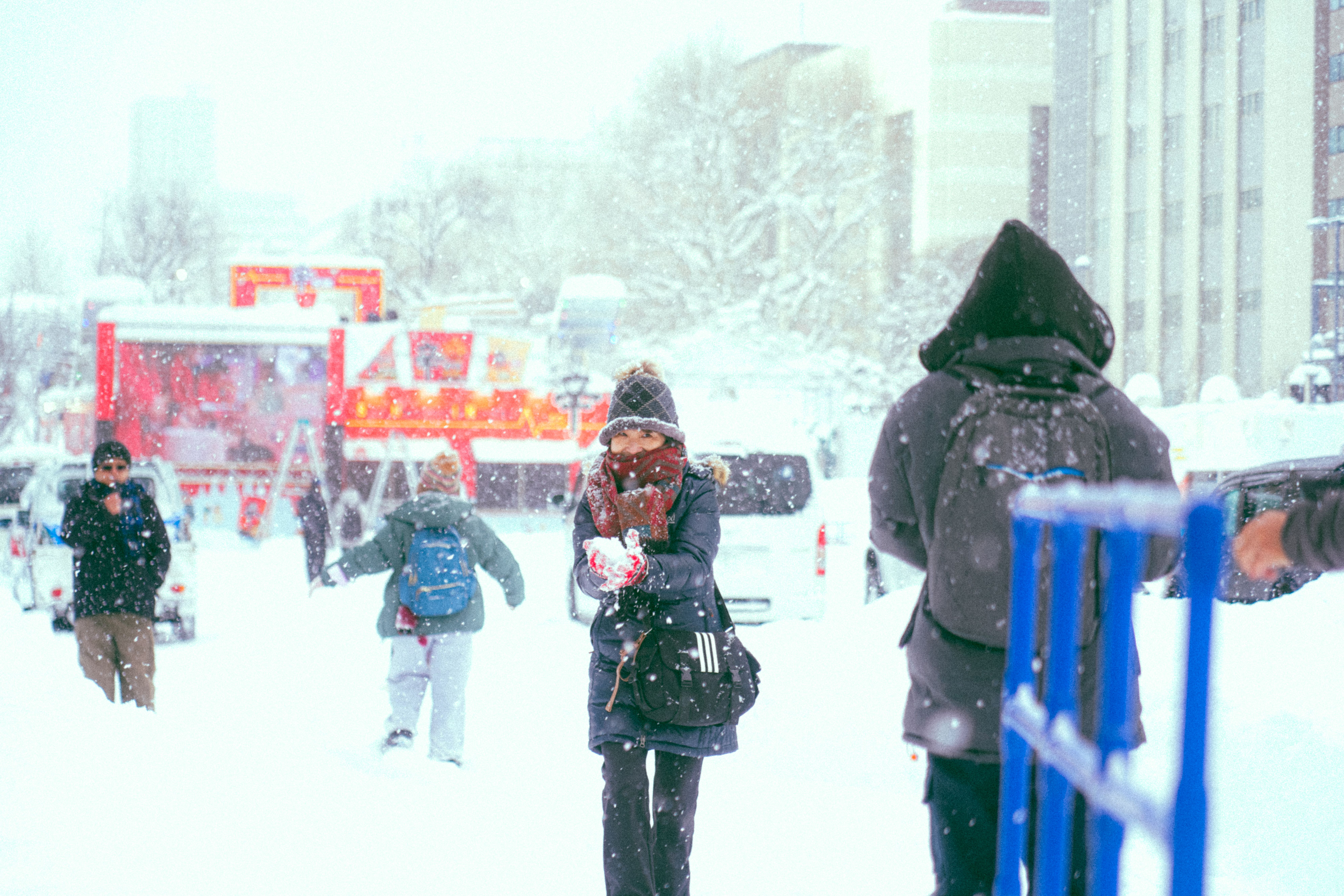
Best for: Nature
Sapporo, Niseko, and Hakodate for snow festivals, skiing, and seafood
From$2,900/person
View Itinerary ->The most common ways travelers get their winter trip wrong
Many restaurants, shops, and even some attractions close for several days, commonly December 29 through January 3. Travelers who don't plan around it find their itinerary has far fewer open options than expected.
January and February outside ski towns usually bring the year's lowest hotel rates, but the New Year window and resort towns like Niseko and Hakuba both run on their own separate, higher pricing. Check which part of winter your dates actually fall in.
A single mid-weight coat isn't enough for a full day of outdoor sightseeing, and dry indoor heating plus cold outdoor air causes real skin, lip, and nosebleed trouble for travelers unused to it. Pack a real layering system, not just one jacket.
Accommodation, lift passes, and ski-hut logistics for peak January-February weeks fill up far earlier than most travelers expect. Book the moment your dates are set, not a few weeks before departure.
A snowstorm can delay a Shinkansen or close a mountain road for a day, most often December through February. Travelers with zero schedule flexibility feel it the most, build in at least one buffer day around any snow-prone leg.
Browse itineraries built around snow and ski season, including a full 10-day route through Hokkaido.
Browse Itineraries →